wayground logo

Free Printable Worksheets

NEW

Font size

S
M
L
XL
Worksheets

Semester Review

Total questions: 55

Worksheet time: 5hrs 19mins

Name
Class
Date
1.
What is (3, 6) under a dilation of 2?
a)
(3, 6)
b)
(1.5, 3)
c)
(6, 12)
d)
(12, 6)
2.
Find the area.
a)
126 ft2
b)
39 ft2
c)
156 ft2
d)
80 ft2
3.
Find the area of the compound shape
a)
32 ft2
b)
76 ft2
c)
56 ft2
d)
120 ft2
4.

Solve for y.

a)

17

b)

7

c)

2

d)

6

5.

Solve for X.

a)

x=12

b)

x=6

c)

x=11

d)

x=13

6.

Find the value of x.

a)

72

b)

67

c)

65

d)

54

7.

WHAT IS THE VALUE OF X?

a)

16

b)

11.4

c)

0

d)

-16

8.

Find m<1

a)

50

b)

40

c)

90

d)

30

9.
Which line is parallel to y=4x-8
a)
y=8x-4
b)
y=4x+4
c)
y=1/4x-8
d)
y= -1/4x-8
10.

Which line is perpendicular to y=4x-8

a)

y=8x-4

b)

y=4x+4

c)

y=1/4x-8

d)

y=-1/4x+11

11.
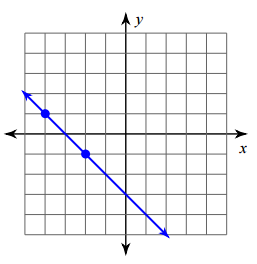
Find the slope of the line.
a)
-2
b)
2
c)
-1
d)
1
12.

If lines are parallel with a transversal, then these two angles are?

a)

Vertical Angles

b)

Corresponding Angles

c)

Exterior Alternative

d)

Interior Alternative

13.

If lines are parallel with a transversal, then these two angles are?

a)

Opposite Side Angles

b)

Supplementary

c)

Same Side Interior

d)

Vertical Angles

14.
Name the corresponding angle to angle 4.
a)
angle 8
b)
angle 6
c)
angle 2
d)
angle 5
15.
What type of angle pair is ∠1 and ∠3?
a)
alternate interior angles
b)
 supplementary angles
c)
corresponding angles
d)
vertical angles 
16.
Name the angle relationship.
a)
Alternate Interior
b)
Alternate Exterior
c)
Corresponding
d)
Vertical Angles
17.
Find the measure of the indicated angle. 
a)
26
b)
36
c)
85
d)
144
18.

Use the pythagorean theorem to find the missing side

a)

5

b)

√194

c)

25

d)

6

19.
What is the missing angle?
a)
61
b)
50
c)
60
d)
69
20.

Identify this figure. (Be as specific as possible)

a)

rhombus

b)

parallelogram

c)

kite

d)

quadrilateral

21.
Find x.
a)
80
b)
100
22.
Determine how to translate triangle A'B'C' to triangle ABC.
a)
right two, down five
b)
right two, down 9
c)
left two, down 9
d)
left two, down 5
23.
What is the correct ratio?
a)
sin 40 = w/28
b)
cos 40 = w/28
c)
tan 40 = w/28
d)
sin 40 = 28/w
24.
Which is the correct set up to solve for x?
a)
sin 72 = 6 / x
b)
cos 72 = 6 / x
c)
tan 72 = 6 / x
25.

Cosine ratio represent

a)

O/H

b)

A/H

c)

O/A

d)

A/O

26.
Tangent ratio represent
a)
Opp/Hyp
b)
Adj/Hyp
c)
Opp/Adj
27.
What are complementary angles?
a)
Angles that add up to 180°
b)
Angles that add up to 90°
c)
Angles that are equal to each other
d)
Angles that are opposite of each other when lines intersect.
28.

What is the complement to: cos 40⁰ = ?

a)

sin 50⁰

b)

cos 50⁰

c)

tan 50⁰

d)

sin 40⁰

29.

What is the complement to: sin 20⁰ = ?

a)

cos 70⁰

b)

sin 70⁰

c)

cos 20⁰

d)

tan 20⁰

30.

What is the complement to: cos 38⁰ = ?

a)

sin 62⁰

b)

sin 52⁰

c)

cos 52⁰

d)

sin 38⁰

31.
What is the missing number?
Sin(   ) = Cos(40)
a)
30
b)
40
c)
50
d)
60
32.

Describe the transformation:

(x, y) -> (x+3, y)

a)

Translation 3 units to the left

b)

Translation 3 units up

c)

Translation 3 units to the right

d)

Translation 3 units down

33.

Are the figures congruent?

(What type of transformation is shown?)

a)

Congruent (rotation)

b)

Congruent (reflection)

c)

NOT Congruent (rotation)

d)

NOT Congruent (reflection)

34.
Identify the transformation from C to D.
a)
90o Counter Clockwise Rotation
b)
180o Rotation
c)
270o Counter clockwise Rotation
d)
360o Rotation
35.
Identify the transformation from ABC to A'B'C'.
a)
Reflection across the x-axis
b)
Reflection across the y-axis
c)
90o clockwise rotation
d)
90o counterclockwise rotation
36.
Identify the transformation.
a)
Reflection across y axis
b)
Reflection across x-axis
c)
180 Rotation
d)
Translation 2 units down
37.
Choose the similarity statement for the triangles.
a)
ΔMNL ∼ ΔOPQ
b)
ΔNOM ∼ ΔPQL
c)
ΔLMN ∼ ΔPQO
d)
ΔMLN ∼ ΔPQO
38.

What statement can be made based on this given?

a)

CABCAD\angle CAB\cong\angle CAD  

b)

CADDAC\angle CAD\cong DAC  

c)

CABDAB\angle CAB\cong\angle DAB  

39.

Which statement is true based on the given diagram?

a)

P  T\angle P\ \cong\ \angle T  

b)

QR    PT\overline{QR}\ \ \cong\ \ \overline{PT}  

c)

PRQ  SRT\angle PRQ\ \cong\ \angle SRT  

40.

What reasons can be given to support line 2?

a)

Corresponding Angles

b)

Vertical Angles

c)

Alternate Interior Angles

41.
Determine whether the triangles are similar or not. If so, state how they are similar.
a)
Yes, by AA Similarity
b)
Yes, by SAS Similarity
c)
Yes, by SSS Similarity
d)
No, not similar
42.
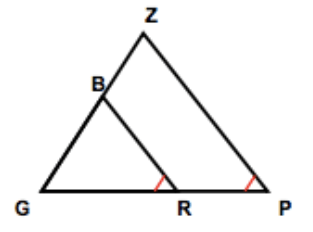
How do these triangles appear to be similar?
(Hint: Look for non-labeled parts!)
a)
AA
b)
SAS
c)
SSS
d)
Not Similar
43.
How do these triangles appear to be similar?
(Hint: Look for non-labeled parts!)
a)
AA
b)
SAS
c)
SSS
d)
Not Similar
44.
What is the similarity statement for the triangle pair?
a)
ΔXYZ~ΔNEW
b)
ΔXZY~ΔNWE
c)
ΔZYX~ΔENW
d)
ΔYZX~ΔNWE
45.
Find the perimeter
a)
25cm
b)
35cm
c)
50m
d)
100cm
46.
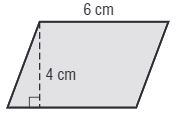
Find the area.
a)
110 square meters
b)
210 square meters
c)
126 square meters
d)
150 square meters
47.
Find the area of the figure.
a)
10 cm2
b)
24 cm2
c)
12 cm2
d)
20 cm2
48.
What is the area of this triangle?
a)
12 sq. cm.
b)
6 sq. cm.
c)
12 cm
d)
6 cm
49.
What is the perimeter if all sides are 4 inches?
a)
4 in.
b)
16 in. 
c)
8 in. 
50.
How many lines of symmetry does this shape have?
a)
0
b)
1
c)
2
d)
4
51.
How many lines of symmetry does this shape have?
a)
0
b)
1
c)
2
d)
4
52.
How many lines of symmetry does this shape have?
a)
1
b)
2
c)
4
d)
6
53.
Identify the smallest angle of rotation that maps the image to itself.
a)
72°
b)
180°
c)
144°
d)
45°
54.

Which of the following shapes does not have a line of symmetry?

a)
b)
c)
d)
55.

2. How many lines of symmetry does the picture have?

a)

1

b)

2

c)

4

d)

0