
 Worksheets
Food Chains/Food Webs Quiz
Total questions: 21
Worksheet time: 11mins
Name
Class
Date
1.
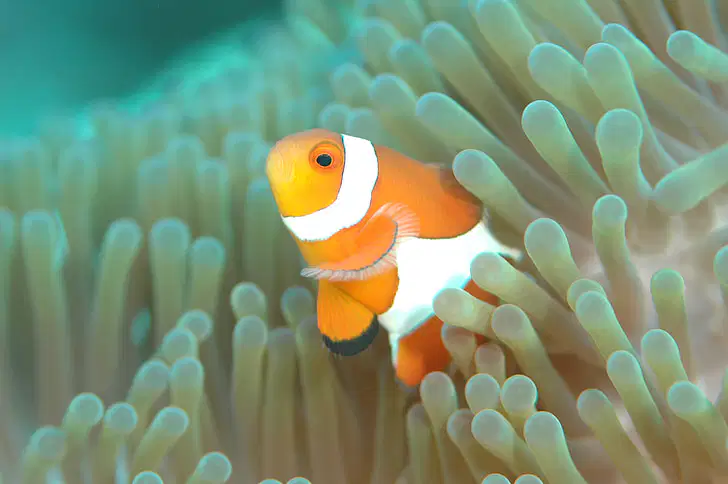
Clownfish usually live within sea anemones, whose tentacles sting and paralyze most fish that touch them. The clownfish, which are not harmed by the tentacles, gain protection from predators and feed on the waste matter left from the anemone’s meals. The clownfish protect the sea anemones from some of their predators and parasites. The relationship between clownfish and sea anemones is ____.
a)
competition
b)
b. carrying capacity
c)
c. parasitism
d)
d. mutualism
e)
e. commensalism
2.

A relationship between the same species in which both compete for limited resources
a)
Symbiosis
b)
interspecific competition
c)
species richness
d)
intraspecific competition
3.
This interaction occurs when lions, cheetahs, and leopards all compete for the same food source.
a)
predation
b)
interspecific competition
c)
mutualism
d)
intraspecific competition
4.
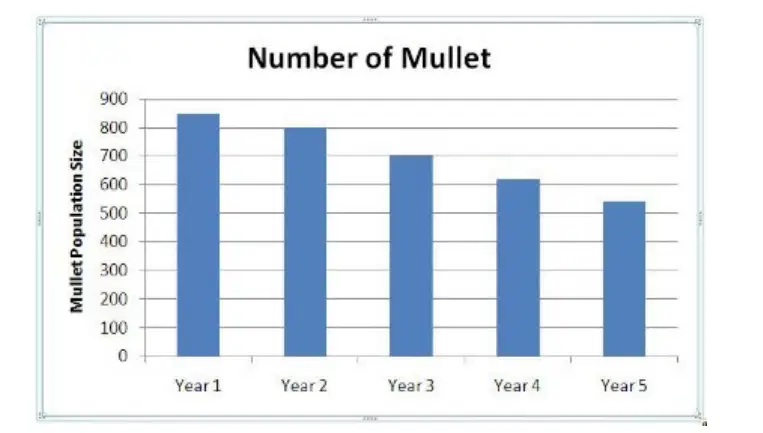
Mullet are local estuarine fish that move in schools and feed on plankton and plant matter. Natural predators of the mullet include spotted sea trout, sharks, pelicans and dolphins. The graph below shows how the number of mullet in an area has changed over time. Based on the data, one student concludes that a new predator was introduced into the area during this time period. Which of the following is a likely alternate explanation for the change in the mullet population?
a)
A. mullet prey increased in the area
b)
B. mullet parasites decreased in the area
c)
C. the temperature of the area increased
d)
D. the amount of aquatic plants in the area decreased
5.
In _______________, one species benefits and the other is neither helped nor harmed.
a)
Commensalism
b)
Parasitism
c)
Mutualism
d)
Predation
6.
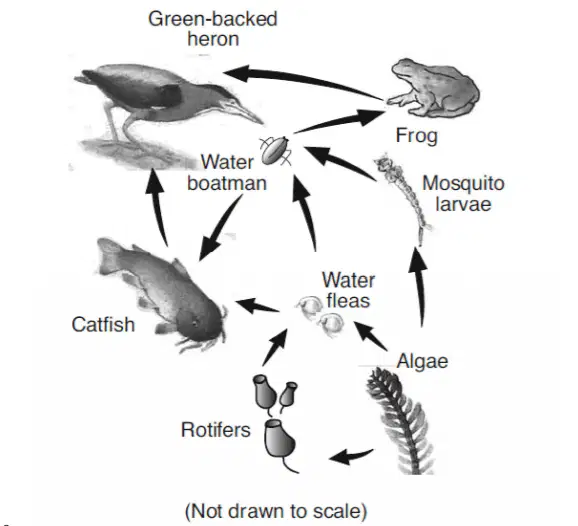
Trace a food chain found on this food web.
a)
algae--> Water fleas--> frog--> mosquito larvae
b)
rotifers--> water fleas--> water boatman--> catfish
c)
heron--frog--> water boatman-->water fleas--> algae
d)
rotifers--> water fleas-->catfish--frog
7.
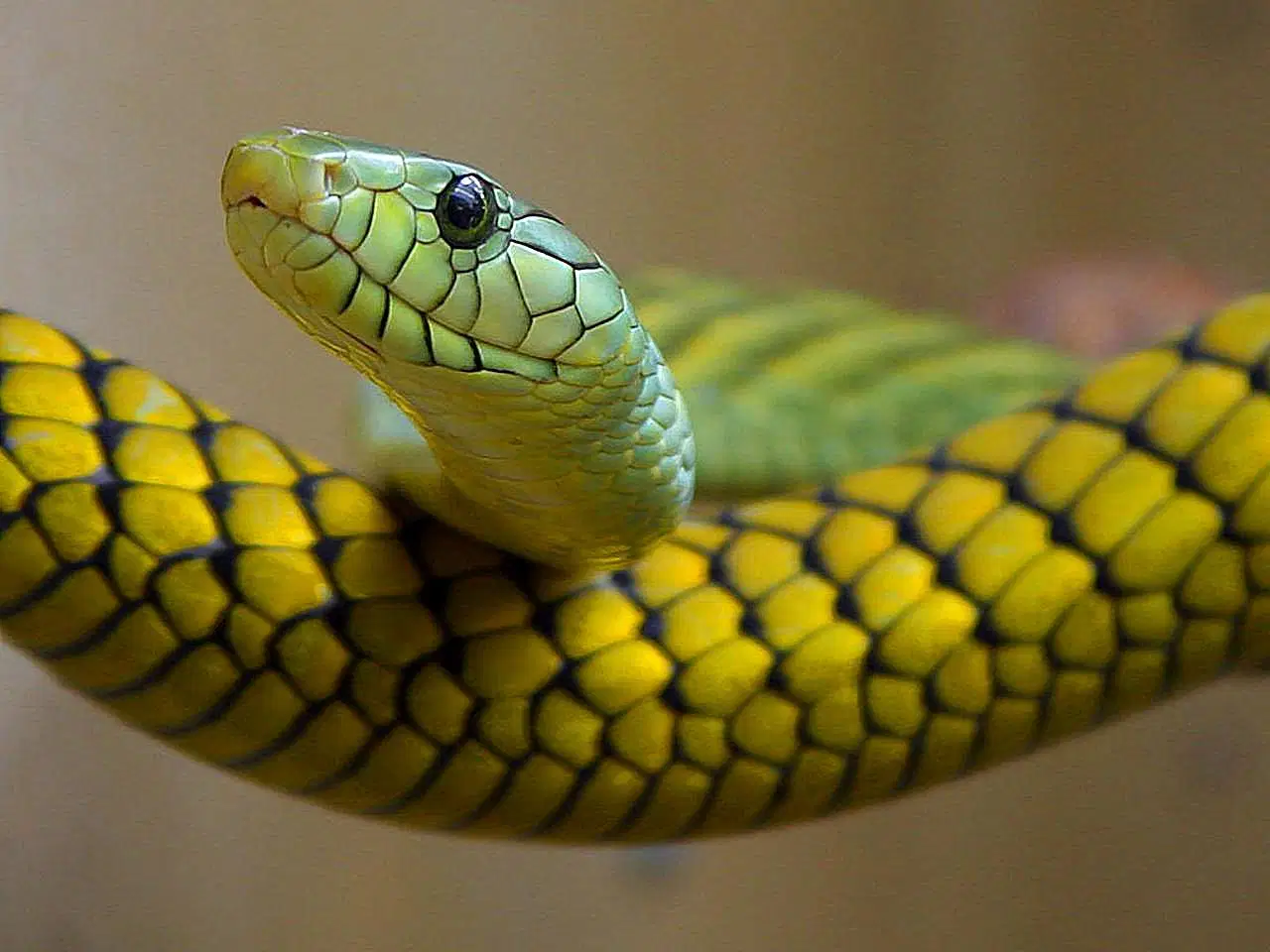
Grass--> locust--> snakes--> eagles In this food chain, what would happen if half the snakes died due to a viral disease?
a)
grass numbers would decrease, locust numbers would increase & eagle numbers would decrease
b)
grass numbers would decrease, locust numbers would increase & eagle numbers would increase
c)
grass numbers would increase, locust numbers would decrease & eagle numbers would decrease
d)
grass numbers would increase, locust numbers would increase & eagle numbers would decrease
8.

If grass stores 1,000 energy units received from the sun and the trophic levels are
grass-->cow-->human, how many units of energy does the human receive of the original 1,000 units?
a)
10
b)
100
c)
200
d)
900
9.
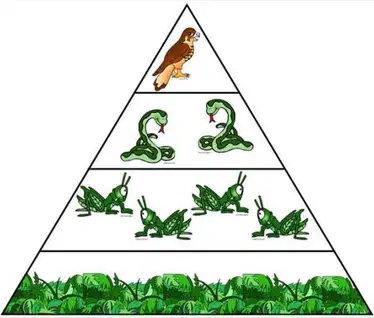
On this energy pyramid, if the grass produced 1,000 kcal of energy, what amount of energy would the bird get?
a)
100 kcal
b)
10 kcal
c)
1 kcal
d)
.1 kcal
10.
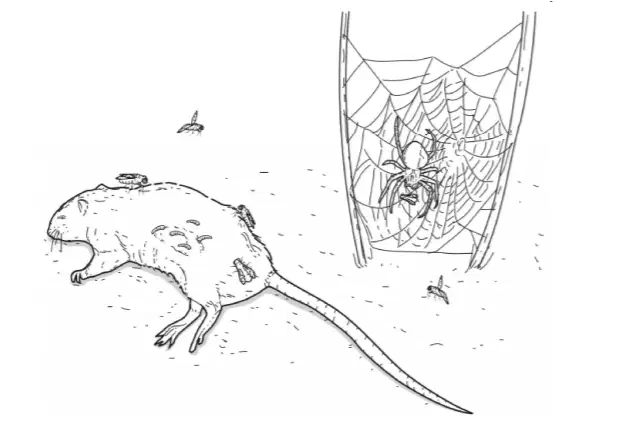
The diagram shows organisms feeding on a dead rat and one of the organisms which, in turn, feeds on them. What is needed to complete the food chain?
a)
consumer
b)
carnivore
c)
producer
d)
predator
11.
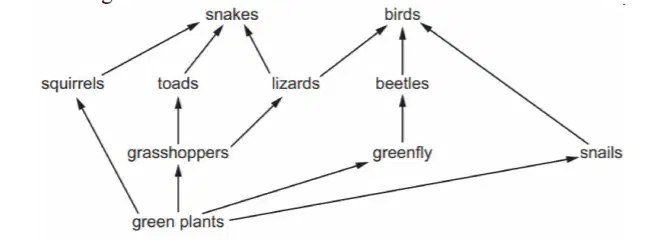
The diagram shows a food web. Which organisms will increase in number if the number of snakes increases?
a)
squirrels
b)
grasshoppers
c)
birds
d)
lizards
12.
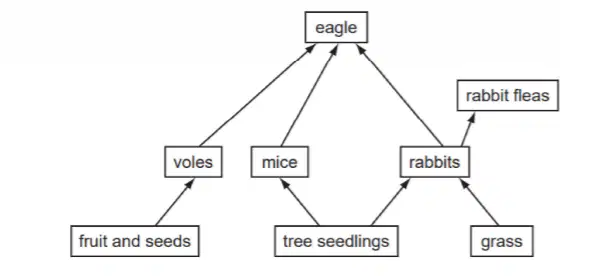
The diagram shows a food web. Which of the following is a food chain in this web?
a)
grass -> rabbits -> eagle
b)
grass -> voles -> eagle
c)
seeds -> voles -> mice
d)
rabbit fleas -> rabbits -> grass
13.
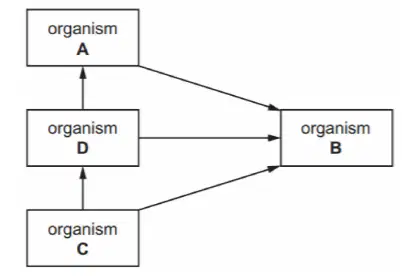
The diagram shows a food web including a producer, consumers and a decomposer. Which organism is the decomposer?
a)
A
b)
B
c)
C
d)
D
14.
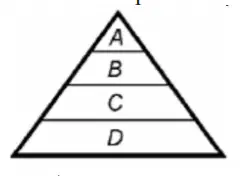
Where would the producers be placed on this energy pyramid?
a)
A
b)
B
c)
C
d)
D
15.
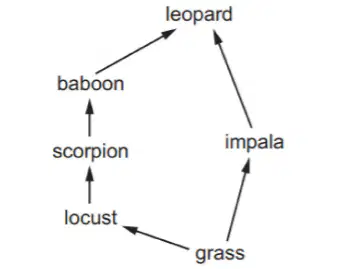
Which organism would be considered a primary consumer on this food chain?
a)
grass
b)
leopard
c)
scorpion
d)
locust
16.

If several species of carnivores are removed from an ecosystem, the most likely effect on the ecosystem will be:
a)
An increase in the kinds of autotrophs
b)
A decrease in the number of abiotic factors
c)
A decrease in stability among populations
d)
An increase in the rate of succession
17.
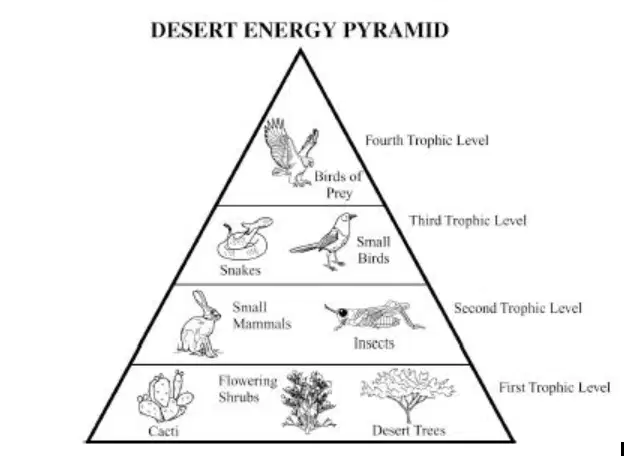
A team of ecologists observed feeding patterns of several populations in the desert. The energy pyramid shown depicts the feeding patterns the ecologist observed. Which of the following best explains the difference in the amount of available energy in the trophic levels of the desert ecosystem?
a)
There is less energy available in the producers because their tissues are less dense than those at the higher trophic levels.
b)
There is less available energy in the fourth trophic level because of the loss of energy through metabolism in each of the lower trophic levels.
c)
There is more energy available in the second trophic level because less energy is needed for hunting compared to the higher trophic levels
d)
There is more available energy in the birds of prey because they have greater muscle mass for storing energy than organisms in lower trophic levels
18.
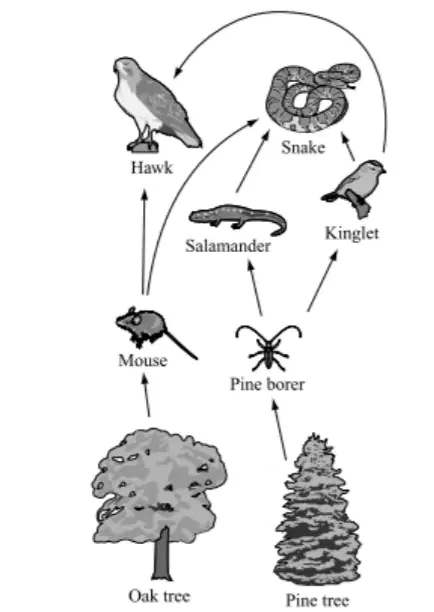
Which of the following organisms compete for the mouse as a food source?
a)
hawk and snake
b)
snake and kinglet
c)
oak tree and pine tree
d)
pine borer and salamander
19.

The diagram shows an biomass pyramid. Which of the following is correct
a)
S = decomposers
b)
P = producers
c)
R = apex predators
d)
S = producers
20.
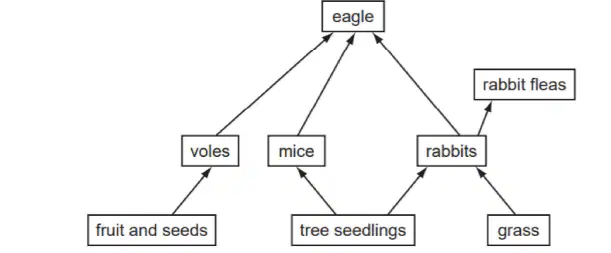
In this food web what would be an example of a primary consumer?
a)
grass
b)
rabbit fleas
c)
voles
d)
eagle
21.
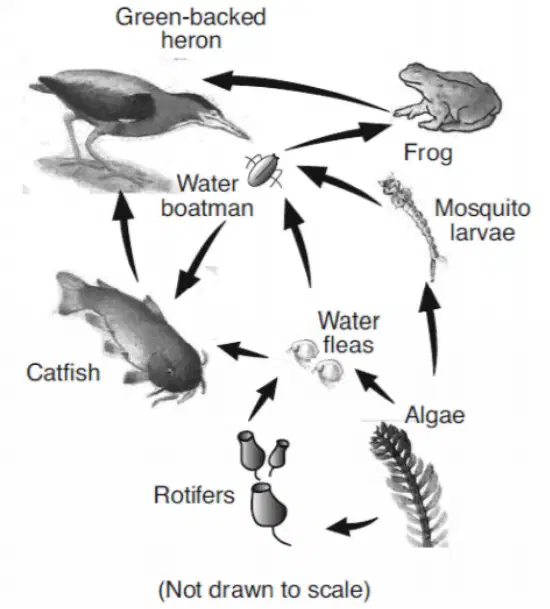
What would be an apex consumer in this food web?
a)
catfish
b)
water fleas
c)
frog
d)
green backed heron
100 %

