
 Worksheets
Evolution Exam
Total questions: 64
Worksheet time: 2hrs 19mins
Match the following groups to the picture that describes they type of evidence that leads to common ancestry.
A trace of an ancient organism that has been preserved in rock.
Fossil
Study of the distribution of organisms around the world.
Biogeography
Structures in different species that have the same bone structure / different function.
Homologous Structures
A structure that is present that no longer serves its original purpose.
Vestigial Structures
Study of embryos. The early development the organisms look similar.
Embryology
Select the image that represents embryology.

The evolution pattern favored by Eldridge and Gould. They believed in long periods of no changed followed by rapid burst of evolutionary change
punctuated equilibrium
divergent evolution
convergent evolution
gradualism
The evolution pattern favored by Darwin. He believed evolution occurred in small changes over a long period of time. This is called ____
punctuated equilibrium
divergent evolution
convergent evolution
gradualism
Select the image that represents gradualism.
Select the image that represents homologous structures.
Select the image that represents punctuated equilibrium.
Select all the images that provide evidence for common ancestry.

According to this image, which organism is LEAST closely related to the baboon? (HINT: differences are circled in red)
Chimp
Lemur
Gorilla
Human


Evolution is...
errors in an individual's genetic code (DNA) that leads to changes in the genotype and/or phenotype of that organism
shifting of traits to better align with the environment
the change in characteristics/traits of a species over a long period of time (many generations)
anatomy that supports common ancestry (homologous, analogous, and vestigial)
An adaptation is a (a) , behavior, or structure that has adjusted to meet the demands of the (b) around the organism.
Match the anatomy to its category
Wings on a bat and wings on a bird
Arm of a monkey and arm of a human
Fin on a shark and flipper on a penguin
Wings on a bird and wings on a butterfly
Appendix in a human
Pelvic bone in a whale
Tailbone in humans
Match the following concepts to the BEST category
Antibiotic Resistance
Adaptation
Short, curly pug tails
Artificial Selection/ Selective Breeding
Apes to humans
Natural Selection
Red hair color
Mutation
A population is divided, resulting in both changing in different ways
Speciation
Which is the human?

Why do scientists study embryos?
Scientists theorize that similar anatomy does not mean similar DNA, therefore they are attempting to reject evolution.
Scientists study embryos to compare them to their adult forms and discuss the differences.
Scientists
believe that the similarities may provide evidence that the two species share a
common ancestor.
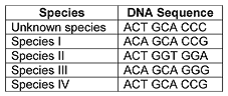
How are the base pairs (A, G, C, T) evidence for evolution?
If two organisms have a lower amount of differences, then they are said to be more closely related
If two organisms have a higher amount of differences, then they are said to be more closely related
If two organisms have a lower amount of similarities, then they are said to be more closely related
If two organisms have completely different base pairs, then they are said to be more closely related
Which moth will do better in an environment with soot covered trees?
Which moth is better adapted to an environment with light trees?
Match the following Mechanisms of Evolution
Mutations
Introduces new genes into the gene pool through random changes in genetic material
Non-Random Mating
Mates select their mate based on certain criteria.
Natural Selection
Organisms most fit for environment survive and reproduce better than others in a population.
Gene Flow
Migration of organisms into a new population or out of a population, changing the gene pool of each
Genetic Drift
Results from a drastic decrease in the population size, leaving only those genes present remaining.
Match the following Mechanisms of Evolution
Natural Selection
In the rainforest, frogs with bright colors are less likely to be eaten. # of bright frogs increases
Gene Flow
Every winter, birds fly south to warm climates, and intermate with other populations of birds
Genetic Drift
A group of birds are blown away from the mainland. The birds establish new population on island.
Mutations
Giraffes with longer necks can reach more leaves. This was a random change in DNA that was passed on
Non-Random Mating
In peacocks, males have pretty feathers to attract mates. Prettier males are more likely to mate.

Which organism is least related to the other 3?
Organism 1
Organism 2
Organism 3
Organism 4

What is the best example of fitness?
A small bird has a very short lifetime, however, she had 10 babies during that time.
A young male lion outcompetes several other young males for food resources.
A cockroach survives a nuclear bomb.
An elephant lives a long, life, having 2 children that survived to adulthood.
Match the following

DNA

Chromosome

Gene

What is the best definition of an allele?
An allele is a section of DNA that codes for protein.
An allele is a variant of a gene for a trait.
Alleles control different traits for each gene.
An allele is a similar form of a different gene.
Which rose is dominant for color?
Match the following

Homozygous dominant

Homozygous recessive

Heterozygous
R = Red
r = White
Two Rr flowers were crossed. Their offspring can be outlined in the Punnett Square.
Click on the square(s) where you will find red offspring.
R = Red
r = White
Two Rr flowers were crossed. Their offspring can be outlined in the Punnett Square.
Click on the square(s) where you will find white offspring.

In this example, R = Red and r = White. Two flowers, one is RR and the other is rr, are crossed. All their offspring are Rr. However, instead of being white, they are pink! This is an example of
Partial Recessiveness
Codominance
Complete dominance
Incomplete dominance
Which of the following is the correct definition of natural selection?
The idea that organisms less equipped for their environment tend to survive longer.
The idea that organisms more well equipped for their environment tend to survive longer.
The idea that organisms more well equipped for their environment tend to not survive.
None.
Click on the correct beetle or beetles that would be able to survive on dark tree trunks.
What does "Survival of the Fittest" mean?
Those who are best adapted to their environment thrive and tend to be favored by evolution due to "natural selection".
An organism is the strongest within its population.
Populations attempt to evolve as fast possible in order to survive.
Match the following:
Change in DNA
Mutation
Father of Evolution
Charles Darwin
Survivors with favorable traits
Natural Selection
Ability to survive and reproduce
Fitness
All the alleles within a population
Gene Pool
Scorpions today are much smaller than their extinct ancestors.
Which of the following conclusions is supported by this information?
Scorpions living today have increased their numbers since they first appeared.
Scorpions in the fossil record are smaller than their descendants are.
Scorpions have changed as a result of natural selection.
Scorpions do not appear in their original state in the fossil record.
Match the following:
What line of evidence for evolution is concerned with the remains of organisms from long ago?
Fossils
What line of evidence for evolution is concerned with the body structures of organisms?
Anatomy
What line of evidence for evolution is concerned with similarities in DNA, RNA and proteins between organisms?
Biochemistry
What line of evidence for evolution is concerned with traits that help an organism survive and reproduce in their specific environment?
Adaptations
What line of evidence for evolution is concerned with the developmental similarities of young embryos?
Embryology
Match the following
The bones of the human arm are similar in structure to the bones of a bat wing and a whale flipper. They are thought to have a common origin.
Homologous Structures
The wings of a bird and the wings of a butterfly have similar functions but are very different in structure. They are NOT thought to have a common origin.
Analogous structures
The human appendix and thighbones in snakes seem to have little to no use.
Vestigial Structures
Match the following
A structural adaptation that allows an animal to blend in with its environment. (Like a walking stick insect)
Camouflage
A structural adaptation in which one organism looks like another organism. Sometimes the other organism is poisonous or bad tasting. Ex. Viceroy butterflies that look like monarchs.
Mimicry
If a layer of rock contains many fossils but the layer above contains none, this may indicate that ________ has taken place.
Mass Extinction
Place the hotspot in the layer that has the youngest fossils.

Based on the biochemical evidence given, which species is most closely related to dogs?
The species that has sequence 1
The species that has sequence 2
The species that has sequence 3
The species that has sequence 4
The species that has sequence 5
Match the following pictures with the words they represent

Analogous Structure

Homologous Structure

vestigial structure
Check all that apply: Which of the following are conditions necessary for natural selection to occur?
overproduction of offspring
population size is very large and no genetic drift
fitness and ability to adapt varies among individuals
variation in heritable traits among members of the population
Check all that apply: How can a population decrease in size?
immigration
emmigration
increased death rate
decreased birth rate
increased birth rate
Check all that apply: Which of the following are examples of density independent limiting factors?
competition
predation
volcanic eruptions
tsunami
disease
The table shows the survival rate of two types of beetles in the same environment over a period of three years. Click on the beetle column with a greater fitness.
Which best describes punctuated equilibrium?
Speciation occurs due to natural selection
Speciation occurs due to isolation
Speciation occurs slowly in geologic time, followed by long periods with very fast evolutionary change.
Speciation occurs suddenly and rapidly in geologic time, followed by long periods with little evolutionary change.

Based on the image above, what type of Isolation is shown?
Geographic Isolation
Behavioral Isolation
Temporal Isolation
Fireflies make a pattern of flashes that attract mates of their own species. What type of isolation is this?
Geographic Isolation
Behavioral Isolation
Temporal Isolation
Two species of whales are divided by a physical barrier that connects two continents. What type of isolation is this?
Geographic Isolation
Behavioral Isolation
Temporal Isolation
One species of lizard breeds in the spring, one breeds in the summer. What type of isolation is this?
Geographic Isolation
Behavioral Isolation
Temporal Isolation

Is this image and description Gradualism or Punctuated Equilibrium?
Gradualism
Punctuated Equilibrium

Which organism is most closely related to the cat?
Fish
Frog
Salamander
Goose
Human

What information does the evolutionary tree give us about organisms?
Shared environments
Shared genetic traits
Shared evolutionary timelines

Bats are common in Texas, especially in rocky regions. Bats with longer hang claws have demonstrated higher fitness because of their ability to cling to rock while resting. This adaptation is becoming more frequent in the population. What mechanism of evolution is this?
Natural Selection
Non-random mating
Gene Flow
Genetic Drift
Reindeer from a rancher in Alaska escape from their pen during an enormous snow storm. After their escape, they mate with wild caribou that are migrating across the land. The offspring of these have traits for short legs and have tame behavior.
Gene Flow
Genetic Drift
Non-Random Mating
Natural Selection
During a hurricane, a population of beetles almost gets completely wiped out. The only beetles that survived were lucky that they were in their nest at the time of the hurricane and had enough food to survive.
Natural selection
Genetic Drift
Gene Flow
Non-Random Mating
What is the difference between gradualism and punctuated equilibrium?
The main difference is the pace of evolution: gradualism is slow and steady, while punctuated equilibrium involves rapid bursts of change followed by periods of stasis.

Homologous structures are bones or organs found in different animals which very closely resemble structures in different organisms. What can you conclude about the past of these organisms?
They all have evolved through natural selection but do not use these structures anymore.
They all share a common ancestor but have evolved through natural selection
They all share a common ancestor but did not evolve from natural selection
During a hurricane, a population of beetles almost gets completely wiped out. The only beetles that survived were lucky that they were in their nest at the time of the hurricane and had enough food to survive.
Natural selection
Genetic Drift
Gene Flow
Non-Random Mating

