
 Worksheets
Unit 2 (Part #2) - Cognition (Memory, Thinking, Problem Solving)
Total questions: 109
Worksheet time: 30mins
Thinking about thinking
amnesia
retrieval failure
testing effect
metacognition
occurs when random events seem less likely due to their frequency in the past
Gambler’s fallacy
sunk cost fallacy
change blindness.
door-in-the-face.
overestimating the prevalence of events by how easily a person can recall instances of the event.
Availability Heuristic
Representative Heuristic
look for evidence to confirm our pre-existing expectation and seek out evidence to reassure us in our choices or decisions
confirmation bias
self-serving bias
framing
priming
frameworks for thinking and represent our basic knowledge of a situation or problem.
schemas
mental set
framing
priming
trying to solve a problem using a way that worked in the past;
using prior experiences that were successful.
confirmation bias
mental set
framing
priming
thinking outside the box, is associated with creativity.
(generating multiple potential solutions)
convergent thinking
divergent thinking
functional fixedness
mental set
sorting through multiple pieces of information to come to a single, best conclusion.
convergent thinking
divergent thinking
functional fixedness
mental set
brain part responsible for planning & reasoning (executive functioning)
prefrontal cortex
hippocampus
cerebellum
sensory cortex
quick decision using first info that comes to mind (the most "available" info)
Representative Heuristic
Availability Heuristic
Gambler's Fallacy
Sunk-Cost Fallacy
overestimating dispositional influences (personal factors) on people’s behavior;
when the guy cuts me off in traffic, I assume he's just a jerk (dispositional/ personality) even though I don't know him.
Fundamental Attribution Error
Availability Heuristic
Gambler's Fallacy
Sunk-Cost Fallacy
overlook actual probabilities or statistics and focus instead on individual characteristics or anecdotes;
(Farmer or engineer? Statistically there are more farmers)
Fundamental Attribution Error
Base-Rate Fallacy Error (related to Representative Heuristic)
Gambler's Fallacy
Sunk-Cost Fallacy
modifying new info to fit an existing schema, schema does not change;
(taking in new info but NOT changing existing schema)
Accomodation
Habituation
Assimilation
Representative Heuristic
adjusting or changing a schema to fit new information.
(takin in new info and changing existing schema to fit the new info)
Accomodation
Habituation
Assimilation
Representative Heuristic
remembering the first time you jumped off a diving board
Semantic memory
Flashbulb memory
Procedural memory
Episodic memory
selfless behavior
altruism (prosocial)
antisocial
Serial position effect demonstrates that people are more likely to remember:
MIDDLE of a list
FIRST and LAST items in a list.
LAST items only
FIRST items only
type of sample that is made up of Ps who were readily available at the time of the study; already nearby
Random Sampling
Convenience Sampling (Opportunity Sampling)
Volunteer Sampling
According to multi-store model of memory, the 1st stage is...
Retrieval
Storage
Encoding
Rehearsal
I want to dump my boyfriend b/c he wont propose,
but decided not to b/c we have spent 2 years together already and my time will have been wasted.
Hindsight Bias
Self-Serving Bias
Sunk-Cost Fallacy
Misinformation Effect
In an experiment, the possibility that the difference in results b/w the two groups occurred by chance.
(The difference was due to chance.)
Positive correlation
Negative correlation
Statistically significant
Not statistically significant.
the hypothetical "most typical" instance of a category
Encoding failure
Prototype
Metacognition
Schema
reliance on the senses (smell, touch, sight, etc.) to evaluate new information.
Bottom-up processing
Top-down processing
Representative Heuristic
Availability Heuristic
Scatterplots
Experiments
Correlations
Natural "Quasi" Experiments
Cause & Effect
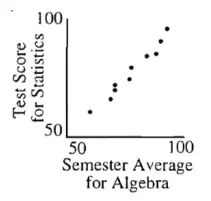
No correlation
Strong Negative
Weak Positive
Strong Positive
The difference was NOT DUE TO CHANCE!
Positive Correlation
Strong Correlation
Statistically Significant
Not statistically signifcant
Serial Position Effect says words most likely to be FORGOTTEN are ...
FIRST items in list
LAST items in list
MIDDLE of the list
FIRST and LAST items
TRUE or FALSE?
Psych research with ANIMAL SUBJECTS should conform to all APA ethical guidelines for animal research..
TRUE
FALSE
Listing 50 uses for a brick, most new & unusual.
("Thinking Outside the Box")
hypothetical thinking
divergent thinking
convergent thinking
algorithm
Recalling your 10th birthday party
Episodic memory
Semantic memory
Echoic memory
Eidetic memory
Amnesia... damage to the ...
Hippocampus
Hypothalamus
Medulla
Cerebellum
Wisdom; long remembered facts & information. Gets better as you age!
Fluid Intelligence
Crystallized Intelligence
Quick thinking, problem-solving, new skills.
Declines in old age.
Fluid Intelligence
Crystallized Intelligence
tendency of people who are being studied to behave differently than they typically would.
The Hawthorne effect
Blindsight
Functional fixedness
Fundamental attribution error
Failing to realize that sewing thread can be used as fishing line and a bent needle as a hook.
Cognitive accommodation
Proactive Interference
Confirmation Bias
Functional Fixedness
Remembering more numbers from the BEGINNING of a list than the end.
Mnemonic
Primacy Effect
Recency Effect
Clustering
Remembering more numbers from the END of a list than the beginning.
Mnemonic
Primacy Effect
Recency Effect
Clustering
tendency to expect the world to behave in a nonrandom way
availability heuristic
representativeness heuristic
confirmation bias
predictable-world bias
Failure to recognize that an object typically not used for a particular purpose can in fact serve that purpose
Schema
Functional Fixedness
Availability
Insight
Sudden realization to the solution to a problem.
Schema
Algorithm
Heuristic
Insight
Counting the letters in each word vs. Focusing on the meaning of each word
Priming
Levels of Processing
Proactive Interference
Procedural Memory
No new memories after an accident
Anterograde Amnesia
Retrograde Amnesia
Psychogenic Amnesia
Proactive Interference
Memory for new info (but cant remember the old).
(NEW interferes with OLD)
Anterograde Amnesia
Retrograde Amnesia
Proactive Interference
Retroactive Interference
Memory for old info (but cant remember the new).
(OLD interferes with NEW)
Anterograde Amnesia
Retrograde Amnesia
Proactive Interference
Retroactive Interference
Inability to produce speech.
Anterograde Amnesia
Broca's Aphasia
Wernicke's Aphasia
Retroactive Interference
Inability to understand speech.
Anterograde Amnesia
Broca's Aphasia
Wernicke's Aphasia
Retroactive Interference
Memory improves b/c neural pathways are strengthened.
Long-Term Potentiation
Mnemonic Devices
Transduction
Semantic Encoding
A study to determine massed practice or distributed practice produces better grades on a word recall test.
The DEPENDENT VARIABLE is...
Massed Practice
Distributed Practice
Students
Word Recall
Mike's dad is a scientist and so is his bestie's dad. Mike thinks most dads are scientists.
His reasoning is based on...
Availability heuristic
Conjunction fallacy
Representative heuristic
Mental set
mental shortcuts based on what's in the forefront one's mind;
recalling the first or most vivid example that comes to mind;
Availability heuristic
Priming
Representative heuristic
Divergent thinking
Memory for automatic activities
(bike riding & handwriting)
Declarative
Semantic
Sensory
Procedural
Mental shortcuts or rules of thumb that help solve problems and reduce mental effort.
heuristics
algroithms
syllogisms
concepts
To determine whether a cause-effect relationship exists b/w 2 variables
Descriptive statistics
Naturalistic observation
Experimental approach
Correlational study
Some aspect of a participant's response that is measured in an experiment
Independent variable
Dependent variable
Participant variables
Random assignment
Processing every possible combo of the letters "DBRI" to get to the word "BIRD".
Algorithm
Availability Heuristic
Gambler's Fallacy
Representative Heuristic
Testing CREATIVITY by asking Ps to come up with as many alternative uses for a object as possible
Schema
Social Loafing
Divergent Thinking
General Intelligence (g)
People generating novel responses to situations.
Convergent Thinking
Divergent Thinking
Inability to produce alternative uses for a paperclip.
Gambler's Fallacy
Functional Fixedness
Sunk-Cost Fallacy
Framing
When ____ of incoming info is prevented, there will be no transfer of the info to Long-Term Memory.
Retrieval
Attention
Rehearsal
Automatic Processing
Knowing the effectiveness of different strategies for learning AP Psych vocab.
Prosopagnosia
Algorithm
Divergent Thinking
Metacognition
cognitive skills that work together, allowing us to generate, organize, plan, and implement/carry out goal-directed behaviors
Executive Functions
Schemas
Assimilation
Insight
Some people have extraordinary face recognition and can recognize a face after seeing it once.
Supertasters
Super-recognizers
Eidetic memory
Iconic memory
a temporal lobe neural structure located in the limbic system, like a "save" button for explicit memories
Prefrontal Cortex
Cerebellum
Amygdala
Hippocampus

is also known as working memory
sensory memory
primacy
short-term memory
long-term memory
working memory processing
Prefrontal Cortex
(front of Frontal Lobes)
Somatosensory Cortex
(front of Parietal Lobe)
Auditory Cortex
(Temporal Lobes)
Visual Cortex
(Occipital Lobes)
Recalling a password and holding it in working memory
Left Frontal Lobe
Right Frontal Lobe
Recalling a visual party scene and holding it in working memory
Left Frontal Lobe
Right Frontal Lobe
Damage to _____: trouble remembering verbal info;
(but no problem recalling visual designs & locations)
Left Hippocampus
Right Hippocampus
Damage to _____: trouble recalling visual designs & locations;
(but no problem remembering verbal info)
Left Hippocampus
Right Hippocampus
Frontal lobes & hippocampus
Explicit Memory
Implicit Memory
Emotion-Related Memory
Prospective Memory
Cerebellum & Basal Ganglia
Explicit Memory
Implicit Memory
Emotion-Related Memory
Prospective Memory
Amygdala
Explicit Memory
Implicit Memory
Emotion-Related Memory
Prospective Memory
Brain part responsible for executive functions (planning, reasoning, decision making).
Teens are still developing neural connections here, so more likely to engage in risky behavior!
Amygdala
Brainstem
Hippocampus
Prefrontal Cortex
Recall is best when encoding (studying!) and retrieval (taking the test!) occur in the same room.
Spacing Effect
State-Dependent Memory
Context-Dependent Memory
Mood-Congruent Memory
Use of deception (telling Ps you're studying vitamins & vision, but really you are studying their memory) is okay, as long as you explain the true purpose of the study after the study is over with.
Informed Consent
Debriefing
Deception
Right to Withdraw
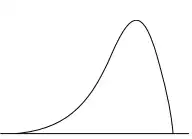
Normal Distribution
Positive Skew
Negative Skew
Negative Correlation
Divergent Thinking
Creativity
Gifted
Intellectual Disablity
Convergent Thinking
TIME is a significant factor in forgetting.
Forgetting occurs rapidly after initial learning & levels off over time.
Encoding Failure
Retrieval Failure
Forgetting Curve
Serial Position Curve
Remember to perform task in the future
Prospective Memory
Flashbulb Memory
Procedural Memory
Semantic Memory
Thorough but inefficient/time-consuming
Algorithm
Insight
Representative Heuristic
Availability Heuristic
Using the same trick to solve a problem b/c it worked before, even though it does not work!
Insight
Mental Set
Algorithm
Reversibility
Implicit ability to perform an action
Procedural Memory
Semantic Memory
Sensory Memory
Episodic Memory
Memory for factual information
Procedural Memory
Semantic Memory
Sensory Memory
Episodic Memory
Incorporating new info into old schemas, even when schemas are inaccurate
Assimilation
Accommodation
Mental Set
Executive Function
Witness's say they saw a red shirt produced false memory of others saying they also saw red shirt.
(misleading information!!)
Misinformation Effect
Leading Qs
Source Amnesia
Confirmation Bias
repeat a problem-solving strategy using prior experiences that were successful
(even if it doesn't work now)
mental set
schema
priming
confirmation bias
look for evidence to prove our pre-existing expectations
and seek out evidence to reassure us in our choices
mental set
schema
priming
confirmation bias
frameworks for thinking;
represent our basic knowledge of a situation/problem
mental set
schema
priming
confirmation bias
exposure to retrieval cues activates our memory;
activating memory systems using cues.
mental set
schema
priming
confirmation bias
when conditions at recall are as close as possible to conditions at encoding;
"same classroom at the same time"
state-dependent memory
context effects
teaching effect
mood-congruent memory
you helped your friend understand a concept, now you understand it better than you originally did
state-dependent memory
context effects
teaching effect
mood-congruent memory
being asked to retrieve a list of words when given a cue to aid in recall
(EX: first letter of each word)
mnemonic device
cued recall
method of loci
recognition recall
To help you remember what you need from Publix, you imagine walking through your kitchen and visualizing what is missing
mnemonic device
cued recall
imagery
recognition recall
Getting an A on your M/C vocab quiz b/c you recognized all the correct answers when you saw them.
mnemonic device
cued recall
imagery
recognition recall
you're more likely to remember information when you SPACE out your studying!
mnemonic device
serial position effect
distributed practice
massed practice
cramming and putting all your studying into 1 session
mnemonic device
serial position effect
distributed practice
massed practice
thinking about the meaning of the word/concept to remember it better
chunking
self-reference
semantic encoding
imagery
relating info into personal experiences
chunking
self-reference
peg-word
imagery
Remembering a list by walking through your house and making associations b/w things on the list and areas in your house
distributed practice
peg-word
maintenance rehearsal
method of loci
repeating things w/o processing them
(mindless repetition)
distributed practice
peg-word
maintenance rehearsal
method of loci
3-4 second sensory memory for sounds
Echoic Memory
Iconic Memory
Phonological Loop
Visuospatial Sketchpad
making a decision based on how well the situation matches our prototype (or schema or stereotype)
Availability Heuristic
Representative Heuristic
Algorithm
Trial & Error
Repeating your class notes to yourself several times
deep processing
elaborative rehearsal
long-term potentiation
surface level processing
formula or "sure-fire way";
systematic; step-by-step-process
Algorithm
Representative Heuristic
Availability Heuristic
Mental Set
pulling door open instead of pushing it b/c that's what usually works
Algorithm
Representative Heuristic
Availability Heuristic
Mental Set
decision-making based on what's in the forefront of one’s mind
Algorithm
Representative Heuristic
Availability Heuristic
Mental Set
creative problem solving by thinking in unconventional ways & generating many possible ideas
Divergent Thought
Representative Heuristic
Availability Heuristic
Convergent Thought
decision-making based on how closely it resembles an existing schema
Algorithm
Representative Heuristic
Availability Heuristic
Mental Set
form of logical reasoning, draw conclusion from 2 premises that are assumed to be true.
It is a type of deductive reasoning.
1. All humans are mortal.
2: Socrates is a human.
Conclusion: Therefore, Socrates is mortal.
Syllogistic Reasoning (type of Deductive Reasoning)
Inductive Reasoning
Functional Fixedness
Mental Set

