
 Worksheets
Color Theory
Total questions: 29
Worksheet time: 35mins
Violet and red are complementary colors.
True
False
Who invented the color wheel?
Envato Elements
Sir Isaac Newton
Laura Keung
Graphic designers
What are the secondary colors on the color wheel?
Black, white, and gray
Green, purple, and orange
Red, yellow, and blue
Cyan, magenta, and yellow
What is the difference between shade, tint, and tone?
Shade is darker, tint is lighter, and tone is neutral
Shade is lighter, tint is darker, and tone is vibrant
Shade is neutral, tint is darker, and tone is lighter
Shade is darker, tint is neutral, and tone is lighter
Michael added black to the paint for his bookshelf to create a darker blue. Michael changed the color’s:
hue
intensity
temperature
value
Brown, cream, tan, and white used together create which color harmony?
analogous
monochromatic
neutral
split-complementary
Chris and Ada paint their nursery light pink. They add yellow-green and blue-green bedding and accessories. Which color harmony are they using?
analogous
monochromatic
neutral
split-complementary
What is the purpose of color combinations?
To determine what colors look good together
To create a particular look or feel
To find colors that create a pleasing effect
All of the above
Julie's bike is a light pink color. How is this related to the color red?
hue
tint
tone
shade

Which colors are cool colors?
Red, Yellow, Blue
Blue, Green, Violet (Purple)
Orange, Green, Violet
Red, Orange, Yellow
When you add black to a colour, this creates a...
Shade
Tone
Tint
In color theory, what colors are created by mixing primary colors?
Tertiary colors
Secondary colors
Complementary colors
Analogous colors
Which of these is a cool color?
Yellow
Red
Blue
Orange
What does the term "hue" refer to in color theory?
The brightness of a color
The lightness or darkness of a color
The purity or intensity of a color
A color or shade

This advertisement was created with:
Complementary Colors
Complementary Colors
Analogous Colors
Monochromatic Colors

Secondary colors are made by mixing two ________ __________.
Neutral Colors
Complementary Colors
Tertiary Colors
Primary Colors

_______ & _______ are one example of Complementary Colors - colors that are opposites.
Blue & Orange
Red & Orange
Green & Purple
Black & Brown
Choose the Complimentary color scheme


What are the primary colors?
Red, Green, Blue
Red, Yellow, Blue
Yellow, Green, Blue
Red, Yellow, Green
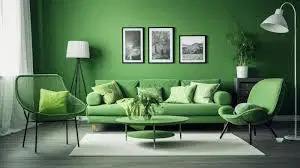
What color scheme is being applied in this interior design example?
complementary
monochromatic
analogous
triadic
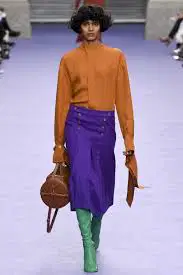
The color scheme presented in her outfit is a complementary color scheme.
True
False

She is wearing an outfit with a neutral color scheme.
True
False
"Intensity" is a property of which Element of Art?
shade
All of the Elements of Art
value
color
White is the absorption of all colors.
True
False
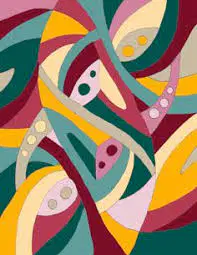
What color scheme did this designer use?
split complementary
tetrad
complementary
triad
The equation to get a tertiary color is:
primary plus primary
primary plus a secondary
secondary plus a secondary
tertiary plus a primary
Black is the reflection of all colors.
True
False
If you are looking at a teapot that is red, what color is not being absorbed by the teapot?
none of the colors are being absorbed except red
all of the colors are being absorbed except red

