wayground logo

Free Printable Worksheets

Font size

S
M
L
XL
Worksheets

Transport

Total questions: 20

Worksheet time: 15mins

Name
Class
Date
1.

What is the main function of xylem tissue?

a)

Storing water and nutrients

b)

Producing energy for the plant

c)

Transporting water and nutrients

d)

Protecting the plant from pathogens

2.

Which tissue is responsible for the transport of water in plants?

a)

phloem

b)

epidermis

c)

xylem

d)

mesophyll

3.

What is the process called when water moves from the roots to the leaves through xylem?

a)

osmosis

b)

respiration

c)

photosynthesis

d)

transpiration

4.

True or False: Xylem transports water and minerals in both upward and downward directions.

a)

Xylem transports only minerals

b)

True

c)

False

d)

Xylem transports only water

5.

What is the main function of phloem tissue?

a)

Transportation of sugars and nutrients

b)

Storage of water and minerals

c)

Protection against pathogens

d)

Production of energy

6.

Which tissue is responsible for the transport of sugars and other organic compounds in plants?

a)

xylem

b)

phloem

c)

epidermis

d)

mesophyll

7.

True or False: Phloem transports substances only in upward direction.

a)

True

b)

False

c)

Phloem transports substances in both upward and downward directions.

d)

Phloem transports substances only in downward direction.

8.

What is the major difference between xylem and phloem?

a)

Xylem transports sugars and organic compounds, while phloem transports water and minerals.

b)

Xylem and phloem have the same function of transporting sugars and organic compounds.

c)

Xylem transports water and minerals, while phloem transports sugars and organic compounds.

d)

Xylem and phloem both transport water and minerals.
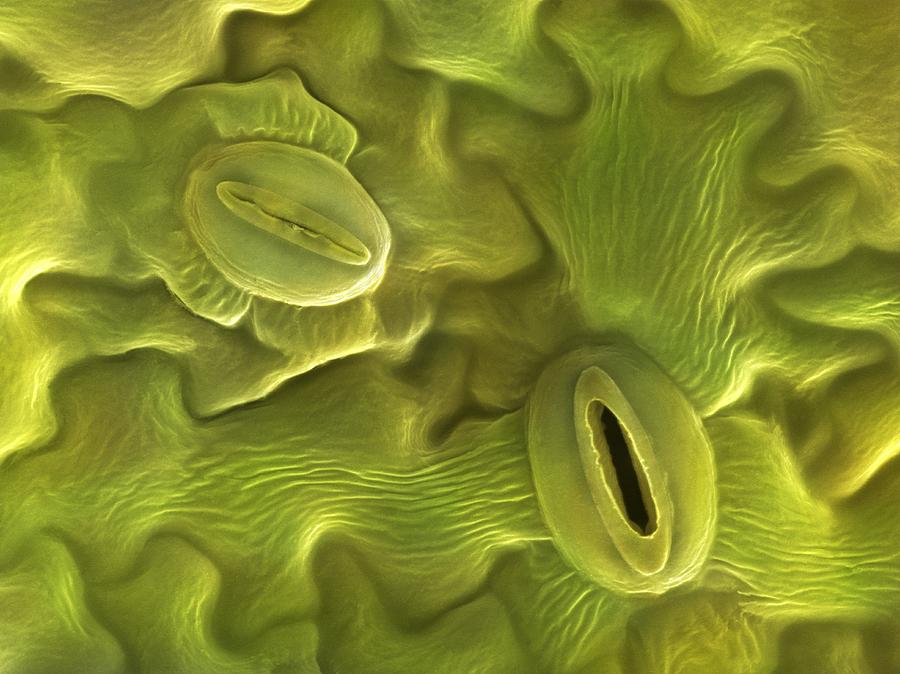
9.
Opening that allows gas exchange
a)
Stomata
b)
Leaves
c)
Roots
d)
Vascular tissue
10.
Which of the following are NOT found in animal cells
a)
chloroplasts and cytoplasm
b)
chloroplasts and cell wall
c)
cell wall and cell membrane
d)
mitochondria and nucleus
11.
Which of the following, found ONLY in plant cells, provides structure?
a)
cell wall
b)
chloroplast
c)
mitochondria
d)
vacuole
12.
I am only found in a plant cell. What am I?
a)

cell membrane

b)
mitochondria
c)
cytoplasm
d)
chloroplast
13.
During osmosis
a)
water moves from high to low concentration
b)
large or oddly shaped molecules move across a cell membrane
c)
water moves when energy is used
d)
proteins are built
14.
Passive transport requires no
a)
concentration gradients
b)
osmosis
c)
motion
d)
energy
15.
_______ regulates what enters and leaves a cell.  
a)
Cell Membrane
b)
Nucleus
c)
Mitochondria
d)
Cytoplasm
16.
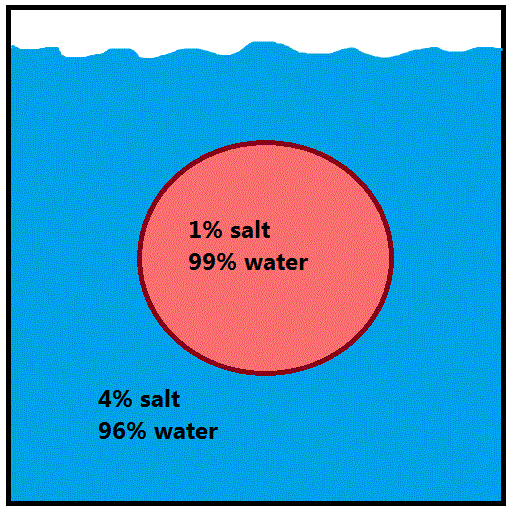
The cell is 99% water. The surrounding is salty. Where will the water go?
a)
Into the cell
b)
Out of the cell
c)
Equally in & out 
17.

If the dots represent sugar what direction will the water flow?

a)

Into the cell

b)

Out of the cell

c)

Both equally (equilibrium)

18.
In this picture, which way will the water move?
a)
Water will move into the cell
b)
Water will move out of the cell
c)
Water will move in and out of the cell
d)
Water will not move
19.
In this picture, how do you classify the solution?
a)
The solution is hypotonic
b)
The solution is hypertonic
c)
The solution is isotonic
d)
The solution is my tonic
20.
The cell membrane is selectively permeable, which means...
a)
All materials can enter and leave the cell
b)
Certain things can enter while others cannot
c)
The cell manually sorts through all materials
d)
Only certain cells can interact with the cell.