
 Worksheets
Energy, Heat and Density Quiz 21st Century OCR
Total questions: 21
Worksheet time: 1hrs 1mins
An apple of mass 100 g falls from a tree. It reaches a speed of 6 m/s before it lands on the ground. What is the gain of kinetic energy of the apple?
How much gravitational potential energy does a 500 g book gain when it is lifted up 1.5 m onto a shelf?
How much energy is transformed in a 2 kW kettle in two minutes?
How much energy is needed to raise the temperature of 3 kg of copper by 10°C?
The specific heat capacity for copper is 385 J/kg°C.
What is the equation for density?
Mass × volume
Volume ÷ mass
Mass ÷ volume
The density of iron is 7.8 g/cm3, what is the mass of 5 cm3 of it?
How much energy is needed to raise the temperature of 500 g of lead by 10°C? (c = 129 J/kg°C)
How much energy is needed to turn 100 g of oxygen gas into a liquid at the same temperature?
L = 213 kJ/kg
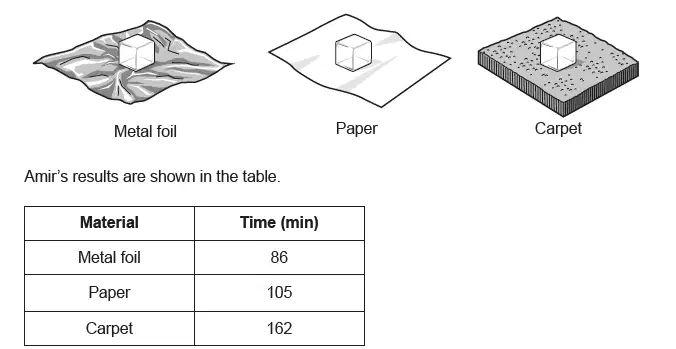
Amir investigates melting ice.
He puts ice cubes on different materials. He then measures the time taken for each ice cube to completely melt.
Calculate the thermal energy needed to melt 20 g of ice.
The specific latent heat of melting for ice is 334 000 J / kg.
Amir investigates melting ice.
He puts ice cubes on different materials. He then measures the time taken for each ice cube to completely melt.
Explain why the ice cubes take different times to melt on different materials.

Amaya and Li are clowns in a circus. They are preparing a new show.
In the show, a water balloon will be dropped on Li’s head from different heights. Amaya lifts the water balloon to a height 5.0 m above Li’s head using a pulley.
Describe all the changes in the way energy is stored, starting from before Amaya starts to lift the water balloon, and finishing after the water balloon has hit Li.
In your answer you should clearly state what is happening to the water balloon as the energy is transferred between each of the stores.
The mass of the water balloon is 1.6 kg.
Calculate the minimum work that must be done by Amaya to lift the water balloon a height of 5.0 m.
Gravitational field strength = 10 N / kg
The mass of the water balloon is 1.6 kg.
Calculate the maximum possible speed of the water balloon when it hits Li.
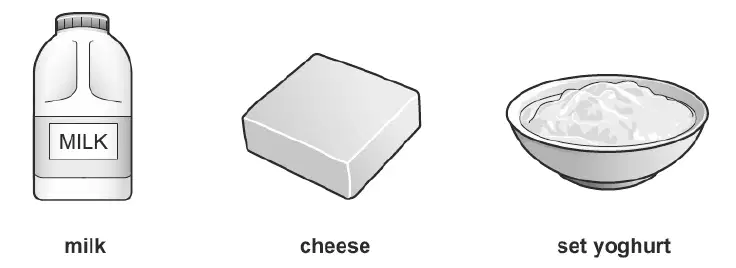
Ben wants to compare the density of three different foods.
Describe how to accurately determine the density of milk.
You should include in your answer how accurate measurements can be obtained from the apparatus used.

The figure shows a representation of the reservoir in the hydroelectric power station.
Calculate the total mass of water that can be held in the reservoir.
Density of water = 1000 kg / m3.

Hydroelectric power is a renewable source of energy. Hydroelectric power stations work by storing water in a reservoir behind a dam.
The water in the reservoir is a store of gravitational energy. The water falls a vertical distance of 400 m from the reservoir to the turbines, as shown in the figure
Calculate the total available gravitational energy when the reservoir is holding 8.0 × 10⁹ kg of water.
Gravitational field strength = 10 N / kg
Hydroelectric power is a renewable source of energy. Hydroelectric power stations work by storing water in a reservoir behind a dam.
The efficiency of the hydroelectric power station is 75%.
On one occasion, the hydroelectric power station has an output power of 140 MW for a time of 1 hour.
Calculate the total energy input required for this output power.
Use the equation: energy transferred = power × time
Give your answer in joules.

Layla uses a van to deliver parcels.
This is a velocity-time graph for the first 5 seconds of the van’s motion.
After 4.0 seconds the kinetic energy of the van is 40 000 J.
Calculate the mass of the van.
Use the equation: kinetic energy = 0.5 × mass × (speed)2
Use the graph.
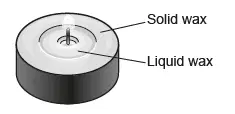
Ling lights a candle.
After a few minutes, some of the wax close to the flame has melted.
What is the difference between specific heat capacity and specific latent heat?
Ling lights a candle.
Describe what happens, in terms of energy, when Ling blows out the candle.

Ling lights a candle.The temperature of the room is 20 °C.
The melting point of the wax is 52 °C. For the wax to melt, it must first increase in temperature to its melting point.
Specific heat capacity of wax = 2300 J / kg °C
Specific latent heat of melting of wax = 210 000 J / kg
Use the Data Sheet.

