
 Worksheets
space review
Total questions: 50
Worksheet time: 50mins
A medium sized star made of hot gases that is the center of our solar system.
Comet
Sun
Earth
Moon
Imaginary line that goes through a planet that tell us how the planet rotates, or spins around itself.
axis
orbit
gravity
What is it called when the Earth moves around the sun in a fixed path?

How long does it take the Earth to revolve around the Sun once?
24 hours
27-31 days
365 hours
365 days
Why does Earth have seasons?
Because of Earth's tilt
Because of Earth's axis
Because Earth is awesome
Why does the Sun appear larger and brighter than other stars?
The sun is the oldest star.
The sun is the closet star to the Earth.
The sun is the largest star.
The sun is the hottest star.
How long does it take for the Earth to rotate once on its axis?
a day
a month
a year
a decade
What is gravity?
a force that pushes matter away
a force that pulls matter up
a force that pulls matter down
a force that attracts magnets
Is there more gravity on Earth or the moon?
Earth
the moon
Joanna was watching her cat playing in the shadows as the Sun set. She wondered why we have day and night. Why does Earth experience day and night?
The Moon rotates on its own axis
Earth rotates on its own axis
Earth revolves around the Sun
The Moon revolves around Earth
Josie understands that a year is about 365 days, but she is not sure why. The next day at school she asked her teacher why. What was the teacher's response?
The Moon revolves around the Earth in about 365 days
Earth revolves around the Sun in about 365 days
Earth rotates on its own axis in about 365 days
The Moon rotates on its own axis in about 365 days

Based on the data in the table, which conclusions can you draw?
Uranus is the coldest of all the planets
The farther a planet is from the Sun, the longer it takes to orbit it.
A day on Earth is longer than a day on Saturn.
The farther a planet is from the Sun, the shorter its day.
What is Astronomical Unit?
1000 km
The size of our solar system
The average distance between Earth and the Sun
The average distance between Earth and Moon
What is Light Year?
The distance travelled by sound in a year
The distance travelled by light in a year
The distance travelled by sound in a minute
The distance travelled by light in a decade
A planet's _____________ is one complete trip around the Sun and what determines the length of a planet's year. A planet's _________ is one complete spin on its axis and determines the length of a planet's day.
orbit; revolution
rotation; revolution
revolution; rotation
revolution; orbit

Why do we have seasons?
Because the tilt of the Earth gives us direct and indirect sunlight.
Because we are closer or further from the Sun.
Because the Sun changes temperatures.
Why do we experience longer days and shorter nights in summer?
Because the Earth is closer to the Sun.
Because the Earth's axis is tilted towards the Sun.
Because the Earth rotates faster.
Because the Earth's orbit is a perfect circle.
What happens during summer in the northern part of Earth?
The Earth is closer to the Sun
The Sun's rays hit Earth more directly
The Earth spins faster
The Sun's rays hit Earth at an angle
Seasons are caused by the Earth's tilt and it's rotation around the Sun
True
False
If the Earth rotated slower, how would that affect the length of the day?
longer day
shorter day
same time, 24 hours
Why can the moon be seen in the sky?
The moon reflects light from the Earth
The moon creates its own light.
The moon absorbs light from Earth's atmosphere.
The moon reflects light from the sun.
How long does it take the moon to revolve around the Earth?
about once every month
about once a year
24 hours
365 days
It takes about (a) days for the moon to travel around the earth one time

Where does moonlight come from?
The Moon produces its own light, just like the sun.
The Earth reflects sunlight to the Moon, lighting the face of the Moon.
The Moon reflects light from the Sun, making it look like the Moon shines.
The Moon reflects light from all the stars, making it look like the Moon shines.

How long does it take the Moon to make one revolution around the Earth?
about 24 hours
about 31 days
about 29 days
about 48 hours
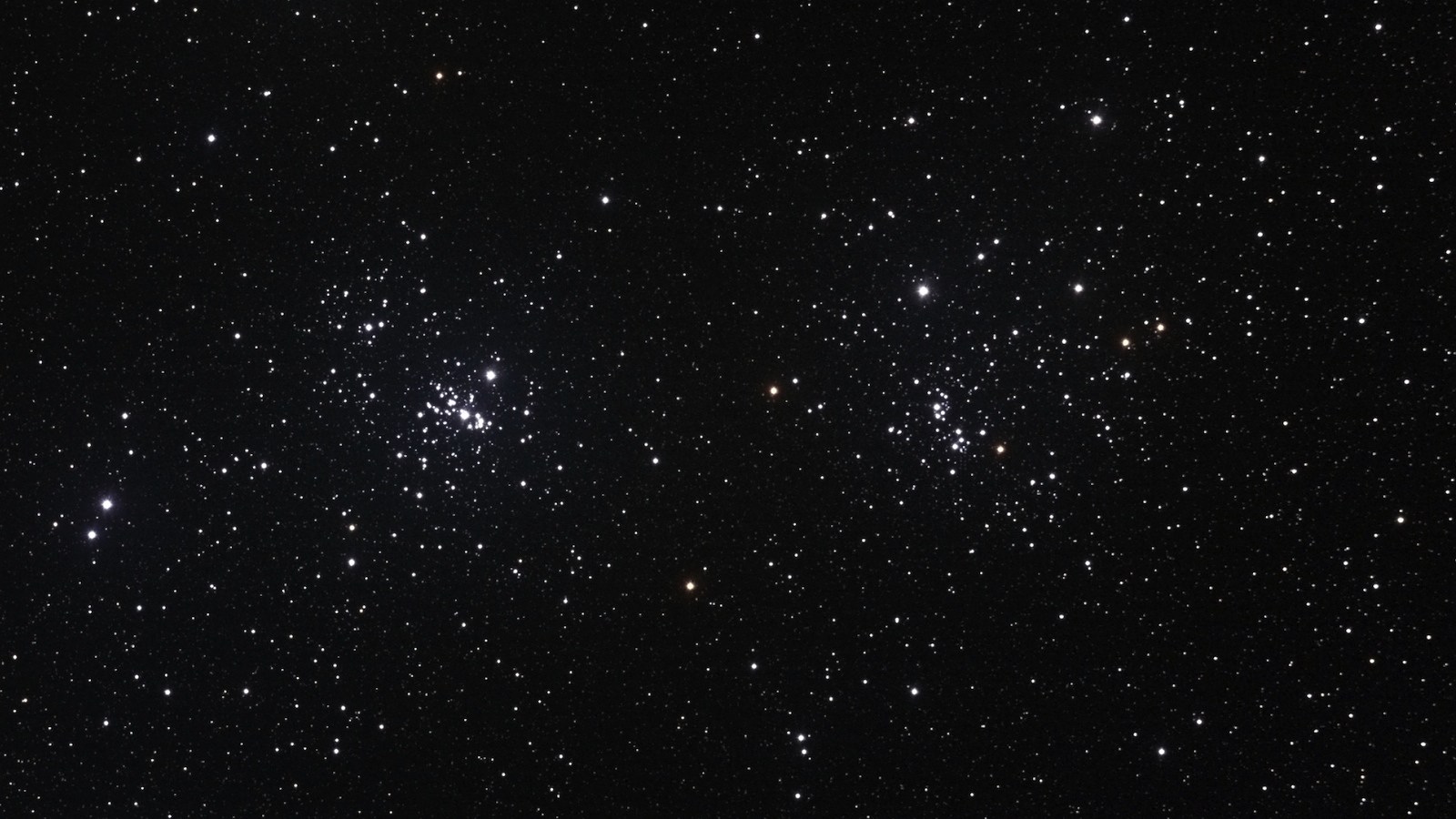

The Sun is the biggest star in the sky.

Scorching hot ball of gas
A very bright star can seem dimmer when you look at it because it is ____________________.
closer to you
farther from you
The unit of astronomical distance that equals the distance light travels in on year is known as a ____________________________________.
magnitude
brightness
luminosity
lightyear
The brightness of a star as it appears from Earth.
Actual brightness
Near brightness
Apparent brightness
Fake brightness
A star is a giant ball of __ that is found in the center of a solar system.
planet
fire
gas
yellow lemon drops
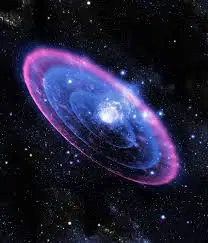
What happens when a star dies?
It turns into a planet
It becomes the Moon
it explodes in a supernova
It disappears quietly
Gravity _____
PULLS on objects
PUSHES on objects
is only on EARTH
An object's gravity depends on the SIZE of the object.
True
False

What would happen to Earth without the sun's gravity?
Earth would DRIFT INTO SPACE
Earth would ORBIT the sun
Earth would be SMALLER
Earth would get CLOSER TO OTHER PLANETS

The moon’s gravity is weaker than Earth’s because If you went to the moon, you would
SHRINK and become shorter
WEIGH LESS than you do on Earth
FLOAT OFF into space
Not be able to JUMP
Which statement about gravity is true?
gravity causes objects to pull towards one another
gravity causes objects to push away from each other
gravity only takes place between planets
the moon doesn't have any gravity
What two things determine the gravity of an object?
mass & weight
mass & distance
density & mass
volume & distance
What keeps the planets in orbit around the sun?
gravity
friction
density
distance
Which of these factors does NOT affect how long it takes a planet to orbit the Sun?
The planet's mass
The planet's distance from the Sun
The shape of the planet's orbit
The color of the planet

Gravity can best be described as a force that…
pushes objects down towards the center of the Earth
pulls objects down towards the center of the Earth.
can push and pull objects, depending on where you are on Earth.
can pull objects both down towards the Earth and push objects up towards the sky.
What is Light Year?
The distance travelled by light in a second
The distance travelled by light in a minute
The distance travelled by light in a year
The distance travelled by light in a decade

