
NEW
Font size
 Worksheets
Circuits
Total questions: 23
Worksheet time: 35mins

This is the symbol of which electrical device?
A light bulb
An resistor
An electrical cell
A switch

This is the symbol for a(n) ..................?
single cell
bulb
battery
AC current source

The picture shows an electric circuit. This is a series circuit because:
The electrical current is divided between the three light bulbs.
It has 3 light bulbs.
The same current flows through all threelight bulbs.
It uses a single battery
This type of circuit only has one path for current to flow.
parallel
combination
split
series
Which best describes a parallel circuit?
Electricity flows along one pathway.
The flow of electricity comes from more than one source.
Electricity flows along more than one pathway
The flow of electricity comes from one source.
What is one problem with using a series circuit?
If one device goes down, they all go down!
It doesn't work properly.
It has a lot of series.
There are no problems.
What is one benefits of using a parallel circuit?
It gets confusing.
There are no problems.
If one goes down, it does not affect theothers.
It has no benefits

Does this diagram represent a series or parallel circuit?
parallel
series

If the cell in the circuit above has a potential difference of 8V, what is the potential difference across one of the bulbs?
8V
4V
16V
2V
How many volts is produced by three cells of 3 V each in series?
3V
1.5V
9V
27V
A circuit contains two resistors in series. One is 5ohms and the other 10 ohms. What is the total resistance of the circuit?
5 ohms
10 ohms
15 ohms

If the cell above has a potential difference of 8V, what is the potential difference across one bulb?
8V
4V
16V
2V

Look at figure 4. Ammeter A2 and A3 read the same value at 0.4Amps. What is the reading on Ammeter A1?
0.4A
0.2A
0.8A

In a series circuit __________________ .
there are multiple pathways for the charges to go through
there is only one pathway for the charges to go through
there is no pathway for the charges to go through
there is only one device on the circuit

If light bulb A burns out, what will happen?
light bulb B will still work but C will not
none of the light bulbs will work
light bulb C will still work but B will not
light bulbs B and C will continue to work

If light bulb A burns out, what will happen?
none of the lights will work
light bulbs B and C will continue to work
light bulb B will work, but C will not
light bulb C will work, but B will not
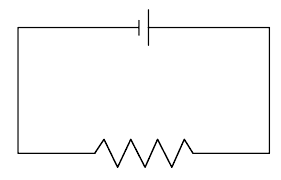

The total resistance in this circuit is?

The total resistance of this circuit is?
1.52 Ω
120 Ω
.658 Ω
15.2Ω

Find the total resistance of the circuit
200Ω
100Ω
.063Ω
15.8Ω

V1 shows a voltage of 9V. What voltages will V2 and V3 show?
V2: 9V
V3: 9V
V2: 3V
V3: 6V
V2: 6V
V3: 3V
V2: 15V
V3: 12V


