
Font size
 Worksheets
Anatomy and Physiology final project 4
Total questions: 28
Worksheet time: 17mins
how is membrane potential generated?

passive leak channels and Na/k pump

chemically gated channels

voltage gated channels
Potassium pumped out of the cell
The strength of a graded potential can...
Always creates a Action potential
Never creates a Action potential
Sometimes causes a Action potential

Graded potentials are bi-directional, this means
they travel along the axon terminal
they can travel long distances
they can hyper-polarize and Depolarize
They are a all or nothing response
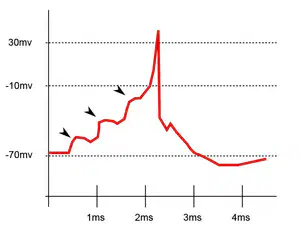
what statement best represents Excitatory potential
depolarization
repolarization
Hyperpolarization
Resting potential
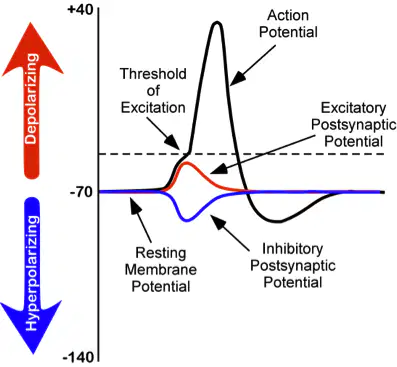
inhibitory potential
depolarization
repolarization
hyperpolarization
resting potential
What channels need to be open for Depolarization
Na+ voltage gated channels
k+ voltage gated channels
Na+ chemically gated channels
K+ Chemically gated channels
What Channels need to be open for Repolarization?
K+ chemically gated channels
Na+ chemically gated channels
Na+ voltage gated channels
K+ Voltage Gated Channels
What are all the channels that are open during graded potential called?
chemically gated channels and voltage gated channels
Na/k pump and leak channels
Na/k pump, leak channels, chemically gated channels
Voltage gated channels, Na/k pump, leak channels
What is NOT the goal of a graded potential?
to reach threshold
to create a a Action potential
To create Repolarization
to maintain resting potential
Graded potentials depolarizing causing a action potential in called
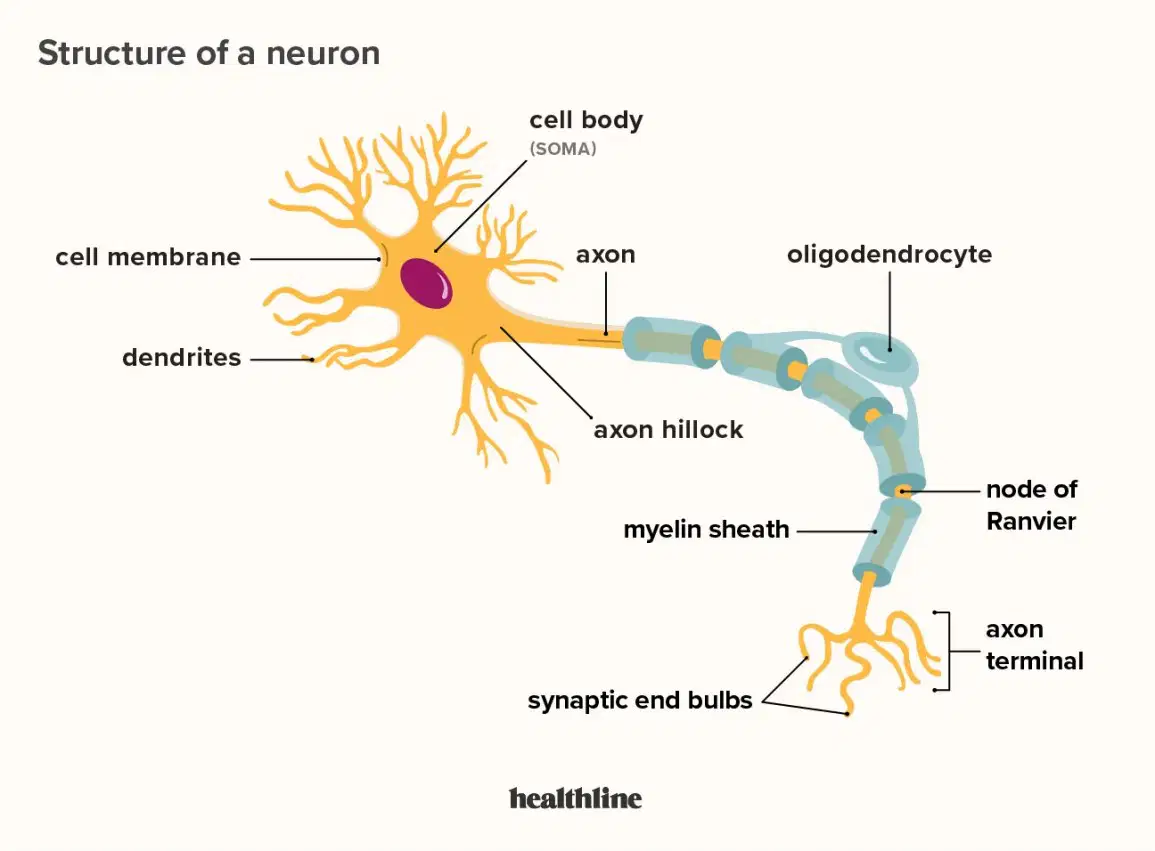
Where are Action potentials located
axons
dendrites
soma
synapse
What are the correct characteristics of a Action Potiential?
Bi-directional, long
Unidirectional, long
bidirectional, short
unidirectional, short
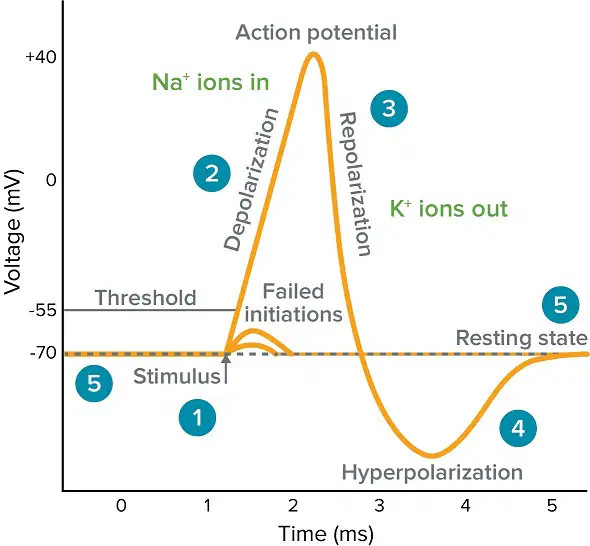
Step 1 (depolarization) of action potential, what channels are open and closed
Voltage-gated potassium channels are open
Voltage-gated sodium channels are open
Voltage gated potassium channels are closed
Voltage gated sodium channels are close
Step 2 (Repolarization), what channels are open? what channels are closed?
Na channels are open, K channels are open
Na channels are closed
K channels are open
Na channels are inactive, k channels are open
Na Channels are open, k channels are closed
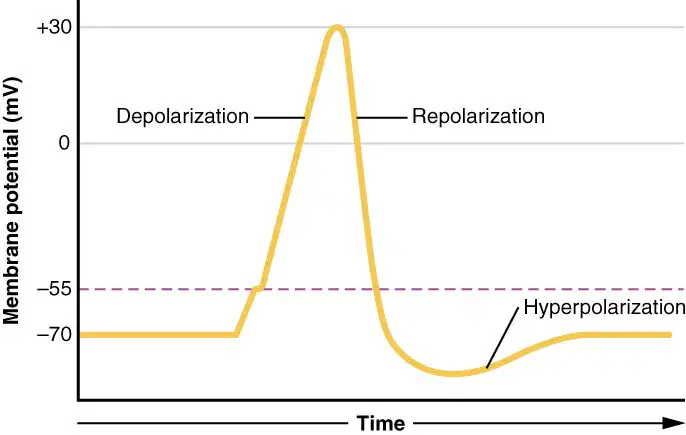
Step 3 (Hyperpolarization), What channels open? What channels are closed
Na channels are open, K channels are closed
Na channels are closed, K channels are slowly closing
Na Channels are slowly closing, K channels are open
Na channels closed, K channels are closed
Action potential propagation is...
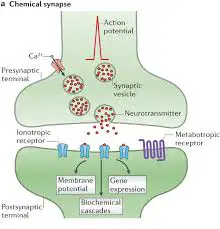
The pre-synaptic neuron needs A Action potential to cause a chemical synapse
true
false
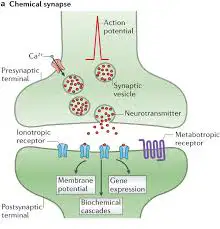
The presynaptic cell uses what channels to release a neurotransmitter into the postsynaptic cell
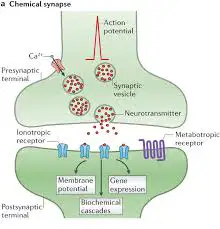
What is located in the synaptic cleft during chemical synapse
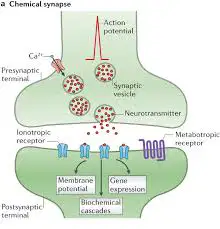
What is located on the postsynaptic neuron during chemical synapse?
voltage gated channels
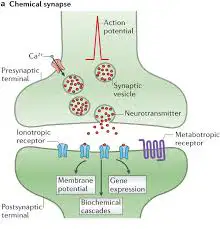
What is the correct order in which exocytosis happens in the chemical synapse
Ca causes the release of neurotransmitters, Voltage Ca channels open, Neurotransmitters diffuse across cleft
Voltage Ca channels open, Ca causes the release of neurotransmitters, Neurotransmitters diffuse across cleft
Neurotransmitters diffuse across cleft, Voltage Ca channels open, Ca diffuses across cleft
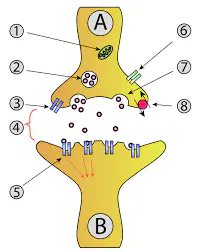
When the neurotransmitter binds to a receptor in step 5 , what happens
Chemically gated channels open, causing graded potential
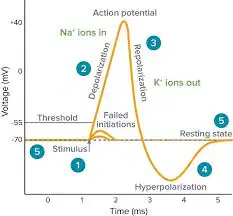
A action potential cant happen without
Voltage Gated channels
Receptors
Neurotransmitters
reaching threshold
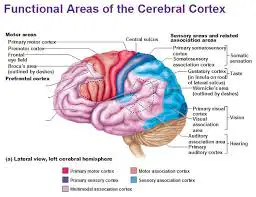
The anterior association area is located in...
postcentral gyrus
temporal lobe
wernickes area
prefontal cortex
What does the Anterior association area involved in...
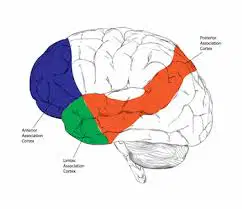
Anterior association area...
Slowly matures during development
Quickly matures during development
A damaged prefrontal cortex can result in
personality changes
poor decision making
attention deficits
lack of interpretation of language

