
 Worksheets
SAS B.Inggris Kelas 9
Total questions: 40
Worksheet time: 1hrs 20mins
The text for number 1 – 4!
A kangaroo is an animal found only in Australia. It has a smaller relative, called a wallaby, which lives on the Australian island of Tasmania and in New Guinea.
Kangaroos eat grass and plants. They have short front legs, very long and strong back legs and a tail. These are used for sitting up and for jumping. Kangaroos have been known to make forward jumps of over eight metres, and leap across fences more than three metres high. They can also run at speeds of over 45 kilometres per hour.
The largest kangaroos are the Great grey kangaroo and the Red Kangaroo. Adult grows to a length of 1.60 metres and weighs over 90 kilos.
Kangaroos are marsupials. This means that the female kangaroo has an external pouch on the front of her body. A baby kangaroo is very tiny when it is born, and it crawls at once into this pouch where it spends its first five months of life.
According to the text, the kangaroo ....
can run faster than a car
can grow as tall as a man
can walk as soon as it is born
can jump over 8 meters high fence
The text for number 1 – 4!
A kangaroo is an animal found only in Australia. It has a smaller relative, called a wallaby, which lives on the Australian island of Tasmania and in New Guinea.
Kangaroos eat grass and plants. They have short front legs, very long and strong back legs and a tail. These are used for sitting up and for jumping. Kangaroos have been known to make forward jumps of over eight metres, and leap across fences more than three metres high. They can also run at speeds of over 45 kilometres per hour.
The largest kangaroos are the Great grey kangaroo and the Red Kangaroo. Adult grows to a length of 1.60 metres and weighs over 90 kilos.
Kangaroos are marsupials. This means that the female kangaroo has an external pouch on the front of her body. A baby kangaroo is very tiny when it is born, and it crawls at once into this pouch where it spends its first five months of life.
.... are used for sitting up and for jumping.
Short legs
Long tails
Short front legs
Strong back legs
The text for number 1 – 4!
A kangaroo is an animal found only in Australia. It has a smaller relative, called a wallaby, which lives on the Australian island of Tasmania and in New Guinea.
Kangaroos eat grass and plants. They have short front legs, very long and strong back legs and a tail. These are used for sitting up and for jumping. Kangaroos have been known to make forward jumps of over eight metres, and leap across fences more than three metres high. They can also run at speeds of over 45 kilometres per hour.
The largest kangaroos are the Great grey kangaroo and the Red Kangaroo. Adult grows to a length of 1.60 metres and weighs over 90 kilos.
Kangaroos are marsupials. This means that the female kangaroo has an external pouch on the front of her body. A baby kangaroo is very tiny when it is born, and it crawls at once into this pouch where it spends its first five months of life.
We know from the text that kangaroo ....
Bigger size relative
an omnivorous animal
female kangaroo has internal pouch
can be called Wallaby in New Guinea
A kangaroo is an animal found only in Australia. It has a smaller relative, called a wallaby, which lives on the Australian island of Tasmania and in New Guinea.
Kangaroos eat grass and plants. They have short front legs, very long and strong back legs and a tail. These are used for sitting up and for jumping. Kangaroos have been known to make forward jumps of over eight metres, and leap across fences more than three metres high. They can also run at speeds of over 45 kilometres per hour.
The largest kangaroos are the Great grey kangaroo and the Red Kangaroo. Adult grows to a length of 1.60 metres and weighs over 90 kilos.
Kangaroos are marsupials. This means that the female kangaroo has an external pouch on the front of her body. A baby kangaroo is very tiny when it is born, and it crawls at once into this pouch where it spends its first five months of life.
The largest kangaroos are … .
red kangaroos
black kangaroos
red and black kangaroos
grey and red kangaroos
The text for number 5 – 8 !
Origin : in the forests of Asia, with their habitats ranging from the Russian far East to the mangrove swamp of the Sundarbans.
Physical Characteristics: Tigers are instantly recognizable due to their distinctive orange fur with black stripes. These stripes are unique to each individual and serve as a form of camouflage in the dense vegetation. Tigers have powerful bodies, sharp claws, and strong jaws. They are excellent swimmers and can easily traverse rivers and lakes.
Diet : eat smaller animals when the opportunity arises. They are apex predators, meaning they have no natural predators in their ecosystem.
Threat : declined significantly due to habitat loss, poaching, and illegal wildlife trade.
Conservation strategies : the establishment of tiger reserves and anti-poaching measures.
What is the unique of tiger’s fur?
The excellent swimmers
Black stripes
Sharp claws
Strong jaws
The text for number 5 – 8 !
Origin : in the forests of Asia, with their habitats ranging from the Russian far East to the mangrove swamp of the Sundarbans.
Physical Characteristics: Tigers are instantly recognizable due to their distinctive orange fur with black stripes. These stripes are unique to each individual and serve as a form of camouflage in the dense vegetation. Tigers have powerful bodies, sharp claws, and strong jaws. They are excellent swimmers and can easily traverse rivers and lakes.
Diet : eat smaller animals when the opportunity arises. They are apex predators, meaning they have no natural predators in their ecosystem.
Threat : declined significantly due to habitat loss, poaching, and illegal wildlife trade.
Conservation strategies : the establishment of tiger reserves and anti-poaching measures.
Where are tigers primarily found in the wild?
Asia
Africa
South America
North America
The text for number 5 – 8 !
TIGER
Origin : in the forests of Asia, with their habitats ranging from the Russian far East to the mangrove swamp of the Sundarbans.
Physical Characteristics: Tigers are instantly recognizable due to their distinctive orange fur with black stripes. These stripes are unique to each individual and serve as a form of camouflage in the dense vegetation. Tigers have powerful bodies, sharp claws, and strong jaws. They are excellent swimmers and can easily traverse rivers and lakes.
Diet : eat smaller animals when the opportunity arises. They are apex predators, meaning they have no natural predators in their ecosystem.
Threat : declined significantly due to habitat loss, poaching, and illegal wildlife trade.
Conservation strategies : the establishment of tiger reserves and anti-poaching measures.
The threats of the tiger is ….
The establishment of tiger reserves
Can easily traverse rivers and lakes
Anti-poaching measures
Illegal wildlife trade
The text for number 5 – 8 !
TIGER
Origin : in the forests of Asia, with their habitats ranging from the Russian far East to the mangrove swamp of the Sundarbans.
Physical Characteristics: Tigers are instantly recognizable due to their distinctive orange fur with black stripes. These stripes are unique to each individual and serve as a form of camouflage in the dense vegetation. Tigers have powerful bodies, sharp claws, and strong jaws. They are excellent swimmers and can easily traverse rivers and lakes.
Diet : eat smaller animals when the opportunity arises. They are apex predators, meaning they have no natural predators in their ecosystem.
Threat : declined significantly due to habitat loss, poaching, and illegal wildlife trade.
Conservation strategies : the establishment of tiger reserves and anti-poaching measures.
What type of habitat can tigers adapt to?
Forest
Desert
Tundra
Mountains
The text for number 9 – 12!
Peacock
Peacocks have a latin name, Pavo cristatus. Peacock has shining dark blue feather. The male peacock is big. It can reach 230 cm long. It has a very long metalic green tail. On its head there is a beautiful crest which is like a fan. But the female one is different. It is smaller then the male. The feather isn't shining. It's greenish brown with black stripes.
Peacocks live around Asia mainly in India, Sri Lanka, Nepal, and Bhutan. It is also found in Bangladesh but It's endagered.
Peacocks eat some seeds, grass tips, leaves and insects. It also consumes some animals such as worm, spiders and lizard.
Peacocks have a latin name, Pavo cristatus.
The synonym of the underlined word is....
special
specific
scientific
favourite
The text for number 9 – 12!
Peacock
Peacocks have a latin name, Pavo cristatus. Peacock has shining dark blue feather. The male peacock is big. It can reach 230 cm long. It has a very long metalic green tail. On its head there is a beautiful crest which is like a fan. But the female one is different. It is smaller then the male. The feather isn't shining. It's greenish brown with black stripes.
Peacocks live around Asia mainly in India, Sri Lanka, Nepal, and Bhutan. It is also found in Bangladesh but It's endagered.
Peacocks eat some seeds, grass tips, leaves and insects. It also consumes some animals such as worm, spiders and lizard.
The “TRUE” statement based on the text is....
On its body there is a beautiful crest which is like a fan
A male peacock is bigger than the female.
Peacock has shining dark green feather
The female’s feather is shining.
The text for number 9 – 12!
Peacock
Peacocks have a latin name, Pavo cristatus. Peacock has shining dark blue feather. The male peacock is big. It can reach 230 cm long. It has a very long metalic green tail. On its head there is a beautiful crest which is like a fan. But the female one is different. It is smaller then the male. The feather isn't shining. It's greenish brown with black stripes.
Peacocks live around Asia mainly in India, Sri Lanka, Nepal, and Bhutan. It is also found in Bangladesh but It's endagered.
Peacocks eat some seeds, grass tips, leaves and insects. It also consumes some animals such as worm, spiders and lizard.
What do they eat?
some seeds, grass tips, leaves and insects
some animals such as worm, spiders and lizard.
some seeds, grass tips, leaves, insects and spiders and lizard.
some seeds, grass tips, leaves, insects and some animals such as worm, spiders and lizard.
The text for number 9 – 12!
Peacock
Peacocks have a latin name, Pavo cristatus. Peacock has shining dark blue feather. The male peacock is big. It can reach 230 cm long. It has a very long metalic green tail. On its head there is a beautiful crest which is like a fan. But the female one is different. It is smaller then the male. The feather isn't shining. It's greenish brown with black stripes.
Peacocks live around Asia mainly in India, Sri Lanka, Nepal, and Bhutan. It is also found in Bangladesh but It's endagered.
Peacocks eat some seeds, grass tips, leaves and insects. It also consumes some animals such as worm, spiders and lizard.
Where do peacock live?
Bangladesh and indonesia
Sriilanka and Thailand
Nepal and Vietnam
India and Bhutan

what animal is it?
Tiger
Lion
Bekantan
Dog
What is the scientific name of the Bekantan?
Panthera leo
Nasalis larvatus
Pongo pygmaeus
Gorilla gorilla
Where can you mostly find Bekantan?
In the African savannas
In the Amazon Rainforest
On the islands of Borneo and Sumatra
In the Australian deserts
What is a unique physical characteristic of the Bekantan?
Long sharp claws
A large, long nose
A bright red fur
Huge wings
What does the Bekantan primarily eat?
Carnivorous diet
Fruits, leaves, and seeds
Fish and small insects
Grass and roots
How does the Bekantan help the ecosystem?
By pollinating flowers
By controlling insect populations
By spreading seeds and aiding plant growth
By producing honey
Which of the following statements is true about Bekantan?
They are solitary animals
They are highly social and live in groups
They live only in caves.
They are nocturnal creatures.
What is the main threat to the Bekantan population?
Climate change
Habitat destruction and hunting
Pollution in the oceans
Competition with other animals
Why is the Bekantan considered an endangered species?
It has a very small population and limited distribution.
It is too aggressive towards humans.
It has no natural predators.
It can adapt to any environment.
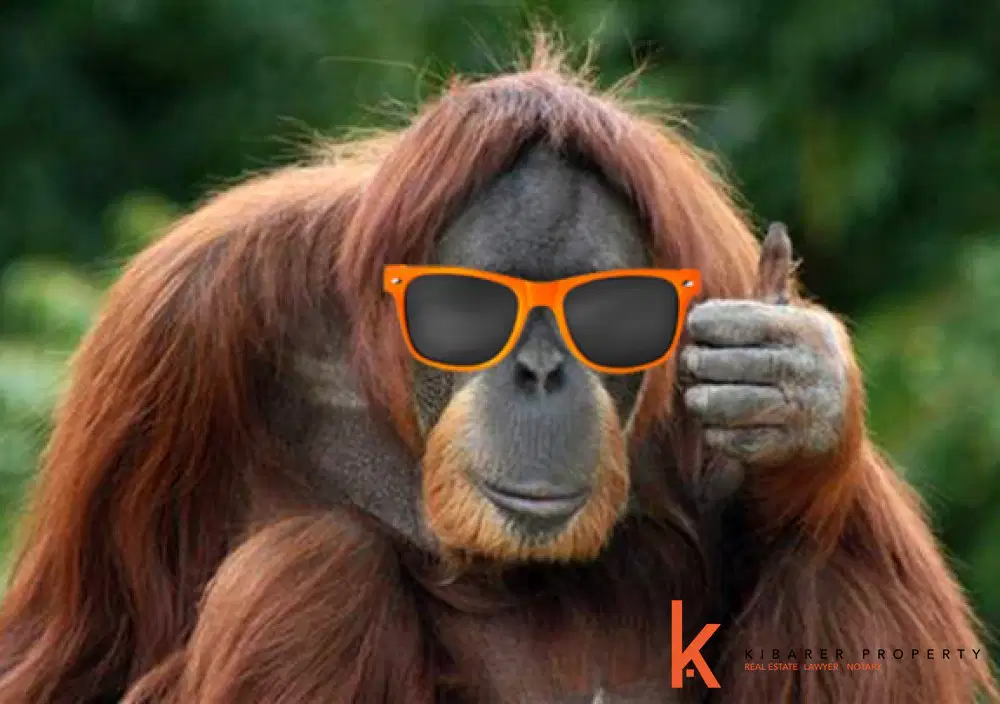
what animal is it ?
Orang utan
Bekantan
Monkey
Gorilla
What is the scientific name of the orangutan?
Pongo pygmaeus
Pan troglodytes
Gorilla gorilla
Pongo abelii
Where can orangutans be found in the wild?
Africa
South America
Southeast Asia, particularly Borneo and Sumatra
Australia
What is the primary diet of an orangutan?
Insects and small animals
Fruits, leaves, and bark
Fish and meat
Seeds and flowers
Which of the following is a characteristic feature of an orangutan?
Long arms and reddish-brown fur
Large ears and long tail
Small size and white fur
Black fur and short arms
How do orangutans usually move in the forest?
By running on the ground
By flying
By swinging from tree branches (brachiation)
By walking on all fours
Why are orangutans considered endangered?
They have too many natural predators
They are hunted for their fur
Habitat loss due to deforestation and illegal pet trade
They have no food sources left
How long do orangutans usually live in the wild?
10-15 years
30-40 years
45-60 years
Over 100 years
What is the primary threat to the orangutan's habitat?
Pollution from factories
Logging and palm oil plantations
Hunting by humans
Wildfires
Which of the following is true about orangutans?
Orangutans are social animals and live in large groups.
Orangutans are solitary creatures and live alone.
Orangutans migrate from one place to another.
Orangutans live in caves and not in trees.
How do orangutans communicate with each other?
Through vocalizations like hoots and screams
By dancing
By making tools
By jumping from tree to tree

what animals is it ?
Gorilla
Monkey
Orang utan
Bird
What is the scientific name of the gorilla?
Panthera leo
Gorilla gorilla
Ursus maritimus
Pongo pygmaeus
Where do gorillas primarily live in the wild?
In the forests of Africa
In the rainforests of Southeast Asia
In the mountains of South America
On the islands of the Caribbean
What is the main diet of a gorilla?
Insects and meat
Fruits, leaves, and stems
Fish and seeds
Roots and flowers
Which of the following is true about gorillas?
Gorillas are solitary animals.
Gorillas are herbivores and only eat plants.
Gorillas are primarily nocturnal creatures.
Gorillas are known for their ability to fly.
What is a major threat to the gorilla population?
Climate change
Habitat loss and poaching
Pollution in the ocean
Competition with other animals
What is the primary social structure of gorillas?
Gorillas live in large, organized groups called troops.
Gorillas live alone and only meet during mating season.
Gorillas migrate in herds.
Gorillas form alliances with other animal species.
How long can gorillas live in the wild?
10-15 years
20-30 years
35-40 years
45-50 years

