
Font size
 Worksheets
Property of Materials 2º ESO
Total questions: 31
Worksheet time: 16mins
A bottle is ________ because it breaks easily
brittle
Hard
elastic
A stone wall is ________because it does not break easily.
conductor
hard
waterproof
A material is suitable for their use depending on.....
their cuality
their properties
their shape
When a material does not transmit heat, we call it....
Impermeable
Transparent
Conductor
Insulator
When a material transmit heat, we call it....
Conductor
Transparent
Opaque
Impermeable
One of the properties of materials that measures the transmission of heat.
Mass
Hardness
Thermal Conductivity
Elasticity
A material that doesn't recover the original shape when a force is removed is...
brittle
elastic
plastic
Which material is obtained from tree trunks?
glass
pottery
metal
wood

A mixture of two or more metals and a non-metal in a molten state that, once solidified at room temperature, mantains its metallic properties:
Alloy
Ferrous Metal
Cast Iron

The opposition that a body offers to scratches or perforation:
Elasticity
Fragility
Hardness

If a materials deforms when a force is applied on t but later recovers its initial shape, it is:
Fragile
Elastic
Ductile

Ductility of a material is its ability to?
Withstand an applied load without failure or plastic deformation
Resist a distorting effect and to return to its original size and shape
Drawn out or stretched into wire without breaking
Resist deformation induced by either mechanical indentation or abrasion

Malleability of a material is its ability to?
Absorb energy and plastically deform without fracturing.
Resist a distorting effect and to return to its original size and shape.
Deform under pressure and able to be beaten into shape.
Resist deformation induced by either mechanical indentation or abrasion.
Which of these materials is least useful as an insulator?
Cardboard
Aluminum
Rubber
Plastic
What is an thermal insulator?
A coat
Something that doesn't allow heat to pass through it
Something to stop music
Something that allows heat to pass through

Ability of a material to plastically deform without breaking ie to be drawn into wires is
ductility
malleability
brittleness
resilience

What property of a material is this describing?
The ability to absorb impact without breaking.
Tensile strength
Hardness
Malleability
Ductility
Toughness
Which one means "recycle"


Which of the following is an example of a softwood?
Beech
Pine
Cherry
Oak
Softwood come from which type of tree?
Deciduous
Coniferous
Tall
Ones that lose their leaves in autumn.
Hardwood comes from which type of tree?
Deciduous
Coniferous
Tall
Evergreen

Using the diagram, what is the name of the "skin" of the tree?
Pith
Sapwood
Heartwood
Bark

What type of prefabricated wood is shown here?
MDF
Plywood
Blockboard
Hardboard
The two main classifications of trees are:
Evergreen and Deciduous
Dry and Moist
Hardwoods and Softwoods
Leafed trees and Needle trees
Which picture is showing us clay?
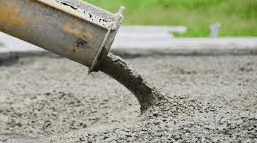
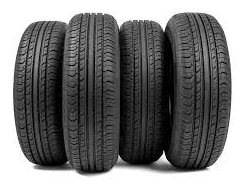
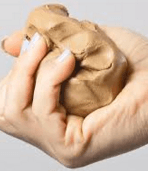
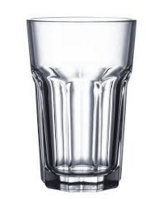

what is shown in the picture
Orientated strand board (OSB)
Particle board or chipboard
Plywood
Natural wood (is/is not) resistant to insect attacks.
(a)
Man-made wood is (cheaper/more expensive) than natural wood.
(a)
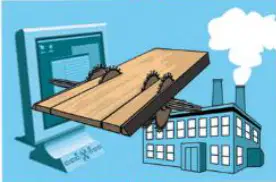
The process showed in the picture is usually executed in a:
SAWMILL
GRAINMILL
WOOLWORK SHOP
SEWMILL
Select the wrong answer.
The following metals are ferrous metal
IRON
STEEL
TIN
CAST IRON
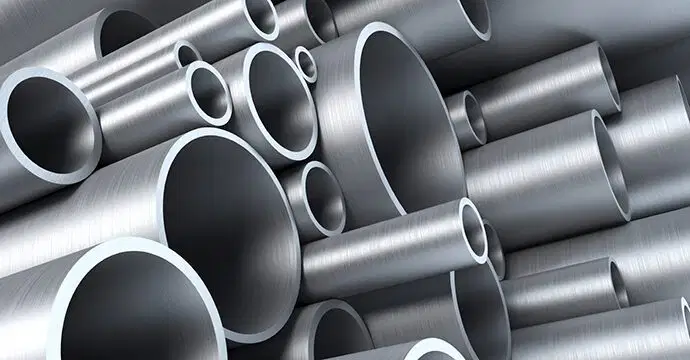
Steel is made mainly from iron with:
0,1% to 2% carbon
1% to 2% carbon
0,1% to 0,2% carbon
0,12% to 1,2% carbon

