
 Worksheets
Year 8 chemistry revision
Total questions: 40
Worksheet time: 31mins

Magnesium (Mg) can be burned in oxygen (O2) to produce solid magnesium oxide (MgO).
Mg(s) + O2(g)→ MgO(s)
Mg(s) + O(g) → MgO(s)
Mg(s) + CO2(g) → MgO(s) + C(s)
Mg(s) + O2(g) → Mg2O2(s)
Complete the word equation below.
Magnesium + oxygen --> .....
Magnesium
Magnesium oxide
Oxides
Magnesium oxide + water
Which of these is a chemical reaction?
boiling
burning
condensing
melting

The reaction of surface of atoms of a metal with oxygen, or other substances is called _________________
combustion
respiration
corrosion
reaction
The metals that do not reactive with oxygen.
Gold & Zinc
Zinc & Platinum
Platinum & Gold
Copper & Gold
Metal + Oxygen -->
Metal hydroxide
Metal oxide
Metal chloride
Salt
Pure elements are made up of
only one type of atom
two types of atoms
many kinds of atoms
every atom is exactly the same
Pure elements are made up of
only one type of atom
two types of atoms
many kinds of atoms
every atom is exactly the same
Silver marked with 900 is
925 atoms out of 1000 atoms
is more pure than 92.5%
900 atoms are other elements
90% pure
Pure diamonds are made of
carbon and nitrogen
carbon atoms only
carbon and hydrogen
carbon and boron
24 carat gold is
yellow
brown
red
grey
14 carat gold is
75% pure
100% pure
less than 58% pure
58 parts gold out of 24

Which two were the same mixture of dyes?
1 and 5
2 and 6
3 and 4
4 and 6

A sample of ink was compared with four different dyes using chromatography. The results are shown in figure below. Which two dyes does this ink contain?
1 and 2
1 and 4
2 and 3
2 and 4

Figure below shows a chromatogram obtained from a police investigation. Which suspect A, B, C or D is most likely to have been at the crime scene?
SUSPECT A
SUSPECT B
SUSPECT C
SUSPECT D
Why must the start line be drawn in pencil and not pen?
a) Pencil lead is good at keeping substances in place.
b) Pencil lead is soluble in water
c) Pencil lead is insoluble in water
d) Pencil lead is not coloured
Which of the following mixture/s is/are separated by chromatography?
Pigments from natural colours
Colours in a dye
Colours of flowers extracts
All the above

In an endothermic reaction, heat is ...
taken in
given out
Oxidation (rusting) is an exothermic reaction, what do I mean by exothermic?
Heat enters the reaction from the surroundings
Heat exits the reaction to the surroundings
The definition of solution.
The substance that does the dissolving
Solute
Solvent
Solution
Miscibility

A. 1
B. 2
C. 3
D. 4
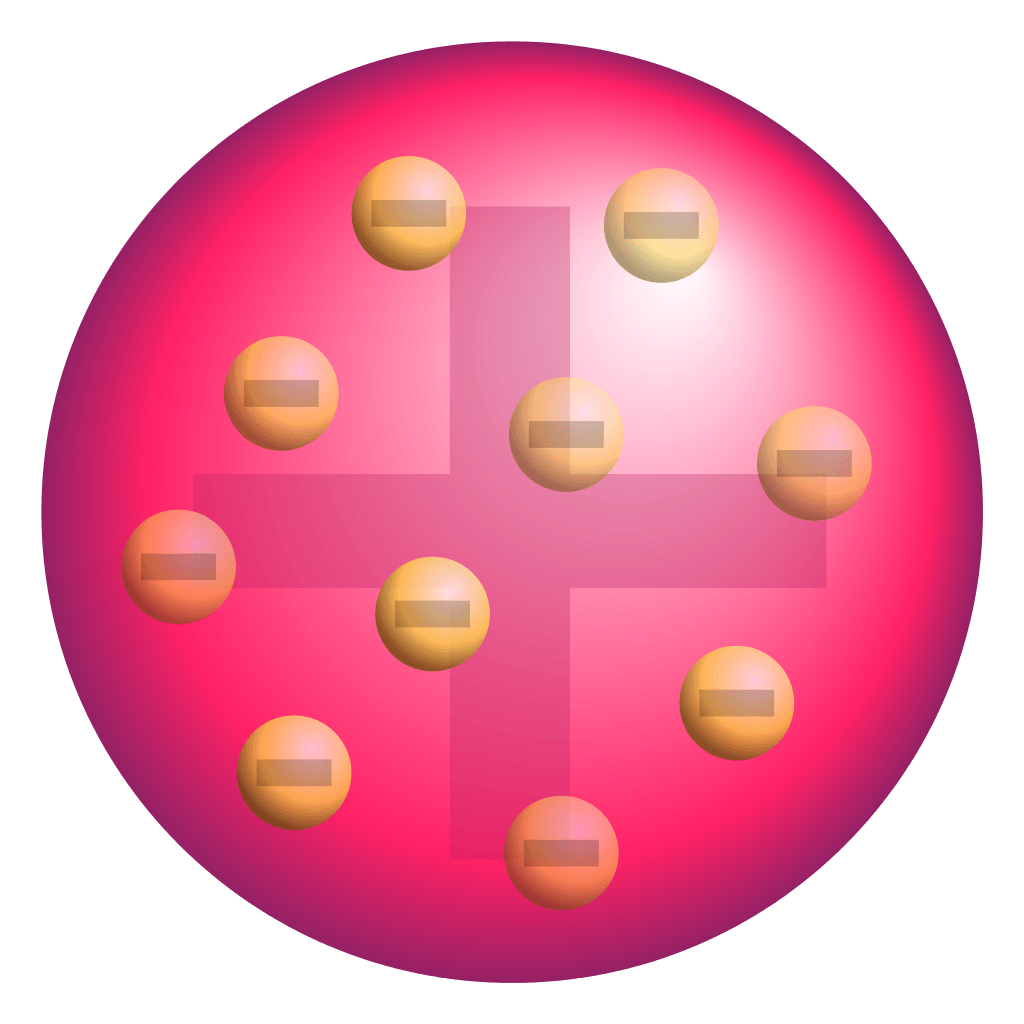

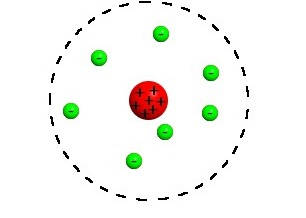
The atomic number for Oxygen is 8, so
there are 8 protons in the atom
the atomic mass is less than 8
the mass of the atom is 8
there are 8 electrons
The atomic number for Oxygen is 8, so
there are 8 protons in the atom
the atomic mass is less than 8
the mass of the atom is 8
there are 8 electrons
What is this subatomic particle that has no charge?
Electron
Neutron
Proton
Megatron
What is this subatomic particle that has positive charge?
Electron
Neutron
Proton
Megatron
What is this subatomic particle that has negative charge?
Electron
Neutron
Proton
Megatron
The center of an atom is known as the
nucleus
electron cloud
neutron cloud
mass circle



