
 Worksheets
ETP Unit 3
Total questions: 166
Worksheet time: 1hrs 25mins
During the 1600-1700’s, where did children primarily receive their education?
In the fields
In the church
In the home
In the school
What was the primary focus of instruction for women in the 19th century?
Reading and writing
Arithmetic
Sewing and knitting
Astronomy
What was the primary focus of instruction for men in the 1600-1700’s?
Farming
Reading and writing
Sewing
Cooking
In which city was the first school for African Americans in America established?
Washington D.C.
New York City
Boston
Philadelphia
What was the first formal teacher education program called?
Teacher's College
Normal Schools
Teaching Academy
Educator's Institute
Why did the students in the one room school house use slates? (select all that apply)
Slates could be used over and over again
Paper was expensive
They actually used whiteboards
None of these answers are correct
What was the focus of education in the 17th and 18th century, according to the text?
Rote learning and memorization
Problem based learning
Religious texts and history
Reading, writing, arithmetic
What was the average pay for teachers in the early 1700s?
High
Low
What was the normal school for?
A need in expanding professional teachers
A need in expanding students
A need to help the mentally ill
All of the above
What was the Bilinguial Educations Act of 1968 intended for?
Russian speaking ability
French speaking ability
Spanish speaking ability
English speaking ability
Which President signed the No Child Left Behind Act?
George W. Bush
Barack Obama
Bill Clinton
Ronald Reagan
What was the purpose of the Boston Latin School?
To bring English-like schools to America
To teach people to write
What was the first state to pass the law that states school attendance is required?
Massachusetts
Ohio
Arizona
Oregon
Opened in 1635, what was the first-ever school in what is now the United States?
The New Jersey Science HS
The New York Arts School
The Boston Latin School
The Philadelphia Grammar School
Which American city was the first to open public high school in 1821?
Boston
New York
Philadelphia
Washington DC
When was the first law passed in the United States that made education mandatory?
1852
1700
1915
1927
Who is credited with inventing the modern form of education in the United States?
John Andrew
Thomas Jefferson
Jonathan Mercer
Horace Mann
What was Horace Mann's vision for education in the state of Massachusetts?
a system where teachers could teach whatever they wanted
a system of teachers who would teach organized curriculum
a system where students create the curriculum
a system where students should study independently
On what subject did early public school focus?
family, religion and community
math and reading
science, math and trade skills
religion and science
In early American schools, girls did not have an option to pursue higher education.
True
False
When did public schooling become widespread in the South?
after Revolutionary War
during the Civil War
during the Reconstruction Era after the Civil War
during World War I
In 1954, which Supreme Court ruling declared segregated schools were unconstitutional?
Brown v. Board of Education
Dred Scott v. Sandford
Plessy v. Ferguson
Batson v. Kentucky
What two factors influenced the colonial period the most?
Religion & Language
Puritans & Religion
Puritans & Langauge
Who was responsible for opening an Academy?
Benjamin Franklin
John Locke
Horace Mann
Immigrants
The Old Deluder Satan Act was a law designed to produce citizens who understood the Bible and thwart Satan’s trickery
False
True
Which colony was the most diverse?
Southern
Middle
New England
women taught small groups of children in their homes during colonial times.
Academy
Public school
Magnet school
Dame school
Public schools that provide innovative or specialized programs and accept enrollment from students in all parts of a district
Public schools
Magnet schools
Academy
Designed to help 3-5 year olds disadvantaged children enter school ready to learn.
Head Start
Pull out programs
Title I
Title IX
Who successfully passed the nation’s first compulsory school attendance law?
John Locke
Benjamin Franklin
John Amos
Horace Mann
America was mainly rural and Children lived where
Penthouse
Hotels
Apartment
On farms
Franklin was a what
teacher,doctor,Chef,therapist
politic, scientist, writer, inventor
Gastroenterologist,Doctor, Scientist,a mom
teacher, writer,doctor, a stay at home dad
Franklin began the first what
Home
Library
Shoe store
make up store
Thomas Jefferson was what president
8th
1st
3rd
4th
Thomas Jefferson wanted what to be free
elementary
food
water
healthcare

In the beginning of the American Colonial Period, most education took place at _____.
A. elementary schools
B. dame schools
C. home
D. universities
During the American Colonial Period, parents paid a fee for their children to attend _____ schools, where students were taught by women in their homes.
A. normal
B. elementary
C. dame
D. common
A. normal
B. elementary
C. dame
D. common
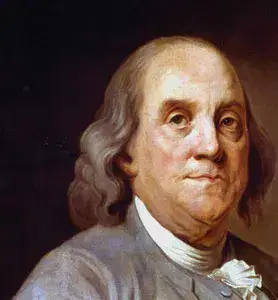
During the American Early National Period, _____ began the first public library.
A. George Washington
B. Thomas Jefferson
C. Alexander Hamilton
D. Benjamin Franklin
A. George Washington
B. Thomas Jefferson
C. Alexander Hamilton
D. Benjamin Franklin
_____ was responsible for developing the first public system of education.
A. George Washington
B. Thomas Jefferson
C. Alexander Hamilton
D. Benjamin Franklin
A. George Washington
B. Thomas Jefferson
C. Alexander Hamilton
D. Benjamin Franklin
Public schools available to children from all levels of society, or _____ schools, were introduced in the American Common School Period. (Unit 2:C1)
A. normal
B. elementary
C. dame
D. common
A. normal
B. elementary
C. dame
D. common
The Quaker Schools were open to girls, African-Americans, and Native Americans as early as 1600.
true
false
Enslaved people (slaves) were taught along with the children of middle-class families.
true
false
Educational change and reform began in the rural areas and then spread to the urban areas.
true
false
Before the Civil War, laws existed to keep African-Americans from receiving an education because whites feared that education would lead to rebellion.
true
false
The increase in population after World War II resulted in the need for more schools and teachers.
true
false
The outcome of Brown v. Board of Education of Topeka, Kansas was separate but equal schools for all Americans.
true
false
School districts receive sufficient funds for federally mandated programs.
true
false
In many cases, property taxes fund education and, therefore, the communities that need the most often have the least amount of funds.
true
false
Teachers are often the first people to see signs of students facing significant problems.
true
false
Who is considered to be father of American education?
John Dewey
William Wirt
Book T. Washington
Horace Mann
Which of the following educational approaches was advocated by John Dewey?
Child-centered approach
School-centered approach
Content-centered approach
. Teacher-centered approach
Which of the following laws called for an end to segregation in schools?
No Child Left Behind Act
Higher Education Act
Equal Educational Opportunities Act of 1974
The Civil Rights Act of 1954
What is the Morill Act know as?
Revolution Congress Act
Land-Grant College Act
American Civil Act
All of the Above
A classical secondary school in colonial America that emphasized elements of Latin and English
grammar schools and by the nineteenth century became more of a college preparatory school.
Common School
Dame School
Franklin Academy
Normal School
The first version of school or college for the training of teachers.
Common School
Dame School
Franklin Academy
Normal School
An early form of a private elementary school in English-speaking countries. They were usually taught by women and were often located in the home of the teacher.
Common School
Dame School
Franklin Academy
Normal School
A public school in the United States during the nineteenth century.
Common School
Dame School
Franklin Academy
Normal School
The first version of school or college for the training of teachers.
Common School
Dame School
Franklin Academy
Normal School
Which of the following is the first college in the United States?
College of William and Mary
Harvard
Spellman
Yale
Which of the following men is considered the Father of Public Education
Horace Mann
John Dewey
Booker T. Washington
Lyndon B. Johnson
Which of the following court cases started the segregation of schools in order to create “separate but equal” school for Caucasian and African American students?
Brown v Board of Education
Marbury v Madison
Plessy v Ferguson
Roe v Wade
Why was the Old Deluder Satan law important?
It created formal training for teachers
It helped spread religion in the colonies
It separated the church and school
It was the attempt to make school mandatory
Which of the following was the main purpose of education during the colonial period?
To give everyone an equal chance
To further the spread of religion
To make a more educated workforce
To make educated citizens
Required by law.
Compulsory
Voluntary
Negotiable
Someone who learns a skilled trade by watching and helping someone in that trade in early America
Journeyman
Apprentice
Tutor
Student
The quality of being fair and impartial.
Objective
True
Honesty
Equity
A relationship between an individual and a government in which the individual participates in systems and processes and the government provides services.
Declaration of Independence
Advocacy
Citizenship
Democracy
The teaching of children.
Pedagogy
Andragogy
The first widely used textbooks published during the American Common School Period that included moral lessons along with science, grammar, and other subjects. Was written by Reverend William Holmes McGuffey. Their wide use contributed to standardization of American education
Hornbook
Dictionary
McGuffey Reader
Bible
A teacher training school in early America
Common School
Normal School
Dame School
Teacher College
This was the first public state supported schools available to children from all levels of society.
College
Private School
Normal School
Common School
This early textbook contained the letters of the alphabet, numbers and a prayer. It was used in early colonial America.
Slate
Bible
Hornbook
McGuffey Readers
Schools run by women in their own homes. Parents paid a fee for their children to attend.
Free School
Public School
Private School
Dame School
Horace Mann was one of the implementers of
insurance plans for teachers
public school development
curriculum planning
professional development
Schools that women opened in their homes to teach girls and boys to read and write
dame school
common school
McGuffey Readers
teacher unions
The first public state-supported schools that gave the same education to people from different levels of society.
dame school
common school
community school
homeschool
An African American progressive who supported segregation and demanded that African American better themselves individually to achieve equality.
Horace Mann
Booker T Washington
John Dewey
Benjamin Bloom
Gave federal land to the states to help finance agricultural colleges.
Morrill Act
Land Act
National Defense Education Act
Vocational Education Act
John Dewey led movement that focused on personal growth, not mastery of body of knowledge and learning through experience.
Booker T Washington
Horace Mann
John Dewey
Benjamin Bloom
United States educator who worked to improve race relations and educational opportunities for African Americans (1875-1955).
Horace Mann
Mary McLeod Bethune
Booker T Washington
John Dewey
A part of the Education Amendments of 1972, __________ protected individuals from discrimination based on gender.
Title IV
Title IX
Title X
Title XI
The Elementary and Secondary Education Act was passed to
mandated standardized curriculum
develop the mental resources and technical skills of young people
establish minimum cut scores for passing grades
increase teacher salaries
Horace Mann was one of the implementers of
insurance plans for teachers
public school development
curriculum planning
professional development
The piece of legislation requires government-run schools that receive federal aid to administer state-wide standardized tests annually for all students.
National Competency Testing Act
Title IX
No Child Left Behind
Educational Testing Standard Act
The desegregation of public schools, which took place in 1954, was a landmark case known as
Brown vs Board of Education
Plessy vs Ferguson
Equal Protection Clause
The Civil Rights Movement
Which Act has impacted the classroom by putting a large amount of funding into ensuring high-quality professional development for teachers?
The Family Educational Rights and Privacy Act
National Child Protection Act of 1993
The No Child Left Behind Act of 2001
USA Patriot Act of 2001
Education became a __________ responsibility by virtue of not being addressed in the Constitution
Federal
State
___________ schools were the first public, free American elementary schools.
dame
common
high
middle
Teacher preparation institutions called ____________ schools were created to respond to the need for more teachers with increased and consistent preparation.
normal
common
dame
high
In 1965, Congress passed the _______________ which initially provided extra money for school districts with low income families, and now applies to a variety of education reforms.
Elementary and Secondary Education Act
Vocational Education Act
Civil Rights Act
No Child Left Behind Act
During the 1970's, the Education for All Handicapped Children Act and ___________ increased educational opportunities for all children.
Title IX
Title X
Title XX
Title XI
Franklin Academy - free from religious influence a move away form Latin Colleges students got to choose areas of study
Benjamin Franklin
Thomas Jefferson
George Washington
Horace Mann
wanted to educate the masses not just the wealthy
Benjamin Franklin
Thomas Jefferson
Horace Mann
Andrew Jackson
African American progressive who supported segregation and demanded that African American better themselves individually to achieve equality.
Booker T Washington
Maria Montessori
Thomas Jefferson
Horace Mann
famous for her belief in sensory driven learning
Maria Montessori
Booker T Washington
Thomas Jefferson
Horace Mann
Established a hierarchy of educational objectives that attempted to divide cognitive objectives into subdivisions ranging from simplest to most complex behavior.
Benjamin Bloom
Mary McLeod Bethune
Horace Mann
Booker T Washington
Classification awarded to teachers by the NBPTS that certifies they have met certain high criteria for teaching skills
collective bargaining
pedagogy
teacher's license
board-certified
Generally a teacher preparation program, consisting of academic subjects and teaching methodology
normal school
secondary school
American Federation of Teachers
alternative education
credential issued by state governments that grants the legal right to teach
board-certified
pedagogy
teacher's license
networking
process by which teachers are represented by an agent who negotiates salary, working conditions, and other employment
American Federation of Teachers
National Board for Professional Teaching Standards
collective bargaining
pedagogy
a collection that showcases examples of a teacher's best work and demonstrates professional growth over time
portfolio
resume
networking
pedagogy
assesses and certifies outstanding teachers
teacher license
National Board for Professional Teaching Standards
American Federation of Teacher's
pedagogy
the science and art of teaching
psychology
networking
teacher's license
pedagogy
means of preparing teachers through structured apprenticeship, a sort of on-the-job training
tenure
board-certification
networking
alternative teacher education
an expectancy of continued employment
tenure
pedagogy
board-certification
teacher's license
the process by which prospective teachers get licensed to teach within a given area after completing required coursework, degrees, tests, and other specified criteria.
Specialist Degree
certification
advancement opportunity
alternative education
Which of the following paths to becoming an educator includes a four year degree in education, receiving certification, and being hired as a teacher?
traditional
non-traditional
non-teaching educator
administrator
an organization for students working towards a degree in education
GaTAP
NBPTS
FEA
SPAGE
The term for a first level of graduate study completed after a bachelor's degree. It's an advancement opportunity for an educator.
specialist degree
doctoral degree
master's degree
associates degree
Which of the following is not a benefit of becoming a teacher?
pay equal to the importance of the job
retirement
health insurance
major holidays off from work
This type of teacher works daily with a paraprofessional in their classroom
middle school
PreK
elementary school
high school
Which of the following IS NOT a place that teachers work as part of the field of education?
literacy programs
schools
technical colleges
department stores
The term for a 4 year academic degree given by colleges or universities
Associate's Degree
Doctoral Degree
Bachelor's Degree
Specialist Degree
Master's Degree
Which of the following is NOT a type of teaching specialist?
Foreign Language Teacher
Music Teacher
CTAE Teacher
Reading Teacher
This type of teacher typically specializes in teaching one or two areas, like social studies and science
middle school
elementary school
high school
preK
The term for the highest level of academic degree
specialist
assosicate's
bachelor's
doctoral
master's
a percentage of EXTRA pay that teachers get within their district
salary
pedagogy
local supplement
all the other choices are correct
type of teacher that typically specializes in one subject or group of related subjects and has additional responsibilities outside of teaching , such as coaching, being a club advisor or chaperoning a trip/dance
middle school
post-secondary
high school
elementary school
fixed regular payment, typically paid on a monthly or biweekly basis but often expressed as an annual (yearly) sum
local supplement
stipend
salary
all of the other choices are correct
method and practice of teaching, especially as an academic subject or theoretical concept
collective bargaining
pedagogy
teacher's license
board-certified
Which of the following paths to becoming a teacher includes a Bachelor's degree, a teacher's license, and then getting hired to teach?
Administrator
Traditional
Non-Teaching Educator
Non-traditional
Which of the following paths to becoming an educator includes a four year degree, being hired as a teacher on a provisional license, and completing course work to receive full certification?
Administrator
Non-Teaching Educator
Traditional
Non-traditional
a post-master's degree program
doctoral
bachelor's
associate's
specialist
type of school where great exploration takes place, language development, social development, and introduction of scientific and mathematical concepts
elementary school
high school
middle school
preK
serves students ages 4-5 and has a strong focus on learning through play
middle school
elementary school
high school
PreK
moving to a higher position within a given career
Doctoral Degree
Advancement Opportunities
Certification
Specialist
type of teacher who specializes/spends the year teaching in one grade level, however, some may be across multiple levels
PreK
middle school
elementary school
high school
in this type of school, learning is less structured, incorporating more projects and activities; students can be lively and creative
middle school
high school
elementary school
PreK
In this type of school, topics are studied more in depth; students may have 5-7 classes and teachers in a day
middle school
high school
elementary school
Prek
The National Board for Professional Teaching Standards was created due to the influence of
the Holmes Group
No Child Left Behind
alternative teacher education programs such as Teach for America
the Carnegie Group
Modern efforts to reform education began in the
1930s
1990s
1980s
2000
Alternative education programs for teachers
are available only in a few states
are producing better teachers than traditional programs do
are becoming increasingly popular
all of the other choices are correct
All of the following statements are true about teacher licenses except
board certified teachers are exempt from licensure requirements
colleges and universities do not issue teacher license
requirements for licensure vary from state to state
possession of a teacher's license give the holder the right to teach
A written summary of a job seeker's employment objectives, experience, education, skills, & personal information.
perks
resume
portfolio
networking
Many professions require their members to earn some type of license or ____________________________ in order to practice the profession. For example, hairdressers and lawyers must be licensed as well as doctors. Teachers in the state of Georgia must be certified.
certification
resume
perks
portfolio
"Father of Public Education" He established the first public normal school in 1839.
Anne Hutchinson
Roger Sherman
Rev. Samuel Hall
Horace Mann
______________________ is the art or science of teaching; education; instructional methods
standards
pedagogy
certification
predestination
Complete a college degree program for teachers that includes course work, practicum and student teacher; take certification test; obtain certificate from the state to teach.
Traditional Teacher Preparation
Teach For America
GaTAPP
normal schools
Historically, the first American institution devoted exclusively to teacher training . . . 2 year program.
university
normal schools
college
teacher residency
In 1823, established a normal (Fr. ecole normale, a school that establishes model standards) private school in Concord, VT which marked the beginning of formal teacher education
Roger Sherman
Anne Hutchinson
Horace Mann
Rev. Samuel Hall
Alternative teacher preparation program founded by Wendy Kopp as part of her undergraduate thesis at Princeton. Recruits teach for two years in under-resourced urban and rural schools
Traditional Teacher Preparation
Teacher Residency
TFA Teach for America
Teacher Apprenticeship
An academic degree which usually takes four years to earn and is awarded by a college or university.
master's
bachelor's
doctoral
specialist
An advanced 2-year program completed after attainment of a bachelor's degree.
doctoral degree
bachelor's degree
master's degree
specialist
Improving or gaining new skills related to career is called ___________________________
professional development
mission
vision
motto
This organization began in 1857 and it is the largest professional and employee organization in the nation with 3 million members.
FGE (Future Georgia Educators)
NEA (National Education Association)
AFT (American Federation of Teachers)
GAE (Georgia Association of Educators)
This organization began in 1916. John Dewey was the first member and it is exclusively for teachers.
FGE (Future Georgia Educations)
GAE (Georgia Association of Educators)
NEA (National Education Association)
AFT (American Federation of Teachers)
Provides essential service to society; concerned with specific need; possesses a unique body of knowledge; decisions are research based; based on its disciplines of knowledge/skills;
job
hobby
apprenticeship
profession/career
During the Colonial Era in America _________________ served as teachers to pay off a debt (someone paid for their voyage over here).
indentured servants
slaves
women
Europeans
New York, California and _________________________ pay teachers the most in the United States.
Pennsylvania
Georgia
Louisiana
Florida
Arrive __________________ minutes before your interview.
20
10
15
30
__________________________ skills are teachable and measurable abilities such as writing, reading and math.
Soft
Hard
Important
Flexible
______________________ skills are the traits that make you a good employee such as communication, getting along with others and office etiquette.
Important
Flexible
Hard
Soft
When you go to your interview you should always take your _________________________ and _____________________.
phone and business card
resume and phone
resume and CV (communication vitae)
resume and CP (communication portfolio

