
 Worksheets
Chemistry Review!
Total questions: 37
Worksheet time: 22mins
How do you find the number of neutrons in an atom?
It's the same as the atomic #
It's the same as the mass number
Subtract the atomic # from the mass number
Add the mass number and the atomic #

How many neutrons does beryllium have?
4
5
9
13

What is the atomic number of silicon?
14
28
42
7

How many neutrons are in magnesium?
12
24
25
36

How many electrons does oxygen have?
8
16
2
15
An electron has what charge?
Positive
Negative
It has no charge (it is neutral)
A proton has what charge?
Positive
Negative
It has no charge (it is neutral)
A proton has what charge?
Positive
Negative
It has no charge (it is neutral)
A neutron has what charge?
Positive
Negative
It has no charge (it is neutral)


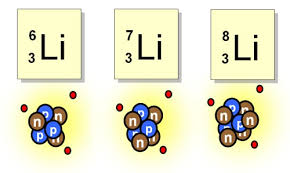
An atom that has gained or lost electrons in an attempt to become stable/bond with another atom.
Normal/Neutral Atom
Ion
Isotope
A negatively charged ion that has gained electrons to satisfy the octet rule (metals do this)
Anion
Cation
Neutral Atom
Isotope
A positively charged ion that has lost electrons to satisfy the octet rule (non-metals do this)
Anion
Cation
Neutral Atom
Isotope
Atoms of the same element that have different mass than expected because they have a different number of neutrons.
Neutral Atom
Ion
Isotope
Cation
If an atom has 9 protons and 10 electrons it has a charge of ____.
0
-1
+1
-2
If an atom has 4 protons and 2 electrons it has a charge of ____.
0
-2
+2
+1
If an atom has a charge of +3 and an atomic number of 5 it should have _______ electrons.
1
2
3
4
If an atom has a charge of -2 and an atomic number of 16 it should have _______ electrons.
14
16
18
20
If an atom has a charge of 0 (neutral) and an atomic number of 8 it should have ____ electrons.
0
8
7
9
Ionization energy __________ as you go across a period
stays the same
decreases
increases
Ionization energy __________ as you go down a group.
stays the same
decreases
increases

Which element has the greater ionization energy?
Magnesium (Mg)
Phosphorus (P)

Which element has the greater ionization energy?
Iodine (I)
Chlorine (Cl)

Why is there a large jump in ionization energy 1 and 2 for Lithium?
the valence electrons are harder to lose than core electrons
the valence electrons are easier to lose than core electrons

Where is there a big jump of ionization energy increase for the element Silicon(Si)?
between 1 and 2
between 6 and 7
between 7 and 8
between 4 and 5

Which of the following lists the atoms in order of increasing Ionization energy?
calcium, iron, copper
copper, iron, calcium
calcium, copper, iron
iron, copper, calcium

Which element's atom is larger? Nitrogen or Phosphorus?
Nitrogen
Phosphorus

Which element's atom is the smallest?
Rhodium
Silver
Cadmium
Tin

Which has the greater electronegativity:
N or C?
C
N

Which has the greater electronegativity:
Cl or Al?
Cl
Al

