
 Worksheets
Evidence of Evolution
Total questions: 10
Worksheet time: 6mins

What are homologous structures?
Structures in different species that are similar because of common ancestry.
Structures that have the same function in different species but do not have common ancestry.
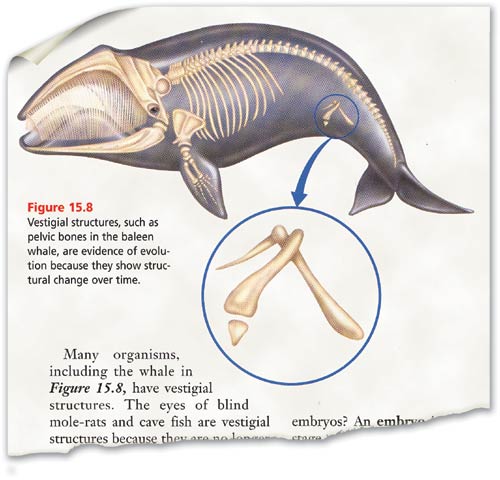
Structures that are present in an organism but have no apparent function.
Identical structures found in closely related species.
Fossil records have shown a progression from simple to more complex organisms. This supports the theory of evolution by suggesting:
Instantaneous creation of all life forms.
Gradual change and increasing complexity over time.
That complex organisms have always existed.
That there is no link between different life forms.
Why are homologous structures considered evidence for common ancestry?
Because they perform the same function in different species.
Because they show that different species can evolve independently to have similar structures.
Because they indicate that different species have structures that are similar in position and structure but may differ in function.
Because they are structures that are no longer needed but still appear in the organism.
Which of the following best describes vestigial structures?
Structures that are fully functional and essential for survival.
Structures that have lost all or most of their original function in the course of evolution.
Structures that have evolved to perform a new function.
Structures that are found only in embryonic stages.
Comparative embryology provides evidence for evolution because it shows that:
Adult forms of different species look similar.
Embryos of different species pass through similar stages, suggesting a common ancestry.
The DNA of embryos from different species is identical.
Embryos of all species develop at the same rate.
The study of biogeography can help explain:
Why unrelated species in different parts of the world look similar.
Why similar habitats across the world can be home to very different species.
How species have spread and adapted to different environments over time.
All of the above.
What is the role of DNA in the study of evolution?
It provides evidence of the age of fossils.
It shows the physical characteristics of extinct species.
It reveals the genetic similarities and differences between species, suggesting common ancestry.
It has no role in the study of evolution.

