
 Worksheets
The Crucible Review :)
Total questions: 13
Worksheet time: 15mins

Which theme is MOST evident when Proctor refuses to sign the confession?
Integrity
Mass Hysteria
Reputation
Corruption

The Salem Witch Trials in The Crucible symbolize:
The importance of justice
The power of forgiveness
The dangers of mass hysteria
The inevitability of sin

How does the theme of power and authority evolve between Act 3 and Act 4?
In Act 3, the court holds power through honesty and justice. By Act 4, its authority is unquestionable as individuals like Proctor and Rebecca Nurse maintain compliance over personal integrity.
In Acts 3 and 4, it becomes apprent the court's authority is absolute.
In Act 3, everyone begins to question the courts authority and legitimacy, however by Act 4 individuals such as Goody Proctor and Rebecca Nurse can no longer dispute the fact the courts proceedings are working.
In Act 3, the court holds power through fear and manipulation. By Act 4, its authority is questioned as individuals like Proctor and Rebecca Nurse maintain personal integrity over compliance.

Who said it? "“Because it is my name! Because I cannot have another in my life!”
John Proctor
Parris
Hale
Abigail Williams

Who says, “More weight,” and why is it significant?
Giles Corey. Corey’s defiance symbolizes resistance to injustice and his unwillingness to betray anyone else, even at the cost of his life.
Putnam. Putnam's willingness to betray others for his own selfish reasons symbolizes a lack of compassion even at the cost of a life.
Reverend Hale says 'more weight' as a way to symbolize the heavy burden of guilt he feels for his role in the trials.
John Proctor says 'more weight' to show that he is ready to face death rather than tarnish his reputation by confessing to a lie.
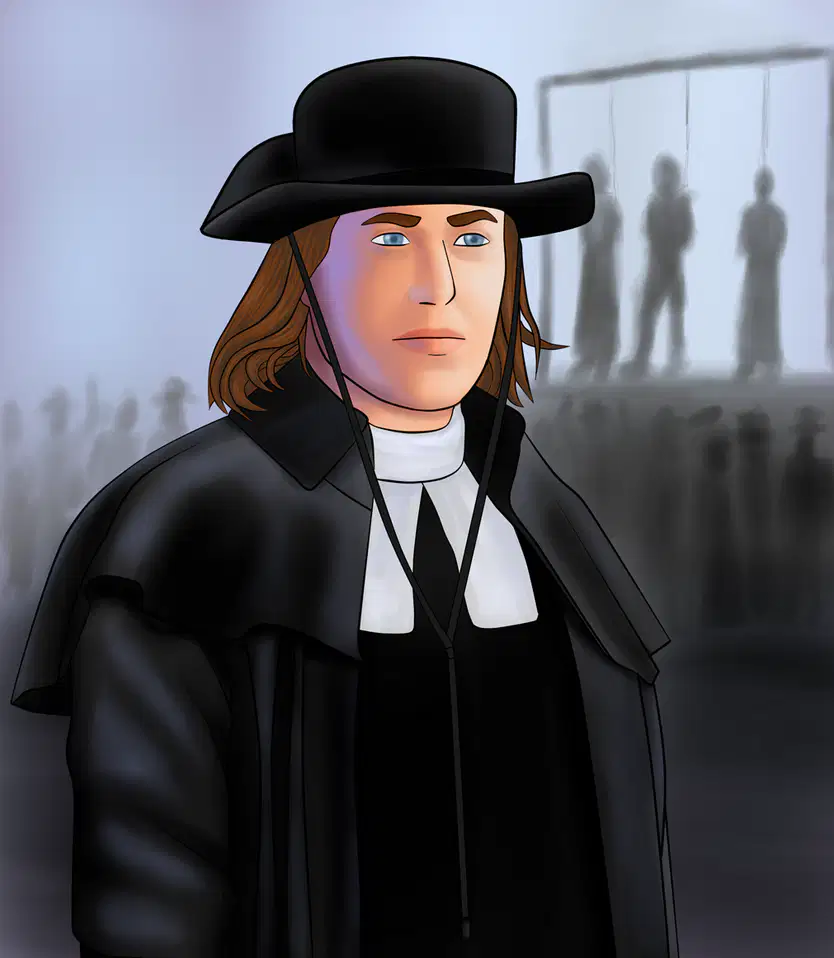
How does Reverend Hale’s perspective on the court change from Act 3 to Act 4, and what does this say about his character?
Reverend Hale’s perspective on the court doesn’t change; he continues to believe in the court’s justice but becomes frustrated with its slow process in punishing the guilty.
Hale’s perspective shifts because he decides that the court is a necessary evil to maintain order in Salem, even if it requires sacrificing innocent lives.
Hale’s change shows his growing ambition to take over the court and fix its mistakes, proving that he believes in his own ability to administer justice better than Danforth.
Hale transitions from a firm believer in the court’s mission to an outspoken critic of its corruption. This shift highlights his moral conflict and eventual recognition that justice is not being served.

What role does fear play in the actions of the characters in Act 3 and Act 4?
Fear compels characters like Danforth to maintain the court's authority at all costs.
Fear leads characters like Hale to question the court's authority and seek redemption.
Fear causes characters like Proctor to confess to witchcraft to save their lives.
Fear drives characters like Abigail to manipulate others to maintain her power.

Who said it to whom? “We cannot look to superstition in this. The Devil is precise." What is the significance?
John Proctor says this to Reverend Hale to challenge Hale’s reliance on spectral evidence in the trials.
Elizabeth Proctor says this to John Proctor to dismiss the accusations of witchcraft against her.
Reverend Hale says this to the people of Salem, showing his early confidence in identifying witchcraft through evidence.
Judge Danforth says this to the court to justify his harsh rulings and reliance on witnesses like Abigail.

How does Elizabeth’s statement, “He have his goodness now. God forbid I take it from him,” reflect her growth as a character?
Elizabeth’s statement shows her growth because she forgives John for his affair with Abigail, which she believes restores his moral character in the eyes of the community."
Elizabeth’s statement reflects her growth because she realizes that confessing to witchcraft is the only way for John to redeem himself, and she supports his decision to lie.
Elizabeth accepts Proctor’s decision to maintain his integrity. This shows her emotional growth from earlier in the play when she doubted his goodness due to his affair with Abigail.
Elizabeth’s statement shows her growth because she recognizes that John’s goodness comes from proving the court’s corruption and leading a rebellion against it.
How does the concept of reputation influence the decisions of the characters in The Crucible?
Reputation drives Proctor to refuse to sign a false confession, valuing his name over his life.
Reputation causes Hale to initially support the court's actions to maintain his credibility.
Reputation influences Elizabeth to lie about John's affair to protect his name.
Reputation leads Abigail to accuse others of witchcraft to protect her own standing.

How does the theme of hysteria manifest in the actions of the townspeople in The Crucible?
Hysteria encourages the townspeople to seek forgiveness from the accused.
Hysteria results in the townspeople forming a rebellion against the court.
Hysteria causes the townspeople to flee Salem in fear of being accused.
Hysteria leads the townspeople to support the court's decisions without question.

Who says, “A man may think God sleeps, but God sees everything, I know it now,” and to whom, and why is it significant?
Elizabeth Proctor says this to John Proctor to reveal her acceptance of her own sins.
John Proctor says this to Elizabeth, reflecting his realization that he cannot escape accountability for his sins showing a turning point in Proctor’s moral journey.
Reverend Parris says this to Judge Danforth to admit his guilt in supporting false accusations.
Abigail Williams says this to the court to manipulate them into believing she is acting under divine guidance.
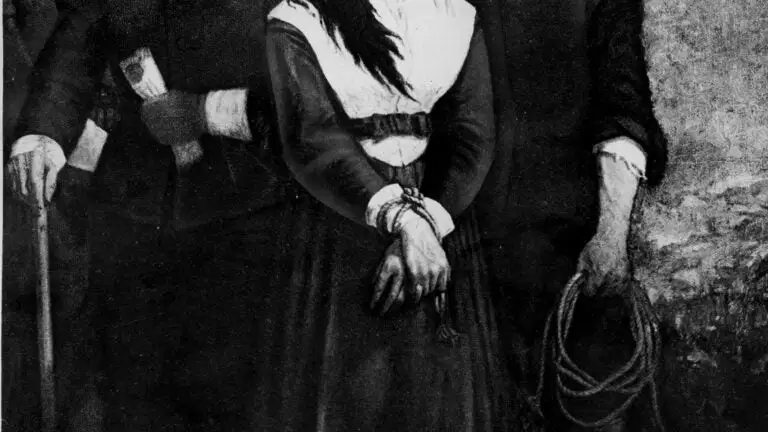
How do power dynamics shift between Abigail Williams and the court throughout the play, and what does this shift suggest about authority in Salem?
The power dynamics remain constant, as Abigail is always subordinate to the court and its decisions. There is no shift in authority.
The court eventually overpowers Abigail, holding her accountable for her actions and ending the trials fairly. The shift in proceedings of the court suggests that positive change is coming to Salem.
Abigail initially controls the court through manipulation, but her power fades when her credibility is questioned, leading her to flee Salem. This shift shows how authority in Salem is fragile and easily corrupted by fear and personal agendas.
Abigail loses her power early in the play when John Proctor publicly confronts her about their affair. The shift in the relationship between the two suggests that anyone is susceptible to false accusations.

