
 Worksheets
Cells Quiz
Total questions: 39
Worksheet time: 27mins
Which of the following cell parts are found in ALL cells...eukaryotes and prokaryotes. (3)
cytoplasm
ribosomes
cell membrane
mitochondria
choroplasts
Which of the following is found only in eukaryotic cells and not prokaryotic cells?
mitochondria
cytoplasm
ribosomes
cell wall
What organelle has protein production as its function?
vacuole
smooth endoplasmic reticulum
ribosomes
nucleus
What organelle maintains cell homeostasis by controlling which substances can enter and exit a cell?
cell membrane
rough endoplasmic reticulum
golgi bodies
centrosome
Which of the following are only found in PLANT cells (and most bacteria) and not in animal cells.
lysosome
mitochondria
cell wall
nucleus
Which of the following are only found in PLANT cells (and many protists like algae) and not in animal cells.
chloroplast
smooth endoplasmic reticulum
cytoplasm
ribosomes
Prokaryotic organisms can be multicellular.
True
False
Prokaryotic cells include which of the following?
plants
animals
fungi
bacteria

What type of cells is pictured?
Eukaryotic - animal
Eukaryotic - plant
Prokaryotic - animal
Prokaryotic - plant
This organelle is found only in animals and functions in digesting bacteria and old cell parts:
central vacuole
lysosome
golgi bodies
cytoplasm
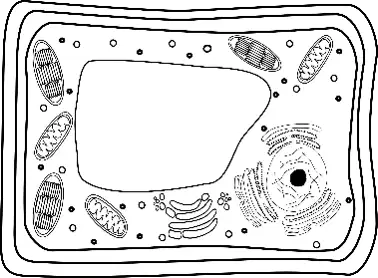
What cell is pictured below.
bacteria
plant
animal
fungi

What is the function of this organelle pictured below?
It modifies, sorts, and ships proteins
It provides structure for the cell.
It is the site of photosynthesis
It stores food and water

What organelles is responsible for converting glucose to usable cell energy (ATP)? It is known as the powerhouse of the cell.
ribosome
lysosome
endoplasmic reticulum
mitochondria


Which of the following is NOT a major component of the cell membrane?
Nucleic acids
Phospholipids
Proteins
Carbohydrates

Concentration gradient just means concentration __________________ of a solute from one area to another.
placement
difference
homeostasis
disequilibrium
What is the primary role of cholesterol in the cell membrane?
To facilitate cell communication
To transport nutrients
To stop hydrophobic molecules from entering.
To help maintain membrane stability.
What does the term 'semipermeable' mean in relation to the cell membrane?
Completely impermeable to all substances
Selectively allows certain molecules to pass
Only allows large molecules to pass
Allows all substances to pass freely
How does the concentration gradient affect molecular (small and uncharged) movement across the cell membrane?
Molecules can only move if energy is supplied
Concentration gradients have no effect on movement
Molecules move from higher to lower concentration
Molecules move from lower to higher concentration
Which transport mechanism requires energy to move substances across the cell membrane?
Active transport
Facilitated diffusion
Passive transport
Osmosis
Since oxygen and carbon dioxide are small molecules they are able to go directly across the cell membrane without the use of energy (ATP). Which process do they use?
Exocytosis
Protein pumps
Osmosis
Diffusion
What happens to a cell placed in a hypertonic solution?
The cell will absorb more solute
The cell will remain unchanged
The cell will lose water and shrivel
The cell will swell and burst
If a molecule moves into the cell through a channel protein from a higher concentration to a lower concentration, what type of transport is this?
Osmosis
Facilitated diffusion
Protein pump
Exocytosis
What type of transport is used when a cell takes in a very large molecule using energy?
Protein pump
Diffusion
Facilitated diffusion
Endocytosis
In which type of solution is a cell likely to experience no net movement of water?
Hypotonic
Isotonic
Mesotonic
Hypertonic
What cell structure is gel-like and suspends the other cell parts?
nucleus
cytoplasm
mitochondria
smooth endoplasmic reticulum
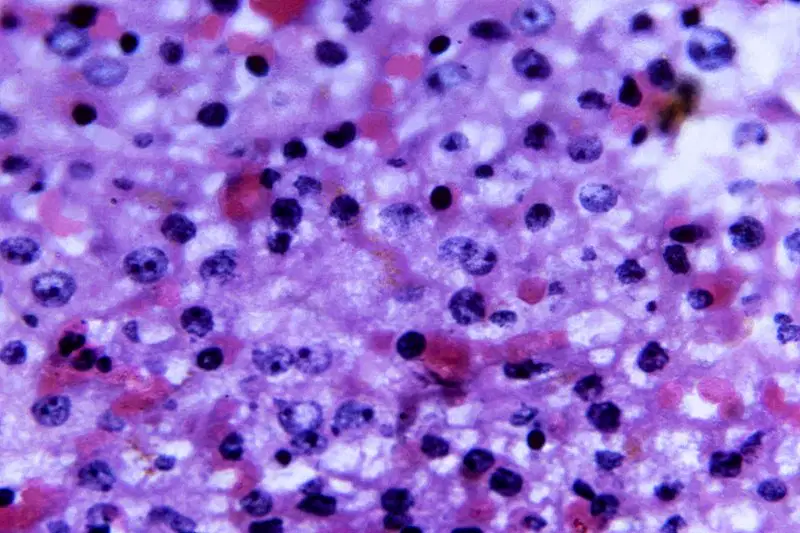
Which organelle in eukaryotes houses the DNA and is visible under the microscope (the darker purple)?
ribosomes
cytoplasm
nucleus
vacuole
(a) build different kinds of (b) which build (c) which build (d) which build (e) .
tissues
organs
organ system
organisms
Cell types
proteins
lipids
The outer layer of our skin is made up of a tissue called the epidermis. It is made up of (a) cells and is where the (b) , which are responsible for skin color, are located. The layer under that is called the dermis and is where the (c) tissue and (d) follicles are located. All these types of cells work together to perform the important function of the (e) .
Which organelle is responsible for packaging and distributing proteins within the cell?
Golgi apparatus
Ribosome
nucleus
Lysosome
What is the primary function of the smooth endoplasmic reticulum in a cell?
Protein synthesis
Lipid synthesis
DNA replication
Photosynthesis
Which process involves the movement of water across a semipermeable membrane?
Active transport
Endocytosis
Osmosis
Facilitated diffusion

In which part of the plant cell does photosynthesis take place?
Nucleus
Mitochondria
Chloroplast
Ribosome
Match the following.
DNA stored here
Nucleus
Organelle that assembles proteins.
Ribosomes
The instructions to make proteins.
DNA
Building blocks of proteins
Amino acid
Organelle that helps produce and modify proteins.
Endoplasmic Reticulum
Drag and label the parts of the phospholipid bilayer.
hydrophilic
hydrophobic
Labeling the following organelles to the plant cell.
nucleus
cell wall
vacuole
mitochondria
chloroplast
(a) cells are more primitive. They have no (b) or other membrane bound organelles. They are generally (c) and include (d) and (e) .
All eukaryotic organisms are multicellular.
True
False

