
 Worksheets
The Movement of Shadows
Total questions: 49
Worksheet time: 25mins
What causes a shadow to form?
A source of light and an opaque object
A source of light and a transparent object
A source of light and a reflective object
A source of light and a translucent object
Why do shadows change position during the day?
Because the Earth rotates
Because the sun moves around the Earth
Because the moon blocks the sun
Because the stars change position
What happens to your shadow when you walk away from a street light?
It appears in front of you
It disappears completely
It stays behind you
It gets shorter
What happens to the shadow of a lawn chair when the sun is directly overhead at noon?
The shadow becomes longer and moves to the side.
The shadow disappears completely.
The shadow becomes smaller and appears below the chair.
The shadow becomes larger and covers the entire lawn.
What is a sundial used for?
Measuring temperature
Telling time using shadows
Predicting weather
Navigating directions
What is the gnomon on a sundial?
A type of clock
A shadow-casting piece
A type of star
A planet
Who were the scientists that noticed planets move differently from stars?
Isaac Newton and Albert Einstein
Galileo and Nicholas Copernicus
Marie Curie and Louis Pasteur
Charles Darwin and Gregor Mendel
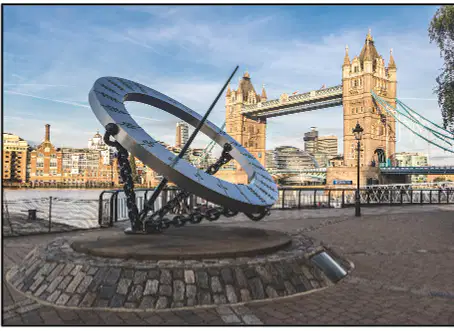
This is a large sundial located near Tower Bridge in London, England. As the Earth rotates on its axis, the sun appears to move across the sky. The center part in the sundial will then create a shadow from the sun. That shadow can be used to tell time. The circular part of the sundial is set up like the clocks that we’re familiar with. This one has round dots engraved along the border.
A large clock tower
A digital clock
A large sundial
A solar panel
What is the meaning of the word "shadow"?
A dark area or shape produced by a body coming between rays of light and a surface
A bright light that illuminates an area
A type of weather condition
A loud noise
What does the word "source" refer to?
The beginning or origin of something
A type of fruit
A kind of animal
A musical instrument
What does "position" mean?
The location or arrangement of something
A type of food
A type of clothing
A type of vehicle
What does the word "perspective" mean?
A way of looking at something
A type of drawing
A mathematical tool
A type of measurement
What is an "angle"?
A type of fruit
A measure of turn between two lines
A kind of animal
A musical instrument
What is a "sundial" used for?
Telling time using the position of the sun
Measuring temperature
Observing stars
Calculating distance
What does "orbiting" mean?
Moving in a circular path around something
Jumping up and down
Running in a straight line
Digging underground
Throughout the day, you may see many different _______.
colors
shadows
animals
clouds
Shadows are made when there is something _______ a light source.
beside
under
blocking
above
The _______ of the sun affects the position of a shadow.
color
size
shape
position
The higher the sun is in the sky, the _______ the shadows it will create.
longer
shorter
darker
lighter
We can use a _______ to help us tell time using shadows.
clock
sundial
watch
calendar
Moving shadows are just one clue that shows us how the Earth _______.
spins
floats
orbits
rotates
Shadows seem to move _______ on where the sun is in the sky.
depending
regardless
opposite
similarly
Shadows will change _______ as you walk past a light source, such as a street lamp.
color
size
shape
direction
The lower the sun is, the _______ the shadows it will create.
longer
shorter
darker
lighter
_______ itself is a shadow.
Night
Day
Noon
Evening
We experience night when we face _______ from the sun.
away
towards
above
below
_______ also appear to move across the sky, proving that Earth is orbiting the sun.
Stars
Clouds
Shadows
Birds
How are shadows created?
By blocking light
By reflecting light
By absorbing light
By emitting light
Why do shadows appear to move?
Because the shadow itself moves
Because the light source moves
Because the object moves
Because the ground moves
What causes shadows to change shape throughout the day?
The shape of the object changes
The position of the light source changes
The color of the object changes
The size of the object changes
What are sundials?
Devices that tell time using water
Devices that tell time using the sun
Devices that tell time using sand
Devices that tell time using stars
What clues help us understand how Earth moves?
The movement of the stars
The movement of the sun
The movement of the moon
The movement of the clouds
What does the length of a shadow tell us about the time of day?
It is always the same length.
Shadows are longest at noon.
Shadows are shortest at noon.
Shadows do not change length.
What causes the direction of a shadow to change?
The color of the object.
The position of the Sun.
The size of the object.
The temperature of the day.

What can you use to determine the location of the sun in the sky?
The length of the object
The color of the object
The direction of the shadow
The size of the object
On page 1, how did you decide where to draw the sun?
By guessing
By using a compass
By observing shadows
By asking a friend
On page 1, did you have enough information to figure out the location of the sun?
Yes, there was enough information
No, there was not enough information
Yes, but it was confusing
No, it was too difficult
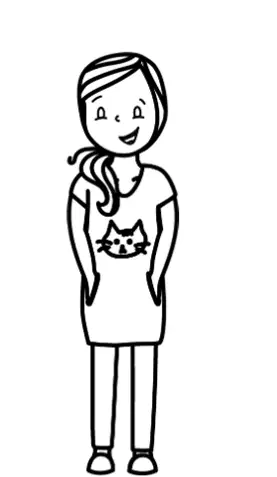
Using the image of the girl to the left, What shadow kind of would see at noon?
A long shadow to the east
A short shadow directly below
A long shadow to the west
No shadow at all
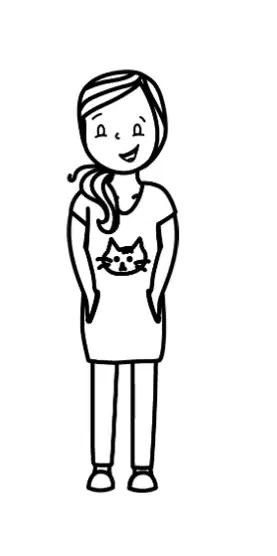
Using the image of the girl to the left, what shadow would you see if she had a lamp post shining from the left side of the picture?
A shadow to the right
A shadow to the left
A shadow above her
No shadow

What is the length of the shadow at 12 pm according to the graph?
0 ft
5 ft
10 ft
7 ft
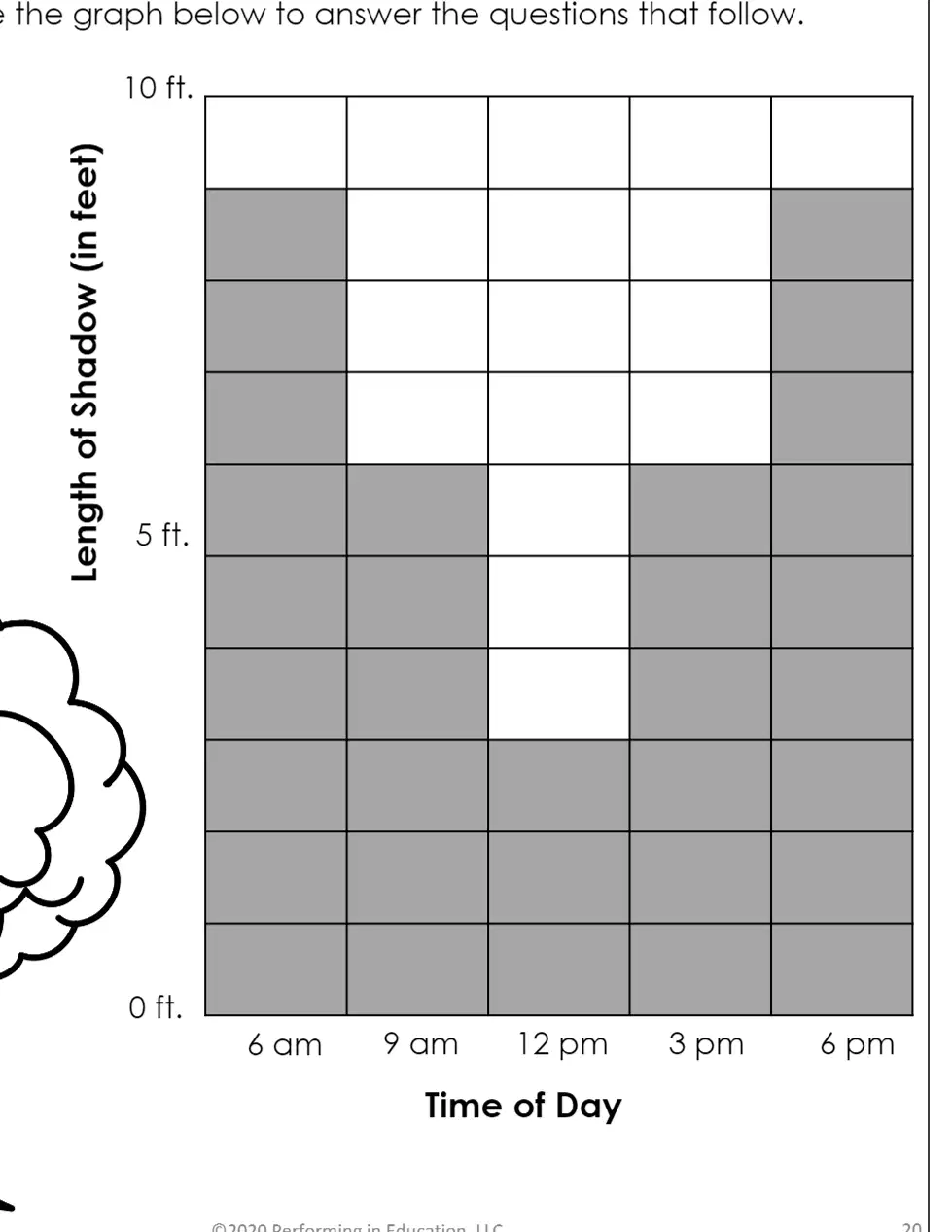
At what time is the shadow 10 feet long?
6 am
9 am
3 pm
12 pm
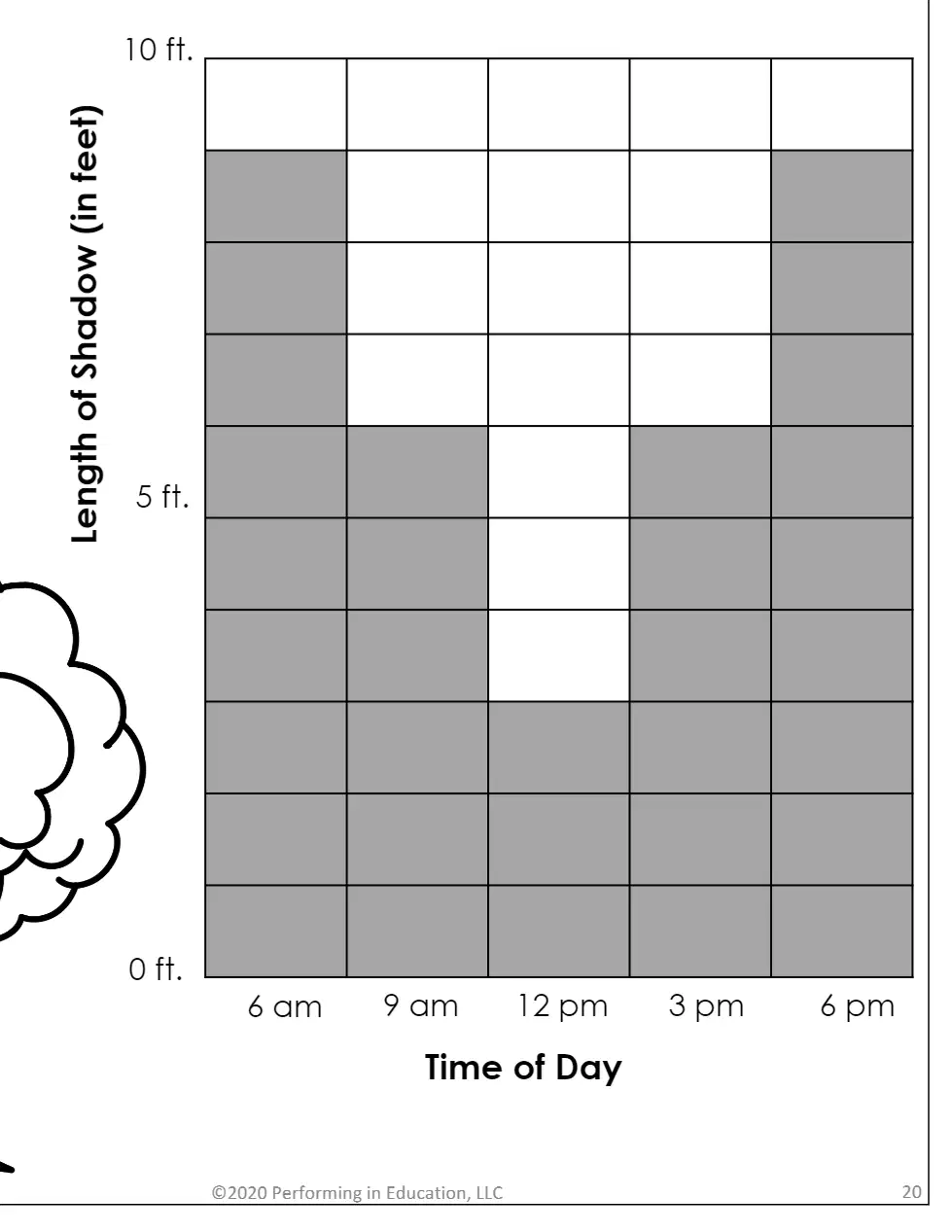
How long is the shadow at 3 pm?
5 ft
10 ft
0 ft
7 ft
What does the data on page 1 tell you about the shadows created by the tree?
They are longest at noon.
They are shortest in the morning.
They change direction throughout the day.
They disappear in the afternoon.

If the sun was in the east at 6 am, where was it at noon?
North
South
West
Directly overhead
Why should you look at the same objects a few different times throughout the day?
To see if they change color
To take note of any changes in shadows
To see if they disappear
To count how many there are
Is night a shadow?
Yes, night is a shadow.
No, night is not a shadow.
Night is a type of light.
Night is a reflection.
What causes night and day on Earth?
The Earth's revolution around the sun.
The Earth's rotation on its axis.
The moon's phases.
The Earth's distance from the sun.
Can shadows move because of the wind?
Yes, shadows can move because of the wind.
No, shadows cannot move because of the wind.
Shadows move because of the sun.
Shadows move because of the moon.
When are shadows the longest during the day?
In the middle of the night.
At noon.
In the early morning and late afternoon.
Shadows are always the same length.

