
 Worksheets
Sec 4
Total questions: 151
Worksheet time: 1hrs 16mins
What is the main focus of the segment of environmentalist art discussed in the document?
Depicting historical events
Documenting pollution and its effects
Celebrating natural landscapes
Exploring ancient civilizations
Which project is an example of documenting American pollution in the 1970s?
Minamata Project
Documenteria Project
New Landscapes
Toxic Sublime
What is a common theme among the artworks discussed in the document?
Exploration of ancient myths
Addressing issues of pollution
Celebration of modern technology
Depiction of historical battles
What is the purpose of using photography in environmental art?
To create abstract art
To record and communicate environmental damage
To promote tourism
To sell art pieces
Who is the artist associated with the work "Wheatfield—A Confrontation"?
Pablo Picasso
Vincent van Gogh
Agnes Denes
Leonardo da Vinci
What was one of Agnes Denes' formative works of eco art?
Starry Night
The Scream
Rice/Tree/Burial
The Persistence of Memory
What type of projects do the artists create to address pollution?
Single-layered
Multi-layered
Digital
Temporary
What is the significance of Agnes Denes' work in contemporary art?
It focuses on traditional painting techniques.
It is a foundational part of ecological art.
It is known for its abstract style.
It is primarily commercial.
What was the name of the exhibition that included Wheatfield—A Confrontation?
The International Art Show for the End of World Hunger
The Global Art Exhibition for Peace
The World Art Fair for Sustainability
The Universal Art Show for Ecology
Who was Noah Purifoy?
A Southern California-based artist
A New York-based photographer
A Finnish sculptor
A Canadian painter
What type of art does Noah Purifoy's work represent?
Documentary photography
Abstract painting
Digital art
Classical sculpture
Who was one of the founding artists of contemporary ecological art?
Agnes Denes
Pablo Picasso
Vincent van Gogh
Claude Monet
What was one of Agnes Denes' formative works of eco art?
Rice/Tree/Burial
The Persistence of Memory
The Scream
The Last Supper
What did Wheatfield—A Confrontation involve?
Planting and growing wheat on two acres of land
Building a large sculpture
Painting a mural
Creating a digital artwork
What could visitors take home from the exhibition?
Seeds harvested from Denes’s wheatfield
Paintings
Sculptures
Photographs
What is a notable feature of Agnes Denes' art installations?
They are primarily digital.
They often involve large-scale environmental interventions.
They focus on traditional portraiture.
They are known for their use of bright colors.
Which artist is known for creating art that addresses environmental issues?
Andy Warhol
Claude Monet
Agnes Denes
Salvador Dali
What was the primary medium used in the Wheatfield—A Confrontation project?
Wheat and soil
Oil paint
Digital graphics
Metal sculpture
What did the trees in "Rice/Tree/Burial" symbolize?
Human interference with nature
Growth and prosperity
Seasonal change
Artistic creativity
What type of poem did Agnes Denes bury in her work "Rice/Tree/Burial"?
Haiku
Sonnet
Limerick
Free verse
Where was Agnes Denes asked to re-create her work nearly a decade later?
Artpark
Central Park
Golden Gate Park
Millennium Park
What did Agnes Denes not keep a record of in her work "Rice/Tree/Burial"?
Her haiku poem
Her sketches
Her photographs
Her diary
What was the location of the original "Rice/Tree/Burial" work?
Sullivan County, New York
Manhattan, New York
Brooklyn, New York
Queens, New York
What was Denes's next major project after Artpark?
A sculpture in Central Park
Wheatfield–A Confrontation
A mural in Times Square
A garden in Brooklyn
What did Denes plant in her Wheatfield project?
Corn
Wheat
Rice
Sunflowers
What did Wheatfield symbolize according to Denes?
Art and culture
Food, energy, commerce, and economics
Nature and wildlife
Peace and harmony
What is one of the confrontational qualities of Wheatfield?
Its large size
Its seeming impossibility
Its location in a rural area
Its use of modern technology
What do Denes’s photographs of Wheatfield make clear?
Wheatfield was intended to be a singular idea
Wheatfield was a large-scale farming project
Wheatfield was a temporary installation
Wheatfield was a commercial venture
What is a common feature of the photographs taken by Denes?
They are all in color
They include shots of the World Trade Center
They focus on rural landscapes
They are all portraits
What did Denes focus on after the Wheatfield project?
Building urban parks
Creating ecological artworks
Developing new farming techniques
Designing modern buildings
What type of spiral was used in the planting pattern of Tree Mountain?
Simple spiral
Geometrical spiral
Random spiral
Linear spiral
What is the significance of the 1992 Earth Summit for Tree Mountain?
It marked the completion of the project
It announced the sponsorship
It was the planting date
It was the design approval
What does Tree Mountain symbolize in terms of art and environment?
Temporary installations
Permanent change
Minimal impact
Decorative purpose
What was the primary material used in Agnes Denes's Tree Mountain project?
Metal
Concrete
Wood
Soil
What was the main purpose of the Artpark project by Agnes Denes?
To explore temporary art installations
To develop a new art museum
To create a permanent sculpture
To design a public garden
What was a unique feature of the planting pattern in Tree Mountain?
It followed a random distribution
It was based on a Fibonacci sequence
It used a checkerboard pattern
It was arranged in concentric circles
Where was Noah Purifoy born?
Los Angeles, California
Snow Hill, Alabama
Atlanta, Georgia
Watts, California
What degree did Noah Purifoy receive from the Chouinard Art Institute?
Bachelor of Science
Bachelor of Arts
Bachelor of Fine Arts
Bachelor of Social Work
What was the title of the traveling exhibition created by Noah Purifoy?
66 Signs of Neon
Watts Rebellion
Art of the West
Neon Dreams
What event inspired the exhibition "66 Signs of Neon"?
Civil Rights Movement
Watts Rebellion
Los Angeles Riots
Harlem Renaissance
What was the main social message communicated through Purifoy's exhibition?
Environmental conservation
Racial discrimination and police violence
Economic inequality
Artistic freedom
How many children were in Noah Purifoy's family?
10
12
13
15
What was the main theme of the exhibition "66 Signs of Neon"?
Urban development
Social justice
Technological advancement
Cultural heritage
Where did Purifoy transition to arts administration?
New York
California Arts Council
Texas Arts Center
Florida Arts Institute
What type of materials did Purifoy use for his sculptures?
Marble and granite
Found objects and scrap metal
Wood and clay
Glass and ceramics
What did Purifoy's earlier junk sculpture for 66 Signs of Neon address?
Social issues
Environmental issues
Political issues
Economic issues
What did Purifoy say about the accessibility of junk in large cities?
It's rarely accessible
It's often hidden
It's extremely accessible
It's only accessible to artists
What is the primary material used in the sculpture at the Outdoor Museum?
Wood
Rusted scrap metal
Plastic
Glass
Which communities are less affected by oil spills according to the text?
Wealthy Southern California communities
Rural communities
Coastal communities
Urban communities
What is the effect of urban infrastructure expansion mentioned in the text?
Reduces pollution
Benefits poorer communities
Disproportionately benefits wealthy communities
Increases biodiversity
Which building in downtown Los Angeles used the same material as the Guggenheim Museum in Bilbao?
Walt Disney Concert Hall
Los Angeles City Hall
The Getty Center
Staples Center
What was the primary focus of Noah Purifoy's work in the desert?
Building traditional sculptures
Painting landscapes
Photography
Creating large-scale installations
Which art movement is Noah Purifoy most associated with?
Surrealism
Impressionism
Abstract Expressionism
Assemblage Art
What was a significant influence on Purifoy's artistic style?
Ancient Greek mythology
The Civil Rights Movement
Jazz music
European classical art
What did Subhankar Banerjee study in India?
Biology
Electrical Engineering
Environmental Science
Photography
Which company did Banerjee work for before joining the Sierra Club?
Boeing
Microsoft
Apple
What hobby did Banerjee take up while living in New Mexico?
Painting
Photography
Writing
Sculpting
What was the size of the ANWR after it doubled in 1960?
10 million acres
20 million acres
30 million acres
40 million acres
Which museum arranged for an exhibition of Banerjee’s photographs in 2003?
The Louvre
Smithsonian National Museum of Natural History
The British Museum
The Metropolitan Museum of Art
Who held up a copy of Banerjee’s book on the floor of the U.S. Senate?
Senator Frank Murkowski
Senator Barbara Boxer
Senator John McCain
Senator Hillary Clinton
What did Banerjee do after quitting his job at Boeing?
Started a business
Traveled to the ANWR
Became a teacher
Wrote a novel
What was the result of the vote on the amendment to block drilling in ANWR?
Passed, 60-40
Passed, 52-48
Failed, 52-48
Failed, 60-40
What did the Interior Department formally suspend in the area?
Oil and gas drilling leases
Fishing licenses
Hunting permits
Logging activities
What is the main concern regarding the caribou's migration mentioned in the text?
Lack of food
Potential oil drilling
Climate change
Predators
What did President Biden’s administration do in June 2021?
Increased oil drilling
Removed protections
Put protections in place
Ignored the issue
Who released a statement about the need for permanent protection through legislation?
Finis Dunaway
President Biden
Chief Dana Tizya-Tramm
The Gwich’in people
What is the relationship between the Gwich’in people and the caribou?
They hunt them for sport
They depend on them for food
They avoid them
They compete with them for resources
What is the broader understanding needed within the ANWR?
Economic benefits
Ecological connections
Political influence
Cultural traditions
What is the main theme of the text regarding the caribou?
Their hunting practices
Their ecological importance
Their migration patterns
Their population growth
Which organization did Banerjee join after leaving Boeing?
World Wildlife Fund
Greenpeace
National Geographic
Sierra Club
What was the primary focus of Banerjee's photography in the ANWR?
Portraits of local people
Historical sites
Urban landscapes
Wildlife conservation
What was the main reason for the Gwich’in people's opposition to oil drilling in ANWR?
Environmental degradation
Loss of cultural heritage
Economic instability
Political disagreements
Where was Vik Muniz born?
New York, USA
Sao Paulo, Brazil
Rio de Janeiro, Brazil
Chicago, USA
What is Vik Muniz best known for?
Painting landscapes
Creating sculptures
Recreating famous photographs using unexpected materials
Designing buildings
Which iconic painting did Vik Muniz recreate using peanut butter and jelly?
Starry Night
The Scream
Mona Lisa
The Last Supper
What did Vik Muniz use on the right side of his 'Double Mona Lisa'?
Jelly
Chocolate syrup
Peanut butter
Paint
What is the name of the series for which the artist sketched from memory well-known photographs from Life magazine?
The Best of Art
The Best of Life
The Best of Photography
The Best of Memory
In what year did the artist explain that his drawings often require several attempts before they begin to mimic the original photographs?
1990
1985
1988
1995
What is the name of the photograph from the series 'Pictures of Garbage'?
Pictures of Waste
Pictures of Trash
Pictures of Garbage
Pictures of Refuse
What are the garbage pickers in Brazil called?
Recyclers
Collectors
Catadores
Gatherers
What is the main activity of the catadores in Brazil?
Building sculptures
Extracting salable materials from waste
Painting murals
Planting trees
What is the effect of the artist's minor alterations to the original photographs?
They make the images more colorful
They disguise the blending of media
They enhance the details
They simplify the composition
What is the purpose of 'The Best of Life' series according to the text?
To entertain viewers
To make viewers more reflective about the flood of images
To educate about history
To showcase artistic skills
What is the main theme of Muniz's project 'Pictures of Garbage'?
Recycling and waste management
Space exploration
Ancient history
Modern architecture
Which artist's work is referenced in Muniz's photograph?
Jacques-Louis David
Vincent van Gogh
Leonardo da Vinci
Claude Monet
What is the profession of Tião Santos in 'Waste Land'?
Organizer among the catadores
Painter
Photographer
Sculptor
What does Muniz's project ultimately evaluate?
The ethics and real-world impact of environmental artworks
The history of European art
The development of modern technology
The influence of ancient cultures
Which material did Vik Muniz use to recreate the 'Mona Lisa' on the left side of his 'Double Mona Lisa'?
Chocolate syrup
Paint
Peanut butter
Jelly
What is the primary focus of Vik Muniz's 'Pictures of Chocolate' series?
Exploring the texture of chocolate
Recreating famous artworks using chocolate
Documenting the history of chocolate
Creating abstract art with chocolate
In which city did Vik Muniz create his 'Pictures of Garbage' series?
Paris
Rio de Janeiro
New York
London
Where was Vik Muniz born?
New York, USA
Sao Paulo, Brazil
Rio de Janeiro, Brazil
Chicago, USA
What is Vik Muniz best known for?
Painting landscapes
Creating sculptures
Recreating famous photographs using unexpected materials
Designing buildings
Which iconic painting did Vik Muniz recreate using peanut butter and jelly?
Starry Night
The Scream
Mona Lisa
The Last Supper
What did Vik Muniz use on the right side of his 'Double Mona Lisa'?
Jelly
Chocolate syrup
Peanut butter
Paint
What is the name of the series for which the artist sketched from memory well-known photographs from Life magazine?
The Best of Art
The Best of Life
The Best of Photography
The Best of Memory
In what year did the artist explain that his drawings often require several attempts before they begin to mimic the original photographs?
1990
1985
1988
1995
What is the name of the photograph from the series 'Pictures of Garbage'?
Pictures of Waste
Pictures of Trash
Pictures of Garbage
Pictures of Refuse
What are the garbage pickers in Brazil called?
Recyclers
Collectors
Catadores
Gatherers
What is the main activity of the catadores in Brazil?
Building sculptures
Extracting salable materials from waste
Painting murals
Planting trees
What is the effect of the artist's minor alterations to the original photographs?
They make the images more colorful
They disguise the blending of media
They enhance the details
They simplify the composition
What is the purpose of 'The Best of Life' series according to the text?
To entertain viewers
To make viewers more reflective about the flood of images
To educate about history
To showcase artistic skills
What is the main theme of Muniz's project 'Pictures of Garbage'?
Recycling and waste management
Space exploration
Ancient history
Modern architecture
Which artist's work is referenced in Muniz's photograph?
Jacques-Louis David
Vincent van Gogh
Leonardo da Vinci
Claude Monet
What is the profession of Tião Santos in 'Waste Land'?
Organizer among the catadores
Painter
Photographer
Sculptor
What does Muniz's project ultimately evaluate?
The ethics and real-world impact of environmental artworks
The history of European art
The development of modern technology
The influence of ancient cultures
Which material did Vik Muniz use to recreate the 'Mona Lisa' on the left side of his 'Double Mona Lisa'?
Chocolate syrup
Paint
Peanut butter
Jelly
What is the primary focus of Vik Muniz's 'Pictures of Chocolate' series?
Exploring the texture of chocolate
Recreating famous artworks using chocolate
Documenting the history of chocolate
Creating abstract art with chocolate
In which city did Vik Muniz create his 'Pictures of Garbage' series?
Paris
Rio de Janeiro
New York
London

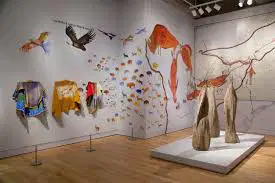
What is the title of this work?
Church Rock Spill Evaporation Ponds
Church Rock Spill Evaporation Lakes
2 things of dirty water
Wheatfield—A Confrontation
Who created this work?
Bonnie Devine
Will Wilson
Agnes Denes
Biggie Smalls
Bonnie Clyde
Who is the artist?
Allora & Calzadilla
Kent Monkman
Bonnie Devine
Will Wilson

When was this work created?
2019
2021
2018
1981
1980

Who is the artist?
Kent Monkman
Bonnie Devine
Bobby Hill
Will Wilson
Wade Wilson
What year was this created?
2012
2021
1891
1871
1998

What type of material is this work created from?
Acrylic on canvas
Mixed media
Archival pigment print
Clay
Water colors
When was this created?
2002
2022
1922
2001
1492

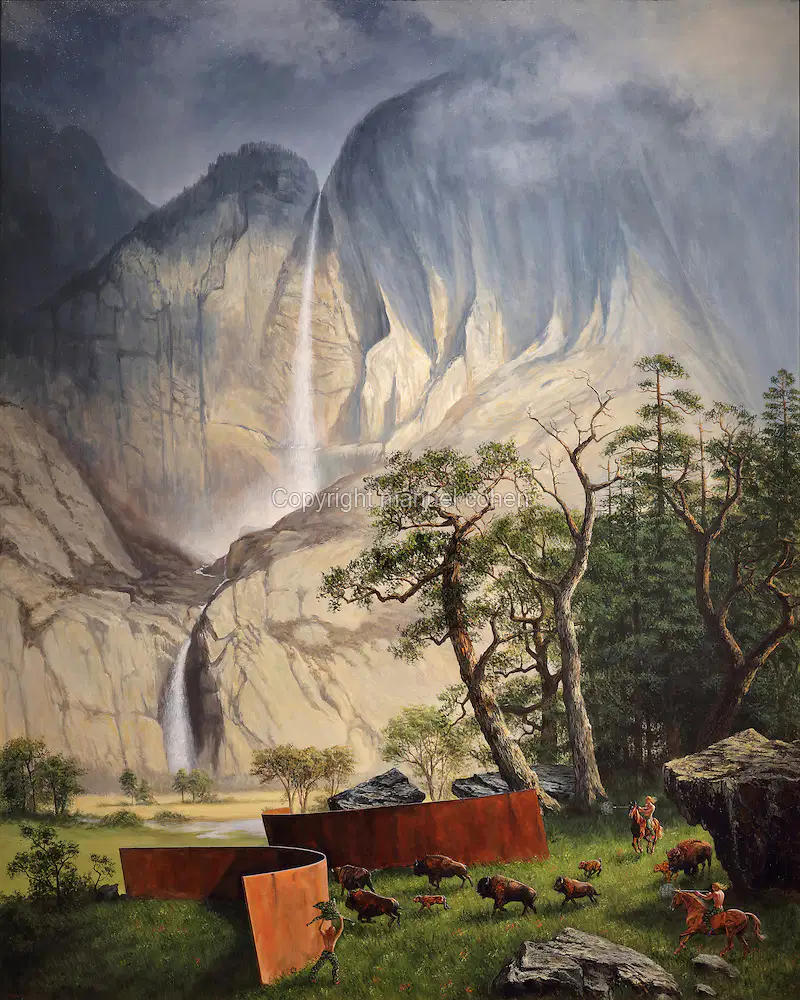
What was the disaster this image is referencing?
radioactive spill
acid rain
coral bleaching
Native Americans being driven off their lands
Hunting all the buffalos

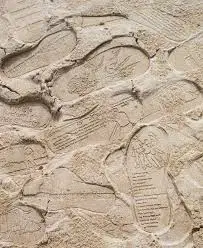
What is this?
sculpture
high relief
low relief
painting

What was the location this work was made at?
Vieques, Puerto Rico
Vieques, Spain
Hawaiian beach
Japan
Yosemite National
Park

What other work of art is referenced in this painting?
Clara Clara
Monumenta
Re-clamation
The Walls
Buffalo Jumps
Where can this work of art be found?
Art Gallery of Ontario
Art Gallery of Oakland
Art Gallery of Canada
Oberlin College
University of Texas at Austin
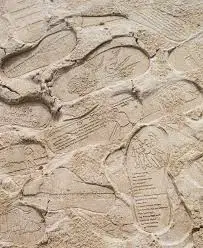
What is the focus of the series "Land Mark (Foot Prints)"?
Land use on the island of Vieques, Puerto Rico
Urban development in New York
Environmental conservation in Cuba
Historical landmarks in Philadelphia
What did Allora & Calzadilla create to raise awareness of the military occupation of Vieques?
Custom-made shoes with printed messages
A documentary film
A series of paintings
A musical performance
What was the purpose of the artists' invocation of Apollo 11?
To note the expansive colonial activities of the United States
To celebrate the moon landing
To honor astronauts
To promote space exploration
What is the significance of the term "landmark" in the context of Allora & Calzadilla's work?
A permanent building
A temporary mark
A famous monument
A natural feature
What is the purpose of the marks made by Land Mark (Footprints)?
To create permanent art
To leave a temporary trace
To build new structures
To design landscapes
What is the role of the motor in the video "Under Discussion"?
To power a boat
To symbolize progress
To move the upturned table
To create noise
Which historical event is often depicted in Monkman's artworks?
The Industrial Revolution
The colonization of North America
The French Revolution
The Renaissance
What is a recurring symbol in Monkman's paintings that represents Indigenous resilience?
The eagle
The bison
The wolf
The bear
Which historical event is often depicted in Monkman's artworks?
The Industrial Revolution
The colonization of North America
The French Revolution
The Renaissance
What is a recurring symbol in Monkman's paintings that represents Indigenous resilience?
The eagle
The bison
The wolf
The bear
What style does Monkman often use to critique historical narratives?
Realism
Appropriation
Expressionism
Minimalism
What does Monkman use Clara-Clara as in The Fourth World?
A mountain
A buffalo jump
A river
A forest
What does Monkman use Clara-Clara as in The Fourth World?
A mountain
A buffalo jump
A river
A forest
What does the bison symbolize in Monkman's painting?
Modern wildlife
Indigenous culture
Urban development
Technological advancement
What is the significance of the copper-colored walls in Monkman's painting?
They represent modern architecture.
They are a copy of Clara-Clara (1983).
They symbolize industrialization.
They depict ancient ruins.
Who is the artist associated with the work "Wheatfield—A Confrontation"?
Pablo Picasso
Vincent van Gogh
Agnes Denes
Leonardo da Vinci
What was one of Agnes Denes' formative works of eco art?
Starry Night
The Scream
Rice/Tree/Burial
The Persistence of Memory
What was the name of the exhibition that included Wheatfield—A Confrontation?
The International Art Show for the End of World Hunger
The Global Art Exhibition for Peace
The World Art Fair for Sustainability
The Universal Art Show for Ecology
Who was Noah Purifoy?
A Southern California-based artist
A New York-based photographer
A Finnish sculptor
A Canadian painter
What type of art does Noah Purifoy's work represent?
Documentary photography
Abstract painting
Digital art
Classical sculpture
What is a notable feature of Agnes Denes' art installations?
They are primarily digital.
They often involve large-scale environmental interventions.
They focus on traditional portraiture.
They are known for their use of bright colors.
Which artist is known for creating art that addresses environmental issues?
Andy Warhol
Claude Monet
Agnes Denes
Salvador Dali
What did the trees in "Rice/Tree/Burial" symbolize?
Human interference with nature
Growth and prosperity
Seasonal change
Artistic creativity
What did Wheatfield symbolize according to Denes?
Art and culture
Food, energy, commerce, and economics
Nature and wildlife
Peace and harmony
What was the main theme of the exhibition "66 Signs of Neon"?
Urban development
Social justice
Technological advancement
Cultural heritage
What type of materials did Purifoy use for his sculptures?
Marble and granite
Found objects and scrap metal
Wood and clay
Glass and ceramics
Which building in downtown Los Angeles used the same material as the Guggenheim Museum in Bilbao?
Walt Disney Concert Hall
Los Angeles City Hall
The Getty Center
Staples Center
Which iconic painting did Vik Muniz recreate using peanut butter and jelly?
Starry Night
The Scream
Mona Lisa
The Last Supper
What is the name of the series for which the artist sketched from memory well-known photographs from Life magazine?
The Best of Art
The Best of Life
The Best of Photography
The Best of Memory
What are the garbage pickers in Brazil called?
Recyclers
Collectors
Catadores
Gatherers

