
 Worksheets
JPL Test 1
Total questions: 140
Worksheet time: 5hrs 43mins
What is a meteor?
A smaller rock that burns up in the Earth's atmosphere. Also known as a shooting star.
A man-made object that is launched into space to collect data about the universe.
A huge space rock that is covered with ice and orbits the Earth
A large space rock that collides with the Earth's surface and causes significant damage.
What is a meteoroid?
A type of cloud formation in the Earth's atmosphere.
A large celestial body that orbits the Earth.
A type of bird found in the Amazon rainforest.
A small space rock that is in outer space and is smaller than an asteroid.
What is a meteorite?
A massive rock flying in space.
A rock from space that made it through the Earth's atmosphere and landed Earth's surface.
A man-made object sent into space for scientific research.
A "dirty snowball".
What is a comet?
A comet is a type of star that emits light and heat.
A comet is a small planet that orbits the Earth.
A"dirty snowball" that orbits the Sun.
A comet is a meteorite that has fallen to Earth.
What is an asteroid?
A planet that is smaller than Earth
A type of meteorite that falls to the ground
A rocky object that orbits the Sun
A large icy object that orbits the Earth
Which of the following is not a type of space rock?
Comet
Meteorite
Moon
Asteroid
Which of the following is found between Mars and Jupiter?
Asteroid Belt
Planetary Belt
Lunar Belt
Kuiper Belt
Which of the following is found in the Kuiper belt beyond Neptune?
Uranus
Saturn
Mars
Pluto
What is the name of the largest planet in our solar system?
Mercury
Venus
Jupiter
Neptune
Which planet is known as the Red Planet?
Venus
Mars
Uranus
Pluto
Which planet is known for its beautiful rings?
Mercury
Saturn
Uranus
Neptune
Which of the following planets is Jupiter?
Which of the following planets is Venus?
Which of the following planets is Earth?
Which of the following planets is Neptune?
Organize these planets into the right categories.
Mercury
Venus
Earth
Mars
Jupiter
Saturn
Uranus
Neptune
Earth's (a) causes our day/night cycle while Earth's (b) and tilted axis causes our seasons.
Match the following
Asteroid
Large space rock
Comet
Dirty Snowball
Meteor
Space rock burning in the atmosphere
Meteoroid
Small space rock (outside atmosphere)
Meteorite
Space rock that hits Earth's surface
24 hours
Day/Night
Spinning
365.25 Days
Year/Seasons
Orbit


Short revolution
Long revolution
No rings
Have rings
Terrestrial (rocky)
Made of gas
Smaller in size
Larger in size
Match the following
satellite from which vehicles can be launched
or scientific research can be conducted
space station
the tendency of a moving object to keep moving
inertia
a by-product derived from a previous product
spin off
the force that causes a spacecraft to accelerate
thrust
a machine that uses escaping gas to move
rocket
What does a rocket need in order to achieve the speed and direction to break away from the earth’s gravity?
escape velocity
orbital velocity
geosynchronous orbit
high Earth orbit
Who developed the theory of rocket propulsion?
Robert Goddard
Isaac Newton
Johannes Kepler
Konstantin Tsiolkovsky
What is the purpose of a space probe?
to transfer supplies to a space station
to carry astronauts to new planets
to gather data
to stabilize the atmosphere of a planet
Satellites that need to maintain a constant location travel in which orbit?
escape
polar
geosynchronous
low Earth
What force is the result of gravity, velocity, and inertia working together?
nuclear
weak
thrust
centripetal
Why was the space shuttle program started?
to save money
to prepare for Mars exporation
to win the Space Race
to land a man on the moon
If the Pioneer 10 space probe is no longer in service, why do scientists believe it is
going to travel in a straight line to reach Aldebaran?
The data it sent to Earth showed a
course change.
The gravity on Aldebaran is pulling it.
Its own inertia is propelling it.
It was programmed to travel that
distance.
What type of force propels a rocket?
thrust
kinetic
electromagnetic
antigravitational
Space research and exploration create new jobs.
True
False
It takes more fuel to place a satellite in geosynchronous orbit than in a polar orbit.
True
False
Satellites in high Earth orbit experience the most friction because they come into
contact with the most air molecules.
True
False
Scientists on the ground used radio commands to pilot space shuttles.
True
False
Navigation satellites can help locate ships in distress.
True
False
Rocket engines are propelled according to Newton’s law that states an object
in motion will stay in motion.
True
False
Why is navigating a space probe difficult?
they are piloted from Earth
Planets are moving
destinations are far away
all of these
List four challenges of living in space for a long period of time.
a person trained to travel to space and perform a specific job
astronaut
catanaut
specialist
probe
A vehicle sponsored by sixteen nations that circles the earth while astronauts living on board carry out
experiments
International Space Station
Space Shuttle
Space Probe
Space Rocket
A US government agency in charge of the space program
NASA
JPL
FDA
ABSS

Was the Space Shuttle reusable?
Yes
No

Which country was the first to send a man into space?
Soviet Union
United States of America
What is NOT a characteristic of a star?
Stars give off their own light.
Stars give off their own heat.
Stars orbit around planets.
Stars produce their own energy.
What is one difference between the Moon and the Earth?
The Moon does not rotate, but the Earth does.
The Moon gives off its own light, but the Earth does not.
The Earth gives off its own light, but the Moon does not.
The Moon is bigger than the Earth.
What is the primary reason for the seasons?
Earth rotates.
Earth is tilted on its axis.
In the Summer, Earth is closer to the Sun, and in the winter it is further away.
There is no reason; it's all random.
Why does Jupiter have the strongest gravity out of any planet in our solar system?
Jupiter rotates very quickly.
Jupiter is closest to the Sun.
Jupiter is furthest away from the Sun.
Jupiter is the largest planet in our solar system.
How many stars are in our solar system?
1
1,000
Too many to count
1 Billion
What time of day can we expect the shortest shadow?
4:00 PM (afternoon)
7:00 AM (morning)
12:00 PM (noon)
12:00 AM (midnight)
What is the reason for different lengths of shadows throughout the day?
When the Sun gets closer, we have longer shadows. When the Sun is further away, we have shorter shadows.
Earth rotates causing it to look like the Sun changes positions throughout the day.
The Sun orbits around Earth.
Sometimes your shadow just feels like being longer.
Why do we have day and night on Earth?
The Moon orbits the Earth.
The Sun orbits the Earth.
Earth orbits the Sun.
Earth rotates.
Why do we have different Moon phases?
The Moon orbits the Earth causing the Sun's light on the Moon to change throughout the month.
The Earth orbits the Moon, so we see it from different angles all month.
The Moon has its own source of light, and it changes throughout the month.
The Sun orbits the Moon, changing the light pattern on it throughout the month.
What is NOT true about the Moon?
The Moon is larger than Earth.
The Moon has less gravity than Earth.
The Moon does not give off its own light.
The Moon does not have an atmosphere.
A group of stars that form a recognizable shape is called a...
solar system
galaxy
herd
constellation
The date of the longest day of the year (the summer solstice) is...
March 21st
June 21st
September 21st
December 21st
The date of the shortest day of the year (the winter solstice) is...
March 21st
June 21st
September 21st
December 21st
The date of the Spring Equinox (equal daylight and nighttime) is...
March 21st
June 21st
September 21st
December 21st
The date of the Fall Equinox (equal daylight and nighttime) is...
March 21st
June 21st
September 21st
December 21st
This is the imaginary line that Earth rotates around.
the North Pole
the axis
the equator
the Prime Meridian
Where is the Johnson Space Center?
Houston TX
Miami FL
New York City
Washington D.C.
What do astronauts do on the International Space Station to help us here on Earth? (Choose 3)
Conducting research to better understand human health, to combat diseases more effectively.
Demonstrates new space technology
Mapping Earth to aide in disaster response
Practice their space walks
Which NASA satellite is used to measure soil moisture?
Hubble
Spitzer
SMAP
Landsat
Which NASA satellite is used to measure ice height?
ICESat-1
ICESat-3
ICESat-4
ICESat-2
Which NASA satellite is used to study Earth's water cycle?
GRACE
Curiosity
Hubble
Voyager
Which NASA satellite is used to measure ocean salinity?
Hubble
Galileo
Aquarius
Voyager
Which NASA satellite is used to study Earth's ozone layer?
Aura
Hubble
Apollo
Voyager
Which NASA satellite is used to study clouds and aerosols?
Hubble
Voyager
CALIPSO
Curiosity
Which NASA satellite is used to study precipitation?
International Space Station (ISS) satellite
Global Precipitation Measurement (GPM) satellite
Hubble Space Telescope (HST) satellite
Mars Reconnaissance Orbiter (MRO) satellite
Which NASA satellite is used to study hurricanes?
The NASA satellite used to study hurricanes is called the Cyclone Monitoring and Analysis (CMA) satellite.
The NASA satellite used to study hurricanes is called the Hurricane Imaging Radiometer (HIRAD) satellite.
The NASA satellite used to study hurricanes is called the Tornado Detection and Analysis (TDA) satellite.
The NASA satellite used to study hurricanes is called the Storm Tracking and Observation Platform (STOP) satellite.
Which NASA satellite provides real-time solar wind data?
The International Space Station
The NASA satellite that provides real-time solar wind data is the Advanced Composition Explorer (ACE) satellite.
The Hubble Space Telescope
The Mars Rover
Which NASA satellite is used to study precipitation and snowfall?
Mars Rover
International Space Station
Hubble Space Telescope
Global Precipitation Measurement (GPM)
Which NASA satellite is used to study Earth's magnetic field?
The NASA satellite used to study Earth's magnetic field is called the Magnetosphere Multiscale (MMS) satellite.
The NASA satellite used to study Earth's magnetic field is called the Geostationary Operational Environmental Satellite (GOES).
The NASA satellite used to study Earth's magnetic field is called the Solar Dynamics Observatory (SDO).
The NASA satellite used to study Earth's magnetic field is called the Mars Atmosphere and Volatile Evolution (MAVEN).
Which NASA satellite is used to study the Sun's atmosphere?
The NASA satellite used to study the Sun's atmosphere is called the Solar Dynamics Observatory (SDO).
The NASA satellite used to study the Sun's atmosphere is called the Magnetosphere Multiscale (MMS).
The NASA satellite used to study the Sun's atmosphere is called the Mars Atmosphere and Volatile Evolution (MAVEN).
The NASA satellite used to study the Sun's atmosphere is called the Geostationary Operational Environmental Satellite (GOES).
Which NASA satellite is used to study the Earth's radiation belts?
The NASA satellite used to study the Earth's radiation belts is called the Van Allen Probes.
The NASA satellite used to study the Earth's radiation belts is called the Solar Dynamics Observatory (SDO).
The NASA satellite used to study the Earth's radiation belts is called the Mars Atmosphere and Volatile Evolution (MAVEN).
The NASA satellite used to study the Earth's radiation belts is called the Geostationary Operational Environmental Satellite (GOES).
Which NASA satellite is used to study the Earth's atmosphere?
The NASA satellite used to study the Earth's atmosphere is called the Atmospheric Infrared Sounder (AIRS).
The NASA satellite used to study the Earth's atmosphere is called the Mars Atmosphere and Volatile Evolution (MAVEN).
The NASA satellite used to study the Earth's atmosphere is called the Solar Dynamics Observatory (SDO).
The NASA satellite used to study the Earth's atmosphere is called the Geostationary Operational Environmental Satellite (GOES).
Which NASA satellite is used to study the Earth's temperature?
The NASA satellite used to study the Earth's temperature is called the Mars Atmosphere and Volatile Evolution (MAVEN).
The NASA satellite used to study the Earth's temperature is called the Solar Dynamics Observatory (SDO).
The NASA satellite used to study the Earth's temperature is called the Geostationary Operational Environmental Satellite (GOES).
The NASA satellite used to study the Earth's temperature is called the Atmospheric Infrared Sounder (AIRS).
Which NASA satellite is used to study the Earth's vegetation?
The NASA satellite used to study the Earth's vegetation is called the Mars Atmosphere and Volatile Evolution (MAVEN).
The NASA satellite used to study the Earth's vegetation is called the Solar Dynamics Observatory (SDO).
The NASA satellite used to study the Earth's vegetation is called the Geostationary Operational Environmental Satellite (GOES).
The NASA satellite used to study the Earth's vegetation is called the Moderate Resolution Imaging Spectroradiometer (MODIS).
Which NASA satellite is used to study Earth's gravity field?
The NASA satellite used to study Earth's gravity field is called the Mars Atmosphere and Volatile Evolution (MAVEN).
The NASA satellite used to study Earth's gravity field is called the Gravity Recovery and Climate Experiment (GRACE).
The NASA satellite used to study Earth's gravity field is called the Solar Dynamics Observatory (SDO).
The NASA satellite used to study Earth's gravity field is called the Geostationary Operational Environmental Satellite (GOES).
Which NASA satellite is used to study Earth's surface temperature?
The NASA satellite used to study Earth's surface temperature is called the Mars Atmosphere and Volatile Evolution (MAVEN).
The NASA satellite used to study Earth's surface temperature is called the Solar Dynamics Observatory (SDO).
The NASA satellite used to study Earth's surface temperature is called the Geostationary Operational Environmental Satellite (GOES).
The NASA satellite used to study Earth's surface temperature is called the Landsat.
Which NASA satellite is used to study Earth's carbon cycle?
The NASA satellite used to study Earth's carbon cycle is called the Orbiting Carbon Observatory (OCO).
The NASA satellite used to study Earth's carbon cycle is called the Mars Atmosphere and Volatile Evolution (MAVEN).
The NASA satellite used to study Earth's carbon cycle is called the Solar Dynamics Observatory (SDO).
The NASA satellite used to study Earth's carbon cycle is called the Geostationary Operational Environmental Satellite (GOES).
Which NASA satellite is used to study Earth's seismic activity?
The NASA satellite used to study Earth's seismic activity is called the Mars Atmosphere and Volatile Evolution (MAVEN).
The NASA satellite used to study Earth's seismic activity is called the Solar Dynamics Observatory (SDO).
The NASA satellite used to study Earth's seismic activity is called the Geostationary Operational Environmental Satellite (GOES).
The NASA satellite used to study Earth's seismic activity is called the Geostationary Operational Environmental Satellite-R Series (GOES-R).
Which NASA satellite is used to study Earth's wind patterns?
The NASA satellite used to study Earth's wind patterns is called the Mars Atmosphere and Volatile Evolution (MAVEN).
The NASA satellite used to study Earth's wind patterns is called the Solar Dynamics Observatory (SDO).
The NASA satellite used to study Earth's wind patterns is called the Geostationary Operational Environmental Satellite (GOES).
The NASA satellite used to study Earth's wind patterns is called the Atmospheric Infrared Sounder (AIRS).
Which NASA satellite is used to study Earth's polar ice caps?
The NASA satellite used to study Earth's polar ice caps is called the Mars Atmosphere and Volatile Evolution (MAVEN).
The NASA satellite used to study Earth's polar ice caps is called the Solar Dynamics Observatory (SDO).
The NASA satellite used to study Earth's polar ice caps is called the Geostationary Operational Environmental Satellite (GOES).
The NASA satellite used to study Earth's polar ice caps is called the Ice, Cloud and land Elevation Satellite-2 (ICESat-2).
Which NASA satellite is used to study Earth's ultraviolet radiation?
The NASA satellite used to study Earth's ultraviolet radiation is called the Solar Dynamics Observatory (SDO).
The NASA satellite used to study Earth's ultraviolet radiation is called the Mars Atmosphere and Volatile Evolution (MAVEN).
The NASA satellite used to study Earth's ultraviolet radiation is called the Geostationary Operational Environmental Satellite (GOES).
The NASA satellite used to study Earth's ultraviolet radiation is called the Ozone Monitoring Instrument (OMI).
Which NASA satellite is used to study Earth's land cover?
The NASA satellite used to study Earth's land cover is called the Mars Atmosphere and Volatile Evolution (MAVEN).
The NASA satellite used to study Earth's land cover is called the Solar Dynamics Observatory (SDO).
The NASA satellite used to study Earth's land cover is called the Geostationary Operational Environmental Satellite (GOES).
The NASA satellite used to study Earth's land cover is called the Landsat.
Which NASA satellite is used to study Earth's aerosol distribution?
The NASA satellite used to study Earth's aerosol distribution is called the Mars Atmosphere and Volatile Evolution (MAVEN).
The NASA satellite used to study Earth's aerosol distribution is called the Solar Dynamics Observatory (SDO).
The NASA satellite used to study Earth's aerosol distribution is called the Geostationary Operational Environmental Satellite (GOES).
The NASA satellite used to study Earth's aerosol distribution is called the Cloud-Aerosol Lidar and Infrared Pathfinder Satellite Observation (CALIPSO).
Which university manages JPL?
Caltech
Johns Hopkins
Stanford
Berkeley
True or false: JPL designed, built, and operated the United States' first satellite.
True
False
Which of the following JPL probes was the first to take images of another planet?
Mariner 3
Mariner 4
Mariner 6
Mariner 7
True or false: JPL probes have visited every planet.
True
False
Who was the first director of JPL?
James Van Allen
Wernher von Braun
Theodore von Kármán
Jebediah Kerman
When was JPL threatened with cancellation by the administration?
1969
1972
1975
1981
Which of the following JPL satellites was NOT launched on Shuttle?
Galileo
Seasat
Magellan
Cassini
Which US state is JPL in?
Virginia
Texas
New Mexico
California
When did JPL become part of NASA?
1958
1960
1967
1980

Name the JPL probe in the image.
Voyager probe
Pioneer probe
Ranger probe
Galileo
Which program started the JPL tradition of "good luck peanuts"?
Explorer
Pioneer
Mariner
Ranger
Who is the current director of JPL?
Laurie Leshin
John Davies
Edward Stone
Frank Malina
What was the first spacecraft to dive between Saturn and its rings?
Cassini
Galileo
Juno
Voyager 1
99-113.
Answer the questions below after watching the video
What percentage of the federal budget is allocated to NASA?
Exactly 2%
More than 10%
About 5%
Less than 1%
What technology did NASA develop that is now used in scratch-resistant lenses?
Polarized lenses
Anti-fog coating
Scratch-resistant astronaut helmets
UV protection
What was the original purpose of the technology that allows for LASIK surgery?
To improve astronaut vision
To track astronauts' eyes in space
To measure light intensity
To monitor heart rates
What did NASA develop to protect equipment during space shuttle launches?
Anti-gravity devices
Radiation shields
Shock absorbers
Heat shields
Why does NASA rely on solar power for the ISS?
It reduces the weight of the ISS
Solar power is more efficient in space
It's cheaper than other power sources
The ISS cannot be plugged into an electrical socket
How much water does the ISS recycle annually?
5,000 gallons
1,000 gallons
500 gallons
2,000 gallons
What problem did NASA solve by cutting grooves into runways?
Reducing noise pollution
Increasing runway length
Minimizing hydroplaning
Improving lighting
What is one of the main benefits of the runway grooves developed by NASA?
They reduce noise pollution
They improve runway lighting
They increase traction and channel water away
They make runways longer
What material did Goodyear use in their tires that was developed with NASA's help?
Carbon fiber
Kevlar
A material stronger than steel
Titanium
What technology did NASA's Jet Propulsion Laboratory develop that is now used in smartphones?
Miniature imaging system
Touchscreen technology
Battery technology
GPS
What medical imaging technologies benefited from NASA's digital image processing?
X-rays and ultrasounds
CAT scans and MRIs
Blood tests and biopsies
Endoscopies and colonoscopies
What did NASA discover that is now used in over 90% of infant formulas?
A nutritious, algae-based vegetable oil
A new type of protein
A vitamin supplement
A new type of carbohydrate
What was the original purpose of memory foam technology?
To reduce noise in space
To create more comfortable mattresses
To improve astronaut comfort during takeoff and landing
To insulate spacecraft
What insulating material did NASA develop for the Apollo spacesuits?
Polyurethane foam
Fiberglass
Aerogel
A new type of insulating material
What system did NASA develop to prevent ice buildup on the space shuttle?
Thermawing
FrostShield
IceGuard
HeatWing
A wave of molecular collisions is called
sound wave
pressure wave
seismic wave
What is the speed of sound?
760 miles per hour
1220 miles per hour
1337 miles per hour
The first airplane to fly faster than sound.
Bell X-1
Concorde
Space Shuttle
A Mach 1 airplane goes
faster than the speed of sound
slower than the speed of sound
the speed of sound
An airplane that goes slower than the speed of sound
subsonic
supersonic
hypersonic
An airplane that goes so fast that heat starts to become a critical factor
subsonic
transonic
supersonic
hypersonic
The act of moving or pushing an object forward.
Thrust
Propulsion
sonic boom
Which type of engine cannot create thrust directly?
piston
jet
rocket
Where is the high pressure found around a propeller?
in front of the propeller
behind the propeller
inside the propeller
Where is the increasing pressure found in jet and rocket engines?
inside the engine
outside the engine
beside the engine
A supersonic airliner
Bell X-1
Concorde
Space Shuttle

What is the jet stream?
Precipitation in North Carolina
Weather over a long period of time
Strong winds above the Earth's surface
Football flying over the Earth
Jackson State Will Beat Southern This Weekend. (Period)

Real Bad
Better Not Pick This One

What planet is this?
(Earth, Jupiter, Mars, Mercury, Neptune, Saturn, Uranus, Venus)
(a)
What planet is this?
(Earth, Jupiter, Mars, Mercury, Neptune, Saturn, Uranus, Venus)
(a)

What planet is this?
(Earth, Jupiter, Mars, Mercury, Neptune, Saturn, Uranus, Venus)
(a)

What planet is this?
(Earth, Jupiter, Mars, Mercury, Neptune, Saturn, Uranus, Venus)
(a)

What planet is this?
(Earth, Jupiter, Mars, Mercury, Neptune, Saturn, Uranus, Venus)
(a)

What planet is this?
(Earth, Jupiter, Mars, Mercury, Neptune, Saturn, Uranus, Venus)
(a)

What planet is this?
(Earth, Jupiter, Mars, Mercury, Neptune, Saturn, Uranus, Venus)
(a)

What is this?
(a)
Point to a galaxy
Point to a comet
Point to a constellation
Point to Jupiter
Point to Neptune
Point to Saturn
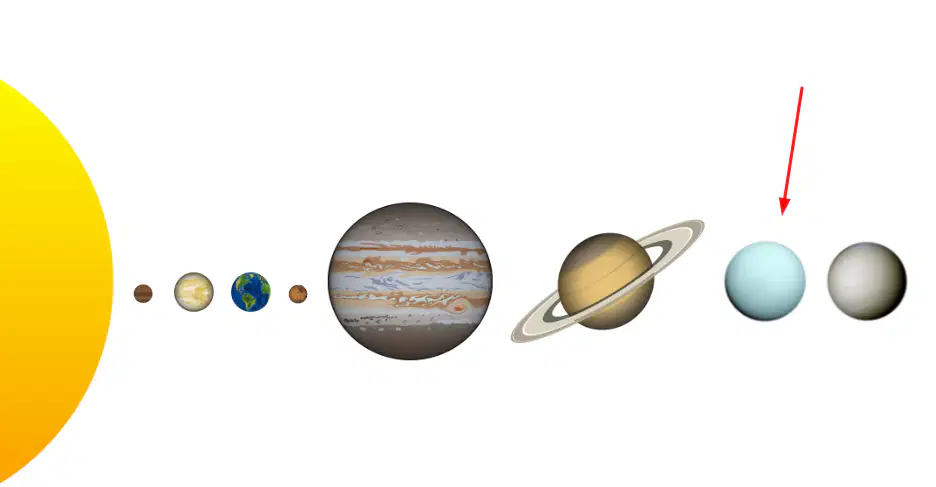
Point to Uranus
Point to Mercury
Point to Mars
Point to Earth
Point to Venus
Organize these planets into the right categories
Mercury
Venus
Earth
Mars
Jupiter
Saturn
Uranus
Neptune
(a) is a rocky planet. It is the smallest planet in the solar system. It is made of metals. It doesn't have any rings or moons.
(a) is a rocky planet. It is the hottest planet in the solar system. It is made of metals. It doesn't have any rings or moons.
(a) is a rocky planet. It is the only planet with life on it. It is made of metals. It doesn't have rings. It has one moon and a lot of water.
(a) is a rocky planet. It is made of metals. It doesn't have rings. It has red rocks and 2 moons. I doesn't have rings.
(a) is a gas planet. It is the biggest planet in the solar system. It has big storms. It has 79 moons. It has the biggest moon.
(a) is a gas planet. It is the second biggest planet in the solar system. It has 7 big rings. It has more than 150 moons.
(a) is a gas planet. It is the coldest planet in the solar system. It has 27 moons and 4 rings. The rings are difficult to see.
(a) is a gas planet. It is the furthest planet from the sun. It has 14 moons and 6 rings. The rings are difficult to see.

