
 Worksheets
physics energy
Total questions: 65
Worksheet time: 1hrs 24mins
How can energy be conserved in daily activities?
Using stairs instead of elevators
Driving instead of biking
Increasing the use of air conditioning
Leaving electronics on standby mode
What information is needed to estimate an elevator's power requirement?
The rated capacity and transport time between floors
The number of buttons inside the elevator
The elevator's maximum speed
The elevator's color
What happens to a car's initial kinetic energy when it comes to a full stop?
It disappears
It converts into potential energy
It is transferred to the road
It converts into another form of energy
What happens to a car's initial kinetic energy when it comes to a full stop?
It disappears
It converts into potential energy
It is transferred to the road
It converts into another form of energy
What is the principle behind the conservation of mechanical energy in a pendulum's swing?
Energy is created at the highest point of the swing
Energy is destroyed at the lowest point of the swing
Kinetic and potential energies are interconverted but their sum remains constant
Energy is transferred to the surrounding air
What factor most significantly affects the efficiency of a solar panel?
The color of the solar panel
The angle of sunlight incidence
The number of solar panels connected in series
The brand of the solar panel
How does increasing the surface area of a wing affect an airplane's lift?
Decreases the lift due to increased weight
Has no effect on the lift
Increases the lift by allowing more air to push against the wing
Increases the lift by reducing air resistance
A man of mass 50 kg jumps to a height of 1 m. His potential energy at the highest point is(g = 10 m/s2)
(a) 500 J
(b) 50 J
(c) 5 J
(d) 5000 J
Complete the statement about the principal of Conservation of Energy.
Energy can be changed for one form to another but the total amount of energy
always increases
always decreases
does not change
varies according to the reaction
(Higher level only)What is the Formula to calculate energy transfer for Kinetic Energy?
Ek=1/2 mv2
1/2mv=k
Em2=1/2k
EK2 =2mv

A pendulum bob swings from potential C to D as indicated in the diagram. There is no friction or air resistance. Which of the following is not true?
Kinetic Energy decreases from C to D
Potential Energy decreases from C to D
The Total Energy stays constant from C to D.
The bob is fastest at point C.

A skier slides down an incline as shown. The work done by friction is:
Positive
Negative
Zero
All of the above

A skier slides down an incline as shown. The work done by gravity is:
Positive
Negative
Zero
All of the above ¯\_(ツ)_/¯

A hockey puck sliding across the ice on a flat surface slows down. Why is this?
Kinetic Energy is converted in Potential Energy
Kinetic Energy is converted into heat
Potential Energy is converted into heat
Potential Energy is converted into Kinetic Energy.

Electromagnetic energy is classified as _________ energy.
kinetic
potential

Electrical energy is classified as _________ energy.
kinetic
potential

Nuclear energy is classified as _________ energy.
kinetic
potential

Chemical energy is classified as _________ energy.
kinetic
potential

Elastic energy is classified as _________ energy.
kinetic
potential

Motion is classified as _________ energy.
kinetic
potential

Gravitational energy is classified as _________ energy.
kinetic
potential

Sound energy is classified as _________ energy.
kinetic
potential

Thermal energy is classified as _________ energy.
kinetic
potential

Energy form stored in bonds between atoms and molecules
chemical
nuclear
thermal
electromagnetic

Energy form stored by an object due to it being compressed or stretched
elastic
motion
chemical
gravitational

Energy form characterized by the flow of electrons
electrical
electromagnetic
elastic
chemical

Energy form characterized by the movement of energy in waves through empty space
electromagnetic
electrical
chemical
nuclear

Energy form stored in an object based upon its position
gravitational
nuclear
thermal
chemical

Energy form stored in the center of an atom
nuclear
chemical
electromagnetic
thermal

Energy form characterized by waves transmitted through matter
sound
electromagnetic
thermal
chemical

Energy an object has due to its motion
motion (mechanical)
thermal
chemical
gravitational

Energy form based on the movement of molecules and atoms within an object
thermal
elastic
chemical
nuclear
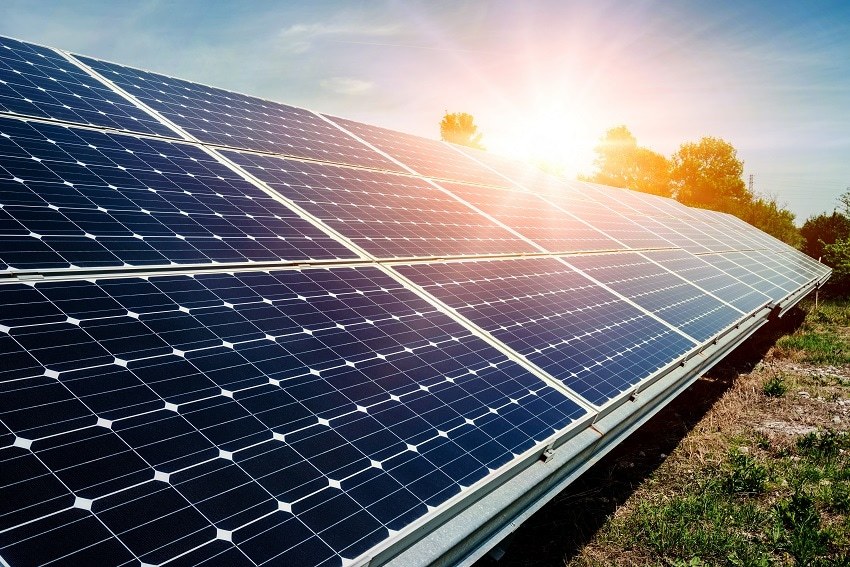
Sunlight is...
Very bright
Will eventually run out soon
A renewable resource
A nonrenewable resource
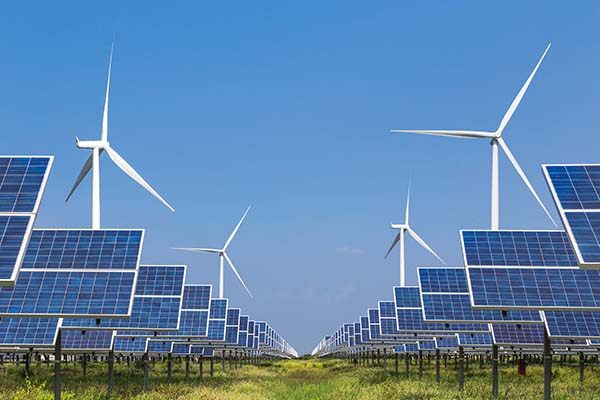
What are renewable resources?
A limited amount and cannot be replaced in a human life time.
Plastic bags
Coal, oil, and natural gas
Can be replaced in our lifetime through natural processes


Trees are renewable resources.
True
False
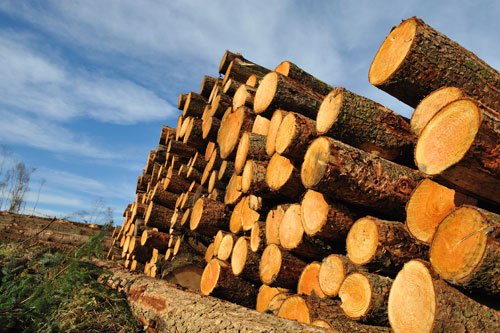
Wood is...
A renewable resource
A nonrenewable resource
Used to make oil
Used to make plastic

Coal is a renewable resource.
True
False

Wind is a renewable resource.
True
False

Oil is a renewable resource.
True
False

Water is a renewable resource.
True
False
Biomass power is a renewable energy source derived from plant and animal products. Which of these is a benefit of using biomass for power compared to nonrenewable resources? SC.912.L.17.11
Biomass power increases the amount of oxygen in the air.
Biomass power reduces the emission of greenhouse gasses.
Biomass power increases the clearing of forests and grasslands for energy crops.
Biomass power reduces organic waste in landfills and waste-treatment facilities.
What are the 3 fossil fuels?
Coal, Oil, Uranium
Coal, Hydroelectric, Oil
Natural gas, Oil, Coal
Oil, Natural Gas, Geothermal
Identify 3 renewable items that are made from plants.
SC.912.L.17.11
Newspaper, Baseball Cap, Fruits
Socks, Leather Shoe, Eggs
Uranium, Lead, Iron
Motor Oil, Water Bottle, Gas
For what reason do nuclear power plants use uranium as fuel?
Uranium atoms have nuclei that can be easily split
Uranium is less expensive than most other metals
Uranium is easier to obtain than most other metals
Unlike most other metals, uranium is not radioactive
What is global warming?
The rise in temperature on Earth
A microwave heating up
The decrease in temperature on Earth
Heating up food
What is the main problem with solar energy?
Solar panels are very expensive and large areas are needed to put them.
Replacement parts are hard to find and systems are difficult to install.
Solar panels will collect more energy than can be stored, causing a system overload.
Solar energy will cause cancer in organisms living near the panels.
What are two examples of renewable energy?
Geothermal and Wind
Solar and Coal
Wind and Natural Gas
Geothermal and Nuclear
What element is primarily used in nuclear fission?
Uranium
Carbon
Manganese
Lead

A tidal power station is made by building a barrage across the mouth of a river. At high tide the
sea water is trapped behind the barrage.
At low tide the water is allowed to flow back into the sea through a turbine.
What is the useful energy change in a tidal power station?
electrical energy → energy of position (potential)
electrical energy → energy of motion (kinetic)
energy of motion (kinetic) → energy of position (potential)
energy of position (potential) → electrical energy
The list contains three energy resources P, Q and R.
P geothermal energy from hot rocks
Q nuclear fission in reactors
R sunlight on solar panels
Which of these resources are renewable?
P and Q only
P and R only
Q and R only
P, Q and R
Biomass & Geothermal Energy are:
Renewable
Non-Renewable
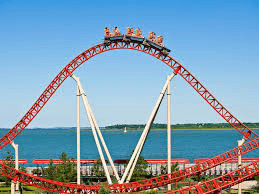
When a roller coaster is at the top of a hill it has
high potential energy
high kinetic energy
low potential energy
equal amounts of kinetic and potential energy
Kinetic energy depends on an object's ____________ and ___________.
position and mass
speed and mass
speed and gravity
position and gravity

Find the kinetic energy of a person weighing 76 kg and running at a speed of 4 meters per second (m/s).
304 J
152 J
80 J
160 J
Sophia is planning on going down an 8-m water slide. Her weight is 50 N. She knows that she has gravitational potential energy (GPE) at various points on the slide. What is her GPE at the top of the slide?
100J
400J
200J
300J
Sophia is planning on going down an 8-m water slide. Her weight is 50 N. She knows that she has gravitational potential energy (GPE) at various points on the slide. What is her GPE at bottom of the slide.
0 J
100J
200J
300J
Sophia is planning on going down an 8-m water slide. Her weight is 50 N. She knows that she has gravitational potential energy (GPE) at various points on the slide. What is her GPE at 2-m on the slide.
100J
200J
300J
400J
Lance is a 60-kg runner who, on a good day, runs at a speed of 5 m/s. What is his kinetic energy when he runs at this speed?
150J
300J
750J
1500J

This bullseye demonstrates...
High Accuracy & High Precision
High Accuracy & Low Precision
Low Accuracy & High Precision
Low Accuracy & Low Precision

This bullseye demonstrates...
High Accuracy & High Precision
High Accuracy & Low Precision
Low Accuracy & High Precision
Low Accuracy & Low Precision

