
 Worksheets
Review Midterm Unit 1 - Cell
Total questions: 20
Worksheet time: 10mins

Arun makes a model animal cell.
Name the part of a cell represented by:
the rubber ball : __________________
the seeds : __________________
Respectively
Mitochondria and nucleus
Nucleus and mitochondria
Nucleus and cytoplasm
Cell membrane and cytoplasm
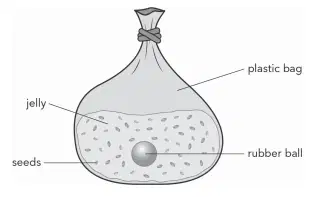
Arun wants to make his model into a model of a plant cell.
Tick (✓) two things that he should do.
Put the model into a box to represent a cell wall.
Remove the seeds.
Remove the rubber ball.
Add some green peas to represent chloroplasts.
Colour the jelly green to represent chlorophyll.
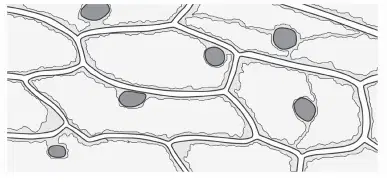
Zara looks at a piece of onion using a microscope.
What name is given to a group of cells like this? Choose the correct answer.
tissue
organ
organ system
organism
Zara can see a nucleus in each of the onion cells.
What is the function of the nucleus in a cell?
control the activity of cell
where the cell release the energy
control what is going out and goin in the cell
where the photosynthesis happens
Red blood cells transport oxygen around our bodies.
Their structure helps them to do this.
Tick (✓) the two correct statements about how the structure of red blood cells is related to their function.
They contain hemoglobin, which carries oxygen.
They have a large vacuole, which contains cell sap.
They have a strong cell wall, so that they do not get damaged easily.
They have chloroplasts to help them to transport food.
They have no nucleus to make more space for carrying oxygen.
Root hair cells are also adapted for their function. Complete the sentences.
The function of root hair cells is .
They have long extensions to help them to do this.
absorbing the water from soil
transporting the oxygen and mineral in the body
swapping the bacteria and virus out of the mouth
making food or photosynthesis
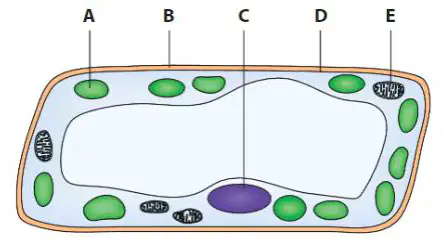
The diagram below shows a plant cell.
What is the function of D (Cell membrane)?
holds the cell in shape
controls what goes in and out of the cell
controls the activities of the cell
where photosynthesis takes place
The diagram below shows a plant cell.
What does letter A show?
mitochondrion
chloroplast
cell wall
cell membrane
The diagram below shows a plant cell.
What does letter B show?
mitochondrion
chloroplast
cell wall
nucleus
The diagram below shows a plant cell.
What does letter C show?
mitochondrion
chloroplast
cell wall
nucleus
The diagram below shows a plant cell.
What does letter E show?
mitochondrion
chloroplast
cell wall
nucleus
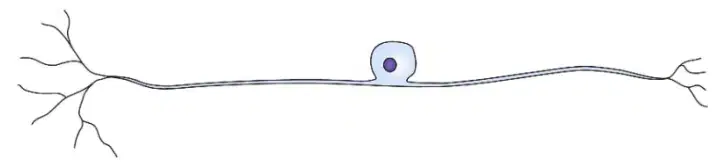
The diagram shows a specialised cell from the human body.
What is the function of this cell?
transfer electrical signals from one part of the body to other
transport the oxygen and mineral in body
absorb the water from soil
swap the bacteria and virus from the mouth
The diagram shows a specialised cell from the human body.
Describe how the cell is adapted to carry out its function. ______________________________________________________________________________ ___________________________________________
it has cilia, tiny hair on it surface
It has long extension, so it has more surface area
It has dendrite and axon
It has chloroplast
The diagram shows a specialised cell from the human body.
What is the name of this cell? ______________________________________
red blood cell
palisade cell
neuron cell
ciliated cell
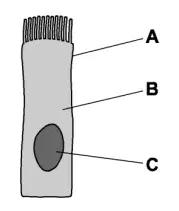
The human body is made of different types of cells.
Look at the diagram of a ciliated cell.
Which one is not present in the diagram?
cell membrane
cytoplasm
nucleus
mitochondria
Which structure is the largest?
cell
organ system
organ
tissue
Which structure is the smallest?
cell
organ system
organ
tissue
What is the function of the mitochondria in a cell?
to transport nutrients
to store genetic information
to produce energy
to control the activities of the cell
What is the function of the cell membrane?
stores energy
controls what goes in and out of the cell
produces proteins
provides structure to the cell
What type of cell is responsible for photosynthesis in plants?
palisade cell
neuron cell
root hair cell
red blood cell
ciliated cell

