
 Worksheets
KS3 Detecting Sound
Total questions: 20
Worksheet time: 10mins

Sound waves CANNOT travel through which of these:
liquid
gas
Outer space
Sound is caused by ....
instruments
vibrations
force
volume

What is amplitude as it refers to sound waves?
The distance between the same two points on a wave
The number of waves per second
The distance from the middle to the peak or trough of a wave
The frequency of the wave
The distance from any point on a wave to the corresponding point on the next wave.
Amplitude
Wavelength
Frequency
Compression
The total number of waves produced in one second is called the ________ of the wave.
Vibration
Echo
Frequency
Amplitude
What is a pitch (as it relates to sound)?
the intensity of a vibration
the amplitude of a sound wave
volume of sound
highness or lowness of a sound

Which of these waves would have a higher pitch?
Low Frequency
High Frequency
Frequency does not determine pitch
What happens when you increase the amplitude of a sound?
It makes the sound travel faster
It makes the sound louder
It increases the wavelength of the sound
It increases the frequency of the sound
Why is sound able to travel faster through a solid than a gas?
Gas molecules are packed tightly
Sound does not travel faster through a solid than a gas
Solid molecules are packed tightly together
Gas molecules move slowly

The __________________ the frequency, the ____________________ the pitch and vice versa.
higher, lower
lower, higher
higher, higher
Frequency does not affect pitch
What is a sound that is repeated because the sound waves are reflected back?
Pitch
Echo
Vibration
Volume
What does the middle ear consist of?
Ear canal,Ear drum
Ear canal, ossicles
Ear drum, Ossicles
Ossicles, Cochlea
What are the three tiny bones called?
Ossicles - Hammer, Angus, Stirrup
Ossicles - Hammer, Anvil, Stirrup
Occulars - Hammer, Anvil, Stirrup
Occulars - Hanson, Angus, Stands
What is inside of the Cochlea?
Liquid, and tiny hairs
Water, and tiny hairs
Acid, and hairs
Water, and fuzz
Hammer, Anvil, and stirrup are all called....
Three bones
Ossicles
Ear bones
Occulars


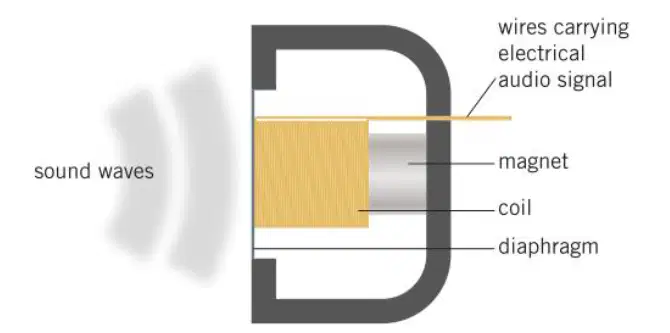
Which part of a microphone acts like the ear drum in your ear?
The coil
The Magnet
The Diaphragm
The Wires

