
 Worksheets
History of Computing Devices
Total questions: 21
Worksheet time: 17mins
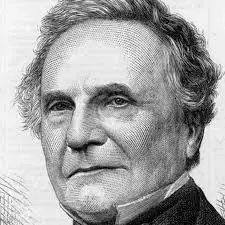
Charles Babbage is known as the father of computing because he built the first computer in the 1900s.
True
False
The first computers were created as calculating devices.
True
False
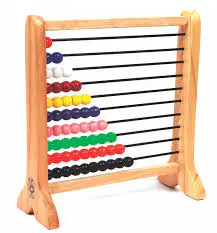
The abacus was the FIRST calculating device created in 500 BC by the Babylonians.
True
False
Reorder the following in the order they were invented.

Abacus

Pascaline

Stepped Reckoner

Jacquard's Loom

Hollerinth's Tabulating Machine
The abacus was invented by the (a) in 500 BC.
The Pascaline was created by (b) in 1642.
The Stepped Reckoner was created by (c) in 1673.
Jacquard's Loom was invented by (d) in 1801.
The Difference Engine and the Analytical Engine were both invented by (e) between 1822 and 1833.
Match the following descriptions with the machine they refer to.
Machine first used for tax collection.
Pascaline
Machine first used to calculate mathematical tables
The Difference Engine
First machine to record & store info on punched cards
Hollerinth's Tabulating Machine
First machine that could add, subtract, multiply and divide
Stepped Reckoner
The machine that worked like a computer brain and its memory.
The Analytical Machine.
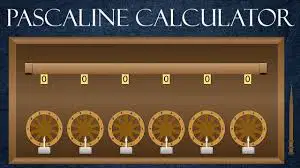
The Pascaline was the first machine that could add, subtract, multiply and divide.
True
False
He was the inventor who created the machine used to calculate a census

Gottfried Wilhelm

Charles Babbage

Joseph Marie Jacquard

Herman Hollerinth
The first person to introduce the binary system was
Gottfried Wilhelm
Charles Babbage
Joseph Marie Jacquard
Herman Hollerinth
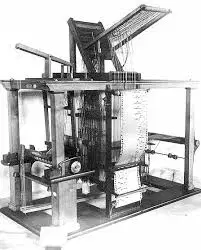
Jacquard's Loom was the first machine to be programmed.
True
False
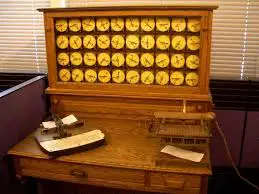
Hollerinth's Tabulating Machine was the first machine to record and store information on punched cards.
True
False
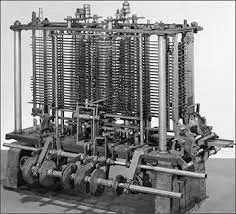
The Analytical Engine was designed in 1833 by Charles Babbage which was to use a programme. It had a part that worked like the (a) called the (b) and a part that worked like (c) called the (d) . It was to work just like the (e) but only a small part of this machine was built.
Computers speak their own language called machine language.
True
False
Machine language is an advanced high-level language with letters, numbers, colours and sounds.
True
False
Match the following
Set of instructions that can be understood and run directly by a computer's CPU.
Machine language
The number system that the computer understands.
Binary system
Set of instructions that tells a computer what to do.
Programme
Special language used to write computer programmes e.g. C++, Java, Basic, COBOL, Pascal etc.
Programming language
Which of the following is NOT an example of a programming language.
Basic
FoxPro
French
Pascal
A computer programme has to be installed every time you want to open and use a programme on the computer.
True
False
Someone who writes codes to give the computer instructions on what to do is known as a computer (a) .
Programming languages that allow programmers to write codes for programmes are known as high-level languages.
True
False
Even though all programmes must be changed to machine language for the computer to use them, programmes are NOT written in machine language. This is because ...
Writing and testing programmes with only numbers was very hard.
Writing and testing programmes with only numbers was very time-consuming.
Errors in the programme were not easy to find.
All of the above

