wayground logo

Free Printable Worksheets

Font size

S
M
L
XL
Worksheets

Cells and Human KS3 Review

Total questions: 107

Worksheet time: 1hrs 9mins

Name
Class
Date
1.

The lungs are found in the

a)

Chest

b)

Brain

c)

Abdomen

2.

The lungs are protected by the ribs.

a)

False

b)

True

3.

When we breathe in, our chest moves

a)

Upward and outward

b)

Inward and downward

c)

Upward and downward

d)

Inward and outward

4.

The blood carries carbon dioxide from all parts of the body back to the lungs.

a)

True

b)

False

5.

Which gas we take in when we inhale?

a)

Oxygen

b)

Carbon dioxide

c)

Nitrogen

d)

Hydrogen

6.

Which gas we take out when we exhale?

a)

Oxygen

b)

Carbon dioxide

c)

Nitrogen

d)

Hydrogen

7.

Air sacs are the place where exchange of gases takes place.

a)

True

b)

False

8.

When we breathe in, our lungs get

a)

Bigger

b)

Smaller

9.

When we breathe out, our diaphragm becomes

a)

relaxed and dome shaped

b)

contracted and flattened

c)

relaxed and flattened

d)

dome shaped and contracted

10.

The process of movement of air into and out of the lungs is called

a)

Circulation

b)

Digestion

c)

Breathing

d)

Excretion

11.

Which of the following is the primary function of the respiratory system?

a)

make carbon dioxide

b)

produce oxygen

c)

gas exchange

12.

Trachea is also known as?

a)

voicebox

b)

windpipe

c)

throat

13.

Larynx is also known as?

a)

voice box

b)

windpipe

c)

throat

14.

Pharynx is also known as?

a)

voice box

b)

windpipe

c)

throat

15.

When we inspire (inhale), our diaphragm does what?

a)

relaxes and moves down

b)

contracts and moves down

c)

contracts and moves up

d)

relaxes and moves up

16.

What happens to the volume and pressure in the lungs when we inspire (inhale)?

a)

volume and pressure decreases

b)

volume and pressure increases

c)

volume decreases, pressure increases

d)

volume increases, pressure decreases

17.

What happens to the volume and pressure in the lungs when we expire (exhale)?

a)

volume and pressure decreases

b)

volume and pressure increases

c)

volume decreases, pressure increases

d)

volume increases, pressure decreases

18.

Every cell in our body needs a supply of oxygen. The cells use oxygen for ___?

a)

respiration

b)

breathing

c)

digestion

19.

Air is around 20% oxygen.

a)

true

b)

false

20.

Air is around 20% carbon dioxide.

a)

true

b)

false

21.

In the lungs, oxygen diffuses into the blood and carbon dioxide diffuses out of the blood. This is called what?

a)

breathing

b)

gas exchange

c)

respiration

22.

What is the green part called?

a)

trachea

b)

air sac

c)

brochi

23.

What do you call this part of the human lung (seen through a microscope)?

a)

air sacs/alveoli

b)

lung cells

c)

capillaries

d)

bronchioles

24.

Which is true about diffusion?

a)

occurs from a higher concentration to a lower concentration

b)

occurs from a lower concentration to a higher concentration

25.

Blood which ENTERS the capillaries of the lungs have ______ oxygen.

a)

more

b)

less

26.

Blood which LEAVES the capillaries of the lungs have ______ carbon dioxide.

a)

more

b)

less

27.

In the diagram, oxygen diffuses from the air sac into the capillaries.

a)

true

b)

false

28.

Why does oxygen and carbon dioxide diffuse in the direction shown?

a)

because the inhaled air has less oxygen and less carbon dioxide

b)

because the inhaled air has more oxygen and more carbon dioxide

c)

because the inhaled air has more oxygen and less carbon dioxide

d)

because the inhaled air has less oxygen and more carbon dioxide

29.

Breathing is similar to respiration.

a)

true

b)

false

30.

In the diagram, carbon dioxide diffuses from the air sac into the capillaries.

a)

true

b)

false

31.

What is the name of the bone highlighted in red?

a)

clavicle

b)

pelvis

c)

ribs

d)

scapula

32.

What is the name of the bone highlighted in red?

a)

clavicle

b)

tibia

c)

humerus

d)

femur

33.

What bone is highlighted in red?

a)

ulna

b)

radius

c)

humerus

d)

patella

34.

What bone is highlighted in red?

a)

Ulna

b)

Radius

c)

Humerus

d)

Pelvis

35.
a)
Tibia
b)
Fibula
c)
Patella
d)
Femur
36.

What bone is highlighted in red?

a)

patella

b)

tibia

c)

fibula

d)

femur

37.

What bone is highlighted in red?

a)

femur

b)

tibia

c)

fibula

d)

metatarsals

38.

What bone is highlighted in red?

a)

metatarsals

b)

phalanges

c)

metacarpals

d)

ulna

39.

What bone is highlighted in red?

a)

clavicle

b)

scapula

c)

sternum

d)

ribs

40.

What bones is highlighted in green?

a)

tarsals

b)

metacarpals

c)

carpals

d)

metatarsals

41.

What bone is highlighted in red?

a)

tarsals

b)

carpals

c)

vertebrae

d)

femur

42.

What is the name of the bones highlighted in blueish purple?

a)

phalanges

b)

carpals

c)

tarsals

d)

metatarsals

43.

What bone is highlighted in yellow?

a)

cranium

b)

mandible

c)

clavicle

d)

scapula

44.

What bone is highlighted in red?

a)

cranium

b)

mandible

c)

scapula

d)

clavicle

45.

What bone is highlighted in orange?

a)

patella

b)

pelvis

c)

clavicle

d)

femur

46.

Name the bones highlighted in red.

a)

ribs

b)

radius

c)

ulnas

d)

sternum

47.

Name this bones highlighted in red.

a)

clavicle

b)

scapula

c)

cranium

d)

sternum

48.

Name this bone highlighted in red.

a)

tibia

b)

fibula

c)

femur

d)

humerus

49.

What is the name of the bones highlighted in green?

a)

tarsals

b)

carpls

c)

phalanges

d)

metatarsals

50.

What are the bones highlighted in green called?

a)

metacarpals

b)

phalanges

c)

tarsals

d)

metatarsals

51.

Name the bones highlighted in green.

a)

metatarsals

b)

phalanges

c)

tarsals

d)

metacarpals

52.
Name this joint
a)
gliding
b)
saddle
c)
ball and socket
d)
condyloid
53.
Fibrous joints are?
a)
freely moveable
b)
partially moveable
c)
immovable
54.
The joint between the tibia and fibula is?
a)
a gomphosis
b)
a syndesmoses
c)
a cartilaginous joint
d)
a synovial joint
55.
Synovial fluid
a)
provides cushioning
b)
provides structure
c)
lubricates the joint
d)
provides support
56.
Name this joint
a)
pivot
b)
saddle
c)
gliding
d)
hinge
57.
Which joint allows movement in only one direction?
a)
ball and socket
b)
fiibrous
c)
hinge
d)
pivot
58.
Name this cartilaginous joint
a)
gomphosis
b)
symphysis
c)
hinge
d)
saddle
59.
The skull is an example of what type of joint?
a)
Cartilaginous
b)
Synovial
c)
Fibrous
60.
Sutures, Syndesmoses, and Gomphoses are example of what type of joint?
a)
Cartilaginous
b)
Fibrous
c)
Syndesmoses
d)
Synovial
61.
Synovial joints are freely movable.
a)
True
b)
False
62.
________ connects bone to bone.
a)
ligament
b)
tendon
c)
muscle
d)
meniscus
63.
Name this joint 
a)
gliding
b)
saddle
c)
hinge
d)
ball and socket
64.
Name this joint
a)
gliding
b)
saddle
c)
condyloid
d)
pivot
65.
This type of muscle tissue is found only in the heart
a)
Skeletal
b)
Cardiac
c)
Smooth
66.
This type of muscle tissue is found in the walls of hollow organs such as the stomach 
a)
Skeletal
b)
Cardiac
c)
Smooth
67.
This type of muscle tissue is attached to bones wand helps control voluntary movement
a)
Skeletal
b)
Cardiac
c)
Smooth
68.
Which of the following is a type of muscle tissue
a)
Skeletal 
b)
Cardiac
c)
Smooth
d)
All of the above
69.
Which types of muscle tissue are voluntary
a)
Cardiac Muscle
b)
Smooth Muscle
c)
Skeletal Muscle
d)
Skeletal Muscle and Smooth Muscle
70.
This type of muscle tissue is found in the walls of hollow organs such as the stomach 
a)
Skeletal
b)
Cardiac
c)
Smooth
71.
This type of muscle tissue moves food through the digestive track
a)
Skeletal
b)
Cardiac
c)
Smooth
72.
Which muscles are involuntary?
a)
skeletal
b)
cardiac
c)
smooth
d)
smooth and cardiac
73.
When a muscle contracts, it _______
a)
gets longer
b)
gets shorter
c)
gets thinner
d)
grows hair
74.
Skeletal muscles are attached to the _________.
a)
Stomach
b)
Lungs
c)
Bones
d)
Involuntary Muscles
75.
Cardiac muscles are ONLY located in the heart
a)
TRUE
b)
FALSE
76.
What is an example of an involuntary muscle? 
a)
Heart
b)
Arms 
c)
Legs
d)
Shoulders
77.
Smooth muscle can be found in the:
a)
Intestines
b)


Heart

Heart

c)
Bicep
d)
Brain
78.
Voluntary muscle is...
a)
muscle that has to be told when to move
b)
muscle that moves automatically
c)
muscle that needs to be stretched regularly
d)
muscle that makes up the heart and stomach
79.
Voluntary muscle is...
a)
muscle that has to be told when to move
b)
muscle that moves automatically
c)
muscle that needs to be stretched regularly
d)
muscle that makes up the heart and stomach
80.

One muscle _______ and the other _______.

a)

works, works harder

b)

works, relaxes

81.

Muscles pull on _______ to help you move.

a)

Body parts

b)

Other muscles

c)

Bones

82.

_________ muscles are controlled by you.

a)

Involuntary

b)

Voluntary

83.

__________ muscles you do not control.

a)

Voluntary

b)

Involuntary

84.

Your heart is a/an ________________ muscle.

a)

Voluntary

b)

Involuntary

85.
The basic unit of structure and function in the human body is the....
a)
organ
b)
organ system
c)
cell
d)
tissue
86.
Which of the following is the correct order of organization in living things from most basic (simple) to most complex?
a)
a.  Organism, cell, tissue, organ, organ system
b)
a.  Organ system, organ, tissue, cell, organism
c)
a.  Cell, tissue, organ, organ system, organism
d)
a.  Cell, organ, tissue, organ, organism, organ system
87.
A group of similar cells that come together to perform a specific function is a/an
a)
organ
b)
organism
c)
organ system
d)
tissue
88.

The most basic level of organization in the human body

a)

tissue

b)

cell

c)

organ

d)

organ system

89.
When many organ systems work together it can form...
a)
organ
b)
cells
c)
organ system
d)
organism 
90.
This is a example of........ 
a)
organ system
b)
cells
c)
organ
d)
tissue
91.
What is the largest organ for the human body?
a)
heart
b)
lungs
c)
skin
d)
muscles 
92.

In most animals, combinations of various tissues make up functional units called

a)

epithelial cells

b)

organs

c)

organ systems

d)

populations

93.

The stomach helps break down food for digestion. Which BEST describes the stomach?

a)

It is part of a cell with a fuction

b)

It is a single cell that performs a life function

c)

Made up of a small number of cells that perform a single function

d)

Composed of millions of cells of different types working together to perform a function

94.

Why is your skin considered to be an organ?

a)

it is part of an organism

b)

it is made of cells

c)

it is made of tissue

d)

it acts as a barrier

95.

Plants also have ___________that are made up of different tissues working together.

a)

leaves

b)

organs

c)

arms

d)

roots

96.
A group of organs that work together to perform big jobs for your body is an organ system.
a)
True
b)
False
97.
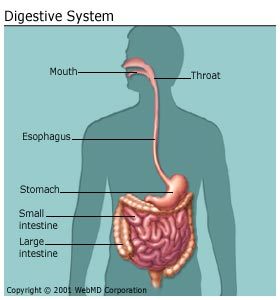
The digestive system includes the stomach. What level is the stomach?
a)
organ
b)
tissue
c)
cell
d)
organism
98.
This is a example of ........
a)
cell
b)
organ system
c)
organ
d)
tissue
99.
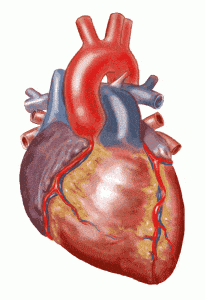
This is a example of ........
a)
cell
b)
tissue
c)
organ 
d)
organ system
100.

This picture represents which of the levels of organization?

a)

atom

b)

organ

c)

organelle

d)

cell

101.

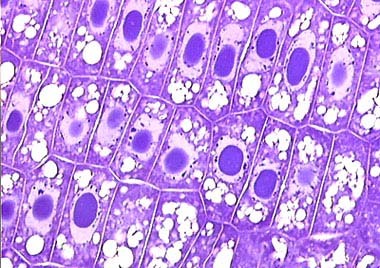
This picture represents which of the levels of organization?

a)

organ

b)

organ system

c)

cell

d)

tissue

102.

This picture represents which of the levels of organization?

a)

tissue

b)

organism

c)

organ

d)

organ system

103.

This picture represents which of the levels of organization?

a)

cell

b)

organ

c)

organ system

d)

organism

104.
A group of similar cells that come together to perform a specific function is a/an
a)
organ
b)
organism
c)
organ system
d)
tissue
105.
When a group of organs work together to perform a particular function they create a/an
a)
organ system
b)
organism
c)
tissue
d)
organ
106.
The smallest level of organization of life in an organism
a)
tissue
b)
cell
c)
organ
d)
organ system
107.
Which of the following is the correct order of organization in living things from most basic (simple) to most complex?
a)
a.  Organism, cell, tissue, organ, organ system
b)
a.  Organ system, organ, tissue, cell, organism
c)
a.  Cell, tissue, organ, organ system, organism
d)
a.  Cell, organ, tissue, organ, organism, organ system