
 Worksheets
DCA Practice 6th Grade
Total questions: 13
Worksheet time: 9mins

What do the cities of Angkor, Ellora, Dunhuang, and Pagan have in common?
They were all major Buddhist sites.
They were all capitals of empires.
They were all trade centers.
They were all part of the Gupta Empire.

Which of the following landforms protected the Indus River Valley civilization?
Hindu Kush
Apennine Mountains
Thar Desert
Bay of Bengal
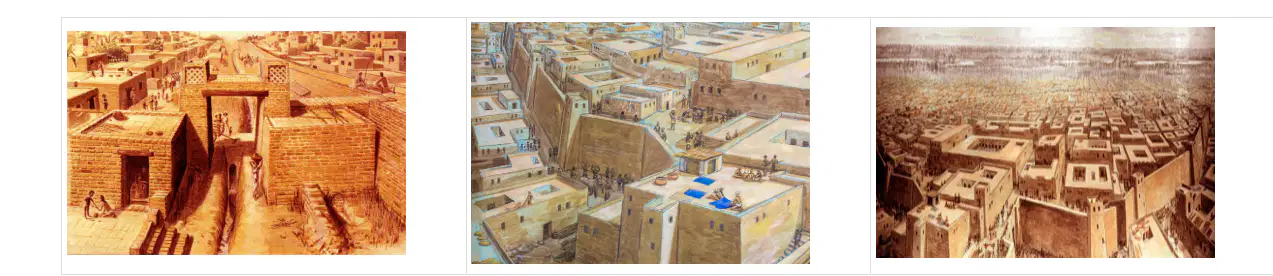
Which of the following would be the best caption for this collection of images?
Nomadic living, people move from place to place.
Hunting is a more significant source of food than farming.
Riverways provide water for agriculture
Advanced urban centers with well-planned streets Indus Valley Civilizations

Examine the map to determine which of the following statements is accurate.
As Aryans migrated into India, they chose to settle at the Southern tip of India.
Dravidians migrated south as Aryans began to arrive and settle in the north.
Hinduism spread throughout all of India by 1650 BCE
The Aryan migration began around 500 BCE.
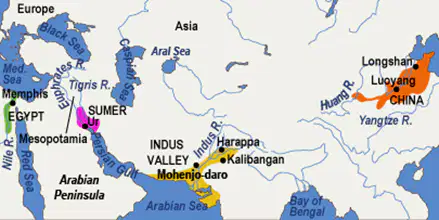
An annotation is a note of explanation about a map, text, or chart/table. What annotation could you create that explains the purpose of this map?
Which of the following is the accurate definition of culture?
The music and art made by famous people in that civilization.
The language spoken by people in a big city.
The food and clothes from a nation.
The way people in a group think, live, and do things together.
What is an example of culture?
The way people celebrate holidays in your country.
The color of someone’s eyes.
The weather in your city.
The speed limit on a highway.
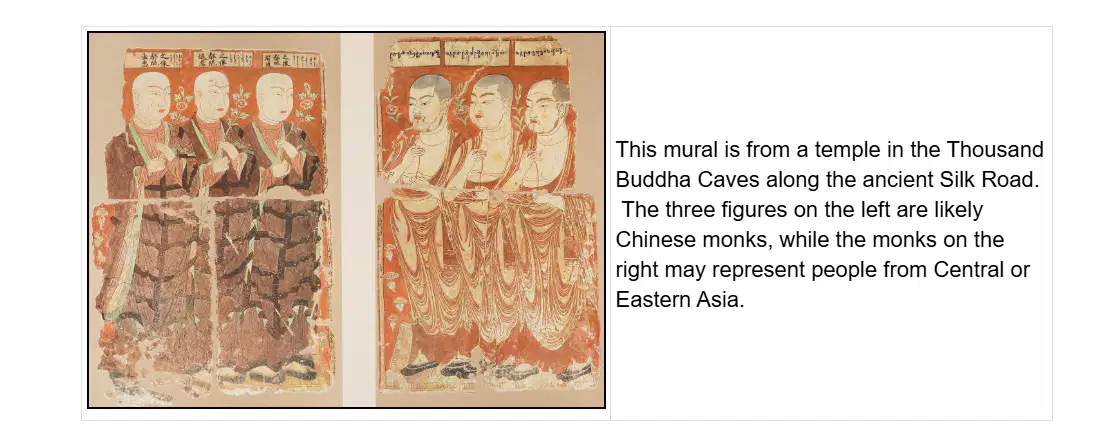
Which of the following claims is best supported in the image and information provided?
The Silk Road had no impact on the development of civilizations in Asia.
People of different cultures shared their knowledge and beliefs as they traveled the Silk Road.
The Silk Road was only used by monks and priests.
Travelers on the Silk Road did not exchange anything other than silk and other textiles.
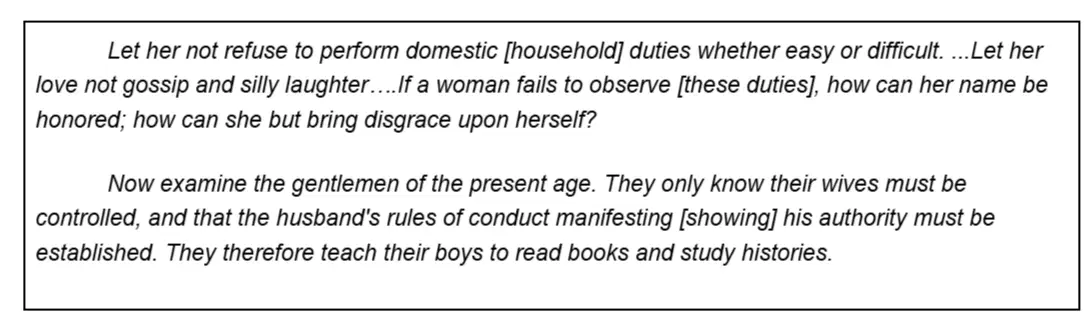
Why would an author in ancient China have written the “Lessons for Women”?
To emphasize the cultural expectation for men to respect their women.
To promote a cultural change for men to do the majority of the household chores.
To show the cultural importance for women to honor their husbands by tending to the household chores.
To explain the cultural significance for men to gossip and laugh with each other nightly.
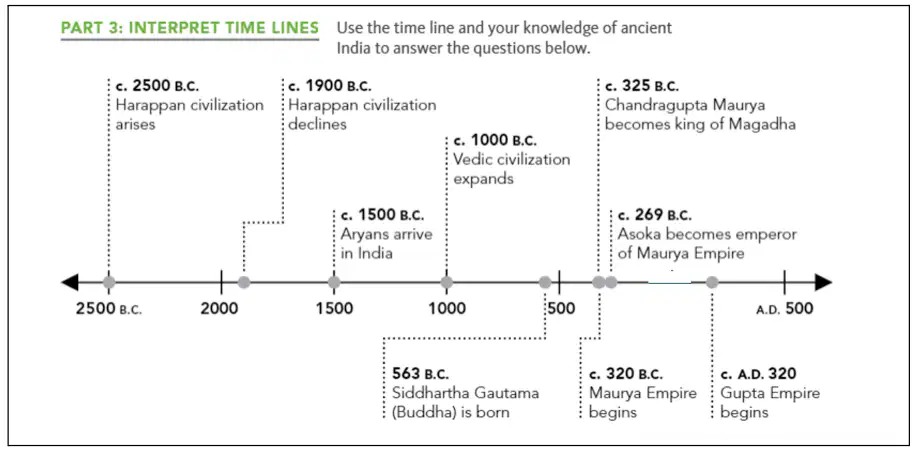
According to the timeline, which of the following events occurred around 563 B.C.E.?
Buddha was Born
The Maurya Empire began
The Gupta Empire began
The Vedic Civilization expanded

According to the timeline, which of the following events occurred BEFORE the year 1000 B.C.E?
Asoka becomes emperor
Maurya Empire begins
Gupta Empire begins
Harappan Civilization declines
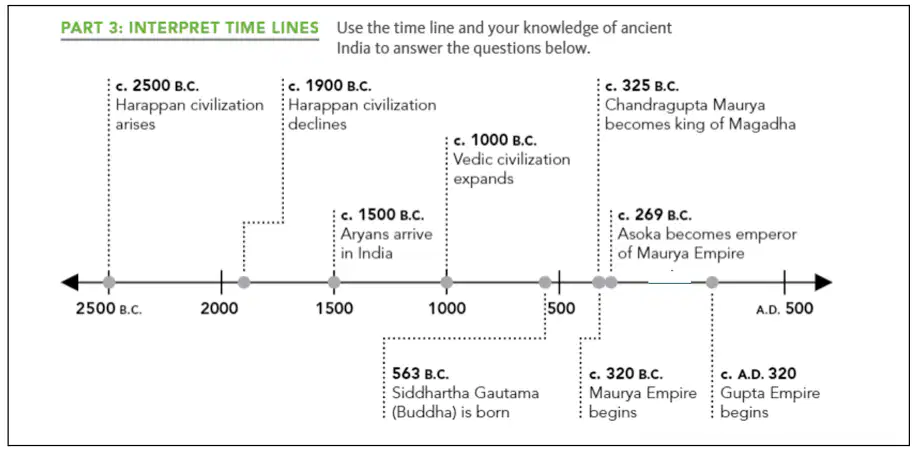
The Maurya Empire began in 320 B.C.E., while the Gupta Empire began in 320 C.E.. Which of the following explains why these did not occur at the same time? [P]
BCE and CE are two different eras
BCE dates count down toward one, while CE dates count up from 1
BCE dates and CE dates are the same
The Gupta and Maurya Empires used different calendar
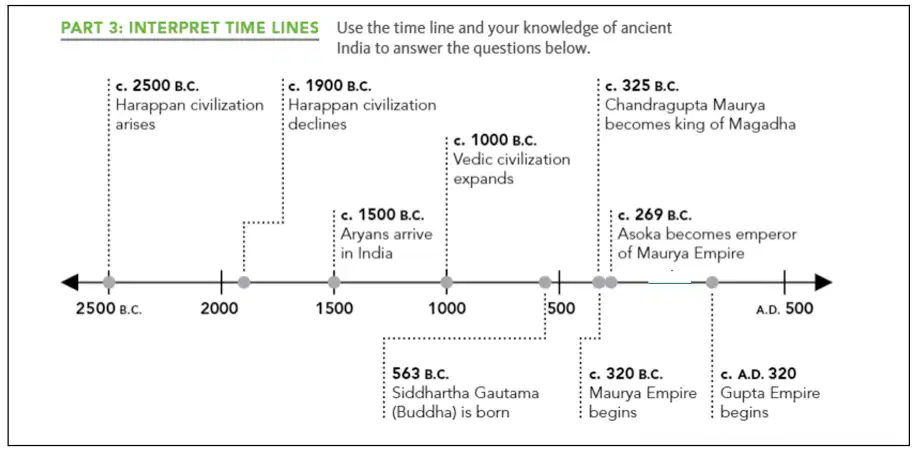
According to the timeline, about how many years passed between the beginning of the Harappan civilization and the decline of the Harappan civilization?
900 Years
700 years
600 Years
400 years

