
 Worksheets
Physics Final Exam Review Fall 24
Total questions: 146
Worksheet time: 3hrs 43mins
This occurs when an object speeds up, slows down, or changes direction.
Speed
Velocity
Acceleration

At what speed would a car have to move in order to travel 20 kilometers in 2 hours.
5 km/hr
10 km/hr
20 km/hr
40 km/hr


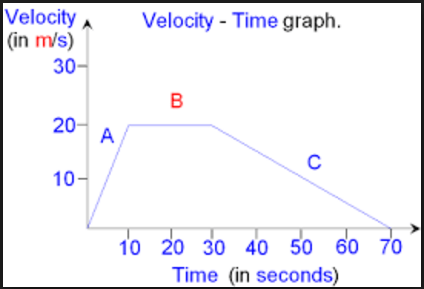
This is a velocity-time graph. What is the object doing in segment A?
Speeding up
Slowing down
Constant Velocity
Not moving

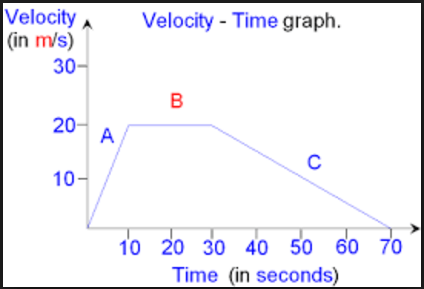
This is a velocity-time graph. What is the object doing in segment C?
Speeding up
Slowing down
Constant Velocity
Not moving
An object in free fall is acted on only by the force of gravity
True
False
A very massive object will free fall at the same rate of acceleration as a less massive object
True
False
When a rock is dropped, it will accelerate downward at a rate of 9.8 m/s^2. If the same rock is thrown downward (instead of being dropped from rest), its acceleration will be ___.
less than 9.8 s2m
more than 9.8 s2m
9.8 s2m
What is the difference between a vector quantity and a scalar quantity?
A scalar has a magnitude and direction and a vector has only a magnitude
A vector has a magnitude and direction and a scalar has only a magnitude
A scalar has a direction and a vector has a magnitude
None of the above
A baseball catcher throws a ball straight up and catches it in the same spot. A what point in the balls trajectory does it experience a velocity of zero.
Midway on the way up
At its peak height
The instant it leaves the catchers hand
The instant before it arrives in the catchers mitt
A ball is thrown straight up into the air. As the ball travels upward, the speed of the ball
increases
decreases
stays the same
behaves randomly
An automobile with an initial speed of 4.30 m/s accelerates uniformly at the rate of 3.0 m/s2. Find the final speed after 5.0 s.
Δx = v0t + 21 at 2
vf2 = v02 + 2a Δx
vf = v0 + at
v = tΔx
A car traveling initially at +7.0 m/s accelerates uniformly at the rate of +0.80 m/s2 for a distance of 245 m. What is its velocity at the end of the acceleration?
Δx = v0t + 21 at2
vf2 = v02 + 2a Δx
vf = v0 + at
a = tΔv
A car accelerates uniformly in a straight line from rest at the rate of 2.3 m/s2. How long does it take the car to travel 55 m?
Δx = v0t + 21 at2
vf2 = v02 + 2a Δx
vf = v0 + at
Δx = vt
Turner’s treadmill runs with a velocity of -1.2 m/s and speeds up at regular intervals during a half-hour workout. After 25 min (1500 s), the treadmill has a velocity of -6.5 m/s. What is the average acceleration of the treadmill during this period?
Δx = v0t + 21 at2
vf2 = v02 + 2a Δx
vf = v0 + at
v = tΔx
The Position vs. Time graph of an object experiencing constant (nonzero) acceleration looks like:
A Straight Line with Nonzero Slope
A Horizontal Line
A Parabolic Curve
A Logarithmic Curve
The Velocity vs. Time graph for an object experiencing constant (nonzero) acceleration looks like:
A Horizontal Line
A Straight Line with a defined, nonzero slope
A Vertical Line
A Parabolic Curve

What variable letter is altitude or height?
dx
vx
dy
vy


What variable letter is range or horizontal displacement?
dx
vx
dy
vy
What variable is vertical velocity?
dx
vx
dy
vy
What variable is horizontal velocity?
dx
vx
dy
vy
What assumption can you make for the acceleration, in the x-component of projectile motion?
-9.8 m/s^2
9.8 m/s^2
9.8 m/s
0 m/s^2
What assumption can you make for the acceleration, in the y-component of projectile motion of a dropped object?
-9.8 m/s^2
9.8 m/s^2
-9.8 m/s
0 m/s
What assumption can you make for the acceleration, in the y-component of projectile motion of an object thrown upward?
-9.8 m/s^2
9.8 m/s^2
9.8 m/s
0 m/s
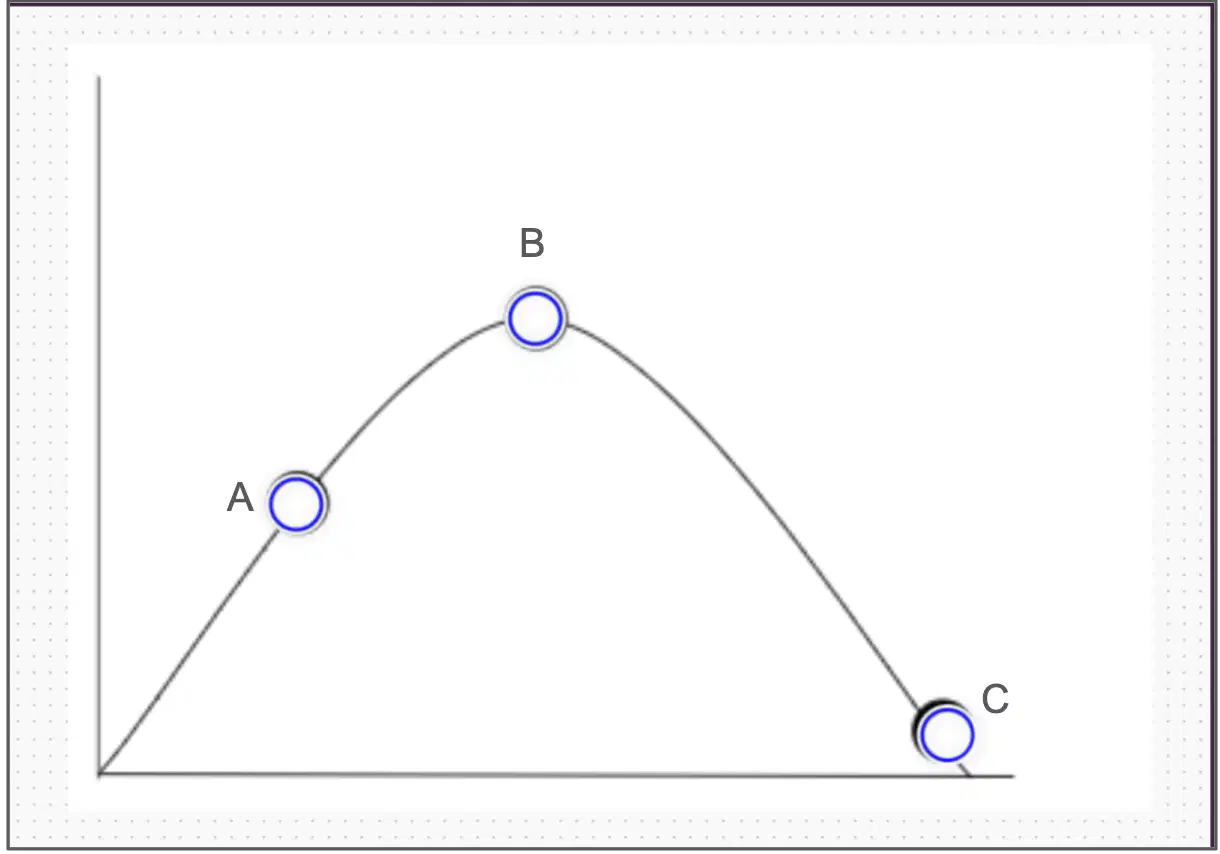
Where is Vy the lowest? (Vy is vertical velocity.)
A
B
C
Both A and C
The force acting on projectiles during its motion.
air resistance
gravity
balanced force
unbalanced force

The Data table shows how the velocity changes over time. What value should go in box A.
-10
0
10
30

The data table shows the velocity of a projectile. What value should go in box 'B'
-10
0
10
30
What are Newtons Laws of Motion Nicknames?
Law of Inertia
Law of Action Reaction
Law of Gravity
Law of Acceleration
What is Newton's First Law
F=ma
Every action has an equal and opposite reaction
An object at rest stays at rest, an object in motion stays in motion.
Gravity is a real downer
What goes up, must come down
What is a PUSH or PULL of an object?
Motion
Force
Friction
Gravity
Tension
Which force(s) will always result in a change in an object's motion?
gravity
balanced forces
unbalanced force
net force
Newton Force
The tendency of objects to resist a change in motion is called:
Friction
Inertia
Gravity
Velocity
Impetus
Letting go of a balloon full of air is demonstrating Newton's ______ _______ ________ _________ because the air comes out of the back and the balloon moves forward.
1st law of motion
2nd law of motion
3rd law of motion
4th law of motion
silliness

A net force of 15 N is exerted on an encyclopedia to cause it to accelerate at a rate of 5 m/s2. Determine the mass of the encyclopedia.
m = 3.0 kg
m = 0.3 kg
m = 3.0 ml
m = 75.0 g
cannot be determined

Name the missing force....
weight force
normal force
frictional force
tension force
forced to be here
Which is an example of the law of inertia?
When you let go of a balloon it flies away.
A soccer ball accelerates faster than a bowling ball when kicked.
Blood rushes from your head to your feet when quickly stopping on an descending elevator.
A dog chases a cat cause thats what they do
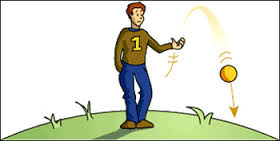
What is the attractive force that exists between all objects that have mass?
Weight
Mass
Gravity
Viscosity
Krush
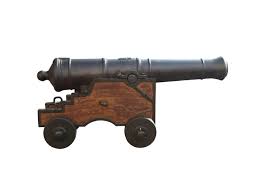
When a cannon fires a cannonball we observe Newton's third law. Which force is the reaction force?
The cannon moving forward
The cannonball moving forward
The cannon moving backward
The cannonball moving backward
The enemy going splat
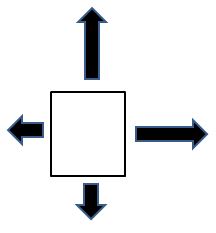
This object would be moving (pick all that are correct):
up
down
left
right
not moving at all
A leftward force is applied to a crate to push it across the floor at a constant speed. Which is the correct force diagram?


A rightward force is applied to a dresser to accelerate it to the right across the bedroom floor.


A hockey puck glides to the right across the ice at a constant speed on a practically frictionless ice.


A downward-moving skydiver who has just opened the parachute is slowing down.


This diagram can be used to indicate which of the following?
a object at rest
an object moving at a constant velocity (speed)
an object accelerating
(Trick question -- there is only one correct answer)
an object decelerating

By what factor is the larger box accelerated compared to the smaller?
1/2
2
50
500

What is the difference in accelerations?
5N
0.2 m/s2
0.3 m/s2
0.1 m/s2
there is no acceleration
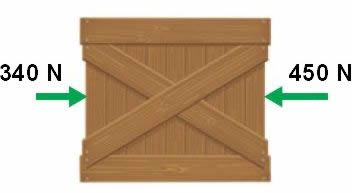

find the acceleration of the box.
12m/s2 towards right
12m/s2 towards left
40m/s2
60m/s
If the wind is heading south with a force of 5 N, and a car is going north with force of 78936 N, what is the Net Force and Direction.
78931 N North
78931 N South
78531 N North
78531 N South
If the net force (Fnet) is 0, _____
the forces are balanced.
the object just keeps doing what it was doing.
the object maintains its same speed and direction.
the object maintains its velocity.
the object does not speed up, slow down, or turn.

If the velocity of the object is to the left, the object will _____.
speed up
slow down
turn
accelerate to the left

How will this object move?
It definitly won't be moving.
It will move to the right.
It will move to the left.
It will move in both directions.
it will not accelerate
In order for an object to experience friction, the object MUST:
Be in contact with a surface.
Be in motion.
Be in motion across a surface.
Which type of surface will have the LEAST amount of friction?
Ice
Glass
Rubber
Sand paper
There are two type of friction: static friction and kinetic friction. Which best describes the type of friction being observed by the following object?
An table is being pushed at a constant velocity across the floor.
Static Friction
Kinetic Friction
There are two type of friction: static friction and kinetic friction. Which best describes the type of friction being observed by the following object?
An table is being pushed, but remains at rest.
Static Friction
Kinetic Friction
How is static friction calculated? Select all that applies
Fs = μsFN
Fs = μmg
Fs = μsmg
Fs = μsFg
How is kinetic friction calculated? Select all that applies
Fk = μkFg
Fk = μkFN
Fk = μmg
Fk = μkmg
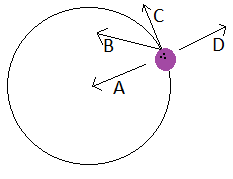
What would the force between them be if the distance between them were doubled?
What would the force between them be if one of the masses were doubled?
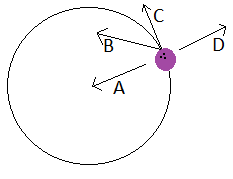
You are moving a ball in a circle using 72 N of centripetal force. What would the force be if you doubled the radius of the circle.
18 N
36 N
72 N
144 N
What's the centripetal acceleration of a .2 kg yoyo spun in a circle with a radius of .7 meters at a velocity of 3 m/s?
8.23 m/s2
10.54 m/s2
12.86 m/s2
17.39 m/s2
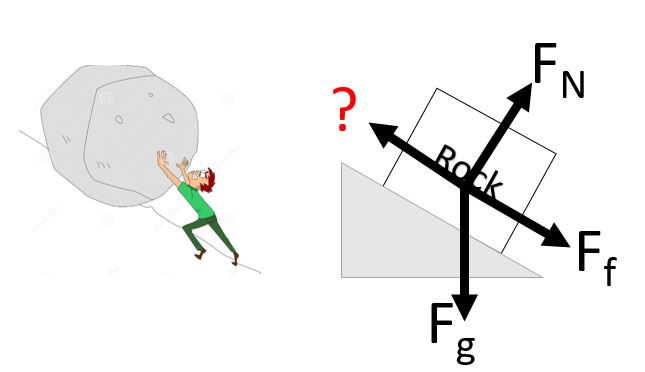
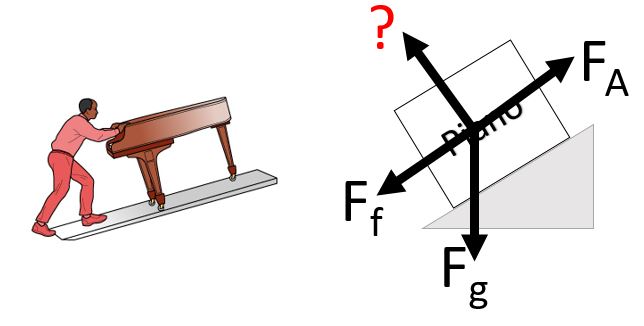
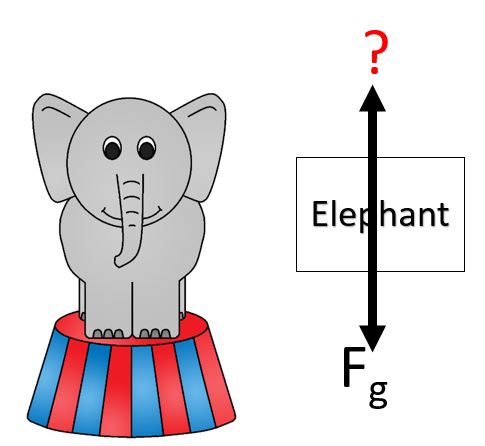

The force that keeps objects on top of surfaces instead of letting them sink into the surface is known as:
normal
abnormal
static
inertia
The force exerted by ropes and chains is called
tension
normal
elastic
mechanical
Paired forces are
in opposite directions
always equal
not possible
added together
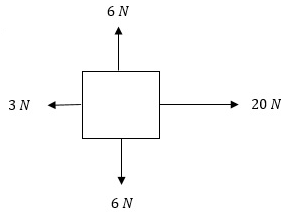
What is the NET FORCE of this diagram?
17 N, right
17 N, left
23 N, right
12 N, up
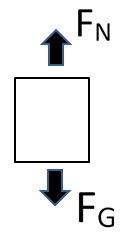
Which of the following is true about this free-body diagram?
the forces are are balanced
the object is free-falling
the object is moving upward
the forces are unbalanced


Potential energy is _____ proportional to the _____ of an object.
inversely, mass
inversely, height
directly, speed
directly, height
If we double (x2) the height of an object, its potential energy will...
quarter (x1/4)
halve (x1/2)
double (x2)
quadruple (x4)
If we triple (x3) the height of an object, its potential energy will...
become 1/4 the original
become 1/3 the original
triple (x3)
quadruple (x4)
Kinetic energy is _____ proportional to the _____ of velocity.
directly, amount
directly, square
directly, cube
inversely, square
If we double (x2) the speed of an object, its kinetic energy will...
quarter (x1/4)
halve (x1/2)
double (x2)
quadruple (x4)
If we triple (x3) the speed of an object, its kinetic energy will...
become 1/9 the original
become 1/3 the original
triple (x3)
become 9x the original (x9)
If we halve (x1/2) the speed of an object, its kinetic energy will...
become 1/4 the original
become 1/2 the original
double (x2)
quadruple (x4)
A ramp is 0.5 m high. What is a 30 kg child's gravitational potential energy at the top of the ramp?
3.75 J
4.9 J
15 J
147 J
Determine the kinetic energy of an 80 kg skydiver falling at a terminal speed of 55 m/s.
2200 J
43,120 J
121,000 J
242,000 J
Determine the kinetic energy of a 1000 kg roller coaster moving with a speed of 20 m/s.
10,000 J
196,000 J
200,000 J
400,000 J
A baby carriage is sitting at the top of a hill that is 21 m high. The mass of the carriage with the baby is 1.2 kg. What is the carriage's gravitational potential energy?
25.2 J
246.96 J
264.6 J
529.2 J
A car is traveling with a velocity of 40 m/s and has a mass of 1120 kg. Calculate the car's kinetic energy.
20 J
560 J
22,400 J
896,000 J
This term refers to the amount of matter contained in an object.
Joules
Matter
Energy
Mass
This is a type of potential energy.
Sound energy
Electrical energy
Chemical energy
Thermal energy
This is a type of kinetic energy.
Gravitational energy
Elastic energy
Sound energy
Nuclear energy
This is they type of energy stored in a battery.
Gravitational energy
Elastic energy
Nuclear energy
Chemical energy
This type of energy is a measure of how fast the particles of an object are moving.
Sound energy
Thermal energy
Radiant energy
Thermal energy
If two objects are about to be dropped from some height, the heavier one has:
Less potential energy
More potential energy
The same amount of potential energy
If two marbles are rolled down a ramp from some height towards a container the _______ marble will move the container farther because it possess more _________ energy as it approaches the end of the ramp.
heavier, kinetic
heavier, potential
lighter, kinetic
lighter, potential
A 5 N force is applied to a 3 kg ball to change its velocity from +9 m/s to +3 m/s. The impulse on the ball is ______ N s.
-2.5
-10
-18
-45

The picture shows what type of collision?
Elastic, Inelastic and Perfectly Inelastic Collision
Inelastic Collision
Perfectly Inelastic Collision
Elastic Collision
The momentum after objects collide in a perfectly inelastic collision is written as:
m1m2+v1,iv2,i
m1v1,i+m2v2,i
21m1v1,i2+21m2v2,i2
(m1+m2)vf
Conservation of momentum means that the initial and final momentum in a collision are
different
the same/equal
impossible to determine
always the same as the kinetic energy
In a two-body collision,
momentum is always conserved
kinetic energy is always conserved
neither momentum nor kinetic energy is conserved
both momentum and kinetic energy are always conserved


In what type of collisions, both momentum, and total kinetic energy is conserved?
Elastic, Inelastic and Perfectly Inelastic Collisions
Perfectly Inelastic Collisions
Elastic Collisions
Inelastic Collisions
Kinetic energy is conserved __________ collisions.
only in elastic
only in inelastic
in all
never during
When two objects collide, their momentum after the collision is explained by ______.
Newton’s first law of motion
Newton’s second law of motion
Newton’s third law of motion
the conservation of momentum
A real car moving at 10 km/h has more momentum than a toy car moving at the same rate because ______.
its mass is greater
its mass is less
it moves faster
of friction
If an object with a mass of 12 kilograms is moving at 10 meters per second, what is its momentum?
120 kg*m/s
120 kg*m*s
1.2 kg*m/s
1.2 kg*m*s
Newton's Second Law of Motion can be summarized by which equation?
M = F/a
F = ma
F = m/a
Determine the momentum of a 0.145 kg baseball thrown at 44.7 m/s.
6.4815 kg*m/s
3.0827 kg*m/s
30.2 kg*m*s
64.82 kg*m*s
A projectile of mass 1 kilogram traveling at 9 meters per second collides with another projectile of mass 2 kilograms traveling at 6 meters per second in the same direction. If the projectiles "stick" together after their collision, what is their velocity after colliding?
7 m/s
8 m/s
7.5 m/s
9 m/s

