wayground logo

Free Printable Worksheets

Font size

S
M
L
XL
Worksheets

Rocks

Total questions: 25

Worksheet time: 15mins
Name
Class
Date
1.

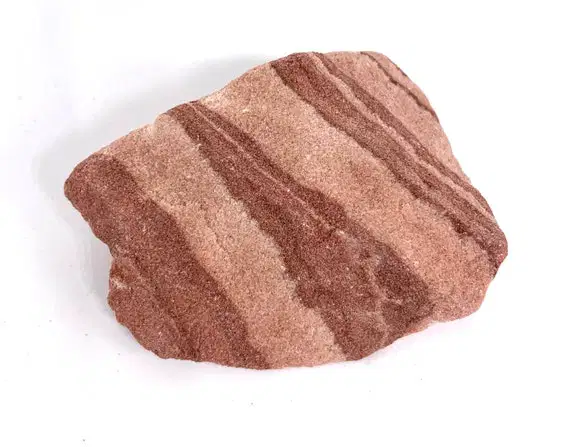
Is this picture sedimentary rock?

a)

yes

b)

no

2.

Why are fossils nearly impossible to find in igneous rock?

a)

Igneous rock changed the fossils and crushed them.

b)

Igneous rock is formed in lava/high heat, so the fossils would be melted down

c)

Igneous rock compacts with too much pressure and destroys all fossils.

d)

Dinosaurs avoided Igneous rocks, so they are not in them.

3.

This 3-d impression of an organism is an example of what type of fossil?

a)

Trace

b)

Cast

c)

Mold

d)

Amber

4.

These teeth suggest this animal was a __________.

a)

herbivore

b)

omnivore

c)

carnivore

d)

foodivore

5.
a scientist who studies fossils
a)
geologist
b)
biologist
c)
paleontologist
d)
chemist
6.
a scientist who studies fossils
a)
geologist
b)
biologist
c)
paleontologist
d)
chemist
7.
a scientist who studies fossils
a)
geologist
b)
biologist
c)
paleontologist
d)
chemist
8.
What information can a fossilized plant give scientists?
a)
what color the plants were long ago
b)
what kind of animals existed long ago
c)
what dinosaurs looked like long ago
d)
what environments were like long ago
9.
True or False: Once a rock is sedimentary, it cannot become an igneous rock.
a)
True
b)
False
10.
When you watch a volcano erupt molten rock, you are seeing _____
a)
Lava
b)
Magma
c)
Mineral Crystals
d)
Igneous Rocks
11.
This rock was formed when molten rock cooled into a solid. What type of rock is it?
a)
Igneous Rock
b)
Metamorphic Rock
c)
Sedimentary Rock
12.
This rock formed when bits of other rocks became pressed into a solid. What type of rock is it?
a)
Sedimentary Rock
b)
Metamorphic Rock
c)
Igneous Rock
13.
What must happen before cementation and compaction occur to create a sedimentary rock?
a)
The rock is broken into small pieces called sediment
b)
The rock is heated and cooled.
c)
The rock is frozen.
d)
None of the above
14.

Rocks that are formed when magma or molten rock cools.

a)

Igneous

b)

Sedimentary

c)

Metamorphic

15.
What are the 3 major types of rocks?
a)
Igneous, Metamorphic, Sedimentary
b)
Metamorphic, Igneous, Cementation
c)
magma, lava, crystals
16.

How are rocks grouped?

a)

by their name

b)

by their properties

c)

by their sounds

17.
A rock formed from fragments of other rocks is a(n)
a)
Metamorphic Rock
b)
Sedimentary Rock
c)
Extrusive Rock
d)
Igneous Rock
18.

Which of the following is categorized as an imprint fossil?

a)

an insect stuck in amber

b)

a leaf outline on a rock

c)

dinosaur bones

d)

petrified wood

19.

A dinosaur footprint is MOST LIKELY which type of fossil?

a)

model

b)

mold

c)

imprint

d)

cast

20.

What answer best describes the relationship between cast fossils and mold fossils?

a)

Mold fossils are formed when minerals fill the cavity left by cast fossils.

b)

Cast fossils are formed when minerals fill the cavity left behind by mold fossils.

c)

Cast minerals and mold fossils are formed when animals leave a footprint in wet mud.

d)

Mold fossils and cast fossils are formed when dead animals are preserved in tree sap.

21.

True or False: All fossils come from animals that are extinct.

a)

TRUE

b)

FALSE

22.

True or False. All fossils come from dinosaurs.

a)

TRUE

b)

FALSE

23.

Fossils are the remains of _____________.

a)

shells

b)

dinosaurs

c)

plants and animals

d)

extinct animals

24.

Why do scientists collect data?

4 lines
25.

Rocks at the top of a mountain will be more _____.

a)

Smooth

b)

Jagged