
 Worksheets
Conservation of Natural Resources Unit Review
Total questions: 202
Worksheet time: 3hrs 58mins
Which is a renewable energy resource?
uranium
natural gas
biomass fuel
coal
Which statement gives an advantage of using fossil fuels?
They are relatively inexpensive
they do not pollute air, land or water
they produce as much energy as fission
they are easily replenished
What is one disadvantage of using nuclear energy?
nuclear energy produces radioactive wastes
nuclear power plants cause much air pollution
fission generates only small amounts of energy
To personally manage nonrenewable resources wisely, you could
work with others to reclaim mined lands
use renewable energy resources whenever possible.
increase the amount of vampire energy you consume.
_______________ is a renewable energy source.
oil
coal
nuclear energy
geothermal energy
Reclamation is a process in which land is
mined to recover resources
restored after it has been mined
treated to destroy nuclear waste.
drilled to recover oil and natural gas
An advantage of fission is that it
is relatively cheap to use
doesn't produce radioactive waste
generates small amounts of energy
generally does not pollute other resources
________________ is NOT a renewable energy resource
the sun
natural gas
moving water
wind
A disadvantage of hydroelectric power is that it
is nonpolluting
is relatively inexpensive
can harm fish and other organisms.
Which activity is the best way to wisely manage nonrenewable resources?
using public transportation
irrigating crops with rainwater
picking up litter around the school
cooking with natural gas rather than electricity
Why are coal, oil, and natural gas classified as nonrenewable resources?
They are limitless
They exist in many places on Earth.
They are originally from once-living things.
They take millions of years to form.

Why is solar energy considered renewable energy?
It's cheaper than fossil fuels
The sun's energy would not run out for billions of years
Solar energy recharges batteries
Which of the following is TRUE about carbon dioxide?
it doesn't have much effect on the climate
very little carbon dioxide is being given off right now
it is a greenhouse gas
Propane and methane are examples of __.
natural gas
oil
solar
nuclear
Which TWO of the following are disadvantages (bad) of nonrenewable resources?
very expensive to retrieve
cause pollution
take millions of years to create
always available
What is ONE advantage (good) of using nonrenewable resources?
do not cause pollution
cheap to retrieve
not always available
take millions of years to renew
Coal, mineral oil, and natural gases are called __.
plants and animals
renewable resources
fossil fuels
geothermic resources

Fossil fuels
renewable resource
nonrenewable resource

Wind
renewable resource
nonrenewable resource

Sunlight---(solar energy)
renewable resource
nonrenewable resource

Resource that can be restored in a short amount of time is...
renewable resource
nonrenewable resource

A natural resource, once consumed, cannot be replaced for a very long time is...
renewable resource
nonrenewable resource

Something that comes from the earth is a...
natural resource
artificial resource
Resources that are not able to be reproduced as quickly as they are used are called _____.
renewable resources
replaceable resources
non renewable resources
non replaceable resources
Geothermal energy uses heat from ____ to produce electricity.
the earth
coal
oil
natural gas
Coal is burned to heat water so that the _______ can turn turbines.
fire
steam
water
heat
Renewable resources ...
are not replaceable
are used more frequently than non renewables
are never going to run out
going to run out
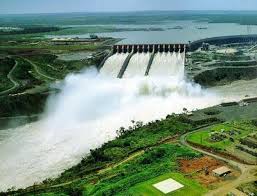
What type of power plant uses the potential energy of water trapped behind a dam?
nuclear power plant
hydroelectric power plant
solar station
coal burning power plant
What are fossil fuels?
coal, oil, uranium
oil, natural gas, uranium
coal, oil, natural gas
geothemals, coal, natural gas
Petroleum is mainly used in the United States for...
gasoline for cars
running coal burning power plants
making windmills turn
burning for heat
A photovoltaic cell captures ____ to be used for power.
wind
water
coal
sunlight
What type of power plant uses scraps from farming, waste products and wind to generate electricity?
Hydroelectric Power Plant
Geothermal Power Plant
Biomass Power Plant
Nuclear Power Plant
Why is the United States so reliant on non-renewable energy?
Because non- renewable sources produce more energy with fewer power plants
Because non-renewable sources do not produce as much energy as renewable sources
Because non-renewable sources will not run out.
Because non-renewable sources have the most plants in the US therefore make the most electricity.
Uranium atoms are split to create a tremendous amount of heat in a _____ power plant.
biomass
geothermal
nuclear
hydroelectric
Which are non renewable resources?
(Choose all correct answers)
natural gas
coal
water in a dam
oil
nuclear energy
Which of these are renewable resources?
coal
wind
geothermal
water in a dam
biomass
What is one advantage of using solar power?
Cloudy Days
Nighttime
It does not create pollution
What is one advantage of using wind power?
It is renewable
The wind doesn't always blow
The windmills are far away from people
What is one disadvantage of using water power?
Dams are expensive to build
It creates a lot of electricity
It is renewable
What are the 3 fossil fuels?
coal, oil, uranium
coal, hydroelectric, oil
natural gas, oil, coal
Geothermal energy
has extreme safety issues because it is so hot
is best where hot water comes to the surface
requires cool water be pumped into the ground
produces a lot of greenhouse gases
To produce electricity, a resource must somehow turn a turbine.
True
False
___________________ energy comes from plants and animals that were recently living.
Biomass
Biology
Biographic
Blahblah
Solar energy is carried between the Sun and Earth as ____________________.
radiation
wind
hydoponically
vapor
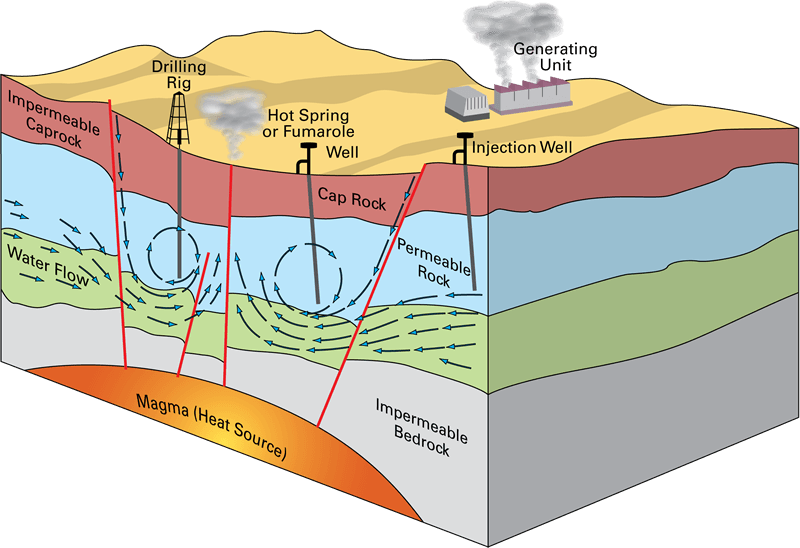
__________uses heat from the interior of the Earth.
Solar
Geothermal
Nucler
Wind

A scientist studies a sample of swamp water. She finds that there are many dead plants and fish in the water. ________ in the water could be the main cause of this.
oxygen
litter and pollution
mud and silt
pebbles and sand
what is the main cause of water pollution?
invasive species
animals
plants and insects
human impact and decision making


_____ is when a farmer plants different crops in the field each year.
crop-rotation
conservation plowing
contour plowing
soil conservation
____ is when dead weeds and stalks of the previous year's crop are plowed into the ground to help return soil nutrients, retain moisture, and hold soil in place.
crop-rotation
conservation plowing
contour plowing
soil conservation
_____ is the management of soil to limit its destruction.
crop-rotation
conservation plowing
contour plowing
soil conservation
_____ is anything in the environment that humans use.
crop-rotation
natural resource
contour plowing
soil conservation
Raw materials taken from the Earth
that are used to make human-made objects
are called...?
electricity
natural products
natural resources
dirt
Which of the following are non-renewable energy sources?
Hydroelectric
Natural gas
Oil
Nuclear power
What are some water conservation methods?
Taking shorter showers
Fixing leaky faucets
Using water-efficient appliances
All of the above
The release of harmful waste into the environment is known as...?
Fossil Fuels
Smog
Pollution
Acid Rain
Which of these is a disadvantage (bad thing) of fossil fuels?
They are free, we just dig them up
They are a limited supply
They do not take a long time to replenish
They are good for the environment
Which renewable energy source uses wind to generate electricity?
Solar power
Hydropower
Geothermal energy
Wind power

Global warming is the term used to describe the RISING of the average temperature on Earth.
True
False

Global warming has negative effects on plants, animals and human beings.
True
False

Global Warming is MAINLY caused by...
...the Sun
...the Greenhouse Effect.

The Greenhouse Effect happens when the HEAT cannot escape the Earth.
True
False

The Greenhouse Effect happens because people cause pollution, and, therefore, Carbon Dioxide.
True
False

Oil and gas produce huge clouds of Carbon Dioxide into the atmosphere.
True
False

Deforestation is another cause of global warming.
True
False

Trees help the Earth because...
...they absorb huge amounts of Carbon Dioxide (CO2) from the air and release oxygen back into it.
...they absorb huge amounts of oxygen from the air and release Carbon Dioxide (CO2) back into it.

Due to a DECREASE in the number of trees and forests, the Carbon Dioxide (CO2) remains in the atmosphere :(
True
False

Recycling, saving energy and using bicycles instead of cars can help reduce Global Warming.
True
False

Everyone should try to reduce their ...
carbon footprint
solar footprint
pylon footprint
global footprint
Which one is not a source of power?
Wave power
Tidal power
Sand power
Solar power
Choose two terms that start with: CO2 ...
emissions
footprint
turbine
panel

What is depicted in the photo?
oil rig
pylon
solar panel
power station

What is depicted in the photo?
oil rig
pylon
solar panel
power station

What is depicted in the photo?
wind turbine
pylon
solar panel
power station

What is depicted in the photo?
oil rig
power station
solar panel
greenhouse

A group of compounds that are able to trap heat in the atmosphere, keeping the Earth's surface warmer than it would be if they were not present.
CO2 emissions
greenhouse gases
climate change

What is depicted in the photo?
coal mine
oil rig
power station
solar panel

What is depicted in the photo?
coal mine
oil rig
power station
solar panel
Which of the following gases does not trap heat?
A. Carbon dioxide
B. Nitrogen
C. Water vapor
D. Methane
As average global temperature rises,
Average precipitation increases
Average precipitation decreases
Average precipitation is unchanged
Where have some of the strongest and earliest impacts of global warming occurred?
A. In the tropics
B. In northern latitudes
C. Impacts of global warming are distributed equally all over the planet.
Compared to other greenhouse gases, ___________ is the most effective at trapping heat near the Earth's surface.
A. Carbon dioxide
B. Nitrogen
C. Water vapor
D. Methane
Some kinds of pollution in the atmosphere can act to cool the planet by reducing the amount of solar radiation that reaches Earth's surface.
reducing the amount of solar radiation
increasing the amount of solar radiation
reducing the amount of carbon dioxide
increasing the amount of carbon dioxide
Earth has recorded _______________ temperatures in the past than it is today.
warmer
cooler
the same
If you removed the atmosphere's natural greenhouse effect, and everything else stayed the same, Earth's temperature would be:
A. 10 to 20°F (6 to 11°C) warmer
B. 30 to 40°F (17 to 22°C) warmer
C. 10 to 20°F (6 to 11°C) cooler
D. 50 to 60°F (28 to 33°C) cooler
How do scientists collect evidence about climate?
A. Using remote sensing from space with satellites
B. By ground-based measurements of surface temperature, carbon dioxide concentration and sea level
C. By collecting "proxy data" from tree rings, ice cores and historical records
D. All of the above
No place on Earth is ________ today than it was 100 years ago.
colder
warmer
the same
What do you think global warming is caused by?
nature
human activity
both
What is Global Warming?
Increasing temperature in Earth's atmosphere
Decreasing temperature in a city
Increasing rain rates in Earth
Decreasing temperature rates
Global warming is caused by a phenomenon known as the greenhouse effect.


Why are too many greenhouse gases bad for the environment?
They cause trees to die.
They release heat and will be the cause of the next ice age.
They trap heat in our atmosphere causing the planet to warm up.
They are fossil fuels which pollute our environment.

Which of these is considered a non renewable energy source? (choose all that apply)
solar power
gasoline
geothermal power
coal

Which of the following is a consequence of global warming? (Choose all that apply)
Seas rising (flooding)
Loss of habitat for animals.
More severe storms and weather.
Increased forest fires and drought.
Which one is not a fossil source?
petrol
sun
coal
natural gas
Which one is and environment protection organization?
Greenpeace
Nato
Unesco
Who
The gradual increase in the temperature is known as ...
Green Effect
Methane
Carbon dioxide Gases
Global Warming
How can Global Warming cause sea levels to rise?
by causing it to rain more often.
by creating bigger and more powerful hurricanes.
by melting glaciers and ice caps.
by increasing the number of undersea volcanic eruptions.
Why does cutting down trees increase Global Warming?
Trees absorb the Sun’s energy without radiating back into the atmosphere.
Trees drain Greenhouse gases like methane from soil.
Trees provide shade which counteracts Global Warming.
Trees soak up Carbon dioxide.
Why is the increase of Greenhouse gasses a big issue?
It causes climate change and increase in the Global temperature.
It can lead to a major increase in Greenhouses.
It causes a major decrease in people.
It leads to more factories.
How are Greenhouse gasses harming our environment?
Less heat is able to escape causing the Earth to cool down.
Less heat is able to escape causing the Earth to warm up.
More heat is able to escape.
They aren’t.
Things you can do to help decrease Global Warming include:
Keep your air conditioner on high.
Keep your deep freezer door open.
Eat more ice cream.
Turn off your lights when you’re not using them.
In a warmer world, we would expect more...
Hurricanes
Droughts
Desert expansions
All of these
Which of the following are effects of ozone depletion?
Reduced crop yields.
Immune system suppression.
Increased photochemical smog.
All of these.
Which of the following are effects of ozone depletion?
Reduced crop yields.
Immune system suppression.
Increased photochemical smog.
All of these.
Burning fossil fuels is one of the main causes for Global Warming.
True
False
All of the following are Greenhouse gasses except...
Nitrogen
Nitrous oxide
Carbon dioxide
Water vapour
Chlorofluorocarbons are,
Flammable
Corrosive
Nontoxic
Expensive
Which statement is the most accurate?
Climate is determined by average weather conditions.
Climatologists examine data from one to a few years to estimate weather.
Weather is determined by average climate conditions.
None of these answers are accurate.
Increased levels of Carbon dioxide in the atmosphere have been implicated in which of the following?
Increased seawater acidity
Increased global warming
Both increased seawater acidity and increased global warming.
The threat of Global Warming can be addressed by...
Slowing population growth.
Reducing deforestation.
Shifting to renewable resources.
Using energy more efficiently.
The main human activity that releases greenhouse gases is...
using bottled water
eating meat
burning fossil fuels
texting on cellphones
The gradual increase in the temperature of the atmosphere is known as
Global Warming
Greenhouse effect
Methane
Carbon Dioxide Gases
How is the greenhouse effect produced?
When the Sun doesn’t emit radiation.
When some energy is reflected back to Earth.
When solar energy trespasses the atmosphere.
When the greenhouse is burned.
What factors determine how air circulates in the lower atmosphere?
The properties of air, water and land.
Uneven heating of the Earth’s surface by the Sun.
Rotation of the Earth on its axis.
Rotation of the Earth on its axis and the properties of air, water and land.
What is the greenhouse effect?
A natural process where gases trap heat in the atmosphere.
A man-made process where gases trap heat in the atmosphere.
A natural process where the ocean traps heat in the atmosphere.
A man-made process where the ocean traps heat in the atmosphere.
Which of these is NOT a greenhouse gas?
Carbon Dioxide
Nitrous Oxide
Oxygen Gas
Methane
TRUE OR FALSE: The greenhouse effect is necessary for life on Earth.
True
False
Which greenhouse gas contributes the most to the greenhouse effect?
Carbon Dioxide
Methane
Water Vapor
Nitrous Oxide
What is the MOST significant way that humans contribute to the greenhouse effect?
We do not contribute to the greenhouse effect.
We burn fossil fuels.
We practice animal agriculture.
We make too much waste.
In the past hundred years, the overall amount of greenhouse gases in the atmosphere has...
decreased
stayed about the same
increased
Without the greenhouse effect, the Earth would be...
colder.
about the same.
warmer.
By adding more greenhouse gases to the atmosphere, humans are...
decreasing the average temperature of Earth.
not affecting the average temperature of Earth.
increasing the average temperature of Earth.
Select the two greenhouse gases that are MOST prevalent in the Earth's atmosphere.
Carbon Dioxide
Methane
Water Vapor
Nitrous Oxide
TRUE OR FALSE: The "Ozone Layer" is a layer of ozone (O3) that protects the Earth from harmful UV radiation.
True
False
SELECT ALL THAT APPLY: The consequences of man-made global warming includes...
An increase in average temperature.
More severe weather events.
A rise in sea levels.
People being displaced from their homes.
Global warming and global cooling can occur...
naturally.
due to man-made causes.
both of the above.

This is a simple diagram of the greenhouse effect. According to this diagram, the energy first comes from...
The Sun
The Earth
The Atmosphere

According to this chart, cellular respiration...
takes Oxygen Gas and produces Carbon Dioxide.
takes Carbon Dioxide and produces Oxygen Gas.

SELECT ALL THAT APPLY: This is a graph produced by the National Aeronautics and Space Administration (NASA). It tells us...
that atmospheric carbon dioxide has massively increased since 1950.
the independent variable is years before today.
that atmospheric carbon dioxide is at its highest point in the past 800,000 years.
the dependent variable is the amount of carbon dioxide in the atmosphere.
What is Global Warming?
Increasing temperature in Earth's atmosphere
Decreasing temperature in a city
Increasing rain rates in Earth
Decreasing temperature rates
Global warming is caused by a phenomenon known as the greenhouse effect.
Why are too many greenhouse gases bad for the environment?
They cause trees to die.
They release heat and will be the cause of the next ice age.
They trap heat in our atmosphere causing the planet to warm up.
They are fossil fuels which pollute our environment.
Which of these is considered a non renewable energy source? (choose all that apply)
solar power
gasoline
geothermal power
coal
Which of the following is a consequence of global warming? (Choose all that apply)
Seas rising (flooding)
Loss of habitat for animals.
More severe storms and weather.
Increased forest fires and drought.
Which one is not a fossil source?
petrol
sun
coal
natural gas
Which one is and environment protection organization?
Greenpeace
Nato
Unesco
Who

Fill in the blank. Greenhouse gases create a thermal _______ around the Earth keeping it warm.
source
blanket
sheet
cover

Which word includes the nonrenewable resources oil, coal and natural gas?
respiration
deforestation
renewable resources
fossil fuels

Which of the following is used to create concrete and adds to the carbon dioxide levels in the air?
cement
concrete
deforestation
agriculture

What do we call the cutting down of trees which leads to less carbon dioxide being absorbed from the atmosphere?
transportation
deforestation
agriculture
decomposition

What is another name for oil that comes from the ground and is used to make gasoline?
gasoline
natural gas
coal
petroleum

Which of the following fossil fuels are used to power trains, grills as wells as in fireplaces?
air
oil
natural gas
coal

Which type of the sources of energy that once they are gone, they are gone forever?
nonrenewable resources
renewable
resources
wind
solar power

Which of the following is NOT a nonrenewable resource?
solar power
coal
oil
natural gas

Which of the following is NOT a renewable resource?
natural gas
wind
solar power
hydropower

Which of the following is NOT a natural process that contributes to greenhouse gas effect?
volcanoes
respiration
agriculture
decomposition

Which of the following animals contributes to greenhouse gases every time they burp?
pigs
ox
horses
cows

How are greenhouse gases emitted from fossil fuels?
they are emitted when we plant them in the ground
they are emitted when we add water to them
they are emitted when we burn them
they are emitted when we eat them

Which of the following describes a natural process in which greenhouse gases are released when organic material breaks down after dying?
solar radiation changes
logs
decomposition
electricity

Which of the following is NOT one of the 4 pieces of evidence of global climate change/global warming?
deforestation
extreme weather events
ocean acidification
sea levels rising

By what percentage has the acidity of the ocean water risen in the last decades?
20%
25%
30%
40%

What is global warming?
a gradual increase of Earths atmosphere caused by gases & pollutants
Harmful gases that absorb heat from the Sun & trap the heat in our atmosphere
a change in a regions weather conditions
the range of weather that varies from region to region

Which of the following is NOT a greenhouse gas?
water vapor
methane
carbon dioxide
helium

How are fossil fuels formed?
by recycling
by mixing ocean water with soil
by burning coal
by the remains of living things

Which of the following is a resource that is considered "clean" energy?
wind
oil
natural gas
ocean currents

Which human activities that contribute to the release of greenhouse gases are WE currently doing in this classroom?
agriculture
decomposition
deforestation
electricity

