
NEW
Font size
 Worksheets
The Judiciary CL&CR II
Total questions: 14
Worksheet time: 7mins
Most conservatives believe that the United States Constitution
is a living document and the Supreme Court should consider public opinion and contemporary values when interpreting constitutional provisions
outlines a framework for government that the Supreme Court should apply strictly regardless of the political or personal preferences of judges
establishes a shared set of political values flexible enough to empower the Supreme Court to apply its own personal judgment to their interpretation
gives judges the power to overrule the other two branches of government in times when those other branches fail to be responsive to changing public opinion on issues
Critics of judicial activism would favor a Supreme Court that would ____________________.
expand civil rights
rule based on a strict interpretation of the Constitution
provide greater protections to the accused
permit the president to influence the Court’s decisions
supplement the power of the federal government
The framers of the Constitution designed which of the following to be LEAST responsive to public opinion?
The office of the president
The electoral college
The courts
Political parties
Critics of judicial restraint would favor a Supreme Court that would ____________________.
establish new precedent
limit the power of the federal government
uphold precedent
limit the power of state governments
only hear a small number of cases
Those who believe that the Supreme Court in its rulings should defer to the elective institutions of government are advocating
"judicial activism"
"judicial restraint"
"incorporation"
"nullification"
Civil liberties are legal and constitutional protections against __________________________.
private enterprise
tyranny
foreign invasions
criminals
government
Which of the following is true of nominees for federal judgeships?
They are recruited from the current pool of United States attorneys.
They are nominated by the Senate and approved by the House of Representatives.
They are appointed for life by the President with the advice and consent of the Senate.
They must receive the approval of the American Bar Association upon nomination.
The great freedoms of speech, press, religion, and assembly are contained in the _________.
1st Amendment
4th Amendment
1st, 2nd, 3rd, and 4th Amendments
2nd Amendment
3rd Amendment
The difference between an appellate court and a district court is that an appellate court
conducts trials by jury
has original jurisdiction
hears civil cases but not criminal cases
reviews previous court decisions
The incorporation doctrine involves _________________________________________.
the application of judicial review to state courts
extension of the Bill of Rights to the states
the means of creating a city government
the interpretation of the Commerce Clause
the government’s power to regulate corporations
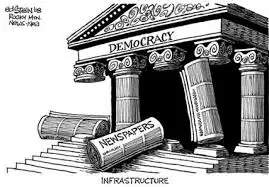
Which of the following headlines is most relevant to the political cartoon?
Nixon Administration Goes to Court to Stop Pentagon Papers Release
Supreme Court Rules High School Students May Silently Protest Vietnam War
Supreme Court Hears a Flag Burning Case
War Protestor Presented "Clear and Present Danger" Says Court
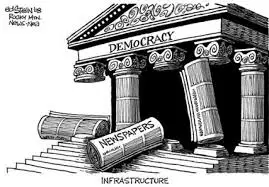
The facts of which of the following cases are most related to the political cartoon?
New York Times Co. v. United States (1971)
Gideon v. Wainwright (1963)
Schenck v. United States (1919)
Wisconsin v. Yoder (1972)
In the case Guey Heung Lee v. Johnson (1971), the parents of Chinese American students who attended a primarily Asian American school challenged San Francisco's effort to desegregate the public schools, arguing that their culture and language would be diluted if their children were dispersed from their local school. The Supreme Court denied the challenge from the parents basing their decision on the Fourteenth Amendment. Which of the following cases was most likely used in the decision as precedent?
Tinker v. Des Moines Independent Community School District (1969)
Brown v. Board of Education of Topeka (1954)
Engel v. Vitale (1962)
Gideon v. Wainwright (1963)
A school district in Seattle used the race of students as a tie-breaking factor to determine which students would be admitted to the more popular schools in an attempt to maintain racial diversity. In the case Parents Involved in Community Schools v. Seattle School District No. 1 (2007), the Supreme Court ruled this plan unconstitutional under the Fourteenth Amendment. Which of the following statements offers the most accurate comparison between this case and the decision in Brown v. Board of Education of Topeka (1954) ?
Both cases involved the use of affirmative action in public schools.
Both cases ruled against the school district based on the equal protection clause.
Both cases struck down plans to segregate students.
Both cases ruled in favor of students based on the due process clause.

