
 Worksheets
EARLY REPUBLIC Review
Total questions: 22
Worksheet time: 11mins
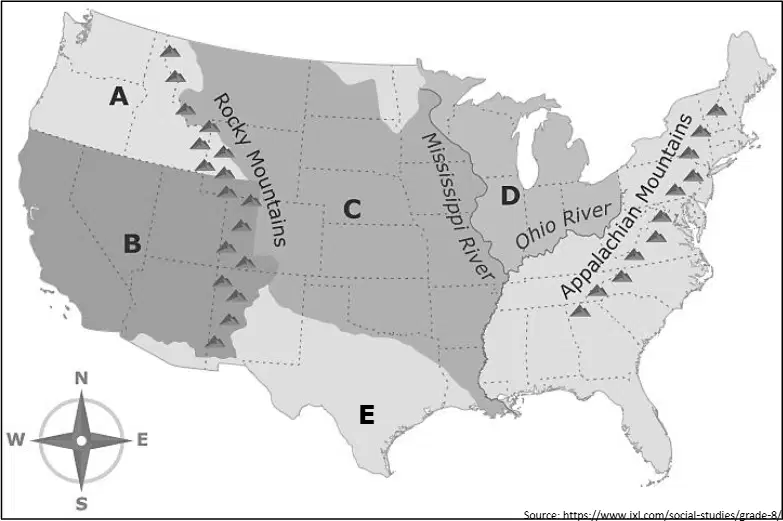
Which location on the map shows the territory purchased by the U.S. in 1803?
A. A
B. B
C. C
D. D
E. E

Which of the following BEST describes Washington’s stance based on the quote above?
He believed strongly in creating a presidential cabinet.
He felt it was necessary to follow the Constitution.
He believed relationships with foreign countries were necessary for trade.
He believed the U.S. should stay neutral in its dealings with other countries.
Which of the following reflects how George Washington maintained national security?
He protected citizens’ first amendment rights to petition the government.
He encouraged the creation of political parties in the United States.
He worked with Congress at great lengths to pass the Embargo Act.
He sent out a force of 13,000 militia troops to suppress an uprising.
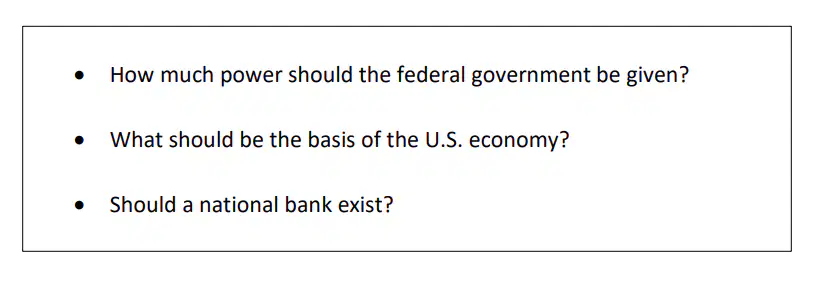
4. Disagreements over questions like those listed above led to the -
A. election of George Washington as president
B. outbreak of the War of 1812
C. creation of political parties in the United States
D. addition of the Bill of Rights to the U.S. Constitution

Which of the following completes the table above?
A. Supported a strong central government
B. Supported the French in most arguments
C. Supported a strong state government
D. Supported United States farmers
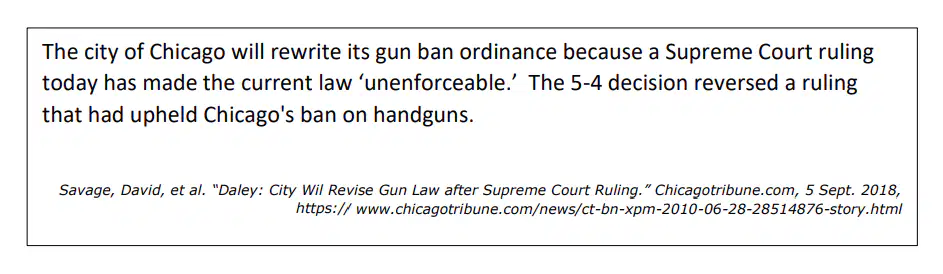
Which Supreme Court case gave judges the power described above?
Marbury v. Madison
McCulloch v. Maryland
Dred Scott v. Sandford
Gibbons v. Ogden
Congress shall have the power To make all Laws which shall be necessary and proper for the carrying into Execution the foregoing Powers... The above excerpt helped Alexander Hamilton justify
fighting the War of 1812
establishing a judicial branch
purchasing the Louisiana territory
creating a national bank
How did the War of 1812 significantly affect the United States economy?
Surge in patriotism
Expansion in manufacturing
Increase in foreign respect
Weakening of Native influence
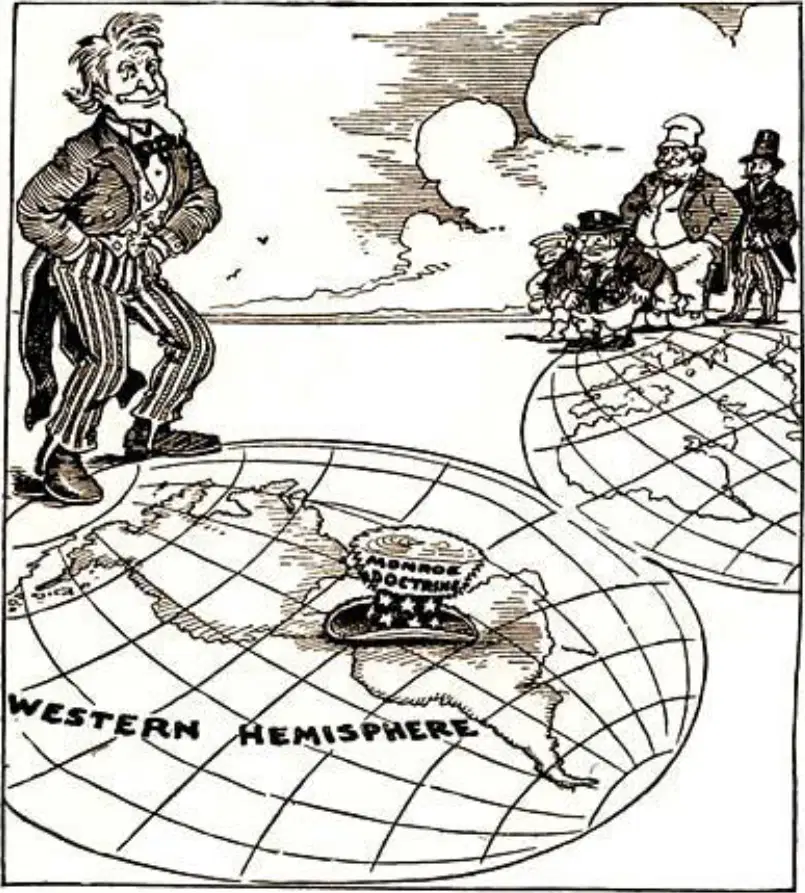
The U.S. foreign policy depicted above was designed to -
show United States’ interest in claiming South American lands
express the U.S. stance of neutrality when European nations were at war
prevent European countries from recolonizing in the Americas
attract Europe to trade with countries in the western hemisphere
Which of the following statements BEST reflects a key belief of the Democratic-Republican Party?
The Supreme Court must have the freedom to interpret the Constitution as it sees fit.
Unless we take steps to encourage manufacturing, our national economy will fail.
The growing power of the central government is a threat to the rights of the states.
The United States must strengthen its economic bond with Great Britain.
Which characteristics describes the Era of Good Feelings?
(Choose 3)
More power was given to state governments
One party political system
High tariffs set to protect U.S. manufacturing
New laws prevented foreign trade
Renewed sense of nationalism

The above excerpt describes giving the Supreme Court the power of -
making laws
judicial review
vetoing laws
creating lower courts
What economic issue did George Washington face when he took office?
High debt from the American Revolution
Implementing protective tariffs
Lack of manufacturing centers in the U.S.
Fending off the British for aiding Natives
Which idea from Washington’s Farewell Address was incorporated in the Monroe Doctrine?
Discourage the creation of political parties
Remain neutral in foreign affairs
Avoid accumulation of national debt
Restrict the expansion of free enterprise
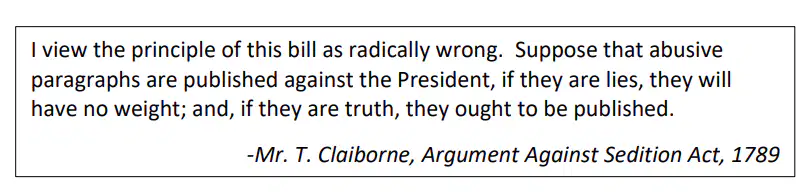
The excerpt above violates which freedom protected under the Constitution?
Freedom of Assembly
Freedom of Religion
Freedom of Petition
Freedom of Press
Which of the following describes the impacts of ruling in Marbury v. Madison? Select TWO correct answers.
The Supreme Court had the ability to declare a law unconstitutional.
Congress had the power to regulate interstate commerce.
The power of the judicial branch was strengthened.
Slaves were viewed as property and had no rights.

The excerpt above expresses reasons why
George Washington was elected as the first president
John Marshall was appointed as chief justice
Alexander Hamilton was appointed Secretary of Treasury
Thomas Jefferson was elected leader of the Democratic-Republicans
What was President Adams’ response to the XYZ Affair?
Declared war on France in order to put an end to the situation more quickly
Sent over more ambassadors in order to try to improve relations with France
Showed the U.S. would not be taken advantage of by refusing to pay the bribe
Joined forces with Great Britain’s navy in order to start impressing French sailors

Which president passed the act described above, thereby changing the economic relationship between Great Britain and the United States in order to avoid war?
Alexander Hamilton
Thomas Jefferson
John Adams
Andrew Jackson
After the XYZ Affair, John Adams felt he was maintaining national security by -
encouraging Congress to pass the Alien Act
promoting trade with England and France
denying Cherokee Indians access to their lands
supporting military invasions in South America
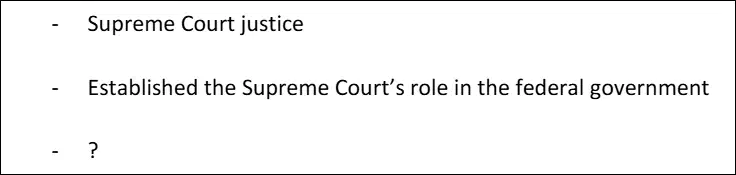
Which of the following completes the diagram above?
Ruled slaves were property and had no rights
Declared states had the right to secede from the Union
Wrote decision that established judicial review
Established the doctrine for free enterprise
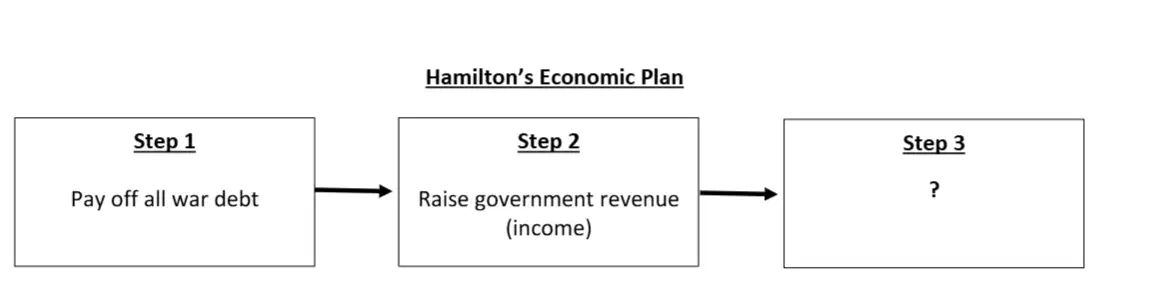
Which of the following completes the diagram above?
Move the U.S. capital south
Combine state and national debt
Create a national bank
Re-establish trade with Natives

