
Font size
 Worksheets
First Semester Benchmark Test 2025
Total questions: 50
Worksheet time: 25mins
___________ both had groups who settled in North America to escape religious freedom
France and Spain
Spain and Great Britain
Great Britain and France
___________ both had missionaries who wanted to convert American Indians to Catholicism,
France and Spain
Spain and Great Britain
Great Britain and France

Why did an African slave trade develop in the southern colonies of North America?
A new enslaved labor force was needed on plantations when local people refused to keep working on them.
A new enslaved labor force was needed on plantations when the fur trade became big business.
A new enslaved labor force was needed on plantations when the original cash crops failed.
A new enslaved labor force was needed on plantations when European diseases killed large numbers of indigenous people.
How did Great Britain use the policy of mercantilism?
Great Britain passed the Navigation Acts to make a profit from the slave trade.
Great Britain controlled colonial trade to secure profits and markets for British goods.
Great Britain smuggled colonial goods out of the colonies to avoid paying colonial taxes.
Great Britain determined what cash crops would be allowed on colonial plantations.
Why did the Ohio River Valley become a scene of rivalry and conflict?
Both France and the American Indians wanted to control the area and chase the other away.
Both France and Great Britain gained land there as part of the Treaty of Paris.
Both Great Britain and the American Indians gained land there as part of the Proclamation of 1763.
Both France and Great Britain wanted to control the land and chase the other away.
How did the Treaty of Paris of 1763 affect the colonial powers in North America?
French and Spanish colonies grew in North America.
France gave up all of its North American colonies and Great Britain gave up Florida.
French and English colonies grew in North America.
France gave up all of its North American colonies.

How did colonists react to the Proclamation of 1763?
They supported British policy and paid the new taxes the king ordered.
They resisted British policy and stayed in areas west of the Appalachian Mountains.
They resisted British policy and refused to pay the new taxes the king ordered.
They supported British policy and left the areas west of the Appalachian Mountains.

The Boston Massacre began when a group of __________ were arguing with some British soldiers.
American Indians
Colonists
French mercenaries
Canadian fur traders

At the Boston Massacre, five colonists were __________ by British officers.
captured
killed
recruited
imprisoned
What law forced American colonists to pay a tax on nearly all official documents and papers in America?
Stamp Act
Sugar Act
Tea Act
Quartering Act
How did the colonists view the Quartering Act?
The colonists thought the act was fair because it gave them virtual representation in Parliament.
The colonists thought the act was unfair because they had to spend money to take care of British troops.
The colonists felt the act was fair because it housed troops there to protect them.
The colonists thought the act of unfair because it allowed Great Britain to pass any law they saw fit for the colonies.

The British responded to the Boston Tea Party with the __________.
Tea Act
Stamp Act
Declaratory Act
Intolerable or Coercive Acts
Townshend Act

Which statement BEST represents the message Benjamin Franklin was trying to send with this political cartoon?
The colonies are at the mercy of the American Indians because they are separate, and they should join Great Britain in the fight against them.
The colonies will be more effective as a single unit, and they should join together.
The colonies are separate units, and they should join with Great Britain to succeed.
The colonies will be more effective if they join with France in the war against Great Britain.
What was the significance of Thomas Paine's pamphlet Common Sense?
He urged the colonists to remain with Great Britain, and his pamphlet angered many colonists who supported the revolutionary movement.
He urged the colonies to remain with Great Britain, and his pamphlet convinced many colonists to avoid the revolutionary movement.
He urged the colonists to break from Great Britain, and his pamphlet angered many colonists who thought that it would harm the revolutionary movement.
He urged the colonies to break from Great Britain, and his pamphlet convinced many colonists to support the revolutionary movement.

Who was the main author of the Declaration of Independence?
King George III
Thomas Paine
Paul Revere
Thomas Jefferson

What is the purpose of the Grievances?
lists complaints against King George III including that colonists were forced to pay unfair taxes
explains that all people have "certain unalienable rights" that cannot be taken away
officially proclaims that the colonists are free and independent from British rule
What victory convinced France to support the Patriots?
Battles of Trenton and Princeton
Battle of Saratoga
Battle of Kings Mountain
Battle of Yorktown

Which battle ended the Revolutionary War?
Battle of Saratoga
Battle of Valley Forge
Battle of Breed's Hill
Battle of Yorktown
Those were remained loyal to Great Britain, were older colonists, and against independence for economic reasons were known as __________.
Patriots
Loyalists

Which describes the Battle of Kings Mountain
battle fought in late 1776 and early 1777 in which George Washington defeated the British
battle fought in 1780 in which colonial riflemen from what would become TN used guerrilla warfare to defeat the British
ended British campaign in the West
boosted colonial morale
Why did the Continental Army struggle? (Choose 3)
Some soldiers had training from other wars, and they tried to tell everyone what to do.
The Continental Congress had to rely on the colonies for money, and the colonies did not provide enough.
Some soldiers had no military training and would try to come and go as they pleased.
The Continental Congress could not decide on a leader for the army
The Continental Congress wanted to approve all actions, and it took a long time to get supplies and information back and forth.
Determine if the following applies to James Oglethorpe or William Penn: the colony he helped found served as a "buffer" colony, he selected land on a high bluff for the site of the colony's first city, he wanted to help debtors in England's prisons, and he helped establish the colony of Georgia.
James Oglethorpe
William Penn
Determine if the following applies to James Oglethorpe or William Penn: He received land for the colony as payment of a debt owed to his father, he helped establish the Pennsylvania colony, the colony he helped found became a place where women had rights, he wanted to help Quakers practice their religion without interference.
James Oglethorpe
William Penn
How did New Netherland become New York?
England sold the colony to the Dutch West India Company.
The Dutch West India Company sold the colony to England.
The Duke of York sent soldiers and took control of the colony when the Dutch surrendered.
The Dutch took control of the colony by winning in war against England.
Who was allowed to vote at town meetings when the Massachusetts Bay Colony began?
Puritan men and women
land-owning Puritan men
men and women of any religion
male land-owners, regardless of religion
What characteristic of the Massachusetts Bay Colony had the biggest influence on the banishments of Anne Hutchinson and Roger Williams?
its intolerance to challenges of Puritan beliefs
its fair treatment of all people
its policy to focus on economic achievement
its tolerance to accept new ideas
What is Thomas Hooker often called today?
"Father of America"
"Father of Puritan Religion"
"Father of American Democracy"
"Father of the United States Constitution"
What was the biggest criticism of the Articles of Confederation?
It provided a national government that was too strong
It provided a national government that was weak and ineffective
It contained too many amendments
It was created before the Revolutionary War

The first successful English colony founded in 1607 was...?
Washington D.C.
Roanoke
Plymouth
Jamestown

What did the Pilgrims, or Separatists, want to do with the English church?
Expand it.
Make it more Catholic
Completely separate from
Destroy it
Treaty
Agreement of 2 or more parties
a time in 1609-1610 where starvation killed many colonist
High resistance to sickness
Native American Tribe that lived in The Virginia Territory

Define : Precedent.
A position of supreme power in the U.S.
An example that that others follow and becomes standard practice.
Head of the State
Forced military service.

A set of laws that allowed the government to arrest and deport you if you were seen as "dangerous" to the country. The Government can also fine and arrest you for criticizing your country.
Alien & Retribution Acts.
Alien & Sedition Acts.
1st Amendment.
Intolerable Acts.

President Jefferson buys a LARGE chunk of land from France in 1803 for $15M. What is it called?
Gadsen Purchase.
Mexican Cession.
Oregon Country.
Louisiana Purchase.

The event where 3 secret French agents demanded money from the U.S in order to stop the attacks on U.S Ships Is known as… ___________.
X,Y,Z Affair.
A,B,C Affair.
1,2,3 Affair.
B,R,B Affair

Famous landmark Supreme Court case during President Jeffersons time in office that establishes the principle of Judicial Review.
Marbury V. Madison
Brown V. Board of Education
McCulloh V. Maryland
Dred Scott V. Sandford

This plan for government states in which representation in government was ONLY based on a state's population.
The Great Compromise
The Virginia Plan
The New Jersey Plan
Presidential Veto

The Constitutional principal of "Separation of powers" divides the government into 3 branches. What are they?
Executive, Legislative, Judicial
Official, Executive, Judicial
Presidential, Residential, Prudential
Existencial, Legislative, Executive

The Constitutional principal of "Checks & Balances" makes sure that:
no branch of the Government becomes too powerful.
a branch of government can over power the other.
there is always money in the Federal Reserve.
there will always be a National Bank.
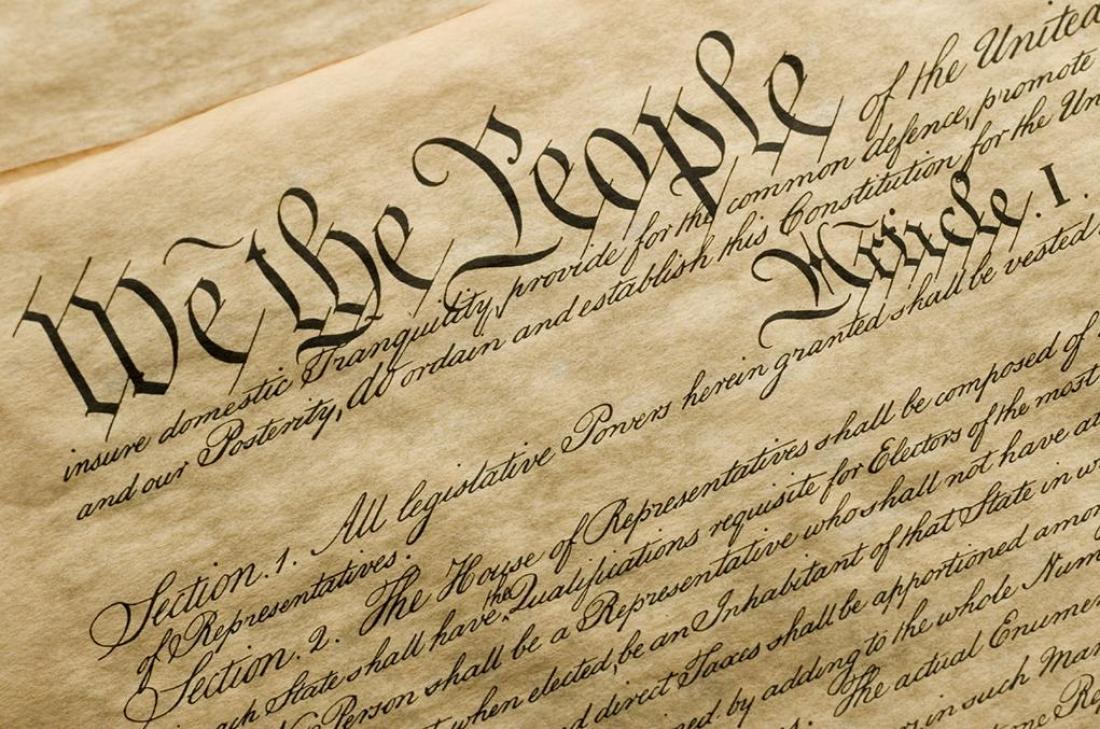
How did the Federalists and Anti-Federalists "compromise" to ratify (approve) the U.S Constitution?
The added the Bill of Rights (First 10 Amendments)
They outlawed cruel and unusual punishment.
Ensured due process of the law.
The Federalists threatened the Anti-Federalists to war.
Anti-federalists
Federalist
a tax on foreign goods or imports

Established the Supreme Court's power of Judicial Review


Who was president during the Whiskey Rebellion?
George Washington
John Adams
Thomas Jefferson
James Madison
In Washington's Farewell address, he warns against ________ with other countries.
fair trade
permanent alliances
lasting wars
excise taxes

