Worksheets
Biology Advanced Semester One Review
Total questions: 95
Worksheet time: 2hrs 35mins
What is the role of a control in an experiment?
It is the part of the experiment that changes due to the independent variable.
It is a standard used for comparison.
It is the part of the experiment that you change on purpose.
It is a suggestion or solution to a problem.
How many independent variables should there be in a good experiment?
Two
Three
One
Four
Where does the independent variable (IV) go on a graph?
x-axis
y-axis
z-axis
w-axis
What is the difference between prokaryotes and eukaryotes?
Prokaryotes have a nucleus; eukaryotes do not.
Eukaryotes have a nucleus; prokaryotes do not.
Both have a nucleus.
Neither have a nucleus.
What is an example of an inference?
The sky is blue.
The sky is cloudy, so it is going to rain.
The grass is green.
The sun is bright.
List the levels of organization from smallest to largest.
Organism, Organ, Tissue, Cell
Atom, Organelle, Cell, Tissue
Community, Population, Organism, Organ
Biosphere, Biome, Community, Population
What is the definition of an organelle?
A molecule that contains two or more different atoms
A pure substance composed of only one atom
Specialized structures that work together inside a cell
The smallest particle of matter that can retain its chemical properties
What is homeostasis?
Maintaining an internal environment
A control mechanism that reduces the impact of a stimulus
A molecule that contains two or more different atoms
The smallest particle of matter that can retain its chemical properties
Where are electrons located in an atom?
Nucleus
Electron shell/cloud
Proton cloud
Neutron shell
What is the charge of a proton?
Negative
Positive
Neutral
No charge
Define an atom.
A molecule that contains two or more different atoms
The smallest particle of matter that can retain its chemical properties
A pure substance composed of only one atom
Two or more atoms held together by a chemical bond
What is an ion?
Atoms that have a charge from losing or gaining electrons
Atoms of the same element with differing numbers of neutrons
A type of chemical bond where atoms share electrons
Solutions that release OH- ions in water
What is a covalent bond?
A type of chemical bond where atoms share electrons
A type of chemical bond where one atom gives electrons
Solutions that release H+ ions in water
Solutions that release OH- ions in water
What is an ionic bond?
A type of chemical bond where one atom gives electrons
A type of chemical bond where atoms share electrons
Atoms of the same element with differing numbers of neutrons
Atoms that have a charge from losing or gaining electrons
What is the pH range for acids?
0 to 6.9
7.1 to 14
0 to 14
7 to 14
What is the pH range for bases?
7.1 to 14
0 to 6.9
0 to 14
7 to 7.9
What does pH measure?
The relative H+ ions in a substance
The number of neutrons in an atom
The number of electrons in an atom
The number of molecules in a compound
How many molecules of Sodium Bicarbonate are in the compound 5 NaHCO₃?
5 molecules
15 molecules
10 molecules
20 molecules
What is the difference between Li-7 and Li-6?
The number of neutrons
The number of protons
The number of electrons
The number of molecules
Why is water considered to have a polar-covalent bond?
Oxygen shares electrons unequally, resulting in a slight charge
Hydrogen shares electrons equally, resulting in no charge
Oxygen and hydrogen do not share electrons
Water molecules do not form bonds
What is the difference between Li-7 and Li-6?
Li-7 has one more neutron than Li-6.
Li-7 has one more proton than Li-6.
Li-7 has a different electron configuration than Li-6.
Li-7 is a different element than Li-6.
Which of these substances are bases? How do you know?
Ammonia and Laundry Soap. There pH is above a 7
Vinegar and 7-Up Soda. There pH is below a 7
Water and Vinegar. There pH is 7
7-Up Soda and Water. There pH is below a 7
Which of these substances has the greatest number of H⁺ ions in solutions?
Vinegar. The pH is the lowest, the lower the pH the greater number of H⁺ ions
Ammonia. The pH is the highest, the higher the pH the greater number of H⁺ ions
Water. The pH is neutral, the neutral pH has the greatest number of H⁺ ions
Laundry Soap. The pH is moderate, the moderate pH has the greatest number of H⁺ ions
What are the four different types of macromolecules?
Carbohydrates, Proteins, Lipids, Nucleic Acids
Sugars, Starches, Fats, Oils
Vitamins, Minerals, Water, Fiber
Enzymes, Hormones, Antibodies, Cells
What are the six elements especially important to life?
C-Carbon, H-Hydrogen, O-Oxygen, N-Nitrogen, P-Phosphorus, S-Sulfur
Na-Sodium, Cl-Chlorine, K-Potassium, Ca-Calcium, Mg-Magnesium, Fe-Iron
H-Hydrogen, He-Helium, Li-Lithium, Be-Beryllium, B-Boron, C-Carbon
O-Oxygen, N-Nitrogen, F-Fluorine, Ne-Neon, Ar-Argon, Kr-Krypton
What chemical indicator test is used for proteins?
Biuret's Reagent
Brown Paper Bag Test
Iodine Test
Benedict's Test
What is the difference between hydrolysis and dehydration synthesis?
Hydrolysis combines molecules, releasing water.
Dehydration synthesis breaks down molecules by adding water.
Hydrolysis breaks down molecules by adding water.
Dehydration synthesis breaks down molecules by adding water.
Which of the following factors does NOT affect the rate of an enzyme reaction?
Temperature
pH
Substrate concentration
Color of the enzyme
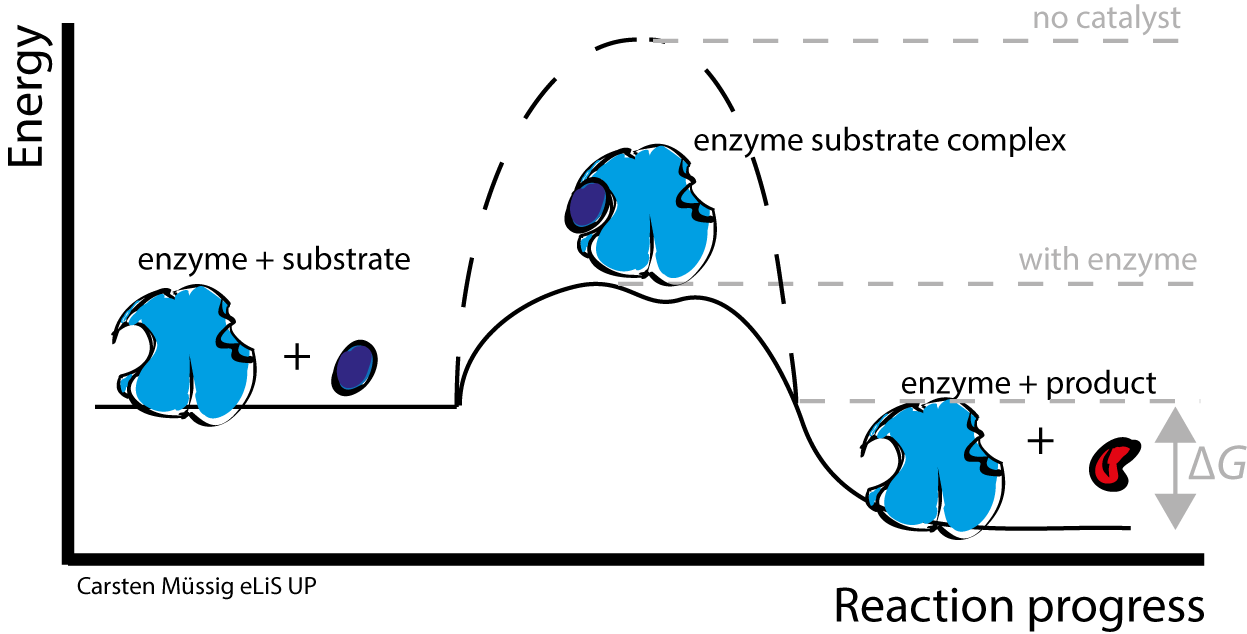
What is activation energy?
The energy released during a reaction
The energy needed to start a reaction
The energy that stops a reaction
The energy that cools a reaction
What controls what enters and leaves the cell?
Nucleus
Cell Membrane
Mitochondria
Ribosome
What happens to a cell in a hypertonic solution?
Cell swells
Cell shrinks
Cell remains the same
Cell bursts
Which component of the cell membrane is used in facilitated diffusion?
Phospholipid
Channel Protein
Cholesterol
Cell Surface Marker
Order the Biological Levels of Organization (Largest to Smallest)
Organism
Organ system
Organ
Tissue
Cell

Which organelle is responsible for energy production in the cell?
Nucleus
Mitochondria
Ribosome
Golgi apparatus
Animal and Plant Cells are Both Eukaryotic
True
False
Ionic bonds are held together by oppositely charged ______.
ions
molecules
atoms
What are the 6 elements important to life?
A) CHONPS
B) CHON
C) CHOPS
D) CHONS
Atoms that have a charge from losing or gaining electrons are known as ________.
Ions
Isotopes
Molecules
Compounds
A type of chemical bond where atoms share electrons is called a ________.
A) Ionic Bond
B) Covalent Bond
C) Hydrogen Bond
D) Solution
A(n) (a) is an atom that has the same number of protons and electrons but different numbers of neutrons and therefore have different physical properties.
A(n) (a) is the smallest particle of a substance that retains all the properties of the substance and is composed of one or more atoms.
A(n) (a) is a substance made up of two or more different elements joined by chemical bonds into a molecule.

True or False: Water is polar covalent molecule
True
False
How many Sodium (Na) are in 6Na2Cl?
1
12
6
2
C12H22O11 has how many carbon atoms?
1
11
12
45
Water is polar. What does that mean?
it is a molecule with opposite charges on opposite ends
it is a molecule with no charge
it is a molecule with identical charges on opposite ends
it is a molecule with too many protons
A base is a substance
That releases OH- ions when dissolved in water
That releases H+ ions when dissolved in water
Does not release any ions when dissolved in water
None of the above
What does pH measure?
the amount of hydrogen (H+) ions
the amount of hydroxide (OH-) ions
amount of water
all of the above
Label the parts of the enzyme model
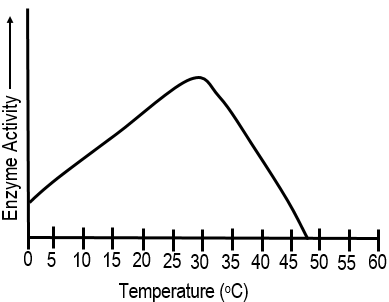
Enzymes are an example of
Lipids
Carbohydrate
Protein
Nucleic Acid

Match the macromolecules with their functions
quick energy
long term energy
hormones, structure, enzymes, etc.
genetic information

Carbohydrate

Protein

Nucleic Acid

Lipid
A monomer is (a) building block of a macromolecule. A polymer is made of (b) repeating units.
What chemical indicator is used to test for glucose?
Benedict's Solution
Biuret Solution
Lugol's Iodine
Brown Paper
What chemical indicator is used to test for starch?
Benedict's Solution
Biuret Solution
Lugol's Iodine
Brown Paper
What chemical indicator is used to test for lipids?
Benedict's Solution
Biuret Solution
Lugol's Iodine
Brown Paper
What chemical indicator is used to test for proteins?
Benedict's Solution
Biuret Solution
Lugol's Iodine
Brown Paper
A positive Benedict's test would result in which color?
Blue
Purple/Pink
Rusty Red-Orange
Black
A positive Biuret test would result in which color?
Blue
Purple/Pink
Rusty Red-Orange
Black
A positive Lugol's test would result in which color?
Blue
Purple/Pink
Rusty Red-Orange
Black


Match the following:
stabilizes and maintains flexibility of cell membrane
Cholesterol
2 layers; allows small & non-polar molecules to pass through the membrane
Phospholipid bilayer
regulates what goes in and out of the cell
Plasma or Cell Membrane
allows large and polar molecules to pass through the membrane
Transport or Channel Proteins
located outside of the membrane; helps with cell communication and cell-to-cell connections
Carbohydrates

low to high uses energy/ATP

Concentration of substances is the same.

Uses energy.

Uses energy.

Doesn't need energy

The solution surrounding the cell in Diagram B, would be defined as:
hypertonic
hypotonic
isotonic


In the cell pictured, which way would water move?
Into the cell, causing the cell to swell
Out of the cell, causing the cell to shrink
In and out of the cell equally, keeping the shape the same
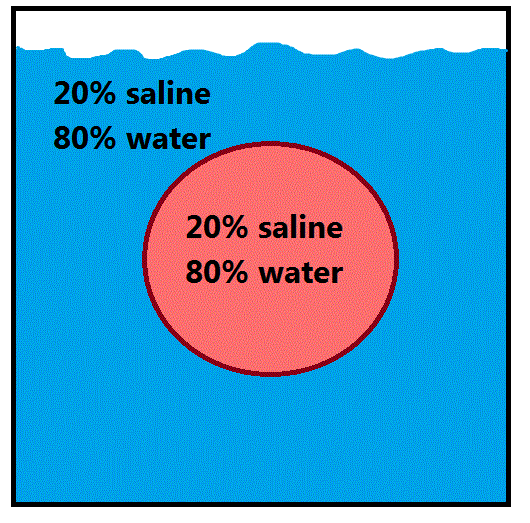
A blood cell is placed into the jar, as seen. Where will the water go?
Into the cell
Out of the cell
Equally in & out - it's isotonic
The water is a lie
Active transport requires (a) to move particles from an area of (b) concentration to (c) concentration


A student wants to ask the question “How does the type of shoe affect a person’s vertical jump height?” What is the INDEPENDENT Variable in this experiment?
The vertical jump height
The amount of basketball players
The type of shoe
The person jumping