NEW
Font size
 Worksheets
Physical Science Units 1, 2 and 3
Total questions: 64
Worksheet time: 1hrs 10mins
________________ is the rate at which work is done.
Power
Work
Time
Energy
_______________ is done when a force acts on an object and the object moves in the direction of the force.
Work
Kinetic energy
Watt
Joule
units for work are
newtons
joules
meters
seconds
How does thermal energy move?
When objects touch.
When objects stay still.

Plastic is a great conductor of heat so it flows quicker.
True
False

Metal is a great conductor of heat so it flows quicker.
True
False
______________ are materials that RESIST the flow of heat or thermal energy.
Conductors
Insulators
___________________ are materials that ALLOW heat and electricity to move easily through them.
Conductors
Insulators
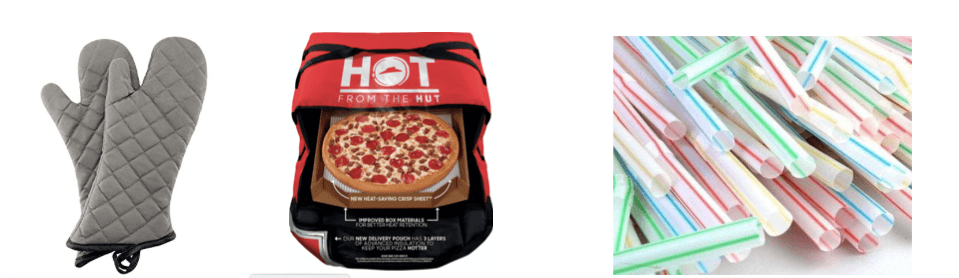
These are examples of
Conductors
Insulators

These are examples of
Insulators
Conductors

The sum of potential energy and kinetic energy equals
work
transformation
total energy
mechanical energy
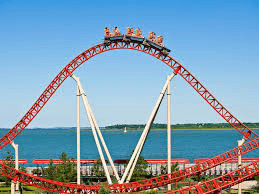
When a roller coaster is at the top of a hill it has
high potential energy
high kinetic energy
low potential energy
equal amounts of kinetic and potential energy
This is the energy that moves objects.
cool
nuclear
chemical
motion/mechanical
This is energy that is stored for later use.
kinetic energy
potential energy
motion/mechanical energy
radiant energy
Energy can not be _______.
transformed
converted/changed
created or destroyed
used
What is Newtons 3rd law
For every action there is an equal and opposite reaction
Gravity
The length that something can go
How an object moves
The sum of all of the forces acting on an object
Net Force
Inertia
Gravity
Newton

What Newtons law does this picture represent
Newtons 1st law
Newtons 2nd law
Newtons 3rdt law
Newtons 4rth law
Objects in motion tend to stay in motion
Newtons 1st Law
Newtons 2nd Law
Newtons 3rd Law
None
How do you fine average speed?
distance divided by density
multiply volume and mass
distance divided by time
time divided by density

The center of the flower is yellow and fuzzy.
qualitative data
quantitative data

The flower is 8 cm tall.
qualitative data
quantitative data

What are observations that are measured or counted called?
qualitative data
quantitative data

What are observations made using our five senses called?
qualitative data
quantitative data
An explanation that uses observations to draw conclusions.
Inference
Variable
Control Group
Conclusion
The group in an investigation that serves as a reference for comparison. The group not getting the test variable applied
Inference
Simulation
Control Group
Field Study Investigation
The variables that do not change in an investigation
Trails
Constant
Valid
Model
Jack is doing an experiment to see which shoes help him run the fastest. What will his independent variable be?
The shoes he wears
The track he runs on
The time of day he runs
The independent Variable is:
What you keep the same in the experiment
What you change in an experiment
What you measure in an experiment
A variable that is unchanged throughout the experiment is the:
Controlled Variable
Experimental Variable
Independent Variable
Dependent Variable
This type of variable is what you DON'T change in a lab
Control
Independent
Dependent
The information you collect in an experiment in order to answer a question is called
Charts
Graphs
Data
Hypotheses
The liquid in the graduated cylinder is blue.
quantitative observation
qualitative observation
inference
prediction
The beaker contains 250 mL of vinegar.
qualitative observation
quantitative observation
inference
prediction
An observation based on proven facts or data.
subjective
objective
An observation based on opinion or feelings.
subjective
objective
Which of the following best represents a quantitative observation?
number, amount, measurement
quality, characteristic, description
opinions and relative terms
subjective
Which of the following best represents a qualitative observation?
quality, description
quantity, number
based on fiction
uses scientific instruments
What are the two kinds of observations?
quantitative and qualitative
quantitative and observations
inferences and predictions
qualitative observations
Collecting information by using the senses.
observation
inference
prediction

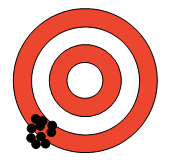
Which best describes the target?
Precise, but not accurate
Accurate but not precise
Precise and accurate
Neither accurate nor precise
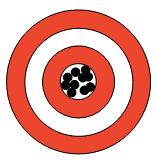
How close a measurement is to the accepted value is called..
Accuracy
Precision
Significant
Estimate