
 Worksheets
American Literature B Final
Total questions: 68
Worksheet time: 1hrs 17mins
Her cheeks were on fire.
personification
idiom
metaphor
hyperbole
It is raining cats and dogs.
metaphor
idiom
hyperbole
personification
Florida is a million miles away.
hyperbole
personification
idiom
simile
It was so hot at Green Lake that the air was sweating.
simile
hyperbole
metaphor
personification

Sally Sells Sea Shells by the sea shore.
what is this?
Personifcation
Alliteration
Hyperbole
None of the above
The feather danced across the room what.
what is this?
Personification
metaphor
Hyperbole
Similie
What does "the feather danced across the room" mean?
The feather was heavy and stuck in one place.
The feather moved about the room freely.
The feather was beautiful like a dancer.
There is no feather.

What does it mean if an assignment is a breeze?
The assignment feels good on your skin.
The assignment is easy.
The assignment is soft and a little chilly.
None of the above.
He is a wall when he plays linebacker.
alliteration
simile
metaphor
personficiation
onomatopeia
Why compare a linebacker to a wall?
The linebacker is made of concrete.
The linebacker is made of drywall.
The linebacker is solidly built.
The linebacker is hard to see over.
Which type of figurative language is this:
The mom was a real bear when she didn't get her coffee in the morning.
Metaphor
Similie
Pun
Personification
Which type of figurative language is this:
The student said, "Great I'm late again" as she walked into the classroom.
Pun
Metaphor
Verbal Irony
Paradox
Which type of figurative language is this:
I'm going to call it a night.
Verbal Irony
Idiom
Simili
Parodox
Which type of figurative language is this example?
"The bulldog's bark was like a booming bass drum."
Simile
Metaphor
Hyperbole
The gardener lovingly added the manure to his crops believing he was making happy flowers. What is being personified?
The gardener
The flowers
The crops
What is the onomatopoeia?

The pitter-patter of paws echoed down the hallway and woke me from my sleep.
simile
metaphor
alliteration
hyperbole
You stole the forbidden fruit when you took his candy.
idiom
understatement
irony
allusion
A traffic cop gets his license suspended because of unpaid parking tickets.
verbal irony
dramatic irony
situational irony
In the Disney movie Mulan, everyone thinks she is a man, but only the audience (and Mushu) know she is actually a woman.
verbal irony
dramatic irony
situational irony

What type of figurative language is this?
Simone is a good swimmer, but she's no Ariel.
simile
metaphor
allusion

I'm dying to see that movie.
What does this mean?

The fog was a blanket covering the road.
What does this mean?

Kiara clammed up when she thought others would tease her about her ideas.
What does this mean?
Kiara kept her ideas to herself.
Kiara enjoyed fishing.
Kiara spoke freely.
To make their writing interesting and visual, or to emphasize an idea and make a point.
Which of the following is NOT a simile? (Select All That Apply)
The moon is a ghostly galleon tossed upon cloudy seas.
The fog crept in on little cat feet.
Life is a rollercoaster.
Her smile was as bright as the sun.
"The baby was as pudgy as a marshmallow and had giant brown eyes" is an example of which figurative language ?
Personification
Allusion
Imagery
Juxtaposition
Figurative language can be found in.....
Short stories
Poetry
Speeches
All of the above
"She is a famous star on Broadway" is an example of which figurative language?
Metaphor
None
Idiom
Alliteration
"It was the best of times, it was the worst of times, it was the age of wisdom....." is an example of which figurative language ?
Hyperbole
Imagery
Alliteration
Anaphora
Which of the following is an example of a metaphor in poetry? a) The wind whispered through the trees b) The sun is a golden ball c) The waves danced on the shore
d
a
b
c
What effect does repetition have in poetry?
Repetition in poetry has no effect.
Repetition in poetry confuses the reader.
Repetition in poetry creates emphasis, rhythm, and a sense of unity.
Repetition in poetry disrupts the flow and structure.
Conveys the opposite of what is said.
Metaphor
Onomatopoeia
Irony
Personification
In Shakespeare's Julius Caesar, Marc Antony gives a speech in which he repeatedly refers to Brutus as "an honorable man," when Brutus just participated in murdering Caesar.
Verbal Irony
Dramatic Irony
Situational Irony
A fire station burns down.
Situational Irony
Verbal Irony
Dramatic Irony
“Once upon a midnight dreary, while I pondered, weak and weary,
Over many a quaint and curious volume of forgotten lore—
While I nodded, nearly napping, suddenly there came a tapping,”
Edgar Allan Poe's lines use metaphor to create the mood in "The Raven."
Edgar Allan Poe's lines use alliteration to create the mood in "The Raven."
Edgar Allan Poe's lines use allusion to create the mood in "The Raven."
Edgar Allan Poe's lines use onomatopoeia to create the mood in "The Raven."
Check all of the statements that are examples of an idiom:
we are burning the midnight oil
the wind whistled
you are up the creek without a paddlle.
the boy was as fast as a cheetah
This method of persuasion requires a credible authority to convince the audience.
Ethos
Pathos
Logos
Examples of this method of persuasion include statistics, research, data, and facts.
Ethos
Logos
Pathos
Method of persuasion that appeals to emotions and feelings.
Ethos
Pathos
Logos
Type of Appeal:
Nearly 25% of all car accidents are caused by drivers using cell phones while driving.
Ethos
Pathos
Logos
Type of Appeal:
The Center for Disease Control advises everyone to get a flu vaccination.
Ethos
Pathos
Logos
Type of Appeal:
Ms. Crisp has taught here for years. Go to her if you have questions about Centennial.
Ethos
Pathos
Logos


What does the line “I’se been a-climbin’ on” reveal about the speaker?
She is hopeless and has given up on life
She wants to do everything so that her son never needs to struggle
She wants her son to see that she has never given up despite her struggle
She climbs many stairs each day at her job
What is the rhyme scheme of this poem?
Little Boy Blue, come blow your horn.
The sheep's in the meadow, the cow's in the corn;
Where is the boy that looks after the sheep?
He's under the haystack, fast asleep!
aabb
abab
abbc
acba
The musical quality created by the words a poet uses
tone
mood
imagery
rhythm
What are the red letters an example of?
The people along the sand (A)
All turn and look one way. (B)
They turn their back on the land. (A)
They look at the sea all day. (B)
As long as it takes to pass (C)
A ship keeps raising its hull; (C)
The wetter ground like glass (D)
Reflects a standing gull. (D)
Rhythm
Rhyme
Rhyme scheme
Alliteration
True or False: All poems do not have to rhyme.
True
False
Which type of poem follows a rhyme pattern?
Free verse
Ballad
True or False: Poetry always follows grammar rules.
True
False
How many lines are in this stanza?
In the winter it's every kid's dream,
As snowflakes begin to appear,
That suddenly there'll be a blizzard,
And they'll cancel school for the year.
15
3
5
4
During which decades did the Harlem Renaissance occur?
1900-1910
1920s and 1930s
1940s and 1950s
late 1800s
The Harlem Renaissance was a cultural, intellectual, and artistic movement.
True
False
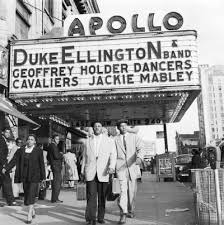
Many of the African Americans that migrated north to escape racial terror and discrimination, ended up in Harlem where they shared their talents such as literature, art, and music.
Which statement best summarizes the Great Migration of African Americans during the early decades of the 1900s?
They moved to areas of the country that had not yet been industrialized.
They left the South hoping to escape poverty and racial discrimination.
Congress passed laws creating aid programs to enable African Americans to move to cities.
The U.S. Army provided free housing to the families of African Americans who enlisted.
Which of the following factors was responsible for African Americans leaving the South during the 1920s?
less segregation and racial discrimination in the North and West
the construction of low-cost government housing in cities in the North
the sale of inexpensive government land in the north and West
Segregation, Jim Crow Laws, Racial Terror, and Discrimination in the South, and the promise of better-paying jobs in the North and West
What/Who was the Lost Generation?

