
 Worksheets
Biology A Final Exam Assessment Ashby
Total questions: 74
Worksheet time: 39mins

A type of cellular respiration in which oxygen is not involved, and produces ethyl alcohol and carbon dioxide. Fill in the blank: __________
Fermentation
Photosynthesis
Glycolysis
Krebs Cycle
A process used by our muscles to produce energy when anaerobic (no oxygen) conditions exist. Fill in the blank: __________
Anaerobic respiration
Photosynthesis
Aerobic respiration
Fermentation
The function of mitosis.
To copy cells.
To create oxygen.
To make sex cells.
To destroy cancer cells.
How can you tell the difference between a plant and an animal cell?
Plant cells have a cell wall, while animal cells do not.
Animal cells have chloroplasts, while plant cells do not.
Plant cells have mitochondria, while animal cells do not.
Animal cells have a rigid structure, while plant cells are flexible.
The standard to which comparisons are made in an experiment.
Control group
Experimental group
Variable group
Test group
What cells would not likely go through continuous mitosis?
Brain and muscle cells.
Skin cells.
Intestinal lining cells.
Bone marrow cells.
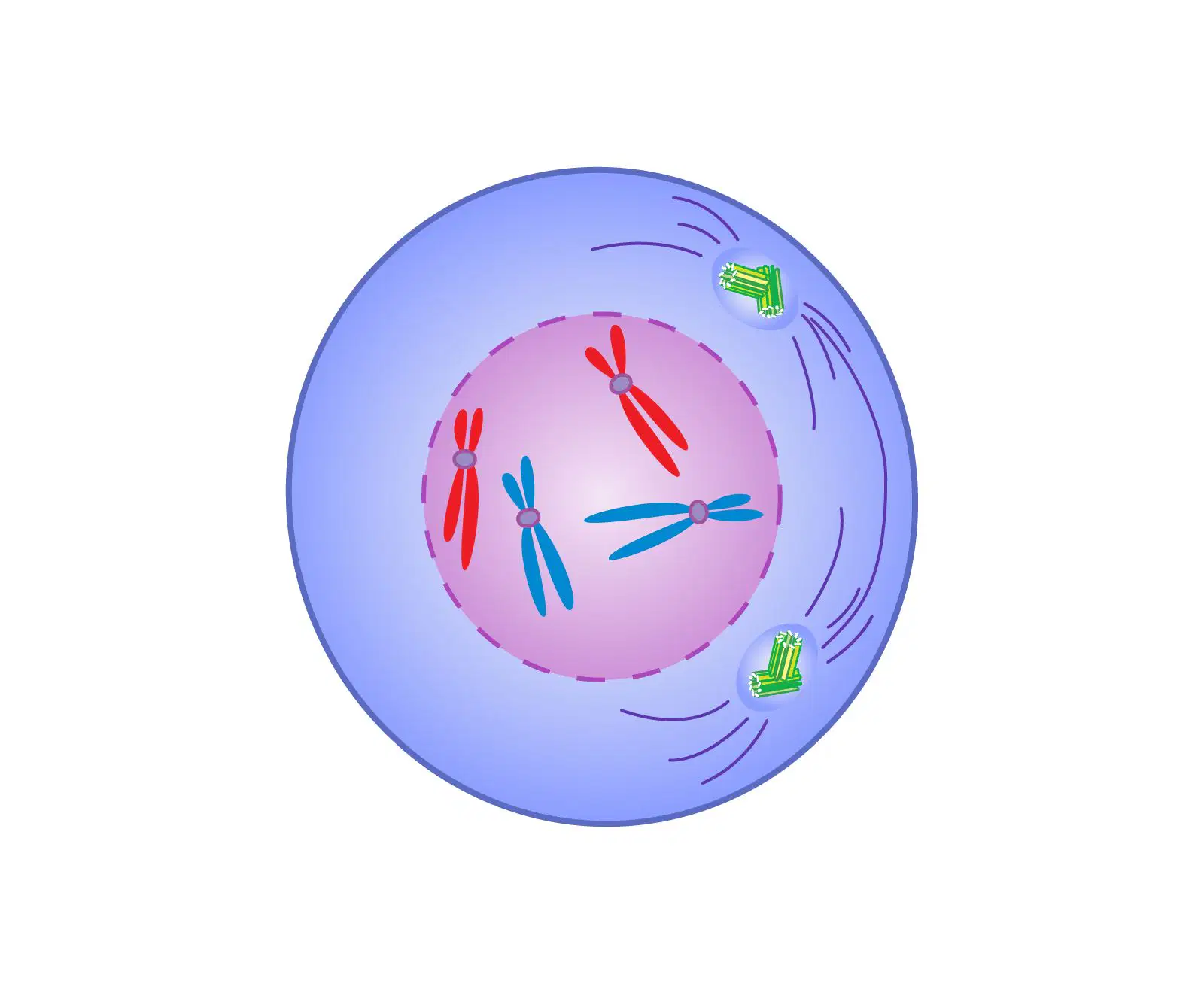
What phase of mitosis is shown?
Prophase
Metaphase
Anaphase
Telophase
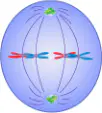
What phase of mitosis is shown?
Prophase
Metaphase
Anaphase
Telophase

What phase of mitosis is shown?
Prophase
Metaphase
Anaphase
Telophase

What phase of mitosis is shown?
Prophase
Metaphase
Anaphase
Telophase
Learning science is important because it helps us understand the world around us. Which of the following is a key reason why learning science is important?
It helps us understand the world around us.
It is not relevant to everyday life.
It is only useful for scientists.
It is a waste of time.
Which cells in the body may contain a large quantity of mitochondria?
Red blood cells
Muscle cells
Skin cells
Nerve cells
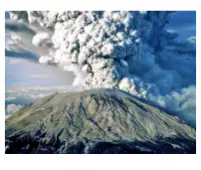
What kind of ecological succession occurs after a major volcanic eruption?
Primary succession
Secondary succession
Climax succession
Tertiary succession
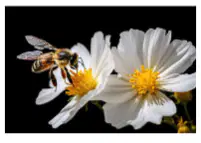
A type of symbiotic relationship where both organisms benefit is called:
Parasitism
Commensalism
Mutualism
Competition
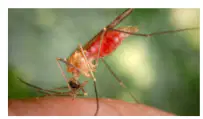
A type of symbiotic relationship where one organism benefits and the other is harmed.
Mutualism
Commensalism
Parasitism
Neutralism
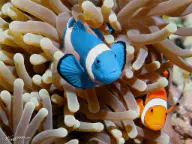
What is a type of symbiotic relationship where one organism benefits and the other is neither helped nor harmed?
Mutualism
Parasitism
Commensalism
Competition
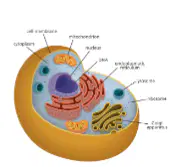
A eukaryotic cell is characterized by:
Lack of a nucleus
Presence of a nucleus
Absence of organelles
Single-celled structure
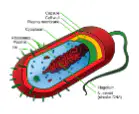
A prokaryotic cell is:
A cell with a nucleus
A cell without a nucleus
A cell with multiple organelles
A cell with a complex structure
An autotroph is:
an organism that produces its own food
an organism that consumes other organisms for food
an organism that decomposes organic material
an organism that lives in water

What is a heterotroph?
An organism that produces its own food
An organism that consumes other organisms for energy
An organism that uses sunlight to make food
An organism that lives in water

What are the producers in an ecosystem?
Animals
Plants
Fungi
Bacteria

Lions eat meat. This makes them _______.
Carnivores.
Herbivores.
Omnivores.
Insectivores.
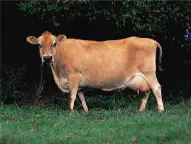
Cows eat grass. This makes them _______.
Primary consumers (herbivores).
Secondary consumers (carnivores).
Decomposers.
Producers.

Human eat plants and animals. This makes them _______.
Omnivores.
Herbivores.
Carnivores.
Insectivores.
Plants take in which of the following as part of photosynthesis?
Oxygen
Carbon Dioxide
Nitrogen
Hydrogen
What do plants give off as part of photosynthesis?
Carbon dioxide and water
Oxygen and water
Nitrogen and oxygen
Hydrogen and carbon dioxide
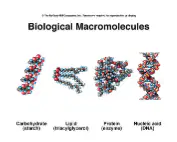
What are the four macromolecules?
Carbohydrates, Lipids, Proteins, Nucleic Acids
Sugars, Fats, Enzymes, DNA
Glucose, Fatty Acids, Amino Acids, RNA
Starch, Oils, Hormones, Genes
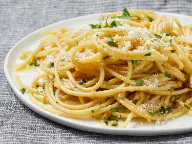
Which macromolecule includes sugar, pasta, and potatoes?
A) Carbohydrates
B) Lipids
C) Proteins
D) Nucleic acids
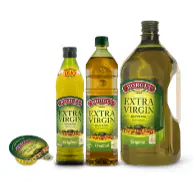
Which macromolecule includes fats, oils, and waxes?
Carbohydrates
Lipids
Proteins
Nucleic acids
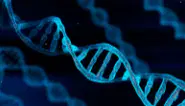
Which macromolecule includes DNA and RNA?
Carbohydrates
Lipids
Proteins
Nucleic acids
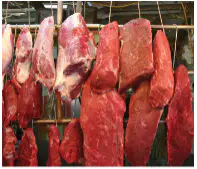
Which macromolecule includes muscles, meat, and beans?
A) Carbohydrates
B) Lipids
C) Proteins
D) Nucleic acids
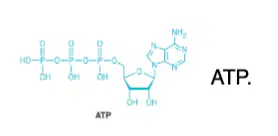
What is the main product of cell respiration that is used as the main energy source of all cells?
ATP
Glucose
Oxygen
Carbon Dioxide
When moving up the energy pyramid, some energy is lost as _______.
Heat
Light
Sound
Electricity
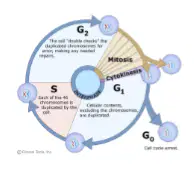
What is the correct order of the cell cycle?
G1, S, G2, mitosis, cytokinesis.
G2, S, G1, mitosis, cytokinesis.
Mitosis, G1, S, G2, cytokinesis.
Cytokinesis, mitosis, G1, S, G2.
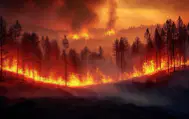
After a forest fire, what type of ecological succession will slowly restore it back to its original state?
Secondary succession.
Primary succession.
Tertiary succession.
Climax succession.
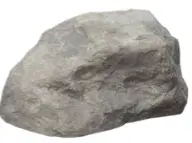
Why is a rock not alive?
It is not made of cells.
It does not grow.
It cannot reproduce.
It does not respond to stimuli.

The study of life.
Biology.
Geology.
Astronomy.
Physics.
Why do you have a body temperature of 98.6 degrees?
Because your body is "burning" glucose inside every cell.
Because it is the natural temperature of water in the body.
Because it is the freezing point of water.
Because it is the temperature of the sun.

Which organelle stores water in plants and also helps to maintain the overall shape of the cell?
Chloroplast
Mitochondria
Vacuole
Nucleus
What are some limiting factors that keep a population from growing indefinitely?
Availability of resources
Unlimited space
Constant birth rate
Lack of predators
How many electrons can the first energy level hold?
2
4
6
8
How many electrons can the second energy level hold?
8.
2.
10.
6.
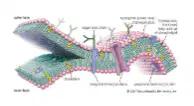
What controls which substances may enter and leave the cell?
Cell membrane.
Nucleus.
Cytoplasm.
Mitochondria.
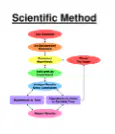
What are the steps of the scientific method?
Observation, question, hypothesis, experimentation, conclusion.
Hypothesis, observation, experimentation, question, conclusion.
Experimentation, hypothesis, observation, conclusion, question.
Conclusion, question, observation, hypothesis, experimentation.
In order for a claim to be scientifically valid, it must be ____.
Testable and repeatable.
Based on personal beliefs.
Accepted by the majority.
Unchangeable over time.

Witchcraft, magic, horoscopes, UFOs, and ghosts are examples of (a) .
Sciences
Pseudosciences
Technologies
Religions
Which process makes lactic acid in humans?
Photosynthesis
Aerobic respiration
Anaerobic respiration
Fermentation
What is the organization of life from simplest to the most complex?
Cell, Tissue, Organ, Organ System, Organism
Organism, Organ System, Organ, Tissue, Cell
Tissue, Cell, Organ, Organ System, Organism
Organ System, Organ, Tissue, Cell, Organism
What two elements are found in organic molecules?
Carbon and Hydrogen
Oxygen and Nitrogen
Sulfur and Phosphorus
Helium and Neon
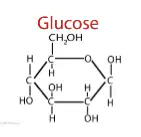
What is the end product of photosynthesis?
Oxygen and Glucose
Carbon Dioxide and Water
Nitrogen and Oxygen
Glucose and Water
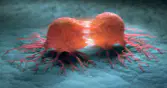
What condition may occur if cells go through uncontrolled mitosis?
Cancer
Diabetes
Hypertension
Asthma
Which chemical elements are found in almost all living things?
Carbon, Hydrogen, Oxygen, Nitrogen, Phosphorus, Sulfur
Helium, Neon, Argon, Krypton Oxygen, Sulfur
Iron, Copper, Zinc, Lead, Carbon, Hydrogen
Gold, Silver, Platinum, Palladium, Nitrogen, Phosphorus
When does the light dependent reaction of photosynthesis begin?
When light is absorbed by chlorophyll
When water is split into oxygen and hydrogen
When carbon dioxide is fixed into glucose
When ATP and NADPH are produced
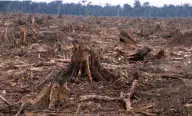
What effect does deforestation have on the carbon cycle?
Increases carbon dioxide levels in the atmosphere
Decreases carbon dioxide levels in the atmosphere
Has no effect on carbon dioxide levels
Balances carbon dioxide levels in the atmosphere
What is the final product of the light-independent reactions?
Oxygen
Glucose
ATP
NADPH
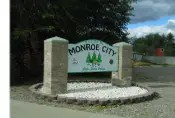
What biome do we live in (Monroe, Utah)?
Desert
Tundra
Temperate Forest
Grassland
How do humans and animals obtain nitrogen?
By breathing in nitrogen gas from the atmosphere
Through the consumption of plants and other organisms
By absorbing nitrogen directly through the skin
Through photosynthesis
When is the most ATP made during cellular respiration?
Glycolysis
Krebs Cycle
Electron Transport Chain
Fermentation
Why are things like water witching, horoscopes, UFOlogy, big foot, palm reading, ouija boards, tarot cards, magic crystals, and ghosts called pseudosciences?
Because they are based on scientific evidence
Because they lack empirical support and scientific methodology
Because they are universally accepted as true
Because they are part of mainstream science
True or False. Plants make glucose, but they do not undergo cellular respiration like animal cells do.
True
False
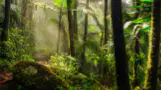
Which land biome is the most productive?
Tundra
Desert
Tropical Rainforest
Grassland
What are the three parts of the cell theory?
All living things are composed of cells, cells are the basic unit of life, and all cells come from pre-existing cells.
Cells are the smallest unit of matter, cells can spontaneously generate, and all cells have a nucleus.
All organisms are made of tissues, tissues are made of cells, and cells are made of molecules.
Cells are the basic unit of life, cells can be seen with the naked eye, and all cells are identical.
When someone incorrectly believes he or she is receiving a real treatment and reports an improvement in his or her condition, it is called the ________.
placebo effect.
nocebo effect.
Hawthorne effect.
observer effect.
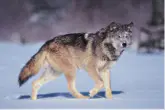
A species that influences the survival of many other species in an ecosystem is called a ________.
keystone species.
dominant species.
invasive species.
endangered species.
Which of the following best represents a Photosynthesis Flowchart?
A diagram showing the process of converting light energy into chemical energy
A chart depicting the stages of cellular respiration
A flowchart illustrating the water cycle
A diagram explaining the process of mitosis
What is the role of chlorophyll in photosynthesis?
It absorbs light energy.
It provides nutrients to the plant.
It transports water within the plant.
It protects the plant from pests.
What is the primary function of the roots in a plant?
To produce flowers
To absorb water and nutrients
To perform photosynthesis
To support the plant in reproduction
What is the main purpose of cellular respiration?
To produce oxygen
To generate ATP
To create glucose
To break down proteins
Which of the following foods are made through the process of fermentation? (select all that apply)
Cheese
Soy Sauce
Eggs
Chocolate
Milk
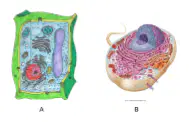
How can you tell a plant cell from an animal cell?
Plant cells have a cell wall, while animal cells do not.
Animal cells have chloroplasts, while plant cells do not.
Plant cells have a smaller vacuole compared to animal cells.
Animal cells have a rigid structure, while plant cells are flexible.
Where does CELLULAR RESPIRATION happen (choose 3)?
(a) + oxygen ⇒ water + (b) + (c)
The (a) are responsible for converting glucose (food) into (b) for the cell.
The more chromosomes an organism has, the more intelligent and complex the organism.
True
False

