
 Worksheets
Science Exam Review 2024
Total questions: 175
Worksheet time: 3hrs 22mins
How is the temperature on the HR diagram organized?
The temperature is organized from coolest(left) to hottest(right)
There is no temperature on the HR diagram
It is not very organized
The temperature is organized from hottest(left) to coolest(right)
Red stars are colder than blue stars.
True
False
What does the color of the star tells you?
Location
Temperature
Luminosity
Weight
What determines the life cycle of the stars?
Temperature
Mass
Color
Luminosity
What type of galaxy do we live in?
Spiral
Black Hole
Elliptical
Irregular
What is the name of our galaxy?
Big Dipper
Milky Way
Snickers’
Orion Belt
What is the main difference between the 7 types of lights on the Electromagnetic Spectrum?
Resting Point
Crest
Wavelength
Amplitude

What is the number of complete waves passing a fixed point in a given amount of time?
Amplitude
Intensity
Wavelength
Frequency

What is frequency measured in?
Milliseconds
Miles
Hertz
Kilograms

Which type of waves have the longest wavelength?
Visible light
Radio waves
X-rays
Gamma-Rays

What does #1 represent?
Period
Frequency
Wavelength
Amplitude

What does #2 represent?
Period
Frequency
Wavelength
Amplitude

What does #3 represent?
Period
Frequency
Wavelength
Amplitude
What is potential energy?
The energy an object has due to its atomic structure.
The energy an object has due to its chemical composition.
The energy an object has due to its motion.
The energy an object has due to its position or condition.
What is kinetic energy?
The energy an object has due to its position or condition
The energy an object has due to its motion
The energy an object has due to its chemical composition
The energy an object has due to its atomic structure
Which object has the most potential energy?
A ball resting on the ground.
A ball being thrown at 100 miles per hour.
A ball on top of a refrigerator.
A ball resting on the edge of a cliff.

Which letter shows the ball when it has THE MOST potential energy?
A
B
C
F
G


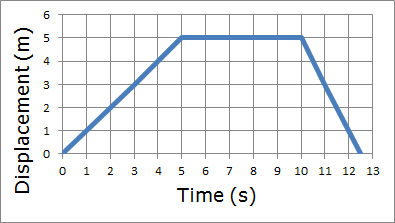


2-5 seconds using the speed vs. time graph.
Pick all of the following that are velocities.
4 km/s west
5 cm/h south
2 mph
8 cm/year
5 m/s up
A lamp sitting on a table.
Balanced Force
Unbalanced Force
Which of the following statements is true?
Balanced forces cause a change in motion.
Unbalanced forces cause a change in motion.
Forces do not effect the change in motion.


These forces are...
Balanced
Unbalanced
Which of the following is an example of an unbalanced force?


Which of the following correctly describes a system with a net force of 0N?
The system would be balanced, therefore the object would move
The system would be balanced, therefore the object would not move
The system would be unbalanced, therefore the object would move
The system would be unbalanced, therefore the object would not move

Currently, both teams have the same force. What could you make the system be unbalanced and have the blue team win? Select all that apply.
Add another person to the blue team to increase the force.
Take another green person away so you can decrease the force of the green team.
Add another person to the blue team to decrease the force/
Take another green person away so that you can increase the force of the green team.


Which of the answer choices is not an characteristic of a balanced force?
no change in motion
moving at a constant speed
net force of zero
causes a change in motion
What will causes an object to move?
unbalanced forces
balanced forces
net force
potential energy
Every answer choice is a characteristic of a unbalanced force, Except-
moving at a constant speed
causes a change in motion
adding of the forces
subtracting of the forces
States that force equals mass x acceleration
Newtons 1st law
Newtons 2nd law
Newtons 3rd law
Claims if an object exerts a force on another object, the second object exerts a force of equal strenght in the opposite direction back towards the first object
Newtons 1st law
Newtons 2nd law
Newtons 3rd law
States an object at rest will remain at rest unless acted on by an unbalanced force
Newtons 1st law
Newtons 2nd law
Newtons 3rd law
An object moving at a constant velocity will continue moving at a constant velocity unless acted upon by an unbalanced force applies to this law
Newtons 1st law
Newtons 2nd law
Newtons 3rd law
The swing of a hammer drives a nail partially into a piece of lumber until it comes to a rest. The lumber exerts an opposite force of resistance.
Newtons 1st law
Newtons 2nd law
Newtons 3rd law
A squid ejects water backward, and the water pushes back, causing the squid to propel forward.
Newtons 1st law
Newtons 2nd law
Newtons 3rd law
A 1,000-kg truck barrels down a highway at 24 m/s2 with a force of 24,000 N.
Newtons 1st law
Newtons 2nd law
Newtons 3rd law
A tossed paper airplane glides forward until a gust of wind blows it sideways.
Newtons 1st law
Newtons 2nd law
Newtons 3rd law
A trampoline pad launches a child upwards with a force equal to the downward force of the landing the moment before.
Newtons 1st law
Newtons 2nd law
Newtons 3rd law
When the force of an object remains constant, then an increase in mass corresponds with a decrease in acceleration.
Newtons 1st law
Newtons 2nd law
Newtons 3rd law
The amount of matter in an object in the object's ________.
Inertia
Weight
Mass
Density
Figure skaters A and B both apply the same amount of force to skate forward. If figure skater B has faster acceleration, is her mass less than that of figure skater A?
Yes
No
A white pool cue ball strikes a striped billiard ball at rest with a speed of 5 m/s. How fast does the striped billiards ball move, and in what direction?
5 m/s2 forward
5 m/s2 backward
5 m/s forward
5 m/s backward
What equation would you use to find the momentum (P) of a 104 kg (m) cheetah that sprints at 3.95 m/s (v)?
P = m x a
P = m x v
M = v x a
V = m x a
What is the acceleration (a) of a 92 kg (m) downhill skier that skis with a force of 118 kg ⋅ m/s2 (F)?
.77 m/s2
1.3 m/s
1.3 m/s2
.77 m/s
in every interaction, there is a pair of forces acting on the two interacting objects.
Friction
Action/Reaction
Net Force
A push or pull exerted on a object
Net force
Force
Inertia
a unit of measure that equals the force required to accelerate 1 kilo of mass at 1 meter per second
Newton
Friction
Action/Reaction
sum of forces acting on a particle or body.
Net force
Balnced
Acceleration
two forces acting in opposite directions on an object, and equal in size
Friction
F=ma
Balanced Force
Friction
one that causes a change in the motion of the object to which the force is applied
Action/Reaction
Unbalanced Force
Acceleration
the action of one surface or object rubbing against another
Force
F=ma
Friction
the rate of change of velocity per unit of time
Acceleration
Balanced Force
Inertia
a tendency to do nothing or to remain unchanged
Inertia
Newtons
F=ma
in every interaction, there is a pair of forces acting on the two interacting objects.
Friction
Action/Reaction
Net Force
Force Mass Acceleration
Force
F=ma
Inertia
an object will remain at rest or in uniform motion in a straight line unless acted upon by an external force
Newtons 1st law
Newtons 3rd law
Newtons 2nd law
the net force acting upon the object and the mass of the object
Newtons 3rd law
Newtons 1st law
Newtons 2nd law
A force is a push or a pull that acts upon an object as a results of its interaction with another object
Newtons 1st law
Newtons 3rd law
Newtons 2nd law
a coherent, typically large body of matter with no definite shape
Force
Mass
Acceleration
the action or process of moving or being moved
Motion
Force
Inertia


Elements
are made of two or more types of atoms bonded together
are made of one type of atom
are made of two or more types of molecules
are always individual atoms
Which is the smallest particle of an element that has the same properties as that element?
atom
molecule
compound
chemical
A substance that cannot be broken down further chemically is known as...
an element
a compound
a molecule
a mixture
Which of the following are examples of ELEMENTS? Choose all that are correct.
Oxygen (O)
Water
(H2O)
Flourine
(F)
Lemonade
Sulfur Dioxide (SO2)
Compounds
are made of two or more types of atoms chemically bonded together
are made of one type of atom
are found on the periodic table
can be separated into their individual parts through physical means
Which of the following are examples of compounds? Check all that apply.
Salt
(NaCl)
Salt Water
(NaCl and H2O)
Sugar
(C6H12O6)
Carbon Dioxide
(CO2)
The bonds of compounds can be broken easily because they are not chemically bonded.
True
False
When substances combine chemically...
they form a mixture and their properties change
they form a compound and their properties change
they form a mixture where their properties stay the same
the form a compound where their properties stay the same
Which of the following are examples of Mixtures?
The atmosphere
(N + O + Ar + H2O...)
Carbon Dioxide (CO2)
Oxygen
(O2)
Lemonade
(sugar, lemon juice, water)
Anything on the Periodic Table
Mixtures
are made of two different types of atoms chemically bonded together
Are only liquids
Cannot be separated
Can be separated using physical properties
Pure Substances
Are only made of one type of atom
Have the same properties throughout
Can never be broken down into something simpler
Are only made of molecules
Which of the following are examples of a Pure Substance?
Water
(H2O)
Helium
(He)
Orange Juice
(oranges, water)
Uranium
(Ur)
Sugar
(C6H12O6)
a different way to say Law of Conservation of Matter
Law of Conservation of Volume
Law of Conservation of Energy
Law of Conservation of Mass
Law of Conservation of Environment
fundamental principle that matter cannot be created or destroyed in a closed system
Law of Conservation of Energy
Law of Conservation of Matter
Law of Conservation of Environment
Law of Conservation of Volume
two or more atoms held together by covalent bonds
molecule
atom
element
a substance made up of atoms of two or more different elements joined by chemical bonds
molecule
compound
mixture
solution
a process where the molecular structure of a substance changes
chemical formula
chemical equation
chemical reaction
a combination of chemical symbols and numbers to represent a substance
mathematical formula
mathematical equation
chemical formula
chemical equation
a way to describe a chemical reaction using chemical formulas and other symbols
mathematical formula
mathematical equation
chemical formula
chemical equation
number after the atomic symbol in equations that tells us the number of atoms of that element in the molecule
denominator
coefficient
numerator
subscript
number in front of molecules in a chemical equation; tells the number of that molecule involved in the reaction
denominator
coefficient
numerator
subscript
a substance that takes part in and undergoes change during a reaction
coefficient
subscript
reactant
product
a new material formed in a chemical reaction
coefficient
subscript
reactant
product
protons + neutrons
atomic number
atomic mass
electrons
a reaction in which energy is absorbed
exothermic reaction
endothermic reaction
red hot reaction
cool reaction
a reaction that releases energy, usually in the form of heat.
exothermic reaction
endothermic reaction
red hot reaction
cool reaction
The law of conservation of mass states that matter ___________________.
cannot enter into chemical reactions
cannot be created or destroyed
cannot form different substances
cannot be modeled
Chemical formulas are used to represent _________________.
reactions
substances
processes
none of the above
Chemical equations are used to represent _________________.
reactions
substances
processes
none of the above
The small numbers under and to the right of element symbols in a formula are called _________________.
element symbols
exponents
coefficients
subscripts
The large numbers before a chemical formula that are used as multipliers are known as __________________.
element symbols
exponents
coefficients
subscripts
A ___________________ uses chemical formulas, plus signs, and an arrow to represent a chemical reaction
chemical formula
chemical equation
element symbol
inventory
The materials we start with in a reaction are known as __________________.
chemicals
reactants
products
creations
The materials we end with in a reaction are known as __________________.
chemicals
reactants
products
creations
Reactants are found on the _______________ side of the arrow in a chemical equation.
Right
Left
Products are found on the _______________ side of the arrow in a chemical equation.
Right
Left
What is the correct "inventory" for KClO3
K = 1 Cl = 3 O = 3
K = 3 Cl = 3 O = 3
K = 1 Cl = 1 O = 3
K = 1 C = 1 l = 1 O = 3

What is the coefficient in the formula?
2
N
H
3
What is the subscript in the formula?
2
N
H
3
What does the arrow in a chemical equation represent?
created
makes
yields
destroys

This is an example of a ___________________________.
chemical formula
chemical equation
What is the correct "inventory" for 3Al2O4
Al = 6 O = 4
Al = 6 O = 12
Al = 2 O = 4
Al = 3 O = 4
What is the correct "inventory" for 4Ag(NO3)2
Ag = 4 N = 2 O = 6
Ag = 4 N = 4 O = 6
Ag = 4 N = 8 O = 24
Ag = 1 N = 2 O = 6
Solutions that have more OH– ions than H+ ions are
acids
bases
enzymes
neutral
Solutions that have more H+ ions than OH- ions are
acids
bases
enzymes
neutral
Which of the following is the strongest acid?
soap - 10
HCL - 0
blood - 7.45
soft drink - 3
Which of the following is the strongest base?
soap - 10
HCL - 0
blood - 7.45
soft drink - 3
Which of these pH values represent an acid?
4
8
10
12

Milk is a very weak acid. What might its pH value be?
6.5
7.8
4.2
12.2
When acids react with metals, they produce hydrogen gas and salt.
True
False
Which of the following are properties of acids?
They conduct electricity when dissolved in water
They taste sour
They react with metals to produce hydrogen gas
All of the answer choices are correct
Which of the following is an acid?
vinegar
bleach
sugar in water
starch in water
toothpaste in water
The pH value of an acid represents its __________ of positive ions in the solution
amount
concentration
color
charge
Which of the following is a property of a base?
bitter taste
reacts with metals
salty
sour taste
Bases have many uses. They are mainly used to make
cleaning products
soaps
concrete
all of the answer choices
Bases turn blue litmus paper red.
True
False
Surface tension is the property of water in which...
water molecules at the surface tend to stick together.
water spills easily.
water tends to be see-through.
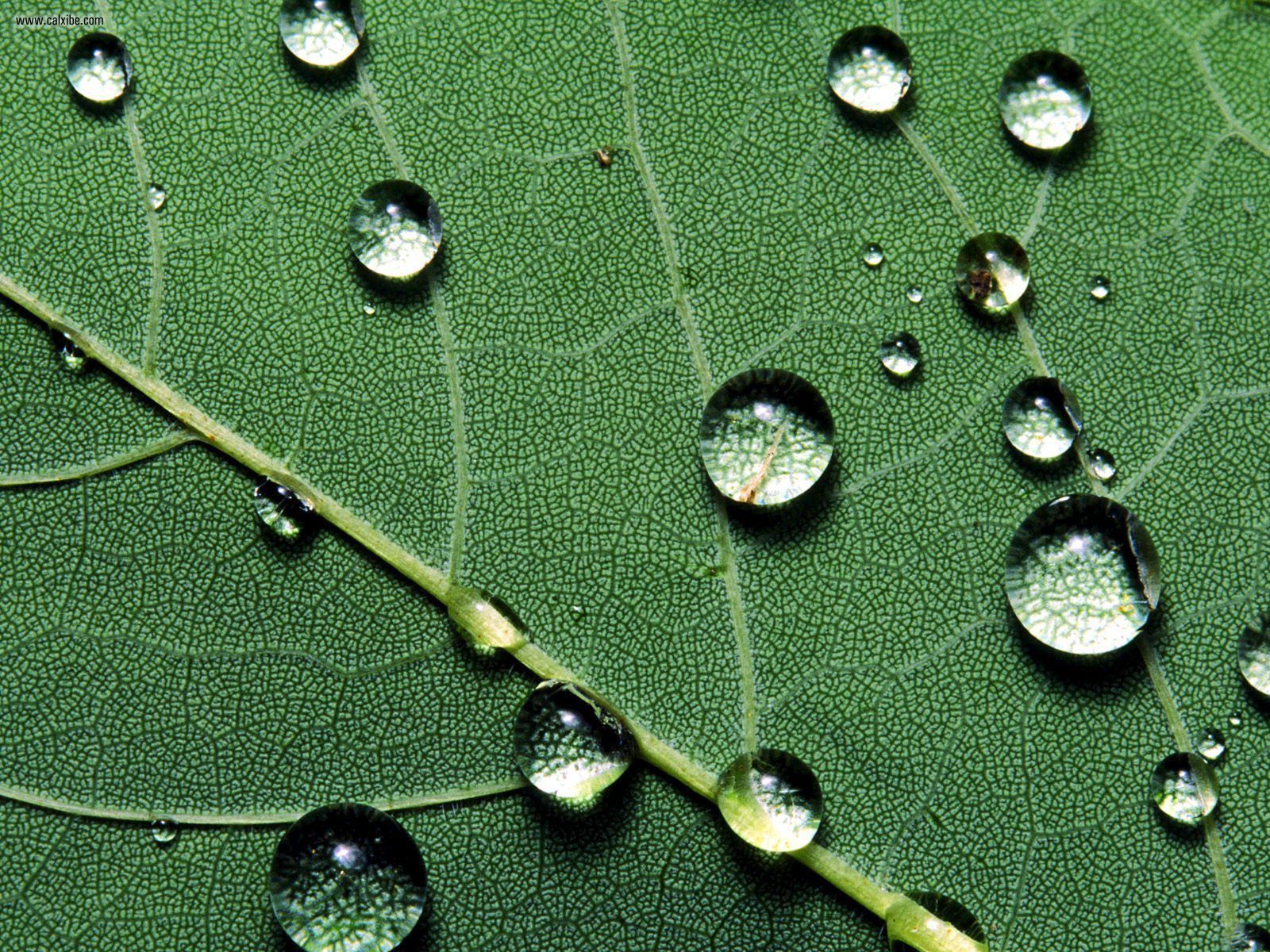
Refer to the picture of water sticking to a leaf; this is occurring because of:
Adhesion
Cohesion
Describe COHESION.
Water molecules attracted to other substances.
Water molecules climbing upwards against the force of gravity.
Water molecules dissolving many substances because of its polarity.
Water molecules attracted to other water molecules.


Water's ability to stick to glass is
adhesion
cohesion
surface tention
capillary action

