wayground logo

Free Printable Worksheets

Font size

S
M
L
XL
Worksheets

Semester 1

Total questions: 219

Worksheet time: 5hrs 56mins

Name
Class
Date
1.
a)
nimbostratus cloud
b)
cumulonimbus cloud
c)
cirrocumulus cloud
d)
altostratus cloud
2.
This weather instrument is a...
a)
thermometer
b)
anemometer
c)
rain gauge
d)
barometer
3.

At which relative humidity is it more likely to rain?

a)

50%

b)

20%

c)

77%

d)

99%

4.
What weather instrument is pictured?
a)
Anemometer
b)
Thermometer
c)
Barometer
d)
Hygrometer
5.
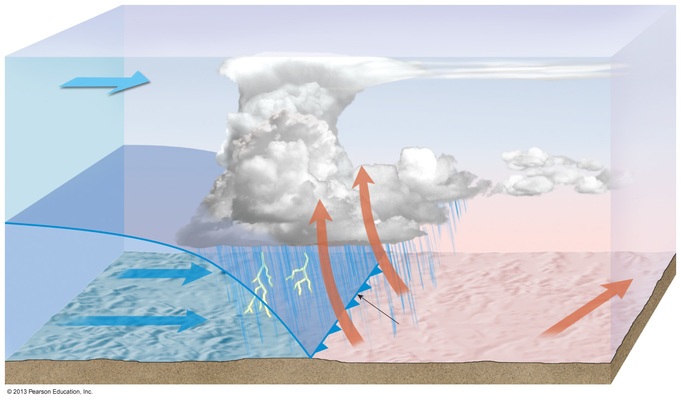
What type of storm front is this? 
a)
warm front
b)
cold front
c)
stationary front
d)
occluded front
6.
A front is
a)
where warm air is cooling at earth's surface
b)
a line where hot and cold air are separating
c)
a line where two different air masses meet
d)
where cold air is rising and forming rain clouds
7.
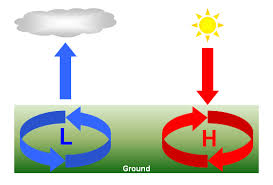
Which most likely produces clear, cool weather?
a)
zero air pressure
b)
stable air pressure
c)
a low pressure system
d)
a high pressure system
8.
_____________ air is more dense and tends to sink
a)
cold
b)
warm
c)
moist
d)
dry
9.
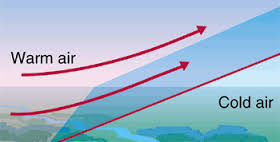
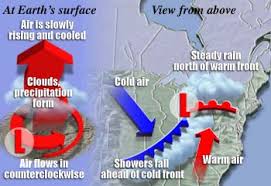
Which type of front is pictured?
a)
Cold front
b)
Warm front
c)
Occluded front
d)
Stationary front
10.
Which system results in rainy or stormy weather?
a)
high pressure
b)
low pressure
c)
hurricane
d)
weather system
11.
Which system results in drier, fairer weather?
a)
high pressure
b)
low pressure
c)
hurricane
d)
weather system
12.
When a cold front is approaching, what happens?
a)
warm air is pushing under cold air causing humid weather and lower temperatures
b)
warm air is pushing under cold air causing humid weather and higher temperatures
c)
warm air rises, cools, and causes rain and thunderstorms
d)
cold air is pushed over warm air causing rain and thunderstorms
13.
Which front leads to steady rain for several days?
a)
warm front
b)
cold front
c)
stationary front
d)
occluded front
14.

An extremely low pressure system that produces powerful winds, and cause heavy flooding.

a)

tornado

b)

thunderstorm

c)

hurricane

d)

blizzard

15.
A severe storm which involves a funnel cloud forming from a cumulonimbus cloud:
a)
hurricane
b)
tornado
c)
thunderstorm
d)
blizzard
16.
Humidity is the...
a)
Amount of Water Vapor in the Air
b)
Amount of Wind in the Air
c)
Amount of Precipitation in the Air
d)
Amount of Pressure in the Air
17.
Where does a hurricane form?
a)
Over a cold body of water
b)
Over a warm body of water
c)
Over cold land
d)
Over warm land
18.
In what direction do winds always blow?
a)
From areas of high pressure to areas of low pressure
b)
From areas of low pressure to areas of high pressure
19.

What causes your ears to pop on an airplane?

a)

a change in humidity

b)

a change in temperature

c)

a change in direction

d)

a change in altitude

20.

As altitude increases, air pressure _______.

a)

increases

b)

decreases

c)

stays the same

21.

The force of the air pushing down on an area is called _____.

a)

humidity

b)

temperature

c)

air pressure

d)

altitude

22.

____ is the average kinetic energy of the particles of a substance.

a)

temperature

b)

humidity

c)

altitude

d)

wind speed

23.
What happens to air pressure as you move upward into the atmosphere?
a)
increases
b)
decreases
c)
stays the same
24.
What causes warm air to rise?
a)
the fact that it's less dense than cold air 
b)
The fact that it weighs more than cold air 
c)
The fact that it has higher pressure than cold
d)
the fact that its more dense than cold air 
25.
Which is the opposite of condensation?
a)
runoff
b)
evaporation
c)
precipitation
d)
transpiration
26.
Snow, sleet, hail, and rain are all examples of  ________________. 
a)
evaporation
b)
condensation
c)
accumulation
d)
precipitation
27.
When water _________, dew forms.
a)
Melts
b)
Evaporates
c)
Condenses
d)
Precipitates
28.

The transformation of water vapor back into liquid water by cooling is called...

a)

condensation

b)

evaporation

c)

Precipitation

d)

Pressure

29.
What types of air masses form over oceans?
a)
Maritime
b)
Continental
c)
Polar
d)
Tropical
30.
What's the humidity and temperature of a continental tropical air mass?
a)
Wet and cold
b)
Dry and warm
c)
Wet and warm
d)
Dry and cold
31.
What's the humidity and temperature of a maritime tropical air mass?
a)
Wet and cold
b)
Dry and warm
c)
Wet and warm
d)
Dry and cold
32.
A dry and cold air mass would be...
a)
Maritime polar
b)
Continental polar
c)
Maritime tropical
d)
Continental tropical
33.
In which position is it Spring in the Northern Hemisphere?
a)
1
b)
2
c)
3
d)
4
34.
In which position is it summer in the Northern Hemisphere?
a)
1
b)
2
c)
3
d)
4
35.
The seasons are caused by___________?
a)
The direction the Earth's axis is tilted toward the sun
b)
Tropical Storms
c)
Changes in the moon
d)
The Earth's rotation on its axis
36.
Which of the following does NOT have an affect on a region's climate?
a)
Large bodies of water
b)
Latitude
c)
Mountains
d)
Longitude
37.
Which of the following is a greenhouse gas?
a)
carbon monoxide
b)
oxygen
c)
nitrogen
d)
carbon dioxide
38.

When the sun's rays pass through our atmosphere and then heat is trapped by the atmosphere it is called

a)

Global Warming

b)

Greenland Effect

c)

Greenhouse Effect

d)

Ice Age

39.

The gradual increase in the average surface temperature of our planet over the past 100 years is called

a)

Greenhouse Effect

b)

Global Warming

c)

Greenland Effect

d)

Ice Age

40.

All of the following are human caused sources of CO2 except

a)

Volcanic Eruptions

b)

Deforestation

c)

Increases in Greenhouse Gases

d)

Burning coal for electricity and methane for heat

41.
What is the climate of the top of a mountain like as compared to the bottom of the mountain?
a)
warmer
b)
cooler
c)
drier
d)
wetter
42.
What is the difference between climate and weather?
a)
 Climate averages the weather conditions in a specific place over a long period of time, while weather describes the state of the atmosphere at a specific moment in time.
b)
 Weather averages the weather conditions in a specific place over a long period of time, while Climate describes the state of the atmosphere at a specific moment in time.
c)
Climate describes the weather conditions at night, while weather describes the conditions during the daytime.
d)
 There is not a difference between climate and weather.
43.
Which sentence best describes the relationship between elevation and air temperatures?
a)
 LOWER elevation = COLDER temperatures
b)
HIGHER elevation = COLDER temperatures
c)
HIGHER elevations = WARMER temperatures
d)
There is no relationship
44.
What are the two main factors that determine the climate of an area?
a)
precipitation and humidity
b)
temperature and air pressure
c)
wind conditions and humidity
d)
temperature and precipitation
45.
Which BEST describes why latitudes closest to the equator have warmer climates?
a)
they are at lower elevations
b)
they receive more solar energy
c)
they are nearer to ocean currents
d)
they get more winds that carry energy in the form of heat
46.
What is the measure of distance in degrees north and south from the equator?
a)
latitude
b)
longitude
c)
elevation
d)
topography
47.
Which sentence best describes how latitude and temperature are related?
a)
LOWER latitude = COLDER air temperature
b)
HIGHER latitude = COLDER air temperature
c)
HIGHER latitude = WARMER temperatures
48.
What causes some areas of Earth to receive less intense solar energy than others?
a)
the mass of earth
b)
the curve of earth
c)
the density of earth
d)
the elevation of earth
49.

Cities that are closer to large bodies of water tend to have _____________ temperatures

a)

more extreme temperature changes

b)

less extreme temperature changes

c)

4 distinct seasons

d)

more sunshine

50.

Which statement about the sun's rays is true?

a)

They shine at the least direct angle near the equator

b)

They shine at the least direct angle near the poles

c)

They shine at the most direct angle near the poles

d)

They shine at the most direct angle at low elevation

51.
What is another name for the dry area of a mountain?
a)
upwind
b)
rainshadow
c)
orographic
d)
atmosphere
52.
Which gas is removed from the atmosphere during photosynthesis?
a)
hydrogen
b)
oxygen
c)
nitrogen
d)
carbon dioxide
53.
Which of the following is the best conclusion that can be made from this graph?
a)
atmospheric carbon dioxide levels have been decreasing since 1960
b)
Hawaii has a lot of carbon dioxide
c)
humans have been working hard to decrease carbon dioxide levels
d)
atmospheric carbon dioxide levels have increased steadily since 1960
54.
The average temperature of the surface of Earth has increased approximately 1°C in the past century. Which reason best explains this increase in temperature?
a)
lower levels of ozone in the atmosphere
b)
lower levels of nitrogen in the atmosphere
c)
higher levels of carbon dioxide in the atmosphere
d)
higher levels of oxygen in the atmosphere
55.
The amount of energy required to raise the temperature 1ºC for every kilogram is called____?
a)
Thermal Energy
b)
Specific Heat
c)
Temperature
d)
Kinetic Energy
56.

Water has a specific heat that is approximately 4000 larger than that of air. How does this effect climate? (Choose all correct answers)

a)

The ocean heats and cools slowly, causing coastal communities to have milder climates.

b)

Continental regions far from water experience more extreme temperatures in their climate because they heat and cool quickly

c)

The ocean heats and cools slower than the land, causing monsoon wind patterns

d)

All of these are true

57.
The main human activity that releases greenhouse gases is...
a)
using bottled water
b)
burning fossil fuels
c)
texting on cellphones
d)
eating meat
58.
T/F: Some greenhouse gases are naturally present in the Earth's atmosphere
a)
True
b)
False
59.
When we discuss greenhouse gases what is the main one we discuss?
a)
Methane (CH4)
b)
Carbon Dioxide (CO2)
c)
Nitrous oxide (N2O)
d)
Flourinated gases
60.
What are the two most common greenhouse gases?
a)
Water Vapor (H2O) and Methane (CH4)
b)
Carbon Dioxide COand Methane (CH4)
c)
Water Vapor (H2O) and Carbon Dioxide CO2
d)
Water Vapor (H2O) and Nitrous oxide (N2O)
61.
set of complex equations used to predict future climates
a)
deforestation 
b)
global climate model 
c)
global warming
d)
greenhouse gas
62.

The approximate population of the world today is..

a)

7.6 Million

b)

6.7 Billion

c)

6.7 Million

d)

7.6 Billion

63.

One reason the world is growing so quickly is because...

a)

The world has infinite resources for everyone

b)

Birth rate is higher than death rate

c)

There are more and more places for people to live

d)

Death rate is higher than birth rate

64.

One major cause of population growth is a falling death rate.

a)

True

b)

False

65.

What is the calculation of the number of births in a population each year?

a)

death rate

b)

birth rate

66.

What is the calculation of the number of deaths in a population each year?

a)

death rate

b)

birth rate

67.

What does the term carrying capacity describe?

a)

The maximum number of birth rates for a population.

b)

The ability of a population to accept new immigrants.

c)

The ratio of birth rates to death rates in a population.

d)

The population size that the environment can sustain.

68.

If a population grows larger than its environmental carrying capacity, then

a)

death rate may rise.

b)

death rate may fall significantly.

c)

birth rate may rise significantly.

d)

immigration rate may increase.

69.
Which of the following is likely to be affected by a population of 7 billion?
a)
amount of land for agriculture
b)
amount of clean water
c)
number of people who are unemployed
d)
all of the above
70.

Which problem today is primarily the result of the Industrial Revolution?

a)

extensive air and water pollution

b)

increased transmission of disease between people living in close proximity

c)

decline in quality of agricultural soil

d)

erosion from deforestation as more fuel wood is harvested

71.
largest number of individuals of a given species that Earth’s resources can support and maintain for a long period of time
a)
carrying capacity
b)
population
c)
resource
d)
reclaimation
72.
Greenhouses gases
a)
Absorb and radiate heat
b)
Destroy the ozone layer
c)
Cause respiratory problems
d)
Create smog
73.
3KOH + H3PO4 --> K3PO4 + 3H2O
a)
Synthesis 
b)
Decomposition
c)
Single displacement
d)
Double displacement
74.
2Pb(NO3)2 --> 2PbO + 4NO2 + O2
a)
Synthesis 
b)
Decomposition
c)
Single displacement
d)
Combustion
75.
3Mg + N2 --> Mg3N2
a)
Synthesis 
b)
Decomposition
c)
Single displacement
d)
Combustion
76.
2NO2 --> N2 + 2O2
a)
Synthesis
b)
Decomposition
c)
Single displacement
d)
Combustion
77.
Fe + H2SO4 --> Fe2(SO4)3 + H2
a)
Synthesis (combination)
b)
Decomposition
c)
Single replacement
d)
Combustion
78.
NH3 + HCl ---> NH4Cl 
a)
Synthesis
b)
Decomposition
c)
Single Replacement
d)
Double Replacement
79.
H2SO4 + Fe -->H2 + FeSO4
a)
Synthesis
b)
Decomposition
c)
Single Replacement
d)
Double Replacement
80.
PbCl2 + AgNO3 ---> Pb(NO3)2 + AgCl 
a)
Synthesis
b)
Decomposition
c)
Single Replacement
d)
Double Replacement
81.
Which of the following is the general formula for a decomposition reaction?
a)
A + B  → AB
b)
AB → A + B
c)
AB + C → AC + B
d)
AB + CD → AC + BD
82.
When balancing equations a ____ can be placed to the left of a formula of a substance to make the equations balanced
a)
charge
b)
subscript
c)
random number
d)
coefficient
83.
What coefficient should be used to make the following equation balanced?
N2+O2--> _NO 
a)
1
b)
2
c)
3
d)
4
84.
Is the equation balanced?: 2H2O + O2 --> 4MgO + 3Fe
a)
Yes
b)
No
85.
Balance this equation:
 __Li + __Cl2 -> __LiCl
a)
2Li + Cl2 -> 4LiCl2
b)
2Li + Cl2 -> LiCl2
c)
2Li +  Cl2 -> 2LiCl
86.
What is a reactant?
a)
a volatile chemical
b)
a dangerous substance
c)
the substances you start with in a chemical reaction
d)
the substances that are formed by a chemical reaction 
87.
What is a product?
a)
a fancy word for make-up
b)
a volatile chemical
c)
the substances you start with in a chemical reaction
d)
the substances that are formed by a chemical reaction
88.

Balancing the following:

____ Al + ____ HCl → ____ AlCl3 + ____ H2

a)
1,3,1,2
b)
2,3,2,3
c)
2,6,2,3
d)
3,2,6,2
89.

The blue numbers in the image represent

a)

subscripts

b)

coeffiecients

c)

roman numerals

d)

none of the answer options are correct

90.

In the equation, 2Mg + O2 ---> 2MgO, which are the reactants?

a)

Mg and O2

b)

MgO

c)

Mg and MgO

d)

O and MgO

91.

When balancing a chemical equation, you can only change _________, you can never change _______!

a)

coefficients, subscripts

b)

subscripts, coefficients

c)

formulas, subscripts

d)

coefficients, formula units

92.
How many atoms of carbon (C) are in C6H12O6?
a)
3
b)
6
c)
12
d)
24
93.
Is the following equation balanced?...
Al + O2 --> 2Al2O3
a)
Yes!
b)
No!
94.
The number of atoms you begin with in a chemical reaction ...
a)
must be the same as the number of  atoms you end with
b)
must be an even number
c)
can be different to the number you finish with
d)
changes depending on how much energy is formed
95.

What is the Law of Conservation of Mass?

a)

It states that matter cannot be created or destroyed.

b)

It states that energy cannot be created or destroyed.

c)

It states that matter can be created or destroyed.

d)

It states that sound can be created or destroyed.

96.

Is the equation balanced?: 2H2O + O2 --> 4MgO + 3Fe

a)

yes

b)

no

97.
What is the right part of a chemical equation called...
2H2 + O2 --> 2H2O
a)
Reactants
b)
Products 
c)
Yields 
d)
Chemical Equation 
98.
Why is the following chemical equation not balanced?
H2 + O2 --> H2O
a)
each side of the equation has a different number of oxygen atoms
b)
each side of the equation has a different number of hydrogen atoms
c)
each side has the same mass
99.

How many sodium atoms in Na₂CO₃

a)

1

b)

2

c)

3

d)

6

100.
How many Magnesium are in 10MgCl2?
a)
10
b)
5
c)
20
101.
Balance this equation:
 2Li + Cl2 -> LiCl
a)
2Li + Cl2 -> 4LiCl2
b)
2Li + Cl2 -> LiCl2
c)
2Li + Cl2 -> 2LiCl
102.
Name the part in red:

H2 + O2 -> H2O
a)
Coefficient
b)
Product
c)
Yield
d)
Subscript
103.
Name the part in red:

H+ O2 -> H2O
a)
Coefficient
b)
Product
c)
Reactant
d)
Subscript
104.
Name the part in red:

H+ O-> H2O
a)
Coefficient
b)
Product
c)
Reactant
d)
Subscript
105.

What coefficient should be placed in front of the Hydrogen in the reactants to balance this equations?

____ H2 + O2 -> 2 H2O

a)

1

b)

2

c)

3

d)

0

106.
The number of atoms you begin with in a chemical reaction ...
a)
must be the same as the number of  atoms you end with
b)
must be an even number
c)
can be different to the number you finish with
d)
changes depending on how much energy is formed
107.
Balance this equation:  H2 + N2 → NH3
a)
 H2 + 4N2 → NH3
b)
 H2 + 3N2 → 2NH3
c)
 3H2 + N2 → 2NH3
d)
 2H2 + 2N2 → 2NH3
108.

Balance this reaction:

____ Na3PO4 + ____ KOH ---> ____ NaOH + ____ K3PO4

a)

1,3,3,1

b)

1,3,2,1

c)

2,3,3,1

d)

1,1,3,1

109.
3Ca + 2AlCl3 --> 3CaCl2 + 2Al
a)
Synthesis
b)
Decomposition
c)
Single diplacement
d)
Double displacement
110.
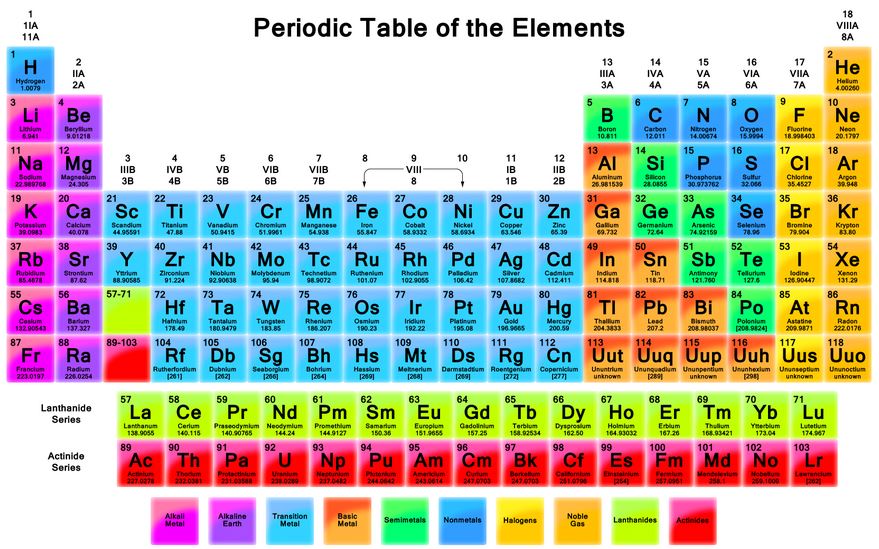
Which of the following has a full valence shell?
a)
Oxygen
b)
Neon
c)
Barium
d)
Carbon
111.
Elements on the LEFT side of the periodic table will most likely form:
a)
Positive ions
b)
Negative ions
c)
Neutral Ions
d)
None of these
112.
An ionic bond forms when atoms ___________ electrons.
a)
gain
b)
share
c)
increase
d)
transfer
113.
Which type of bond has an equal sharing of electrons?
a)
Polar Covalent 
b)
Non Polar Covalent
c)
Ionic
d)
Metallic
114.
Which type of bond has an unequal sharing of electrons?
a)
Polar Covalent 
b)
Non Polar Covalent
c)
Ionic
d)
Metallic
115.
Which type of bond has a transfer of an electron from on atom to another?
a)
Polar Covalent 
b)
Non Polar Covalent
c)
Ionic
d)
Metallic
116.
All chemical bonds involve two atoms sharing electrons.
a)
True
b)
False
117.
Chemical bonds form when atoms
a)
combined nuclei
b)
give up neutrons
c)
gain protons
d)
share or transfer electrons
118.
Bonds that form between two metals are called ______________ bonds.
a)
ionic 
b)
covalent
c)
metallic
d)
pervasive
119.
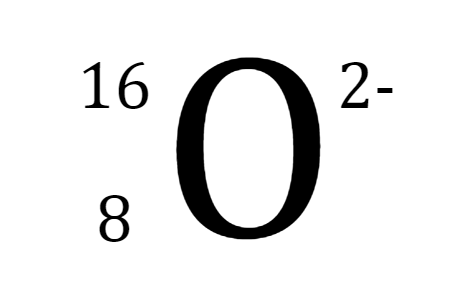
If an atom loses two electrons what charge will it have?
a)
+ 2
b)
 - 2
c)
+1
d)
-1
120.
If an atom gains one electron what charge will it have?
a)
-2
b)
-1
c)
+1
121.
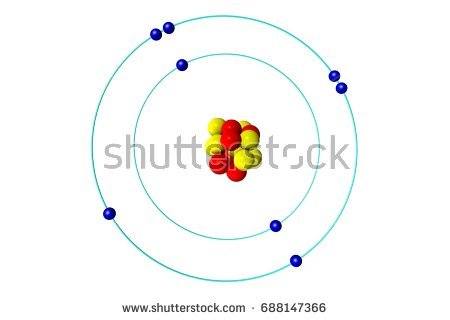
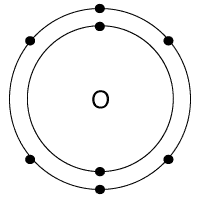
What is the number of valence electrons for Oxygen?
a)
8
b)
6
c)
2
d)
1
122.
How many valence electrons in this structure?
a)
6
b)
5
c)
4
d)
7
123.
Covalent compounds
a)
Share electrons
b)
transfer electrons
c)
contain a sea of electrons
d)
conduct electricity
124.
Which type of bond creates a "pool" of electrons between atoms?
a)
Ionic Bonds
b)
Covalent Bonds
c)
Metallic Bonds
d)
Saving Bonds
125.

Why do atoms bond?

a)

They typically don't bond

b)

To add or take away energy levels

c)

To have a full valance shell.

d)

To have a full inner shell

126.

Ionic bonding is between a

a)

nonmetal and nonmetal

b)

metal and nonmetal

c)

metal and metal

d)

Depends on the situation

127.

Covalent bonding is between a

a)

nonmetal and nonmetal

b)

metal and nonmetal

c)

metal and metal

d)

It depends on the situation

128.

What happens when magnesium loses 2 electrons?

a)

It stabilizes to a net charge of 0

b)

It turns into an atom

c)

It becomes negatively charged

d)

It becomes positively charged

129.

Predict the bond between Mg and Cl

a)

covalent

b)

ionic

c)

metallic

d)

none of the above

130.

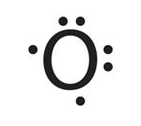
Which is the correct Lewis Structure for oxygen?
a)
b)
c)
d)
131.

What category of element usually forms a positive ion?

a)

Metals

b)

Nonmetals

c)

metalloids

d)

Noble gases

132.

Which category of elements usually form negative ions?

a)

metals

b)

nonmetals

c)

metalloids

d)

noble gases

133.

CaCl2 is an example of what type of bond?

a)

Covalent

b)

Metallic

c)

Ionic

134.

10. What charges attract?

a)

Opposite

b)

Same

135.

11. What charges repel?

a)

Same

b)

Opposite

136.

15. What is a valence electron?

a)

an electron that is found in the outermost shell of an atom.

b)

an electron found in the innermost shell of an atom.

c)

an electron found in the middle shell.

137.

16. What is the number of valence electrons for Calcium (Group 2)?

a)

1

b)

2

c)

3

d)

4

138.

17. What is the number of valence electrons for Carbon (Group 14)?

a)

1

b)

2

c)

3

d)

4

139.

18. What is the number of valence electrons for Neon and the other Noble Gases?

a)

5

b)

6

c)

7

d)

8

140.

19. If an atom transfers an electron to another atom, those atoms form which bond?

a)

Ionic Bond, which is stronger than a covalent bonds

b)

Covalent Bond, which is stronger than ionic bonds

141.

20. If I was trying to determine if two atoms will bond, what would be helpful to know:

a)

Valence electrons, found by group number

b)

Whether the elements are metals or nonmetals

c)

The electronegativity of the atoms

d)

All of the above, all of which can be found on the Periodic Table

142.

(Vocabulary / Concept) What is the Law of Conservation of Mass?

a)

It states that matter cannot be created or destroyed.

b)

It states that energy cannot be created or destroyed.

c)

It states that matter can be created or destroyed.

d)

It states that sound can be created or destroyed.

143.

(Vocab / Concept) The blue numbers in the image represent

a)

subscripts

b)

coeffiecients

c)

chemical symbols

d)

none of the answer options are correct

144.

(Vocab / Concept) What is a product?

a)
a fancy word for make-up
b)
a volatile chemical
c)
the substances you start with in a chemical reaction
d)
the substances that are formed by a chemical reaction
145.

(Vocab / Concept) What is a reactant?

a)
a volatile chemical
b)
a dangerous substance
c)
the substances you start with in a chemical reaction
d)
the substances that are formed by a chemical reaction 
146.

(Vocabulary / Concept) Name the part in red:

H2 + O-> H2O

a)
Coefficient
b)
Product
c)
Yield
d)
Subscript
147.

(Vocab / Concept) In the equation, 2 Mg + O2 ---> 2 MgO, which are the reactants?

a)

Mg and O2

b)

MgO

c)

Mg and MgO

d)

O and MgO

148.

(Vocab / Concept) What is the right part of a chemical equation called...
2H2 + O2 --> 2H2O

a)
Reactants
b)
Products 
c)
Yields 
d)
Chemical Equation 
149.

(Vocabulary / Concept) The number of atoms you begin with in a chemical reaction ...

a)
must be the same as the number of  atoms you end with
b)
must be an even number
c)
can be different to the number you finish with
d)
changes depending on how much energy is formed
150.

(Vocabulary / Concept) Name the part in red:

H
+ O-> H2O

a)
Coefficient
b)
Product
c)
Reactant
d)
Subscript
151.

(Vocabulary / Concept) Name the part in red:

H+ O2 -> H2O

a)
Coefficient
b)
Product
c)
Reactant
d)
Subscript
152.

(Process) Why is the following chemical equation not balanced?
H2 + O2 --> H2O

a)
each side of the equation has a different number of oxygen atoms
b)
each side of the equation has a different number of hydrogen atoms
c)
each side has the same mass
153.

(Counting) How many sodium atoms in Na₂CO₃

a)

5

b)

2

c)

3

d)

6

154.

(Counting) How many atoms of carbon (C) are in C6H12O6?

a)
3
b)
6
c)
12
d)
24
155.

(Counting) Is the equation balanced?: 2H2O + O2 --> 4MgO + 3Fe

a)

yes

b)

no

156.

(Counting) Is the following equation balanced?...
Al + O2 --> 2Al2O3

a)
Yes!
b)
No!
157.

(Counting) Is the equation balanced?: 2H2O + O2 --> 4MgO + 3Fe

a)
Yes
b)
No
158.

(Counting) How many total Carbon atoms are in the reactants for

2 C8H18 + 12 O2 → 16 CO2 + 18 H2O

a)

16

b)

18

c)

8

159.

(Process) When balancing equations a ____ can be placed to the left of a formula of a substance to make the equations balanced

a)
charge
b)
subscript
c)
random number
d)
coefficient
160.

(Process) When balancing a chemical equation, you can only change _________, you can never change _______!

a)

coefficients, subscripts

b)

subscripts, coefficients

c)

formulas, subscripts

d)

coefficients, formula units

161.

(Balancing) What coefficient should be placed in front of the Hydrogen in the reactants to balance this equations?

____ H2 + O2 -> 2 H2O

a)

1

b)

2

c)

3

d)

0

162.

(Balancing) This equation Li + Cl2 -> LiCl is unbalanced, which is the balanced version of this equation.

a)
2Li + Cl2 -> 4LiCl2
b)
2Li + Cl2 -> LiCl2
c)
2Li + Cl2 -> 2LiCl
163.

(Balancing) What coefficient should be used to make the following equation balanced?
N2+O2--> _NO 

a)
1
b)
2
c)
3
d)
4
164.

(Balancing) Balance this equation:  H2 + N2 → NH3

a)
 H2 + 4N2 → NH3
b)
 H2 + 3N2 → 2NH3
c)
 3H2 + N2 → 2NH3
d)
 2H2 + 2N2 → 2NH3
165.

(Balancing) Balance this reaction:

____ Na3PO4 + ____ KOH ---> ____ NaOH + ____ K3PO4

a)

1,3,3,1

b)

1,3,2,1

c)

2,3,3,1

d)

1,1,3,1

166.

(Balancing) Balance the following:

____ Al + ____ HCl → ____ AlCl3 + ____ H2

a)
1,3,1,2
b)
2,3,2,3
c)
2,6,2,3
d)
3,2,6,2
167.

(Balancing) Balance this equation:
 __Li + __Cl2 -> __LiCl

a)
2Li + Cl2 -> 4LiCl2
b)
2Li + Cl2 -> LiCl2
c)
2Li +  Cl2 -> 2LiCl
168.

What is the unit for volume?

a)

m

b)

c)

d)

cm

169.

What does "m³" represent in measurements?

a)

One-dimensional measurement

b)

Two-dimensional measurement

c)

Three-dimensional measurement

d)

Four-dimensional measurement

170.

Which of the following is a two-dimensional measurement?

a)

m

b)

c)

d)

cm

171.

Which of the following is a three-dimensional measurement?

a)

m

b)

c)

d)

cm

172.

How many months are there in one year?

a)

10 months

b)

11 months

c)

12 months

d)

13 months

173.

Which of the following is a smaller unit of time?

a)

Hour

b)

Day

c)

Minute

d)

Millisecond

174.

What is the metric unit of temperature?

a)

Fahrenheit

b)

Kelvin

c)

Celsius

d)

Rankine

175.

What is the temperature of absolute zero in Kelvin?

a)

0 K

b)

273 K

c)

100 K

d)

-273 K

176.

What is the equivalent of 0 Kelvin in Celsius?

a)

0°C

b)

100°C

c)

-273°C

d)

273°C

177.

What is the factor for the prefix "milli"?

a)

10610^{-6}

b)

10910^{-9}

c)

10310^{-3}

d)

101510^{-15}

178.

Which prefix symbol represents 10210^{-2} ?

a)

deci

b)

centi

c)

milli

d)

nano

179.

What is the formula for calculating percent error?

a)

(Accepted value - Experimental value) / Accepted Value * 100%

b)

(Accepted value + Experimental value) / Accepted Value * 100%

c)

(Experimental value - Accepted value) / Accepted Value * 100%

d)

(Accepted value - Experimental value) / Experimental Value * 100%

180.

What is the percent error if the accepted value is 100 and the experimental value is 90?

a)

10%

b)

5%

c)

15%

d)

20%

181.

What is scientific notation useful for?

a)

Shortening extremely large numbers

b)

Lengthening small numbers

c)

Converting numbers to fractions

d)

Simplifying equations

182.

What is the SI unit system primarily used for?

a)

Measuring time

b)

Evaluating temperature

c)

Calculating speed

d)

Standard for measurements

183.

What is the SI unit for mass?

a)

Kg

b)

m

c)

m/s

d)

N

e)

J

184.
Which of the following is NOT a unit in the SI system of units?
a)
kilogram
b)
second
c)
inch
d)
meter
185.

What does the term carrying capacity describe?

a)

The maximum number of birth rates for a population.

b)

The ability of a population to accept new immigrants.

c)

The ratio of birth rates to death rates in a population.

d)

The population size that the environment can sustain.

186.

If a population grows larger than its environmental carrying capacity, then

a)

death rate may rise.

b)

death rate may fall significantly.

c)

birth rate may rise significantly.

d)

immigration rate may increase.

187.
largest number of individuals of a given species that Earth’s resources can support and maintain for a long period of time
a)
carrying capacity
b)
population
c)
resource
d)
reclaimation
188.
Global warming is due to 
a)
Greenhouse gases
b)
Nitric and sulfuric acids
c)
CFCs
d)
Ozone depletion
189.
Which of the following are greenhouse gases?
a)
Carbon dioxide
b)
Methane
c)
Water vapor
d)
All answers are correct
190.
Increase in which gas is primarily responsible for increased global warming?
a)
Carbon dioxide
b)
Water vapor
c)
Methane
d)
Nitric oxides
191.
Evidence of a physical change.
a)
New substance
b)
Shape Change
c)
Light produced
d)
Gas released.
192.
Water boiling is a _______ change. 
a)
Physical Change 
b)
Chemical Change 
193.
Fireworks Exploding are a ________ change.
a)
Physical Change
b)
Chemical Change
194.
A substance that has mass and takes up space. 
a)
Energy
b)
Matter
c)
Protery
d)
Endothermic 
195.
A characteristic that can only be determined by changing the identity of an object. 
a)
Physical Change
b)
Chemical Change
c)
Chemical Property 
d)
Physical Property 
196.
A characteristic that can be observed or measured without changing the composition of the substance. 
a)
Physical change
b)
Chemical change
c)
Chemical Property
d)
Physical Property
197.
Sugar is dissolved into Kool Aid. What type of change is this? 
a)
Chemical 
b)
Physical 
c)
Multi
d)
Asystematic 
198.
A particular characteristic of a substance. 
a)
property
b)
matter 
c)
physical change
d)
chemical change 
199.
What is the evidence of the chemical change seen here?
a)
Color change
b)
Light produced
c)
state change
d)
mixture
200.

Acid in stomach, breaking down food.

a)

physical change

b)

chemical change

201.

Burning coal

a)

chemical change

b)

physical change

202.

Which change describes a substance that changes shape, form, or appearance but is still the same substance?

a)

physical change

b)

chemical change

203.

What happens when a new substance is produced during a reaction?

a)

chemical change

b)

physical change

204.

Glass Breaking

a)

physical change

b)

chemical change

205.

Nails rusting

a)

chemical change

b)

physical change

206.

Lucky Charms cereal

a)

Heterogeneous

b)

Homogeneous

207.

Sausage and mushroom pizza

a)

Heterogeneous

b)

Homogeneous

208.

Air

a)

Heterogeneous

b)

Homogeneous

209.

Milk

a)

Heterogeneous

b)

Homogeneous

210.

Chicken noodle soup

a)

Heterogeneous

b)

Homogeneous

211.

Coca-Cola

a)

Heterogeneous

b)

Homogeneous

212.
A 500-gram block of solid cheese is melted in a pot. Which is most likely the mass of the cheese after it is melted?
a)
500 grams, because the cheese does not gain or lose mass just because it was melted
b)
499 grams, because some of the cheese evaporates as it melts
c)
502 grams, because the cheese absorbs heat as it melts
213.
Jamie weighs a glass of water and observes its weight to be 12 ounces. Jamie then adds 6 ice cubes to the glass of water. Each ice cube weighs one ounce. After all of the ice cubes have melted, what will be theapproximate weight of the glass of water?
a)
b)
12 
c)
18 ounces
214.

If a chemical has the property of solubility, it _______.

a)

Can dissolve in water

b)

Cannot dissolve in water

c)

Partially dissolves in water

215.

If sugar dissolves into water, what is left in the container?

a)

just water

b)

just sugar

c)

a mixture

d)

a new substance

216.
What is the Law of Conservation of mass?
a)
Mass is created in a chemical reaction
b)
Mass is created in a physical change
c)
New chemicals formed from a chemical reaction have a larger overall mass than the original reactants
d)
Mass is never created or destroyed
217.
The principle of conservation of mass is true for
a)
Physical Changes
b)
Chemical Changes
c)
Neither
d)
Both
218.
The total amount of matter (atoms) before and after a chemical reaction (change), remains the same.
a)
True
b)
False
219.
In a closed system, a chemical reaction takes place.  The mass of the reactants in the beginning of the reaction is 25g.  What does the mass have to be in the end of the reaction in order to follow the law of conservation of mass?
a)
25g
b)
You can't tell with the given information.
c)
30g
d)
15g