
 Worksheets
2nd Nine Weeks Study Guide CS
Total questions: 99
Worksheet time: 2hrs 29mins

What planet is this?
(Earth, Jupiter, Mars, Mercury, Neptune, Saturn, Uranus, Venus)
(a)
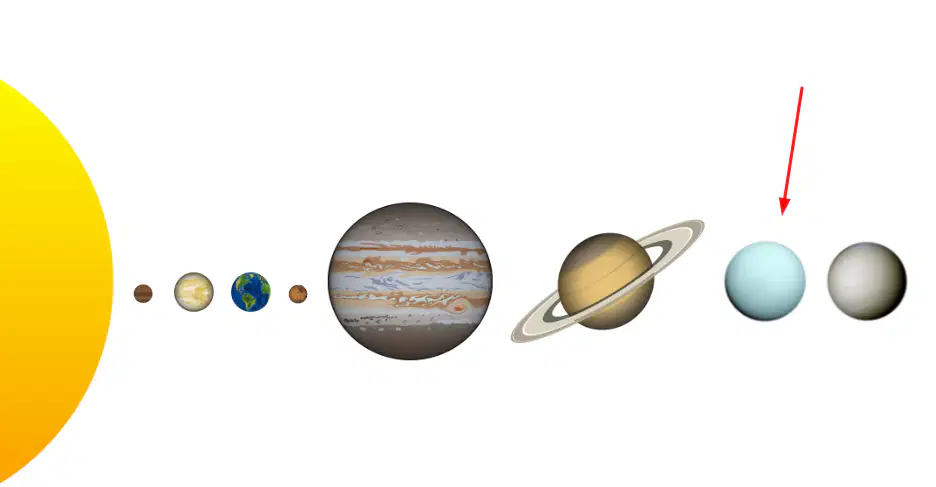
What planet is this?
(Earth, Jupiter, Mars, Mercury, Neptune, Saturn, Uranus, Venus)
(a)

What planet is this?
(Earth, Jupiter, Mars, Mercury, Neptune, Saturn, Uranus, Venus)
(a)

What planet is this?
(Earth, Jupiter, Mars, Mercury, Neptune, Saturn, Uranus, Venus)
(a)

What planet is this?
(Earth, Jupiter, Mars, Mercury, Neptune, Saturn, Uranus, Venus)
(a)

What planet is this?
(Earth, Jupiter, Mars, Mercury, Neptune, Saturn, Uranus, Venus)
(a)

What planet is this?
(Earth, Jupiter, Mars, Mercury, Neptune, Saturn, Uranus, Venus)
(a)

What is this?
(a)
Point to a galaxy
Point to a comet
Point to a constellation
Point to Jupiter
Point to Neptune
Point to Saturn
Point to Uranus
Point to Mercury
Point to Mars
Point to Earth
Point to Venus
Organize these planets into the right categories
Mercury
Venus
Earth
Mars
Jupiter
Saturn
Uranus
Neptune
(a) is a rocky planet. It is the smallest planet in the solar system. It is made of metals. It doesn't have any rings or moons.
(a) is a rocky planet. It is the hottest planet in the solar system. It is made of metals. It doesn't have any rings or moons.
(a) is a rocky planet. It is the only planet with life on it. It is made of metals. It doesn't have rings. It has one moon and a lot of water.
(a) is a rocky planet. It is made of metals. It doesn't have rings. It has red rocks and 2 moons. I doesn't have rings.
(a) is a gas planet. It is the biggest planet in the solar system. It has big storms. It has 79 moons. It has the biggest moon.
(a) is a gas planet. It is the second biggest planet in the solar system. It has 7 big rings. It has more than 150 moons.
(a) is a gas planet. It is the coldest planet in the solar system. It has 27 moons and 4 rings. The rings are difficult to see.
(a) is a gas planet. It is the furthest planet from the sun. It has 14 moons and 6 rings. The rings are difficult to see.
Where does the Earth receive the most direct radiation from the sun?
Correctly label the 3 cells of atmospheric circulation.
Polar
Hadley
Ferrel
Layer we live in and breathe
(a)
Outermost layer
(a)
Thinnest layer due to size in altitude
(a)
High concentration of UV‐absorbing ozone
(a)
Layer that contains the ionosphere layers
(a)
Molecules here can escape into outer space
(a)
Where almost all weather occurs
(a)
Where magnetic storms called auroras occur
(a)
Meteors burn up
(a)
Hottest Layer 100s of *
(a)
Most thick (due to concentration of air molecules)
(a)

Name 1-5 layers of the Atmosphere.
1 (a)
2 (b)
3 (c)
4 (d)
5 (e)
Which layer of the atmosphere do we live in?
Thermosphere
Mesosphere
Stratosphere
Troposphere
Of these, which layer of has satellites?
Thermosphere
Mesosphere
Stratosphere
Troposphere
Which is the shortest or thinnest layer in the atmosphere?
Thermosphere
Mesosphere
Stratosphere
Troposphere
Of these, what is the thickest layer in the atmosphere?
Thermosphere
Mesosphere
Stratosphere
Troposphere
Which layer of the atmosphere contains clouds and weather?
Therosphere
Mesosphere
Stratosphere
Troposphere

Which gas makes up most of the air? (click to enlarge picture)
oxygen
nitrogen
water vapor
argon
Which layer of the atmosphere has the most water vapor?
Thermosphere
Mesosphere
Stratosphere
Troposphere
Which layer of the atmosphere would you find the ozone layer?
Thermosphere
Mesosphere
Stratosphere
Troposphere

Which layer of the atmosphere do meteoroids usually burn up in?
Thermosphere
Mesosphere
Stratosphere
Troposphere

Which layer of the atmosphere is the aurora borealis?
Thermosphere
Mesosphere
Stratosphere
Troposphere

Which layer of the atmosphere would you find weather balloons?
Troposphere
Stratosphere
Mesosphere
Thermosphere
Exosphere
What does the ozone layer in the Stratosphere do?
Block all UV radiation
Blocks some UV radiation
Makes us sick
Causes pollution
Of these, which layer has the lowest air pressure?
Thermosphere
Mesosphere
Stratosphere
Troposphere

What property is used to divide the layers of the atmosphere? (click to enlarge picture)
Air pressure
Temperature
Type of gas

How does temperature in the Troposphere change as the altitude increases? (click to enlarge picture)
temperature increases
temperature decreases
temperature stays the same
Put the layers of the atmosphere in order
Exosphere
Thermosphere
Mesosphere
Stratosphere
Troposphere
How much of our atmosphere is oxygen?
1%
5%
21%
50%
78%

What would be the effect on the particles in the animation if more heat is supplied to the system?
They would slow down.
They would stop moving completely.
They would speed up.
There would be no effect.
What gas makes up 78% of the atmosphere?
Oxygen
Nitrogen
Ozone
Carbon Dioxide
Where is most of the water vapor in our atmosphere?
Troposphere
Stratosphere
Mesosphere
Thermosphere
Exosphere
Which layer of the atmosphere helps us by burning up incoming meteors?
exosphere
troposphere
mesosphere
thermosphere
Which layer of the atmosphere contains the ozone layer?
troposphere
thermosphere
methosphere
stratosphere
What does the ozone layer do for us?
keeps us warm
blocks UV rays from getting to Earth
keeps oxygen in
burns up meteors
Where are clouds located?
mesosphere
Which layers of the atmosphere have a temperature that INCREASES as the altitude increases? Check all that apply.
troposphere
stratosphere
mesosphere
thermosphere
Reorder the following layers from the Earth's surface up:
troposphere
stratosphere
mesosphere
thermosphere
exosphere
The auroras occur in this layer
Troposphere
Mesosphere
Thermosphere
Exosphere
Stratosphere
The boundary between the troposphere and the stratosphere is the (a) .
Where is the Karman line located?
troposphere
stratosphere
mesosphere
thermosphere
exosphere
Challenge Q! Roughly where does the troposphere end?
5 km up
10 km up
15 km up
20 km up
100 km up
Which layers of the atmosphere does the ionosphere overlap with? Select all that apply.
troposphere
stratosphere
mesosphere
thermosphere
exosphere
What two components make up the magnetosphere? Select TWO answers.
solar wind
ionosphere
thermosphere
auroras
Earth's magnetic field
Which layer has the coldest temperatures?
troposphere
stratosphere
mesosphere
thermosphere
exosphere
Where does the Earth receive the most direct radiation from the sun?
Correctly label the 3 cells of atmospheric circulation.
Polar
Hadley
Ferrel
Label the layers of the Earth's atmosphere
thermosphere
troposphere
mesosphere
exosphere
stratosphere
Match the labels and characteristics to the correct layer.
satellites
northern/southern lights
meteorites
ozone
weather
exosphere
troposphere
stratosphere
Mesosphere
thermosphere

Launch date:2006
Providing an inventory of current and recent volcanic and surface activity.
Confirmed the presence of water vapor coming from Volcanoes -by studying the rocks.
Maven
Veritas
Mariner 3
Freedom 7

Launch: 6 June – 23 June 2029
Investigated the chemical composition of Venus’s atmosphere.
Identified potential plate tectonics.
Maven
Huygens
DAVINCI
Galileo

Launch: 2024
Goal: Are there environments on Europa capable of supporting life?
Investigate Europa’s Composition.
Europa Clipper
DAVINCI
Mars Pathfinder
Perseverance
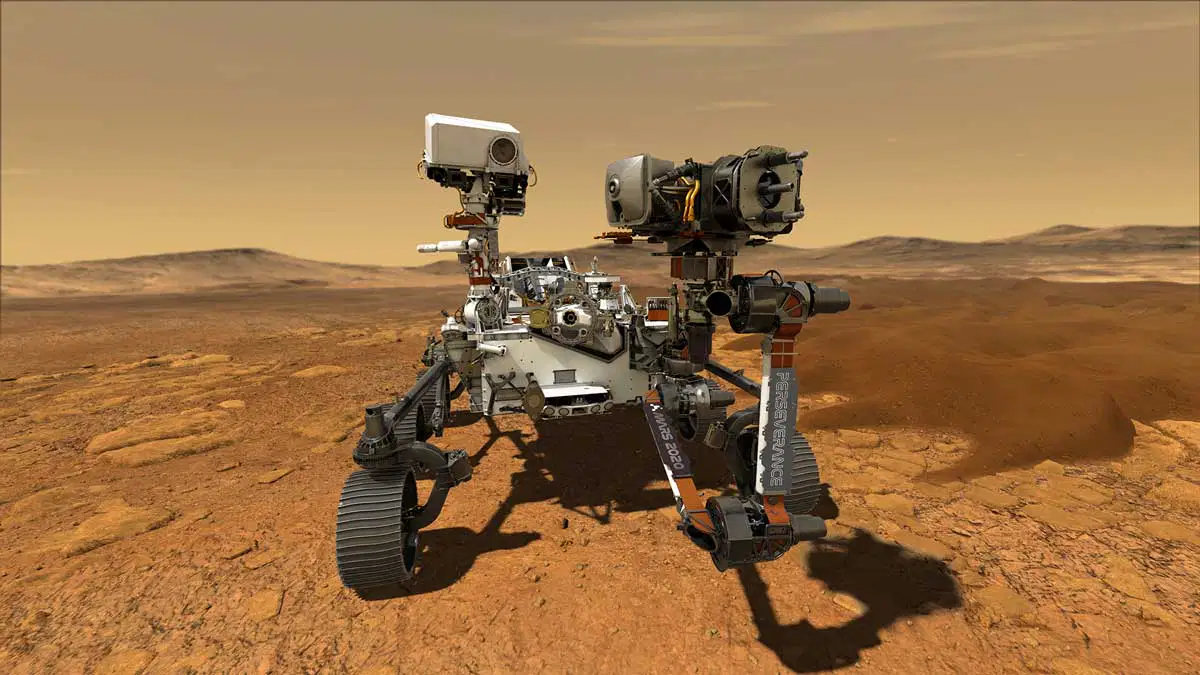
Launch: 2018 Land:2021
Explore a geologically diverse landing site.
Gather rock and soil samples that could be returned to Earth by a future NASA mission.
Opportunity
Curiosity
Perseverance
Spirit
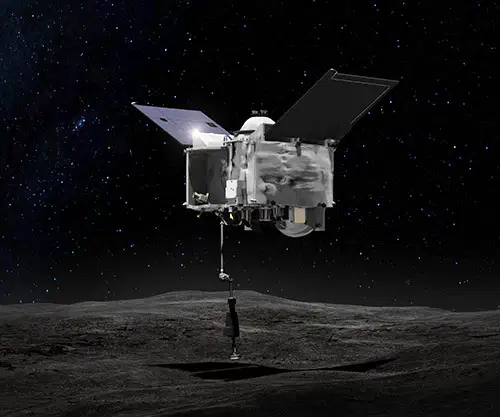
Launch: 2020
Goal: The goal of the mission is to collect a sample from near-Earth asteroid 101955 Bennu and then bring the sample to Earth.
Importance of sample: It is carbonaceous
Mariner 9
OSIRIS-REX
Rosetta/Philae
Phoenix
What is a meteor?
A smaller rock that burns up in the Earth's atmosphere. Also known as a shooting star.
A man-made object that is launched into space to collect data about the universe.
A huge space rock that is covered with ice and orbits the Earth
A large space rock that collides with the Earth's surface and causes significant damage.
What is a meteoroid?
A type of cloud formation in the Earth's atmosphere.
A large celestial body that orbits the Earth.
A type of bird found in the Amazon rainforest.
A small space rock that is in outer space and is smaller than an asteroid.
What is a comet?
A comet is a type of star that emits light and heat.
A comet is a small planet that orbits the Earth.
A"dirty snowball" that orbits the Sun.
A comet is a meteorite that has fallen to Earth.
What is an asteroid?
A planet that is smaller than Earth
A type of meteorite that falls to the ground
A rocky object that orbits the Sun
A large icy object that orbits the Earth
Which of the following is found in the Kuiper belt beyond Neptune?
Uranus
Saturn
Mars
Pluto
Which of the following planets is Jupiter?
Which of the following planets is Venus?
Which of the following planets is Earth?
Which of the following planets is Neptune?
Match the following
Asteroid
Large space rock
Comet
Dirty Snowball
Meteor
Space rock burning in the atmosphere
Meteoroid
Small space rock (outside atmosphere)
Meteorite
Space rock that hits Earth's surface
24 hours
Day/Night
Spinning
365.25 Days
Year/Seasons
Orbit


Short revolution
Long revolution
No rings
Have rings
Terrestrial (rocky)
Made of gas
Smaller in size
Larger in size
Match the following
satellite from which vehicles can be launched
or scientific research can be conducted
space station
the tendency of a moving object to keep moving
inertia
a by-product derived from a previous product
spin off
the force that causes a spacecraft to accelerate
thrust
a machine that uses escaping gas to move
rocket
What planet is this?
(Earth, Jupiter, Mars, Mercury, Neptune, Saturn, Uranus, Venus)
(a)

