
NEW
Font size
 Worksheets
Unit #5 Review (Extra Credit)
Total questions: 25
Worksheet time: 14mins
How did the Hundred Years’ War bring change to medieval Europe?
English and French monarchs increased their powers with new
methods of warfare.
Europeans turned to the Papacy to restore the peace.
The long conflict led to the rediscovery of ancient Greek and
Roman texts.
Armed knights frequently defeated common foot soldiers,
strengthening the position of the nobility.
What role did Arab merchants play in spreading Islam to societies in Europe, Asia, and North Africa?
Arab merchants acted as secret missionaries to win over non-believers.
Arab merchants forcibly converted non-believers to Islam.
Arab merchants brought news of their religion as they traded in different areas.
Arab merchants often paid non-believers to convert to Islam.
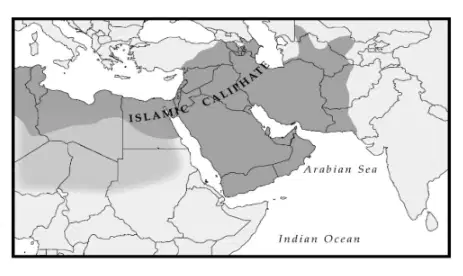
How did the location of the caliphate on the map influence trade in the
region?
Islamic rulers limited all trading to Indians and East Africans.
Byzantine merchants turned to the Red Sea for trade with Asia.
Islamic merchants served as middlemen for European and Asian
trade.
Indian rulers refused to meet European traders without Muslim escorts.
The interaction between Muslims, Jews and Christians living in Europe during the Middle Ages facilitated the diffusion of —
political rights
scientific knowledge
life threatening diseases
new ideas about government
How did Genghis Khan succeed as a conqueror?
through brilliant military strategy and organization
through conquering only empires that had become weak
through dressing his soldiers as warriors of the opposing country
through offering people the Mongol Peace if they surrendered
What happened during the Pax Mongolica?
The irrigation systems in the Tigris and Euphrates valleys were rebuilt.
A cure for the bubonic plague was developed in China.
Ideas and inventions spread with trade between Europe and Asia
Movable type, gunpowder, and the magnetic compass were invented.
What was the chief goal of the Crusades?
to spread Christianity throughout Europe, Asia, and Africa
to recover Jerusalem and the Holy Land from the Muslim Turks
to improve trade among Europe, Asia, and Africa
to force the Byzantines to become Catholics
What was one negative effect of the Crusades that has continued to the present?
weakening of the feudal nobility
trade between Europe and Asia
hostility between Muslims and Christians
strengthening
Which group was most responsible for the spread of the bubonic plague to Europe?
invaders
traders
Crusaders
French soldiers
What did the devastation caused by the bubonic plague contribute to?
a flowering of the arts in the later Middle Ages
the dominance of the Church in the later Middle Ages
the disruption and collapse of medieval society
a sense of unity among the continents affected by it
Which of the following best describes feudalism?
ensuring all people have rights and freedoms
a system without any social classes
a way to raise money for a country through taxes
a system that provides protection in exchange for loyalty
After the fall of the Roman Empire, which institution provided stability for Europe?
the manor system
the Roman Catholic Church
the Islamic Empires
monasticism
Which of the following did NOT contribute to the decline of feudalism?
political reforms in England
the Black Death
the Hundred Years' War
increased trade along the Silk Road
How did the Black Death originally get to Europe?
via trade from Asia along the Silk Road
an alien capsule from outer space
Crusaders returning from battle
bacteria in the water supply
Which of the following is NOT a positive impact of the Mongol empire?
Artistic patronage and architecture
Cultural exchange and diversity
Increased communication and trade
Religious tolerance
What was the Mongols' attitude towards different religions within their empire?
Forced conversion to their own shamanist beliefs
Indifference towards religious practices
Complete ban on practicing other religions
Tolerance and acceptance of diverse religious beliefs
Which trade route did the Mongols provide safe travels and security to?
Silk Road
Indian Ocean Trade Route
Mediterranean Sea Complex
Trans-Saharan Trade Route
When the Mongols conquered a region, they forced people to convert to a new religion.
True
False
Kublai Khan established which dynasty in China?
Yuan dynasty
Song dynasty
Tang dynasty
Sui dynasty
Where was the Golden Horde established?
China
India
Russia
Europe
This is an excerpt about the Mongolian invasions.
"The impact of the Mongolian invasions was felt across most of Asia and much of Europe where their conquests resulted in the largest land empire in history. To rule the new Mongol Empire, Genghis Khan set up a capital city at Karakorum. Mongol armies traveled both to the west and to the east. Some went as far as central Europe. Perhaps even more importantly, the Mongol conquest of central Asia and eastern Europe allowed a deadly disease, the bubonic plague to travel from its home range in western China and Mongolia to Europe along newly-restored trade routes.
Mongol forces attached the Song dynasty in the 1260s. In their attack on the Chinese, the Mongols encountered the use of gunpowder and the fire-lance. In 1279, Kublai Khan completed the conquest of the Song and set up a new Chinese dynasty, the Yuan. The effects of the Mongol invasion of China were seen far and wide.
Over time, the Mongol dynasty won the support of many Chinese people. Some came to respect the stability and prosperity that the Mongols brought. By bringing the entire Eurasian landmass under a single rule, the Mongols increased trade, especially along the Silk Road. This new trade had a major impact on Europe. The capital at Khanbalik was a magnificent city, and foreign visitors, such as Marco Polo, were impressed by its splendor. An effect of these foreign visits was to generate new interest in trade between Europe and China.
The Mongol dynasty eventually fell victim to the same problems that had plagued other dynasties: too much spending on foreign conquests, corruption at court, and growing internal instability. In 1368, the Mongol dynasty ended."
Which statement BEST summarizes the major impacts of the Mongolian invasions?
The Silk Road trading routes between China and Europe decreased positve economic relationships and caused conflicts.
The Silk Road trading routes between China and Europe increased positve economic relationships and cultural exchanges.
The Silk Road trading routes between China and Europe caused increased miltary conflicts between the nations over boundaries.
The Silk Road trading routes between China and Europe increased economic opportunites and cultural divisions.
The Sahara Trade Route helped spread what religion?
Hinduism
Christianity
Islam
Buddhism
What impact did the Mongol Empire have on the Silk Roads?
Increased bandit attacks
Improved roads and ensured safety for merchants
Limited trade to specific regions
Decreased trade and interconnectedness
How did the Crusades contribute to the expansion of networks of exchange along the Silk Roads?
Brought back fabrics and spices, contributing to the demand for luxury goods in Europe
Decreased demand for luxury goods in Europe and Africa
Increased bandit attacks
Limited trade to specific regions
How did the spread of Islam contribute to the expansion of trade in the Indian Ocean?
Decreased trade partnerships
Connected Muslim merchants to port cities across the region
Limited trade to specific regions
Increased piracy

