
 Worksheets
WH Semester Test Fall 2025
Total questions: 100
Worksheet time: 50mins
Name
Class
Date
1.
What was the main impact of the Industrial Revolution on the way goods were produced?
a)
It led to a decrease in the production of goods.
b)
It shifted from hand production to machine production.
c)
It resulted in the use of only hand production.
d)
It led to the complete elimination of factories.
2.
Which of the following advancements is attributed to ancient Indian civilization?
a)
Hexadecimal system
b)
Arabic numerals
c)
Binary system
d)
Roman numerals
3.
What was a major impact of trade routes in ancient times?
a)
Isolation of cultures
b)
Spread of goods and ideas
c)
Decline of economies
d)
Reduction of trade
4.
During the 1500s, followers of John Calvin would likely join which of the following?
a)
Monastery
b)
Synod
c)
Presbytery
d)
Congregation
5.
How did the agreement between patricians and plebeians impact the Roman Republic?
a)
Increased patrician power
b)
Elimination of plebeians
c)
Gained plebeian representation
d)
Creation of a monarchy
6.
What principle in government reflects Roman influence through checks and balances?
a)
Division of powers
b)
Absolute monarchy
c)
Direct democracy
d)
Feudal system
7.
How did the Judeo-Christian tradition support ancient Greek democratic ideas?
a)
Discouraged civic engagement
b)
Promoted autocracy
c)
Supported oligarchy
d)
Emphasized individual responsibility
8.
What does Muhammad's message to St. Catherine’s Monastery imply about Christians?
a)
They should convert to Islam
b)
They are enemies of Islam
c)
They should be protected
d)
They must leave the region
9.
What led to increased trade in the Mediterranean after 750 BCE?
a)
Standardized measurements
b)
Isolation of regions
c)
Increased piracy
d)
Decline of cities
10.
How did Buddhism influence early Japanese practices?
a)
Replaced all native beliefs
b)
Was rejected entirely
c)
Created a new religion
d)
Blended with traditional practices
11.
What was the societal impact of movable type in the mid-1400s?
a)
Increased information spread
b)
Promoted oral traditions
c)
Limited literacy
d)
Slowed down communication
12.
How did the Roman conquest of Jerusalem affect Jewish culture?
a)
Created new religions
b)
Eliminated Jewish practices
c)
Unified Jewish culture
d)
Preserved traditions
13.
What does the Jewish diaspora indicate about the Jewish people's experience?
a)
Faced many obstacles
b)
Gained political power
c)
Unified under one leader
d)
Easily adapted to new cultures
14.
What title would best describe figures like Leonardo da Vinci and Michelangelo?
a)
Famous Renaissance Artists
b)
Baroque painters
c)
Classical sculptors
d)
Medieval artists
15.
Which philosophers are foundational to Western philosophy?
a)
Aristotle and Descartes
b)
Locke and Rousseau
c)
Socrates and Plato
d)
Kant and Hegel
16.
What does the Mandate of Heaven signify about leadership?
a)
All leaders are divinely chosen
b)
Power is absolute
c)
Leadership is hereditary
d)
Unjust leaders lose authority
17.
What inventions would a book about ancient Chinese contributions most likely discuss?
a)
Gunpowder
b)
Silk production
c)
Papermaking and compass
d)
Printing press
18.
How did Confucian ideas influence Japanese government?
a)
Complete rejection of foreign ideas
b)
Cultural exchange
c)
Military dominance
d)
Isolationist policies
19.
Which innovations contributed to the Age of Exploration?
a)
Caravel and astrolabe
b)
Telegraph
c)
Submarine
d)
Steam engine
20.
What contributions are associated with Sumerian civilization?
a)
Monotheism
b)
Democratic governance
c)
City-state government
d)
Feudal systems
21.
What did Martin Luther argue against in his Ninety-Five Theses?
a)
Baptism practices
b)
Church authority
c)
Sale of indulgences
d)
Communion rituals
22.
What does the title 'Holy Roman Emperor' symbolize?
a)
Religious authority only
b)
Secular power only
c)
Unity of political and religious authority
d)
Division of church and state
23.
What was the most important feature for the development of civilization in ancient Egypt?
a)
Desert climate
b)
Nile River
c)
Trade routes
d)
Mountain ranges
24.
Why did the Renaissance first develop in cities like Florence and Venice?
a)
Rural isolation
b)
Political instability
c)
Economic and cultural centers
d)
Religious dominance
25.
What characterized people considered 'Renaissance Men'?
a)
Ignored classical learning
b)
Focused on practical skills
c)
Educated in many fields
d)
Specialized in one field
26.
Where did a person living in a civilization with fertile river valleys like the Yellow River likely reside?
a)
Ancient China
b)
Mesopotamia
c)
Indus Valley
d)
Mesoamerica
27.
What invention is most associated with the Age of Exploration?
a)
Caravel
b)
Sextant
c)
Compass
d)
Astrolabe
28.
Why were the 'untouchables' excluded from the caste system in ancient India?
a)
Religious leaders
b)
Considered outside the hierarchy
c)
High social status
d)
Warriors
29.
What was a result of trade along the Silk Road?
a)
Decline of trade
b)
Cultural exchange
c)
Isolation of cultures
d)
Uniformity of beliefs
30.
Why did Pope Gregory VII oppose lay investiture?
a)
Secular control over church leaders
b)
Promotion of church unity
c)
Encouragement of religious freedom
d)
Support for secular power
31.
What was Timbuktu known for under the Mali Empire?
a)
Political capital
b)
Center of Islamic culture
c)
Military stronghold
d)
Agricultural hub
32.
What was one major achievement of Ferdinand and Isabella?
a)
Promoting religious tolerance
b)
Expanding trade routes
c)
Establishing democracy
d)
Completing the Reconquista
33.
How did gunpowder contribute to European conquests in the New World?
a)
Facilitated trade agreements
b)
Promoted peaceful exploration
c)
Limited military use
d)
Gave military advantages
34.
How did Marco Polo influence European exploration?
a)
Motivated trade route exploration
b)
Discouraged exploration
c)
Promoted land travel
d)
Focused on cultural exchange
35.
What luxury goods did China primarily export along the Silk Road?
a)
Tea and spices
b)
Metals and minerals
c)
Ceramics and pottery
d)
Silk and textiles
36.
What was the end result of the Crusades related to Jerusalem?
a)
Total Muslim exclusion
b)
Muslims controlled with Christian access
c)
Division of the city
d)
Complete Christian control
37.
What does the fourth of Buddhism’s Four Noble Truths explain?
a)
Following the eightfold path ends suffering
b)
Attachment is beneficial
c)
Suffering is inevitable
d)
Desire is the only cause of suffering
38.
How did joint-stock companies encourage international trade?
a)
Reduced financial risk
b)
Increased individual risk
c)
Promoted local trade
d)
Limited trade opportunities
39.
Why did Ferdinand and Isabella support Columbus’s voyage?
a)
To spread Christianity
b)
To establish colonies
c)
Find a trade route to Asia
d)
To explore new lands
40.
What figures would a report about ancient Greek contributions to mathematics likely discuss?
a)
Hippocrates and Herodotus
b)
Euclid and Pythagoras
c)
Plato and Archimedes
d)
Aristotle and Socrates
41.
What was the primary energy source that revolutionized transportation and manufacturing during the Industrial Revolution?
a)
Solar power
b)
Wind power
c)
Steam power
d)
Nuclear power
42.
What was the main reason for the shift from mercantilism to capitalism during the Industrial Revolution?
a)
The rise of factories and cities led to pollution.
b)
The Industrial Revolution led to a shift in economic thinking.
c)
The Industrial Revolution led to the exploitation of child labor.
d)
The Industrial Revolution led to the development of new energy sources.
43.
Who was Toussaint Louverture, and what role did he play in the Haitian Revolution?
a)
He was a French general who fought against the Haitian revolutionaries.
b)
He was a slave who became a prominent general and led the fight for independence.
c)
He was a Spanish governor who supported the Haitian revolutionaries.
d)
He was a British admiral who helped the French regain control of Saint-Domingue.
44.
What was the main reason for the Glorious Revolution in England?
a)
King James II's attempts to impose Catholicism on the nation.
b)
The English people wanted to establish a republic.
c)
The English people were unhappy with the British government's policies.
d)
King James II's attempts to create a new society based on liberty, equality, and fraternity.
45.
According to the text, what was one of the key ideas that Enlightenment thinkers emphasized?
a)
The importance of following tradition.
b)
The need for a strong monarchy.
c)
The value of reason and skepticism.
d)
The power of religion in society.
46.
What was the main idea behind the concept of divine right rule?
a)
Monarchs believed their power came from the people they ruled.
b)
Monarchs believed their power came from God.
c)
Monarchs believed their power came from their wealth.
d)
Monarchs believed their power came from their military strength.
47.
What was a significant economic change during the rise of Western civilization in the 15th century?
a)
Barter system
b)
Mercantilism
c)
Socialism
d)
Feudalism
48.
What was a key driver of European expansion during the Age of Exploration?
a)
The desire to spread Christianity to new lands.
b)
The pursuit of wealth and resources.
c)
The need to escape religious persecution in Europe.
d)
The desire to establish diplomatic relations with other nations.
49.
What time in the past does "prehistoric" refer to?
a)
before the invention of writing
b)
before the Neolithic Age
c)
before the establishment of civilizations
d)
before the appearance of Homo sapiens
50.
Which of the following distinguished the cities of the Indus Valley?
a)
Cities were planned and had their own plumbing and sewage systems.
b)
Cities were laid down without thinking, forming a jumble of streets.
c)
Cities were constantly at war despite huge defensive structures.
d)
Cities were destroyed by invaders in horse-drawn chariots.
51.
Why were Egyptian farmers more fortunate than the farmers of Mesopotamia?
a)
The Tigris and Euphrates frequently changed course; the Nile didn't.
b)
The Nile flooded at regular intervals; the Tigris and Euphrates flooded irregularly.
c)
The Nile flowed north, the Tigris and Euphrates flowed southeast.
d)
The Nile flooded more deeply than the Tigris and Euphrates.
52.
Hinduism and Buddhism have a common belief in
a)
the sacredness of all life
b)
many gods.
c)
the caste system
d)
reincarnation.
53.
What necessity caused the Assyrians to develop a strong army?
a)
Assyria glorified military strength.
b)
To obtain power in Assyria, a ruler needed military conquests.
c)
With no natural barriers, Assyria had to defend itself from frequent attacks
d)
The army was needed to collect taxes from new territories.
54.
How did Hellenistic sculpture differ from classical sculpture?
a)
It was more realistic and emotional
b)
It was made from bronze, not marble
c)
It was colossal in size.
d)
It emphasized the values of order, balance, and proportion
55.
The emperor's purpose for dividing the Roman Empire was ___.
a)
to decrease the authority of the Senate.
b)
to protect the west from Greek influences.
c)
to make control of the Empire more efficient
d)
to separate groups whose conflicts threatened unity.
56.
Which of the following was invented in India?
a)
the phonetic alphabet
b)
modern numerals
c)
the civil service system
d)
paper
57.
How did Muslim scholars help preserve European culture?
a)
by halting 100 miles from Paris instead of conquering it
b)
by exempting European scholars from paying taxes
c)
by building the Great Mosque at Córdoba
d)
by translating works of Aristotle and Plato
58.
What was the main difference between the Sunni and Shi'a branches of Islam?
a)
The Shi'a did not outwardly oppose Umayyad rule.
b)
Sunni named their caliphate after Muhammad's daughter.
c)
Shi'a believed that the caliph needed to be a relative of Muhammad.
d)
Sunni wanted to return to the elective system of choosing a caliph.
59.
How did European colonization impact the demographics of newly colonized lands?
a)
It led to a decrease in the population of European settlers.
b)
It resulted in the displacement or extermination of indigenous peoples.
c)
It caused a significant increase in the birth rate among indigenous populations.
d)
It had no significant impact on the demographics of colonized lands.
60.
What is cultural diffusion and how did it play a role in European colonization?
a)
The spread of European diseases to new lands.
b)
The exchange of goods and services between European nations and colonized territories.
c)
The transmission of ideas, customs, and technologies from one society to another.
d)
The development of new agricultural techniques in colonized lands.
61.
What was a key motivation for European nations to establish colonies during the Age of Exploration?
a)
To spread democracy and human rights.
b)
To create a global network of trade routes.
c)
To escape religious persecution.
d)
To establish a unified global government.
62.
How did European colonization affect the cultural landscape of colonized regions?
a)
It led to the complete eradication of indigenous cultures.
b)
It resulted in a blending of European and indigenous cultures.
c)
It had no significant impact on the cultural landscape.
d)
It caused a complete separation between European and indigenous cultures.
63.
What is an example of how European colonization led to the spread of European culture?
a)
The introduction of new agricultural techniques.
b)
The adoption of indigenous languages by European settlers.
c)
The spread of European languages and religions.
d)
The development of new forms of art and music.
64.
What was a consequence of the competition for resources between European powers during the Age of Exploration?
a)
Increased cooperation and alliances between European nations.
b)
The development of peaceful trade agreements.
c)
The spread of democratic ideals.
d)
Conflict and tension between European powers.
65.
What is one way in which the legacy of European colonialism continues to shape the world today?
a)
The dominance of European languages in global communication.
b)
The widespread adoption of European political systems.
c)
The complete disappearance of indigenous cultures.
d)
The establishment of a unified global government.
66.
What is one example of how European colonization led to the spread of European culture, as mentioned in the text?
a)
The introduction of new agricultural techniques.
b)
The adoption of indigenous languages by European settlers.
c)
The spread of European languages and religions.
d)
The development of new forms of art and music.
67.
What did artists like Leonardo da Vinci and Michelangelo focus on in their art?
a)
Making their art look realistic.
b)
Making their art look simple.
c)
Making their art look abstract.
d)
Making their art look colorful.
68.
What did Niccolò Machiavelli write a book about?
a)
How to be a good writer.
b)
How to be a good ruler.
c)
How to be a good artist.
d)
How to be a good scientist.
69.
Which religious leader started the Protestant Reformation?
a)
John Calvin
b)
Martin Luther
c)
King Henry, VIII
d)
William Tyndale
70.
Which event marked the beginning of the Protestant Reformation?
a)
The Council of Trent
b)
The Edict of Nantes
c)
Martin Luther's 95 Theses
d)
The Peace of Augsburg
71.
What was a major cultural development during the Renaissance?
a)
Decline of literacy
b)
Rise of feudalism
c)
Isolationism
d)
Humanism
72.
Which of the following was a key political change in Europe during the 17th century?
a)
Feudalism
b)
Democracy
c)
Oligarchy
d)
Absolute monarchy
73.
What was the primary motivation for European exploration during the Age of Discovery?
a)
Scientific research
b)
Search for new trade routes
c)
Religious conversion
d)
Colonization of Africa
74.
Which empire was known for its significant cultural and scientific contributions during the Golden Age?
a)
Mongol Empire
b)
Byzantine Empire
c)
Roman Empire
d)
Ottoman Empire
75.
What was the impact of the Columbian Exchange?
a)
End of exploration
b)
Cultural exchange
c)
Isolation of continents
d)
Decline of trade
76.
Which social class emerged as a result of the economic changes in Western Europe during the 16th century?
a)
Peasantry
b)
Clergy
c)
Merchant class
d)
Nobility
77.
What was a significant political conflict in England during the 17th century?
a)
Glorious Revolution
b)
War of the Roses
c)
English Civil War
d)
Thirty Years' War
78.
Which cultural movement emphasized reason and individualism in the 18th century?
a)
Renaissance
b)
Romanticism
c)
Baroque
d)
Enlightenment
79.
What was the significance of the Magna Carta in English history?
a)
It established a system of universal suffrage.
b)
It led to the immediate abolition of the monarchy.
c)
It limited the king's power and established certain rights for the nobility.
d)
It granted complete independence to the American colonies.
80.
Which Enlightenment thinker argued that the government should be based on the will of the people?
a)
John Locke
b)
Adam Smith
c)
Voltaire
d)
Jean-Jacques Rousseau
81.
What was one of the main impacts of the Enlightenment on economic institutions?
a)
The rise of communism.
b)
The development of a strong central government.
c)
The promotion of free market principles.
d)
The decline of trade and commerce.
82.
Which of the following is considered a natural right according to Enlightenment thinkers?
a)
Fame
b)
Power
c)
Wealth
d)
Liberty
83.
What is the social contract?
a)
A legal document
b)
A type of government
c)
An agreement between citizens and government
d)
A philosophical theory
84.
Who is associated with the idea of 'consent of the governed'?
a)
Religious leaders
b)
Modern politicians
c)
Enlightenment thinkers
d)
Medieval kings
85.
What did Enlightenment thinkers believe about government authority?
a)
It should be hereditary
b)
It should be based on consent
c)
It should be absolute
d)
It should be temporary
86.
Which Enlightenment thinker is known for his ideas on republicanism?
a)
Montesquieu
b)
Locke
c)
Hobbes
d)
Rousseau
87.
What was a common fear among some Enlightenment thinkers regarding democracy?
a)
Mob rule
b)
Too many laws
c)
Too much freedom
d)
Lack of representation
88.
What document recognized the natural rights of citizens in the United States?
a)
The Articles of Confederation
b)
The Bill of Rights
c)
The Declaration of Independence
d)
The Constitution
89.
What was the Enlightenment also referred to as?
a)
The Age of Kings
b)
The Age of Revolution
c)
The Age of Enlightenment
d)
The Age of Reason
90.
a political and social philosophy that promotes individual rights, civil liberties, democracy, and free enterprise
a)
democracy
b)
liberalism
c)
naturalism
d)
communism
91.
the philosophical belief that everything arises from natural properties and causes, and supernatural or spiritual explanations are excluded or discounted.
a)
democracy
b)
liberalism
c)
naturalism
d)
communism
92.
What was one of the key differences between the American Revolution and the French Revolution?
a)
The American Revolution was a fight for independence, while the French Revolution aimed to create a new society based on liberty, equality, and fraternity.
b)
The American Revolution was inspired by Enlightenment ideas, while the French Revolution was not.
c)
The American Revolution was successful, while the French Revolution was not.
d)
The American Revolution was fought against the British, while the French Revolution was fought against the Spanish.
93.
What was the main goal of the Congress of Vienna?
a)
To establish a new republic in France.
b)
To promote nationalist movements throughout Europe.
c)
To restore order and stability to Europe after the Napoleonic Wars.
d)
To create a new society based on liberty, equality, and fraternity.
94.
What was the main reason for the Glorious Revolution?
a)
King James II's attempts to strengthen the monarchy's power at the expense of Parliament.
b)
The English people's desire for a new king.
c)
The desire to establish a Catholic dynasty in England.
d)
The fear of a French invasion.
95.
What was the outcome of the Glorious Revolution?
a)
The establishment of a republic in England.
b)
The strengthening of the monarchy's power.
c)
The establishment of a constitutional monarchy.
d)
The return of King James II to the throne.
96.
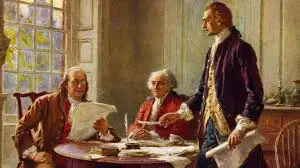
Which term best describes the image below?
a)
American Revolution
b)
Declaration of Independence
c)
Industrial Revolution
d)
Representative Government
97.
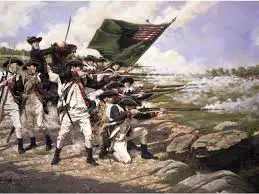
Which term best describes the image below?
a)
American Revolution
b)
Declaration of Independence
c)
Industrial Revolution
d)
Representative Government
98.
What was the main obstacle that prevented the Caracas revolutionaries from expanding their power inland in Venezuela?
a)
The lack of support from the Creole elite in the interior.
b)
The strong presence of the Spanish military in the interior.
c)
The harsh terrain and difficult travel conditions.
d)
The Llaneros, mixed-race cowboys who supported the Spanish king.
99.
What was the main reason for the Haitian Revolution?
a)
The French government's refusal to grant rights to enslaved people in Saint-Domingue.
b)
The desire of the French to gain control of the island's resources.
c)
The desire of the Spanish to conquer Saint-Domingue.
d)
The desire of the British to establish a colony in the Caribbean.
100.
What was the significance of the Haitian Revolution?
a)
It was the only slave rebellion that led to the establishment of a state free from slavery.
b)
It was the first successful revolution in the Americas.
c)
It was the first time a European power was defeated by a colonial force.
d)
It was the first time a black nation was established in the Americas.
100 %

