
 Worksheets
PLTW semester 1
Total questions: 147
Worksheet time: 3hrs 19mins
An object at rest will remain at rest unless acted on by an unbalanced force.
Newtons first law
Newtons second law
Newtons third law
Newtons fourth law
Acceleration is produced when a force acts on an object. The greater the mass of the object, the greater the amount of force needed to accelerate the object.
Force=Mass x Acceleration
Newtons first law
Newtons second law
Newtons third law
Newtons fourth law
For every action there is an equal and opposite reaction is Newtons ____________ law.
First
Second
Thrid
Fourth
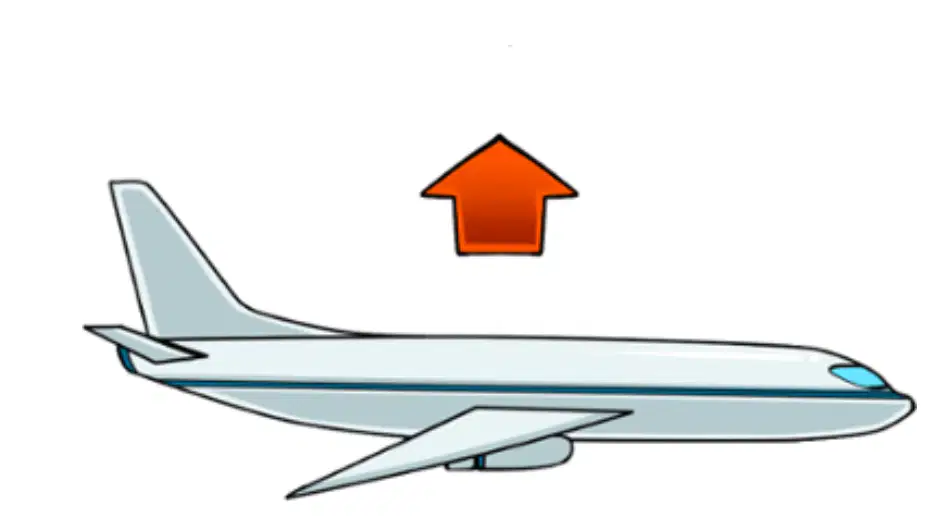
What force is this?
(a)
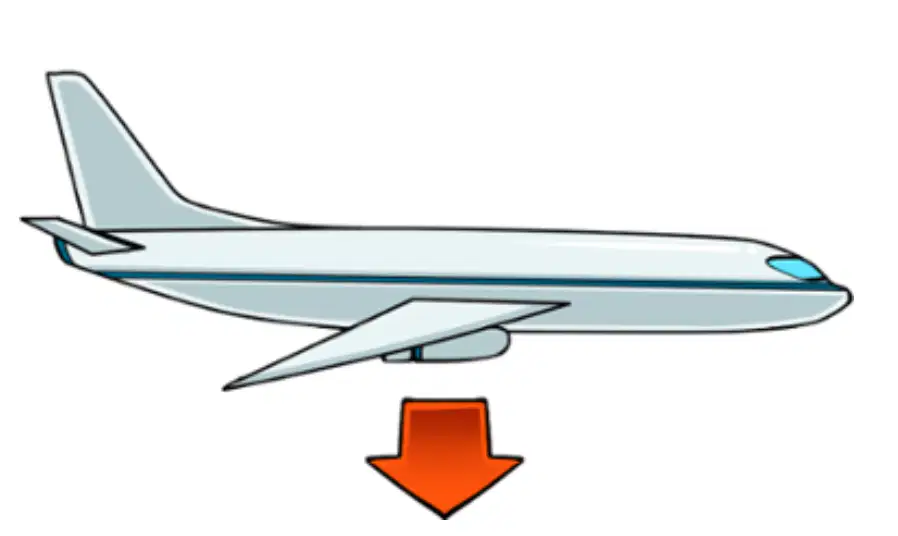
What force is this?
(a)
The part on an airplane that raises and lowers the wings, causing the aircraft to roll.
Wings
Ailerons
Cockpit
Yaw
The force that directly opposes the weight of an aircraft and holds the aircraft in the air.
Lift
Thrust
Drag
Weight
What are the forces that act on an aircraft (select all that apply)
Lift
Weight
Drag
People
To drive or cause to move forward
stop
shake
Propel
roll
A push or pull on an object.
Force
Gravity
Unbalanced forces
Friction

The picture represents which of the following?
Lift
Drag
Thrust
Weight

Lift
Drag
Thrust
Weight
Name and explain the three terms that describe how an airplane moves in three dimensions.
Up, Down, Left,Right
Yaw,Brick,Roll
Yaw,up,down
Yaw,Pitch,Roll

Describe the direction of the forces—lift, drag, thrust, and weight—in the quadcopter.
Lift and Drag
Weight and Thrust
Lift and Weight
Weight and Drag

Which city is North of South Houston?
La Porte
Aldine
Hedwig Village
Pasadena

What are the interstate Highways represented on the map?
610,290,90,59
610,45,69,10
240,69,55,40
290,240,55,59
How many forces of flight affect an airplane?
2
4
5
8
Which flight pulls a plane down to the ground?
drag
thrust
lift
weight
Which force counters weight (or moves the plane up)?
drag
thrust
lift
weight
Which force moves the plane forward?
drag
thrust
lift
weight
The rotation when one wing is raised and the other wing is lowered is
pitch
roll
yaw
The left to right movement of an airplane's nose is
pitch
roll
yaw
The up or down movement of an airplane's nose is
pitch
roll
yaw
The weight force of an airplane is because of
air resistance
gravity
wind
the power of the engine
Bernoulli's Principle as it applies to an airplane's wings creates
drag
thrust
lift
weight
When lift and weight are equal, a plane will
turn left or right
stay at the same height
ascend (rise)
descend (drop)

Name the motion illustrated by the aircraft image.
Pitch
Yaw
Roll
Bend

Name the motion illustrated by the aircraft image.
Pitch
Yaw
Roll
Bend
Name the motion illustrated by the aircraft image.
Pitch
Yaw
Roll
Bend
Name the motion illustrated by the aircraft image.
Pitch
Yaw
Roll
Bend
Name the motion illustrated by the aircraft image.
Pitch
Yaw
Roll
Bend
Name the motion illustrated by the aircraft image.
Pitch
Yaw
Roll
Bend
Name the motion illustrated by the aircraft image.
Pitch
Yaw
Roll
Bend
Name the motion illustrated by the aircraft image.
Pitch
Yaw
Roll
Bend

Name the motion illustrated by the aircraft image.
Pitch
Yaw
Roll
Bend
Name the motion illustrated by the aircraft image.
Pitch
Yaw
Roll
Bend
Aeronautical charts contain the information pilots need to navigate an aircraft.
What information is shown on these charts? Select all that apply.
Weather conditions
Large landmarks visible from the air
Natural topography
Airspace and airports
Torque is __
A forward motion force
A twisting force
A backward motion force
How many axes does an object in space use? (Hint, these help describe the attitude of the object)
1
2
3
Which of Newton's laws states that an object at rest will remain at rest?
1st
2nd
3rd
What type of chart shows an enhanced map that pilots use when flying? It contains topography, hazards, navigation routes, airspace, and airports.
Cardinal directions
Topography
Aeronautical chart
Compass rose
The air or sky above a country that is considered to belong to that country.
Airspace
Cardinal directions
Compass rose
Topography
The person who sets the course or direction for a vehicle or trip.
Pilot
Navigator
Aircraft Dispatcher
Sextant
When picking checkpoints, what must be considered?
Easily seen and recognized from the plane
They have to be cities
They have to be landforms
They have to be roads
Bernoulli's Principle is used to explain the concept of _____.
lift
chemical reactions
the engineering design process
None of these things
If the pressure is higher above the wing and lower below the wing, what will the airplane do?
lift
sink
Neither lift or sink
If the pressure is lower above the wing and higher below the wing, what will the airplane do?
lift
sink
Neither lift or sink


An object at a rest will not move until acted upon by.....
The Jedi Force
a Balanced Force
an Unbalanced Force
a Force of Nature
Which term below is used to describe a measure of the curvature of the airfoil?
Airfoil
Camber
Wing
Chord
Which term below can be described as a part with a flat or curved surface specifically designed to keep an aircraft in the air?
Airfoil
Camber
Wing
Cockpit
Which term below can be described as a part with a flat or curved surface specifically designed to keep an aircraft in the air?
Airfoil
Camber
Wing
Cockpit

The force created by an airfoil moving through the atmosphere
Lift
Weight
Thrust
Drag

An aircraft's tail group. Includes the rudder, elevators, horizontal and vertical stabilizers
Wing
Fuselage
Empennage
Horizontal stabilizer
Vertical stabilizer
An aircraft's tail group. Includes the rudder, elevators, horizontal and vertical stabilizers
Wing
Fuselage
Empennage
Horizontal stabilizer
Vertical stabilizer

The main lifting surface of an airplane
Wing
Fuselage
Empennage
Horizontal stabilizer
Vertical stabilizer

The fixed part of a horizontal airfoil that controls the pitch of an aircraft
Wing
Fuselage
Empennage
Horizontal stabilizer
Vertical stabilizer

The fixed part of a vertical airfoil that controls the yaw of an aircraft
Wing
Fuselage
Empennage
Horizontal stabilizer
Vertical stabilizer
The fixed part of a vertical airfoil that controls the yaw of an aircraft
Wing
Fuselage
Empennage
Horizontal stabilizer
Vertical stabilizer
The fixed part of a horizontal airfoil that controls the pitch of an aircraft
Wing
Fuselage
Empennage
Horizontal stabilizer
Vertical stabilizer

An aircraft's main body structure housing the flight crew, passengers, and cargo
Wing
Fuselage
Empennage
Horizontal stabilizer
Vertical stabilizer
An aircraft's main body structure housing the flight crew, passengers, and cargo
Wing
Fuselage
Empennage
Horizontal stabilizer
Vertical stabilizer
The front-most part of the wing
Trailing edge
Leading edge
Airfoil
Landing gear
Propeller
The front-most part of the wing
Trailing edge
Leading edge
Airfoil
Landing gear
Propeller

Supports the aircraft when it is not in the air, allowing it to take off, land, and taxi on the ground without damage
Trailing edge
Leading edge
Airfoil
Landing gear
Propeller
Supports the aircraft when it is not in the air, allowing it to take off, land, and taxi on the ground without damage
Trailing edge
Leading edge
Airfoil
Landing gear
Propeller
The shape of the wing when looking at its profile
Trailing edge
Leading edge
Airfoil
Landing gear
Propeller
The shape of the wing when looking at its profile
Trailing edge
Leading edge
Airfoil
Landing gear
Propeller
The shape of the wing when looking at its profile
Trailing edge
Leading edge
Airfoil
Landing gear
Propeller
The shape of the wing when looking at its profile
Trailing edge
Leading edge
Airfoil
Landing gear
Propeller
The shape of the wing when looking at its profile
Trailing edge
Leading edge
Airfoil
Landing gear
Propeller
The rear-most part of the wing
Trailing edge
Leading edge
Airfoil
Landing gear
Propeller
The rear-most part of the wing
Trailing edge
Leading edge
Airfoil
Landing gear
Propeller

A device for propelling an aircraft that has blades on an engine-driven shaft and that, when rotated, produces thrust
Trailing edge
Leading edge
Airfoil
Landing gear
Propeller
A device for propelling an aircraft that has blades on an engine-driven shaft and that, when rotated, produces thrust
Trailing edge
Leading edge
Airfoil
Landing gear
Propeller

A rocket will remain on the launch pad until an unbalanced force is exerted on the rocket, propelling it upward.
True
False

The amount of force exerted on the rocket depends on how much air is pumped inside the rocket.
True
False

For every action force, there is an equal and opposite reaction force.
Newton's First Law
Newton's Second Law
Newton's Third Law
Gravitational Force

As your rocket falls back to Earth, the parachute creates
strong gravitational force
Newton's 2nd law
Newton's 1st law
air resistance

When the rocket launches, the water inside the rocket applies a force downward to the launchpad, and the the launchpad applies a force upward to the...
air
grass
rocket
string
What two forces slow a rocket down as it is being launched?
Thrust & Lift
Weight & Drag

I want to get the most thrust from my rocket. What kind of nozzle do I need?
A narrow nozzle
A wide nozzle
It doesn't matter
The nose cone of the rocket is shaped to...
Increase thrust
Decrease drag
Increase drag
The nose cone of the rocket is shaped to...
Increase thrust
Decrease drag
Increase drag
When the rocket engine is falling back down towards earth it is in...
Air resistance
Free fall
Velocity
Why is it important to have fins on your rocket?
They stabilize the rocket
The reduce drag
They evenly distributes the weight
Why is it important to have fins on your rocket?
They stabilize the rocket
The reduce drag
They evenly distributes the weight
Why is it important to have fins on your rocket?
They stabilize the rocket
The reduce drag
They evenly distributes the weight
Which rocket component reduces drag?
nose cone
streamer
Which rocket component provides thrust?
engine
nose cone
launch lug
fin
Which rocket component provides stability?
fin
streamer
nose cone
shockcord
What is the function of the nose cone?
to hold the nose cone to the body tube
provides thrust
provides stability
increases drag
reduces drag
What are the function of the fins?
to hold the nose cone to the body tube
provides thrust
provides stability
to hold the rocket straight
increases drag
What are the function of the fins?
to hold the nose cone to the body tube
provides thrust
provides stability
to hold the rocket straight
increases drag
What is the function of the engine?
to hold the nose cone to the body tube
provides thrust
provides stability
to hold the rocket straight
increases drag
The nose cone of the rocket is shaped to...
Increase thrust
Decrease drag & help provide stability
Increase drag
Which of these variable can you NOT control?
The amount of fuel in the rocket
The weight of the rocket
The amount of wind
The length of the rocket
Which of these variable can you NOT control?
The amount of fuel in the rocket
The weight of the rocket
The amount of wind
The length of the rocket
When did the first person walk on the moon?
1965
1969
1973
1976
Which rocket component provides stability?
fin
streamer
nose cone
shockcord
What is the fuel of a rocket called?
Rocket Fuel
Jet Fuel
Gas
Propellent
Which scientist helped launch the Saturn rocket for the US?
Einstein
Goddard
Kline
Von Braun
What is the highest point in a rockets trajectory called?
Apendix
Apple
Apogee
Apologize
What is the highest point in a rockets trajectory called?
Apendix
Apple
Apogee
Apologize
The device used to measure how high an object travels is called an
Altimeter
Pedometer
Altitude Meter
Altituderer
A small object that orbits a larger object is called a(n)
satellite
probe
orbiter
round-a-bouter
A small object that orbits a larger object is called a(n)
satellite
probe
orbiter
round-a-bouter
What happened to the first rocket Homer and his friends launched?
It blew up and wrecked the fence
It traveled 5 miles
It disappeared into the sky
What did Homer and his friend do to try to earn money to buy metal for the rocket?
Ask their parents for money
Have a bake sale
Steal the metal from store
Took apart the railroad tracks to cash in for money
What is the grand prize for Design Squad?
College Scholarship
$100,000
New Computer System
To host the show next year
What should you cut on to protect the Table?
There is no need to protect the table the blade will not go through.
A Large sheet of cardboard.
A cutting board.
A self-healing mat.
Whats the 1st thing to do when you get your exact knife?
Keep it away from your fingers.
Place the lid onto so that you don't cut your self.
Make sure the blade is not loose.
Hold it like a pair of scissors so you don't cut anyone.
How should you hold the exacto knife while cutting the foam board?
Like a paintbrush
Like a spoon
Like a hammer
Like a pencil

What is the first step in the design process?
Brainstorm ideas
Create a prototype
Test the solution
Define the problem or identify the need
Which step involves generating multiple ideas to solve a problem?
brainstorming
mind mapping
decision making
problem analysis
What is a design brief?
A design brief is a document that outlines the objectives, goals, and requirements for a design project.
A design brief is a document that provides a detailed analysis of a completed design project.
A design brief is a document that describes the design process and techniques used in a project.
A design brief is a document that outlines the budget and timeline for a design project.
Which step involves creating a physical or digital representation of the design?
prototyping
testing
modeling
sketching
What is the purpose of brainstorming solutions in the design process?
To discourage collaboration and teamwork.
To narrow down the possibilities.
To generate a wide range of ideas and possibilities.
To limit creativity and innovation.

Is the first step in the design process. Includes the problem being identified, validated, and justified. The design requirements are determined and the design brief is created.
research solutions
generate concepts
define the problem
present solution
construct/test prototype

This step in Design process includes researching past solutions and brainstorming possible new solutions. You come up with lots of ideas and then pick one.
generate concepts
develop solution
define the problem
present solution
evaluate solution

This step in Design process includes creating a detailed design solution and detailed technical drawings.
present solution
define the problem
construct and test a prototype
evaluate solutions
develop solution

This step in Design process includes building the a testable prototype. Then testing it for performance/ usability/ durability, collecting the data, analyzing the date and creating a test report of the findings.
construct and test a prototype
generate concepts
present solution
define the problem
iterate the solution

This step in Design process includes evaluating the solution's effectiveness, reflecting on design, making recommendation for improvements of the design, and revising design documents.
develop solution
evaluate solution
define the problem
present the solution
generate concepts

This is the last step in the Design process and is when the project portfolio is shared usually during a formal presentation.
present solution
construct/test prototype
generate concepts
Justifiable
Brainstorm
After building a paper airplane, you throw it and it immediately crashes. You realize that there is a major flaw in your design. What should be the next step?
destroy the old airplane and start from scratch
change the design and test it again
use a different color paper

Which step of the design process would you brainstorm ideas on possible solutions or products?
Evaluate Solutions
Generate Concepts
Present Solution
Define the Problem