
NEW
Font size
 Worksheets
Test: Cells
Total questions: 25
Worksheet time: 14mins
New cells come from ____
non-living matter
existing cells
chemical reactions
spontaneous generation
What do vacuoles and vesicles have in common?
They both store substances.
They both contain enzymes.
They both transport substances.
They both produce energy.
How are vacuoles and vesicles different?
Vacuoles are larger and primarily for storage, vesicles are smaller and for transport.
Vacuoles are smaller and for transport, vesicles are larger and for storage.
Vacuoles produce energy, vesicles synthesize proteins.
Vacuoles contain DNA, vesicles contain RNA.
What is the function of ribosomes?
To synthesize proteins.
To store genetic information.
To produce energy.
To transport nutrients.
Name an organelle that contains DNA.
Nucleus
Ribosome
Golgi apparatus
Endoplasmic reticulum
Which organelle is responsible for protein synthesis?
Nucleus
Ribosomes
Golgi apparatus
Rough ER
Which organelle is involved in modifying, sorting, and packaging proteins?
Nucleus
Ribosomes
Golgi apparatus
Rough ER
What is the role of the Rough ER?
Lipid synthesis
Protein synthesis and processing
Energy production
Genetic information storage
What is the main difference between Rough ER and Smooth ER?
Rough ER has ribosomes, Smooth ER does not.
Smooth ER has ribosomes, Rough ER does not.
Both have ribosomes.
Neither have ribosomes.
Which organelle contains the cell's genetic material?
Ribosomes
Nucleus
Golgi apparatus
Rough ER

Which organelle is responsible for protein synthesis and transport?
mitochondria
lysosomes
chloroplast
endoplasmic reticulum

Emma is organizing a school event and needs to sort and package different items for distribution. Which cell organelle is similar to this function?
vacuole
ribosome
endoplasmic reticulum
golgi apparatus

Which organelle is primarily concerned with converting stored energy in glucose molecules into a suitable form for immediate use by the cell?
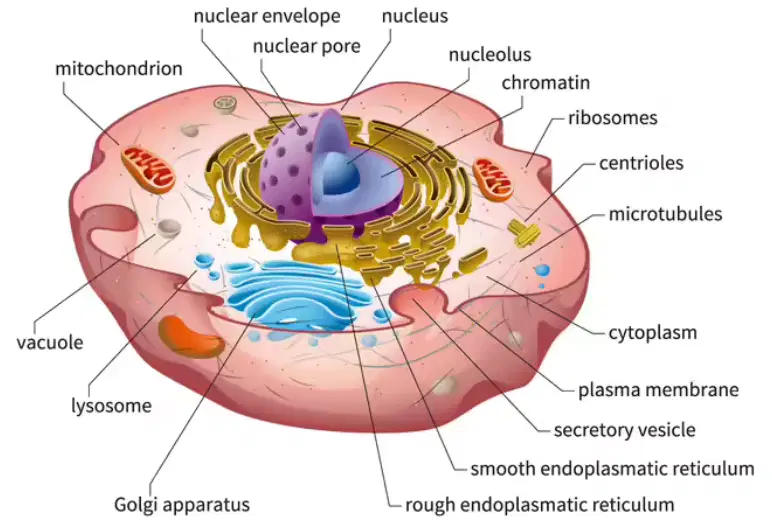
Which sequence correctly traces the path of a protein in the cell?
Which organelle would you expect to find in a plant cell, but not an animal cell?
The primary function of the cell wall is to
Which structures are found in every living cell?
Cell membrane, cytoplasm, genetic material (DNA)
Which of the following organisms are prokaryotes?
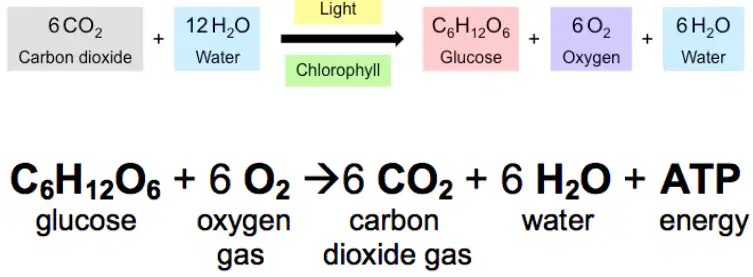
How are the needs and products in photosynthesis and cellular respiration interrelated?
Photosynthesis and cellular respiration are interrelated as the products of photosynthesis (glucose and oxygen) are the needs for cellular respiration, and the products of cellular respiration (carbon dioxide and water) are the needs for photosynthesis.
Which statement best describes the main difference between the energy conversion during photosynthesis and cellular respiration?
Which statement is not part of the cell theory?
Which is the correct order of the levels of organization in multicellular organisms from simplest to most complex?
Which statement best compares asexual and sexual reproduction?
Asexual reproduction produces offspring with genetic variation, while sexual reproduction produces identical offspring.
Asexual reproduction involves two parents, while sexual reproduction involves one parent.
Asexual reproduction produces genetically identical offspring, while sexual reproduction produces genetically diverse offspring.
Both asexual and sexual reproduction result in genetically identical offspring.
Which of the following is an example of asexual reproduction?
A frog laying eggs that are fertilized by sperm
A plant growing from a cutting of another plant
A bird mating with another bird to produce offspring
Humans producing offspring through fertilization

