
 Worksheets
Unit 4: Energy RETEACH (6TH)
Total questions: 25
Worksheet time: 22mins
What is the law of conservation of energy?
(a) is stored energy. (b) is energy of motion.

electrical → radiant → chemical → sound
radiant → electrical → chemical → thermal
chemical → electrical → radiant → thermal
chemical → radiant→ electrical → gravitational

Imagine you're exploring a dark cave and you switch on your trusty flashlight. What energy transformation of energy does the battery perform to light your way?
(a) --> (b) --> (c) --> (d)

Energy stored in the bonds and molecules is what kind of potential energy?
Chemical Energy
Gravitational Energy
Elastic Energy
All of the following are potential energies.
Match the vocabulary word to their definition.
Gravitational Potential Energy
Energy stored due to an object's position in a gravitational field
Chemical Potential Energy
Energy stored in the bonds of chemical compounds
Elastic Potential Energy
Energy stored when materials are compressed or stretched
Which of these have potential energy?

a rock rolling down a hill

an archer's bow drawn back

a car rolling along the road

Rats crawling on the floor
Match the types of energy.
Which of the following is an example of potential energy?
A soccer ball rolling across the field
A boy jumping on a trampoline
A girl roller-skating
A child at the top of the slide

A toy car is traveling up a ramp. What happens to the energy as it goes up the ramp?
Kinetic energy increases while potential decreases.
Potential energy increases while kinetic decreases.
Both potential and kinetic energy increases.
Both potential and kinetic energy decreases.

How does energy change?
The cart has more kinetic energy at the top than when it is going down the hill.
The cart has potential energy at the top while kinetic energy increases going down.
The cart has potential energy that is lost going down the hill.
The cart has kinetic energy at the top of the hill and no potential energy.
Match


Books on a shelf

A spring

Stretched out bow

Food

Battery
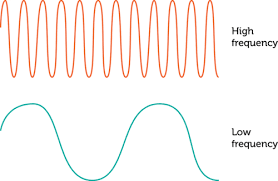
If a wave has a greater frequency, what happens to number of waves per second?
increases
decreases
stays the same


What kind of wave is pictured?
compressional wave
transverse wave
sound wave
mechanical wave

Which wave has the GREATEST energy?
1
2
3
they are all of the same
Which wave has the LEAST energy?
1
2
3
they are all of the same

True or False: The greater the frequency the greater the energy of the wave

A transverse wave moves

A longitudinal wave moves

A longitudinal wave moves (a) to the movement of the wave. A transverse wave moves (b) to the movement of the wave.

