
 Worksheets
The Final Showdown- Econ
Total questions: 120
Worksheet time: 4hrs 40mins
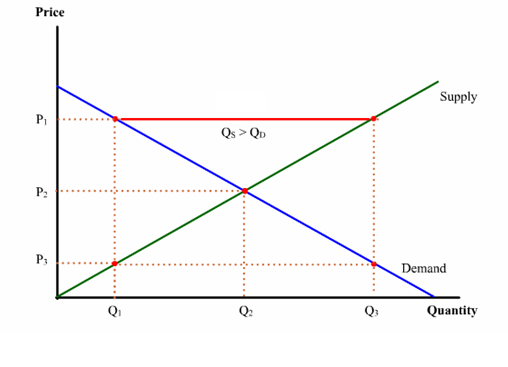
How is a shortage created?
When demand increases.
When demand decreases.
When demand stagnates.
When supply increases.

The delivery of finished products for sale in exchange for revenue is represented in which arrows?
1 and 2
3 and 4
5 and 6
7 and 8

The exchange of money for goods/services to consumers is represented in which part of the circular flow diagram?
1 and 2
3 and 4
5 and 6
7 and 8

What does point C represent on the Circular Flow diagram?
Firm
Factor Market
Individual
Product Market
In the circular flow diagram firms pay wages for which factor of production?
Land
Labor
Entrepreneurship
Raw materials
Where are factors of production (land, labor, etc) exchanged in the circular flow model?
Factor Market
Product Market
Firms
Individuals

Types of cost in the curve are
Total, variable and fixed
Average and marginal
The best definition for fixed costs is
Costs that do not depend on the level of production
Costs that do not change
Costs that increase when you produce more
A person using his own capital in business is an e.g of
implicit cost
explicit cost
Cost per unit of output is
AC
MC
Marginal costs is
the cost added by producing one additional unit
the change in revenue added by producing one additional unit
the additional cost
The shape of Marginal cost is
It first decreases as units increase, then increase
It increases constantly as units increase
It increases as units increase, then it decreases
The formula for marginal costs is
Percentage change in costs divided by percentage change in quantities
Change in costs divided by change in quantities
Percentage change in costs divided by percentage change in prices
The MC curve cuts AC at its
highest point
minimum point
The shape of AFC is
rectangular hyperbole
S shaped
AC is equal to MC where
AC is minimum
MC is minimum
External economies of scale can arise from
Bulk purchases of raw materials, parts and components at favorable prices by a particular business/firm
Purchase and use of physical/human capital by a particular business/firm
Greater availability of skilled laborers for a particular industry in a particular area
A business/firm being able to obtain lower interest rates on loans
Wheat has seen a decrease in demand of 5%, while the price has increased 7%
1.4 inelastic
1.4 elastic
.71 inelastic
.71 elastic
Ford Trucks have seen a increase in demand of 27%, while the price has decreased 15%
.56 inelastic
.56 elastic
1.8 inelastic
1.8 elastic
The medication known as insulin has seen a decrease in demand of 2%, while the price has increased 10%
5 inelastic
5 elastic
.2 inelastic
.2 elastic

In Covington, VA 1,700 frozen turkeys were sold in 2016 at an average price of $17. In Covington, VA 1,500 frozen turkeys were sold in 2017 at an average price of $27.
4.98 inelastic
4.98 elastic
.2 inelastic
.2 elastic

A
B
C
D

The graphs show how consumer prices and real GDP changed in a country between 1995 and 2005. Which conclusion may be drawn from the graphs?
Living standards remained roughly constant between 1995 and 2005.
The level of GDP was lower in 2005 than in 2000.
The country experienced continuous economic growth between 1995 and 2005.
The price level fell between 2000 and 2003.

Between 2000 and 2004 Botswana experienced economic growth but there was a fall in its
Human Development Index.
Which combination of events could explain this apparent paradox?
A
B
C
D
Which of the following describes an entrepreneur?
A person who is hired to work in a factory.
A person who organizes, operates, and assumes the risk for a business venture.
A person who organizes loans the money to a new business just getting started.
A person who invests in businesses to make money.
Product differentiation refers to
Features that make one product appear different from competing products in the same market.
Different prices for the same product in a certain market.
The selling of identical products in different markets.
The charging of different prices for the same product in different markets.
Which of the following describes the
opportunity cost to an economy of building
a new airport?
The extra cost of providing
equipment and managers to
operate the airport efficiently.
The closure of the airport it
replaces.
The goods and services that could
have been produced instead of
the airport.
The increase in taxation to the
citizens to pay for the new
airport.
Which of the following factors would
account for a PPF shifting to the right?
A decrease in taxes
A reduction in unemployment
The introduction of subsidies for
industries
Technological advances in the
industries of the country
Which of the following is LEAST likely to
cause a shift in the production possibility
frontier?
An increase in population
The use of unemployed resources
An advancement in technology
The discovery of a new natural
resource
Economics may be described as a “social
science” since it deals with
the economy
the environment
human behaviour
production and consumption
An economic model is a physical representation of an economy
TRUE
FALSE
Macroeconomics is the study of ___________________
individual building blocks in the economy
the relationship between different sectors of the economy
household purchase decisions
the economy as a whole
Microeconomics is concerned with
the economy as a whole
the electronics industry
the study of individual economic behaviour
the interactions within the entire economy
The opportunity cost of a good is
the time lost in finding it
the quantity of other goods sacrificed to get another unit of that good
the expenditure on the good
the loss of interest in using savings
Economics is the study of
production technology
consumption decisions
how society decides what, how, and for whom to produce
the best way to run society
Which of the following is considered a
good?
A visit to the doctor
A commercial bank paying your
utility bill on your behalf
An operator-assisted telephone call
A soft drink purchased at the
school’s cafeteria
An essential feature of a capital good is that
it
must be replaced frequently
is used to produce other goods
must be purchased through a loan
is consumed directly by the
consumer

Which point on the curve is an efficient use of resources?
F
D
E
A
If the price of Kellogg's Corn Flakes goes up from $1.89 to $2.05 and quantity demanded changes from 250 to 210, then the price elasticity of demand would be:
0.47
0.02
250
2.14

The number of goods demanded is greater than producers are willing to sell:

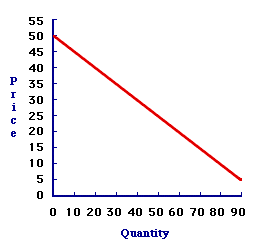
Elastic or Inelastic demand?
Elastic
Inelastic

Elastic or Inelastic demand?
Elastic
Inelastic

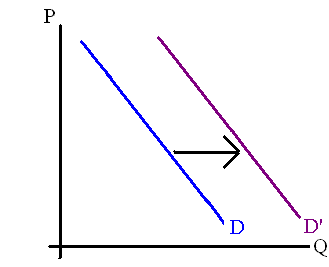
This graph demonstrates
A shift in the supply curve
A higher market price after the shift of the demand curve
A lower market price after the shift of the demand curve
No change in the market quantity after the shift of the demand curve
_____ refers to the desire, willingness, and ability to buy a good or service.
Supply
Demand
Law of Demand
Market Supply
A saving account in a bank represents the function of money:
Store of value
A medium of exchange
A standard for deferred payments
A measure of value

The first four dinner rolls Joan consumes have total utility of 15, 27, 37, and 45 respectively. What is the marginal utility of the 4th dinner roll?
124 units of utility
45 units of utility
11.25 units of utility
8 units of utility
A free good has:
An opportunity cost
No opportunity cost
Excludability
Has a price
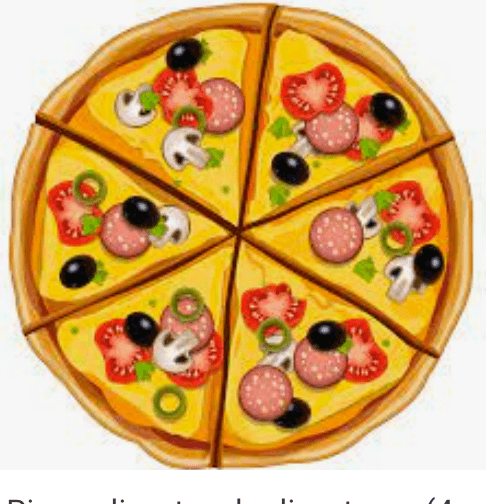
Theresa paid $10 for a pizza when she was prepared to pay $15. Theresa's consumer surplus is:
$10
$15
Impossible to calculate
$5
What do we mean by the unemployment rate?
number of people willing and able to work but not currently employed
proportion of the labour force willing and able to work but not currently employed
proportion of the population willing to work but not currently employed
number of people able to work but not currently employed
Economic growth is a situation where an economy's real GDP increase.
True
False
Actual economic growth is a situation where an economy's growth is fueled by high total spending in an economy.
True
False
Fill in the blank. Inflation is a persistent or sustained __________ in the average level of prices over a period over of time.
Increase
Decrease
Stagnation
Stagflation
None of the answers
True or False. The UK government has a target for inflation of 2% (CPI).
True
False
Which price index includes university fees, stockbroking prices, and new car prices?
Consumer Price Index
Customer Price Index
Retail Price Index
Revenue Price Index
None of the answers
Which cause of inflation occurs when prices rise in the economy due to an increase in the costs of the factors of production?
Cost-push inflation
Demand-pull inflation
Price-push inflation
Supply-pull inflation
None of the answers
Which cause of inflation occurs when excessive growth in demand in the economy results in shortages and firms raise prices?
Cost-push inflation
Demand-pull inflation
Price-push inflation
Supply-pull inflation
None of the answers
Which country experienced hyperinflation in the last 20 years?
USA
UK
Zimbabwe
Japan
None of the countries
Select all the limitations of CPI
Few households are average
Single people have different spending patterns compared to family households
Is slow to respond to new products and services
Does not incorporate increases in quality
None of the answers
Select all of possible consequences of high inflation:
Inequality
Higher interest rates for borrowing
Uncertainty for businesses
Falling real incomes
None of the answers
How does inflation impact interest rates?
Inflation has no impact on interest rates.
Inflation causes interest rates to decrease.
Inflation causes interest rates to remain constant.
Inflation causes interest rates to rise.
What are the negative effects of high inflation on an economy?
Stimulating economic growth, increasing employment opportunities, and boosting consumer spending.
Eroding purchasing power, reducing consumer and investor confidence, distorting price signals, increasing uncertainty, and creating income inequality.
Encouraging investment, promoting innovation, and fostering economic development.
Stabilizing prices, reducing income inequality, and improving financial stability.
What are some economic indicators used to measure inflation?
Unemployment rate
Interest rates
Stock market performance
Consumer Price Index (CPI), Producer Price Index (PPI), GDP deflator
Those who are not willing and able to work at the current wage rate and do not have a job.
Employed
Involuntary unemployed
Voluntary unemployed
Those who are willing and able to work at the current wage rate but do not have a paid job
Employed
Involuntary unemployed
Voluntary unemployed
Unemployment caused by an imbalance between the skills of workers and the requirements of employers
Employed
Structural unemployment
Frictional unemployment
Voluntary unemployment
Cyclical unemployment
Short-term temporary unemployment caused by people being temporarily between jobs or entering the job market for the first time
Employed
Structural unemployment
Frictional unemployment
Voluntary unemployment
Cyclical unemployment
Unemployment caused by a downturn in economic activity
Employed
Structural unemployment
Frictional unemployment
Voluntary unemployment
Cyclical unemployment
Demand for labour comes from
Producers
Consumers
Government
Supply of labour comes from
Producers
Households
Government
Consumption spending is affected by what factors?
Exchange rate
Consumer confidence
Business confidence
Interest rates
Income tax
Economic growth is an ____________ in the value of goods and services produced by an economy over time.
Increase
Decrease
The most common way to measure the level of activity in an economy is?
Inflation
Interest rates
Gross Domestic Product (GDP)
Employment levels
Which of the following is NOT a stage in the economic cycle?
Growth
Boom
Recession
Slow
Unemployment will be at its lowest?
Growth
Boom
Recession
Slump
Unemployment will be at its highest?
Growth
Boom
Recession
Slump
Consumer confidence will be at its highest?
Growth
Boom
Recession
Slump
When consumer confidence is high, people are likely to spend __________?
More
Less
When consumer confidence is low, people are likely to ________ more?
Spend
Save
Periods of growth in the economic cycle are known as...
Recession
troughs
busts
booms
Environmental factors over which businesses have very little control over are known as...
internal
existing
external
international
In a recession, uncertainty about employment can deter spending. Which of the following is a synonym for “deter?”
Discourage
Enable
Facilitate
Permit
What is the study of the behaviour of individuals, households, and companies and is the study of how markets between buyers and sellers work?
Microeconomics
Macroeconomics
Econometrics
Finance
What is the difference between real GDP and nominal GDP?
Real GDP takes into account inflation
Real GDP takes into account population
Real GDP takes into account exchange rates
Real GDP takes into account unemployment
Which of the following is an advantage of division of labour?
Less job satisfaction
Delays in work
Increased speed of work
"Samsung enhances the home experience with products like Samsung Bespoke 4-Door Flex, 110-inch MICRO LED, and JetBot 90 AI+. Continuing sustainability efforts, Samsung announces Galaxy Upcycling at Home and expansion of eco-packaging for TV products in 2021"
The statement is an example of which internal economies of scale?
sustainability
efficiency
research and development
advertising and marketing
What is an example of economies of scale
Realising
Evaluating
Purchasing
Large firms can buy raw materials in bulk at more favourable rates. This is an example of
Purchasing economies of scale
Technical economies of scale
Managerial economies of scale
Marketing economies of scale
Risk bearing economies of scale
Fill in the blank. __________ economies of scale occur due to an increase in the scale of production within a single firm
Internal
External
Complex
Simple
Fill in the blank. Economies of scale is when as output _________, unit costs ________ in the long run.
increases; decrease
increases; increase
decreases; increase
decreases; decrease
Larger firms are better able to diversify into a range of product areas or markets and thus lessen their risk. This is an example of
Financial economies of scale
Technical economies of scale
Managerial economies of scale
Marketing economies of scale
Risk bearing economies of scale
Large firms can negotiate better interest rates on loans; this reduces the costs of borrowing for larger companies. This is an example of
Financial economies of scale
Technical economies of scale
Managerial economies of scale
Marketing economies of scale
Risk bearing economies of scale
Large firms can afford to advertise and sell in larger quantities to develop brand loyalty. This is an example of
Purchasing economies of scale
Technical economies of scale
Managerial economies of scale
Marketing economies of scale
Risk bearing economies of scale
Large firms can take advantage of investing in better machinery and can benefit from the division of labour. This is an example of
Purchasing economies of scale
Technical economies of scale
Managerial economies of scale
Marketing economies of scale
Risk bearing economies of scale
Economies of scale are gained when a business...
decreases it's production and causes an increase in average production costs
increases it's production and causes a decrease in average production costs
maintains production levels and causes an increase in average production costs
increases it's production and causes an increase in average production costs
Which of the following is an advantage of financial EOS?
Paying suppliers higher prices
Lower interest rates for loans
Paying dividends to shareholders
Repeat purchases from loyal customers
Which of the following is a benefit of purchasing economies?
Limited access to specialist staff
Increased advertising costs
Higher unit costs
Bulk buying reduces unit cost
Market share is the _________________ of the market that you control.
proportion
propulsion
quality
customers
weight
What advantage do larger firms have in financial economies?
Increased production costs
Limited access to capital
Higher interest rates
Better lending terms
What is meant by 'diseconomies of scale' in a business context?
The average costs of production decrease with output.
The average costs of production rise with output.
The business experiences constant returns to scale.
The business becomes more efficient as it grows.

