
 Worksheets
USCS with Zahid
Total questions: 15
Worksheet time: 8mins
1. Which of the following is NOT an Atterberg limit?
Liquid Limit
Plastic Limit
Compaction Limit
Shrinkage Limit
2. What does the liquid limit (LL) of soil represent?
The moisture content at which soil changes from plastic to liquid state
The moisture content at which soil changes from semi-solid to plastic state
The moisture content at which soil starts to shrink
The maximum water content a soil can hold
3. The difference between the liquid limit and plastic limit is called:
Shrinkage Index
Plasticity Index
Consistency Index
Activity Index
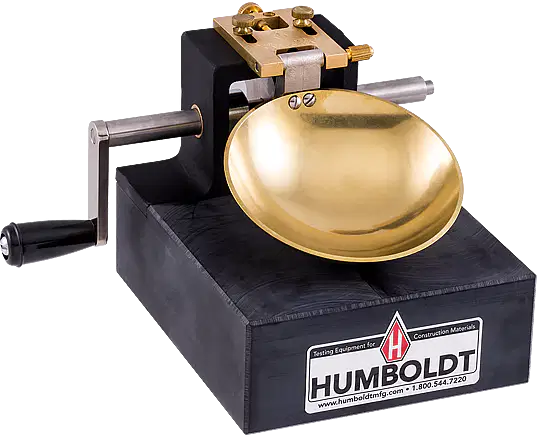
4. Which device is commonly used to determine the liquid limit of soil?
Proctor compaction mold
Hydrometer
Casagrande apparatus
Penetrometer
5. A soil with a high plasticity index (PI) indicates:
Low clay content and low compressibility
High sand content and low shear strength
Low silt content and high permeability
High clay content and high plasticity
6. What is the purpose of a sieve analysis test?
To determine the moisture content of soil
To classify soil based on grain size distribution
To measure soil permeability
To determine the Atterberg limits of soil
7. Which sieve size is commonly used to separate coarse-grained soils from fine-grained soils in the Unified Soil Classification System (USCS)?
No. 10 (2.00 mm)
No. 40 (0.425 mm)
No. 4 (4.75 mm)
No. 200 (0.075 mm)
8. What does the term "percent passing" in sieve analysis represent?
The percentage of soil particles passing through a sieve
The percentage of soil particles retained on a sieve
The weight of soil particles retained on each sieve
The total weight of the sample used in the test
9. Which type of graph is typically used to present sieve analysis results?
Stress-strain curve
Mohr's circle
Particle size distribution curve
Consolidation curve
10. What is the standard duration for mechanical shaking in a sieve analysis test according to ASTM procedures?
2 minutes
10 minutes
15 minutes
30 minutes
11. What is the primary basis for classifying soils in the USCS?
Permeability and compressibility
Grain size distribution and plasticity
Moisture content and density
Organic content and color
12. Which two tests are primarily used to classify fine-grained soils in the USCS?
Proctor compaction and sieve analysis
Consolidation and permeability tests
Triaxial and direct shear tests
Liquid limit and plastic limit
13. What is the boundary between gravel and sand soils in the USCS?
No. 40 sieve (0.425 mm)
No. 200 sieve (0.075 mm)
No. 4 sieve (4.75 mm)
No. 10 sieve (2.00 mm)
14. In USCS, which letter symbol represents well-graded gravel?
GW
GP
GC
SW
15. Which of the following soil types is considered organic in the USCS?
GW
MH
CL
OH

