
 Worksheets
warmup activity Exploring Plant and Animal Transport
Total questions: 37
Worksheet time: 21mins
What is the primary function of xylem in plants?
To provide structural support
The primary function of xylem in plants is to transport water and minerals.
To store food and nutrients
To facilitate photosynthesis
How do animals transport oxygen in their bodies?
Fish use gills to absorb oxygen from the water only.
Insects rely on lungs to transport oxygen throughout their bodies.
Animals transport oxygen using hemoglobin in blood or tracheae in insects.
Oxygen is transported by fat cells in mammals.
What role does phloem play in plant transportation?
Phloem stores nutrients in the roots for later use.
Phloem is responsible for photosynthesis in plants.
Phloem transports water from the roots to the leaves.
Phloem transports organic nutrients, mainly sugars, throughout the plant.
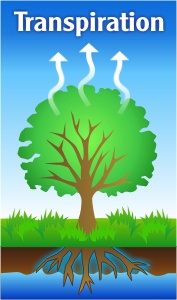
Describe the process of transpiration in plants.
Transpiration is the process of photosynthesis in plants.
Transpiration is the process of water vapor loss from plants through stomata, aiding in nutrient transport and cooling.
Transpiration occurs only at night when plants are dormant.
Transpiration is the absorption of water by plant roots.
What is the circulatory system responsible for in animals?
Regulating body temperature in animals.
Facilitating digestion of food in the stomach.
Producing energy through cellular respiration.
Transporting nutrients, gases, hormones, and waste products throughout the body.
How do plants absorb water from the soil?
Plants take in water through their stems directly from the air.
Plants extract water from the soil using their flowers.
Plants absorb water through their leaves during photosynthesis.
Plants absorb water from the soil through their roots via osmosis.
What is the difference between open and closed circulatory systems?
Open circulatory systems have blood confined to vessels, while closed systems lack blood vessels.
Closed circulatory systems are found only in aquatic animals, while open systems are in terrestrial animals.
Open circulatory systems use hemoglobin to transport oxygen, while closed systems do not.
Open circulatory systems lack blood vessels, while closed circulatory systems have blood confined to vessels.
Explain how nutrients are transported in animals.
Nutrients are stored in the liver and released when needed.
Nutrients are transported through the lymphatic system only.
Nutrients are absorbed directly through the skin into the bloodstream.
Nutrients are transported in animals via the circulatory system, where they are absorbed into the bloodstream and delivered to cells.
What adaptations do plants have for efficient transport?
Plants rely on wind for seed dispersal.
Plants use roots for nutrient absorption.
Plants have leaves for photosynthesis.
Plants have xylem and phloem for efficient transport.
How does the structure of red blood cells aid in transportation?
Red blood cells primarily transport nutrients instead of gases.
Red blood cells have a rigid structure that prevents flexibility.
The spherical shape of red blood cells allows for better oxygen storage.
The biconcave shape and hemoglobin content of red blood cells enhance their ability to transport oxygen and carbon dioxide efficiently.
Phloem helps in the transport of
Food
water
Food and Water
Oxygen
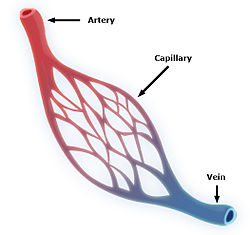
The blood vessel which carries blood to the heart
lymphatic vessel
capillaries
veins
arteries
Why is color of blood red?
myoglobin
globulin
heamoglobin
fibrinogen
Which of the following indicates the pathway of water through a plant?
root hair cell --> xylem --> stomata
stomata --> root hair cell --> xylem
xylem --> stomata --> root hair cell
Pulmonary artery carries what type of blood
Oxygenated
mixed
pure blood
Deoxygenated
Instrument used to measure the heart beat
Endoscope
Kaleidoscope
Microscope
Stethoscope
The blood vessel which carries blood to the heart
lymphatic vessel
capillaries
veins
arteries
Aorta carries oxygenated blood to all parts of the body
True
False
No, pulmonary artery
No, pulmonary vein
Human heart has -----------chambers
3
2
4
1
Pulmonary artery carries what type of blood
Oxygenated
mixed
pure blood
Deoxygenated
The blood vessel which carries blood to the heart
lymphatic vessel
capillaries
veins
arteries
What is the function of white blood cells?
transport oxygen
fight against infection
clotting
all the above
Which of the following is the main circulatory fluid in our body ?
Plasma
Lymph
Blood
None of these
What is the size of a heart?
Closed fist
Hand
Open hand
Closed hand
The human heart contains four chambers, two atria, and two ventricles. A partition separates these chambers from each other. Why is the partition between these chambers necessary?
To maintain the pressure of blood in each chamber of the heart
To avoid mixing of oxygenated blood with the deoxygenated blood
To increase the volume of all chambers so that more blood can be pumped
To provide more volume to oxygenated blood than the deoxygenated blood
A student was provided with a three-dimensional model of a human circulatory system. The teacher asked the student to identify the heart from all the structures involved in the model. How would the student be able to locate the heart in the circulatory system?
A structure that is located in the chest cavity with its lower tip slightly tilted towards the left
A structure that is located in the chest cavity with its upper tip slightly tilted towards the left
A structure that is located in the abdominal cavity with its lower tip slightly tilted towards the right
A structure that is located in the abdominal cavity with its upper tip slightly tilted towards the left
People use water pumps in their houses to circulate water in the house pipes. If our blood vessels are compared to water pipes and blood to water, then what organ of the human body acts as a water pump and circulates blood throughout the body?
Heart
Kidney
Lungs
Liver
People use water pumps in their houses to circulate water in the house pipes. If our blood vessels are compared to water pipes and blood to water, then what organ of the human body acts as a water pump and circulates blood throughout the body?
Heart
Kidney
Lungs
Liver
A student observed the cross-section of two blood vessels A and B with the help of a microscope.
The table lists the observations made by the student.
A- THICK AND ELASTIC
B- THIN
What conclusion can be made about the type of blood carried out by blood vessels A and B
A –oxygen-rich; B- oxygen-rich
A –carbon-dioxide rich; B- oxygen-rich
A –oxygen-rich; B- carbon-dioxide rich
A –carbon-dioxide rich; B- carbon-dioxide rich
A patient was facing trouble in breathing. On diagnosis, the doctor examined that the hemoglobin content in the patient’s body is less than the normal range. What role does hemoglobin play in breathing?
Haemoglobin helps in the transportation of oxygen to all body cells.
Haemoglobin prevents clot formation inside the respiratory tract.
Haemoglobin helps the lungs to take in more air from the surroundings.
Haemoglobin fights against germs that enter into the respiratory tract.
Siddhant got an injury on his knee while playing football in the ground. Blood oozed out from the injured site, but after a few minutes, he observed a brown colored clot on the same site. Which component of the blood might have formed this clot?
Plasma
Platelets
Red blood cells
White blood cells

