wayground logo

Free Printable Worksheets

Font size

S
M
L
XL
Worksheets

Sound, Light, Mirrors & Lenses Quiz

Total questions: 105

Worksheet time: 1hrs 1mins

Name
Class
Date
1.
What type of waves are sound waves?
a)
Transverse waves
b)
Compressional waves
c)
Electromagnetic waves
d)
Surface waves
2.
How does the speed of sound change in different states of matter?
a)
Faster in gases
b)
Faster in liquids
c)
Faster in solids
d)
Speed is the same in all states
3.
What is the unit used to measure loudness?
a)
Hertz
b)
Decibels
c)
Watts
d)
Joules
4.
What determines the pitch of a sound?
a)
Amplitude
b)
Frequency
c)
Wavelength
d)
Intensity
5.
What is the purpose of resonators in musical instruments?
a)
To change the pitch
b)
To amplify sound
c)
To absorb sound
d)
To create silence
6.
What is echolocation primarily used for?
a)
To measure sound intensity
b)
To locate objects using sound
c)
To create music
d)
To amplify sound
7.
What type of mirror curves inward?
a)
Plane mirror
b)
Convex mirror
c)
Concave mirror
d)
Flat mirror
8.
What is the angle of incidence?
a)
The angle at which light reflects off a surface
b)
The angle at which light strikes a surface
c)
The angle of refraction
d)
The angle of sound waves
9.
Which type of lens is used to focus light in the human eye?
a)
Concave lens
b)
Convex lens
c)
Flat lens
d)
Biconcave lens
10.
What is the role of the retina in the eye?
a)
To focus light
b)
To convert light into electrical signals
c)
To protect the eye
d)
To reflect light
11.
What is a characteristic of opaque objects?
a)
They allow all light to pass through
b)
They reflect and absorb light
c)
They transmit some light
d)
They only reflect light
12.
What is the study of sound called?
a)
Optics
b)
Acoustics
c)
Sonar
d)
Echolocation
13.
What type of mirror diverges light rays?
a)
Concave mirror
b)
Convex mirror
c)
Plane mirror
d)
Flat mirror
14.
What is ultrasound used for in medicine?
a)
To measure sound intensity
b)
To create images of internal organs
c)
To amplify sound
d)
To break up stones
15.
How do sound waves travel faster?
a)
In colder temperatures
b)
In gases
c)
In liquids
d)
In solids
16.
What is a characteristic of translucent materials?
a)
They allow no light to pass through
b)
They allow some light to pass through
c)
They reflect all light
d)
They absorb all light
17.
What is the primary function of a telescope?
a)
To magnify small objects
b)
To gather light from distant objects
c)
To reflect light
d)
To create sound
18.
How does the speed of sound change as you move from a gas to a liquid to a solid?
a)
It increases in each state
b)
It decreases in each state
c)
It increases from gas to liquid to solid
d)
It decreases from gas to liquid to solid
19.
If an object reflects all wavelengths of visible light equally, what color will it appear?
a)
Red
b)
Blue
c)
White
d)
Black
20.
What is the primary function of the pupil in the human eye?
a)
To focus light
b)
To control the amount of light entering the eye
c)
To convert light into electrical signals
d)
To detect color
21.
What is the function of the tympanic membrane (eardrum) in the human ear?
a)
To convert sound waves into electrical signals
b)
To amplify sound waves
c)
To filter out high-frequency sounds
d)
To transmit sound waves to the middle ear
22.
Which property of light is responsible for the formation of rainbows?
a)
Refraction
b)
Reflection
c)
Diffraction
d)
Interference
23.
What is the primary function of the retina in the human eye?
a)
To focus light
b)
To convert light into electrical signals
c)
To control the amount of light entering the eye
d)
To detect color
24.
Which of the following is a characteristic of concave mirrors?
a)
They reflect light rays as if they originated from a virtual image behind the mirror
b)
They reflect light rays as if they originated from a real image in front of the mirror
c)
They reflect light rays as if they originated from a point source at the center of curvature
d)
They reflect light rays as if they originated from a point source at the focal point
25.
What is the primary function of the cochlea in the human ear?
a)
To convert sound waves into electrical signals
b)
To amplify sound waves
c)
To filter out high-frequency sounds
d)
To transmit sound waves to the middle ear
26.
How does the speed of sound in air change as the temperature increases?
a)
It increases
b)
It decreases
c)
It remains constant
d)
It depends on the humidity
27.
Which type of mirror is used to form a magnified, upright image?
a)
Concave mirror
b)
Convex mirror
c)
Plane mirror
d)
All of the above
28.
Which of the following best explains why sound travels faster in solids than in gases?
a)
Solids have more mass
b)
Particles in solids are closer together
c)
Gases have more energy
d)
Sound cannot travel in gases
29.
What happens to light when it passes from air into water?
a)
It speeds up
b)
It slows down
c)
It changes color
d)
It disappears
30.
Which type of lens would you use to correct nearsightedness?
a)
Convex lens
b)
Concave lens
c)
Flat lens
d)
Biconvex lens
31.
What is the primary reason that we see colors?
a)
Objects emit light
b)
Objects absorb certain wavelengths of light
c)
Light travels faster in air
d)
Colors are created by sound waves
32.
What is the role of the cornea in the eye?
a)
To focus light
b)
To detect color
c)
To protect the eye
d)
To produce tears
33.
Which of the following describes how a convex lens affects light?
a)
It diverges light rays
b)
It converges light rays
c)
It absorbs light
d)
It reflects light
34.
How does temperature affect the speed of sound?
a)
Higher temperatures slow down sound
b)
Lower temperatures speed up sound
c)
Higher temperatures speed up sound
d)
Temperature has no effect
35.
What is the effect of a concave mirror on light rays?
a)
It scatters light rays
b)
It focuses light rays
c)
It reflects light without changing direction
d)
It absorbs light
36.
Which of the following best describes the relationship between wavelength and frequency?
a)
Longer wavelength means higher frequency
b)
Shorter wavelength means higher frequency
c)
Wavelength and frequency are unrelated
d)
They are always equal
37.
What is the purpose of the eardrum in the human ear?
a)
To amplify sound
b)
To detect vibrations
c)
To protect the inner ear
d)
To convert sound waves into electrical signals
38.
Which of the following materials is most likely to be transparent?
a)
Wood
b)
Glass
c)
Metal
d)
Plastic
39.
What is the primary function of the auditory nerve?
a)
To amplify sound
b)
To transmit sound signals to the brain
c)
To protect the ear
d)
To detect sound waves
40.
How does sound travel through a vacuum?
a)
Faster than in air
b)
Slower than in air
c)
Not at all
d)
At the same speed
41.
Which of the following is a characteristic of sound waves?
a)
They can travel through a vacuum
b)
They require a medium to travel
c)
They travel faster than light
d)
They are always audible
42.
What is the primary function of the outer ear?
a)
To amplify sound
b)
To collect sound waves
c)
To convert sound waves into electrical signals
d)
To protect the inner ear
43.
Which part of the ear is responsible for balancing?
a)
Cochlea
b)
Eardrum
c)
Semicircular canals
d)
Auditory nerve
44.
What role does the eardrum play in hearing?
a)
It transmits sound to the brain
b)
It vibrates in response to sound waves
c)
It amplifies sound
d)
It protects the inner ear
45.
Which structure in the ear is responsible for converting sound vibrations into electrical signals?
a)
Auricle
b)
Cochlea
c)
Auditory canal
d)
Eustachian tube
46.
What is the function of the auditory nerve?
a)
To collect sound waves
b)
To transmit signals to the brain
c)
To balance the body
d)
To protect the ear
47.
Which part of the ear helps to equalize pressure?
a)
Cochlea
b)
Eustachian tube
c)
Semicircular canals
d)
Auricle
48.
What is the function of the ossicles in the middle ear?
a)
To collect sound waves
b)
To amplify sound vibrations
c)
To convert sound into electrical signals
d)
To balance the body
49.
Which part of the ear is responsible for detecting high-frequency sounds?
a)
Cochlea
b)
Eardrum
c)
Semicircular canals
d)
Auditory nerve
50.
What is the main purpose of the auricle (pinna)?
a)
To protect the eardrum
b)
To collect and direct sound waves
c)
To balance the body
d)
To convert sound into nerve impulses
51.
How does the eustachian tube help maintain hearing?
a)
By amplifying sound
b)
By equalizing pressure in the ear
c)
By converting sound waves
d)
By protecting the inner ear
52.
What is the primary function of the semicircular canals?
a)
To detect sound
b)
To maintain balance
c)
To amplify sound
d)
To protect the ear
53.
Which part of the ear is responsible for converting sound vibrations into electrical signals?
a)
Eardrum
b)
Cochlea
c)
Ossicles
d)
Semicircular canals
54.
Which part of the ear helps to equalize pressure?
a)
Ossicles
b)
Cochlea
c)
Eustachian tube
d)
Semicircular canals
55.
What is the primary function of the semicircular canals?
a)
Detecting high-frequency sounds
b)
Converting sound to electrical signals
c)
Balancing and equilibrium
d)
Amplifying sound waves
56.
What role does the eardrum play in hearing?
a)
Amplifying sound
b)
Detecting motion
c)
Transmitting sound vibrations
d)
Equalizing pressure
57.
Which part of the ear is responsible for balancing?
a)
Cochlea
b)
Ossicles
c)
Semicircular canals
d)
Auricle
58.
How does the eustachian tube help maintain hearing?
a)
By amplifying sound
b)
By detecting high-frequency sounds
c)
By equalizing air pressure
d)
By transmitting sound vibrations
59.
What is the main function of the cornea?
a)
To focus light onto the retina
b)
To protect the eye from dust
c)
To regulate the amount of light entering the eye
d)
To convert light into electrical signals
60.
Which part of the eye is responsible for adjusting the amount of light that enters?
a)
Pupil
b)
Lens
c)
Retina
d)
Sclera
61.
What is the role of the retina in the eye?
a)
To focus light
b)
To detect color
c)
To convert light into electrical signals
d)
To protect the eye
62.
Which structure in the eye is responsible for color vision?
a)
Rods
b)
Cones
c)
Cornea
d)
Lens
63.
What is the function of the lens in the eye?
a)
To protect the eye
b)
To focus light onto the retina
c)
To detect motion
d)
To regulate pressure
64.
What part of the eye helps to maintain its shape?
a)
Aqueous humor
b)
Vitreous humor
c)
Cornea
d)
Sclera
65.
Which part of the eye is responsible for detecting low light levels?
a)
Cones
b)
Rods
c)
Pupil
d)
Lens
66.
What is the primary function of the iris?
a)
To focus light
b)
To give the eye its color
c)
To protect the eye
d)
To convert light into signals
67.
Which part of the eye is known as the 'white of the eye'?
a)
Cornea
b)
Sclera
c)
Iris
d)
Retina
68.
What is the function of the optic nerve?
a)
To focus light
b)
To transmit visual information to the brain
c)
To protect the eye
d)
To regulate light entry
69.
What happens to the pupil in bright light?
a)
It dilates
b)
It constricts
c)
It changes color
d)
It becomes opaque
70.

You can't hear sounds in outer space because there is no

a)

medium

b)

light

c)

energy

d)

heat

71.

changes shape to allow us to focus near and far and near again

a)

lens

b)

cornea

c)

iris

72.

What is a measure of sound intensity that better reflects perceived loudness?

a)

sound intensity level

b)

amplitude

c)

frequency

d)

loudness

73.

What does a decibel (dB) measure?

a)

The frequency of a sound

b)

The speed of a sound

c)

The loudness of a sound

d)

The pitch of a sound

74.

what type of mirror is this

a)

concave

b)

convex

c)

translucent

d)

plano

75.
This is an example of a __________ mirror.
a)
Concave
b)
Convex
c)
Plane
d)
Magnifying
76.

____ are thick in the middle and thin at the edges.

a)

Plane mirrors

b)

Convex lenses

c)

Concave lenses

d)

Concave mirrors

77.

Why does the apple appear red?

a)

It reflects all the colors except red

b)

It diffracts all the colors except red

c)

It absorbs all the colors except red

d)

It refracts all the colors except red

78.

A/an _________ material absorbs all of the light that strikes it.

a)

opaque

b)

transparent

c)

translucent

79.

__________ objects transmit light.

a)

Transparent

b)

Opaque

c)

Translucent

80.

_________ objects allow most light pass through but may alter the image.

a)

Transparent

b)

Opaque

c)

Translucent

81.

a tube-like structure connecting the external ear to the eardrum.

a)

ear

b)

ear canal

c)

eardrum

d)

membrane

82.

 the third in a series of three small bones in the middle ear.

a)

cilia

b)

cochlea

c)

oval window

d)

stirrup

83.

 the first in a series of three small bones in the middle ear.

a)

cilia

b)

anvil

c)

hammer

d)

stirrup

84.

 the second in a series of three small bones in the middle ear.

a)

cilia

b)

anvil

c)

hammer

d)

stirrup

85.

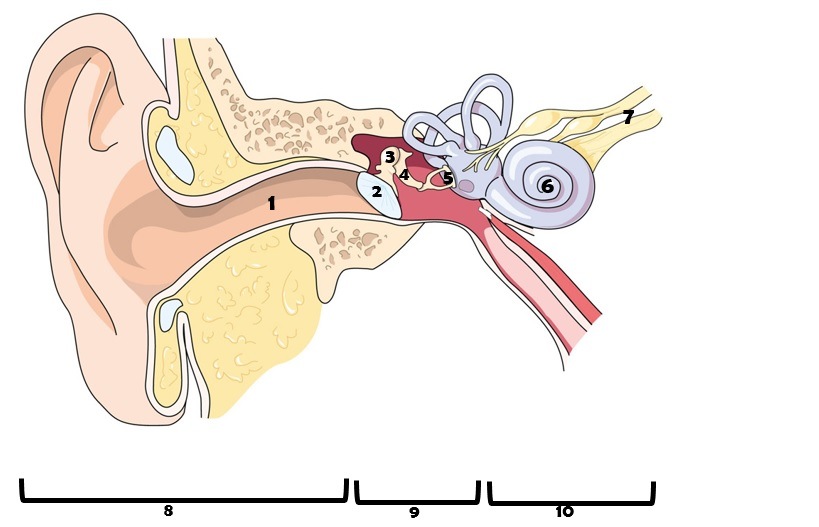
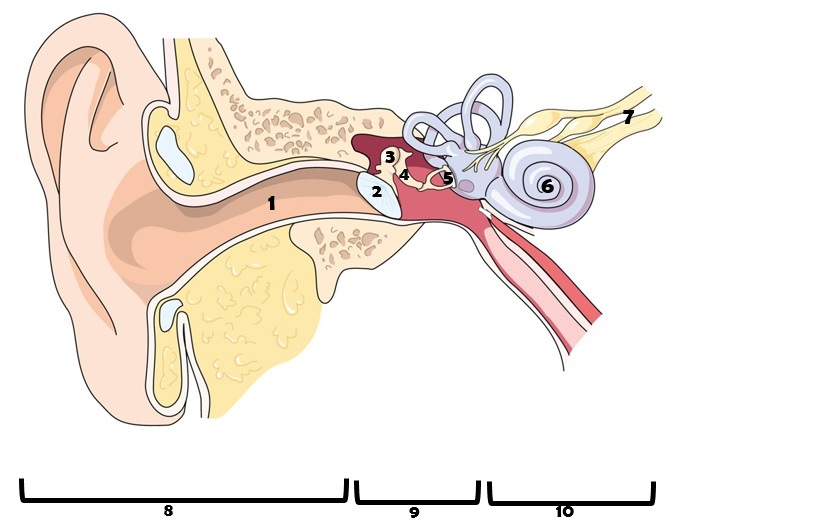
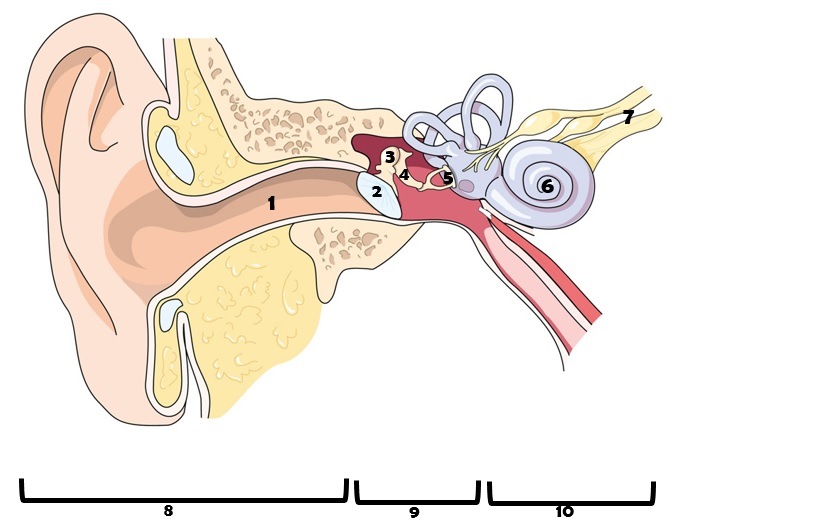
Identify the part of the ear labeled as 1 in the diagram.

a)

auditory nerve

b)

ear canal

c)

eardrum

d)

hammer

86.

The auditory nerve is labeled as which number in the diagram?

a)

3

b)

4

c)

5

d)

6

e)

7

87.

Which number is labeled for the hammer?

a)

1

b)

2

c)

3

d)

4

e)

5

88.

Name the part of the ear labeled as 4 on the diagram.

a)

hammer

b)

anvil

c)

stirrup

89.

Name the section of the ear where the eardrum is located.

a)

outer

b)

middle

c)

inner

90.

The cochlea is found in which section of the ear?

a)

outer

b)

inner

c)

middle

91.

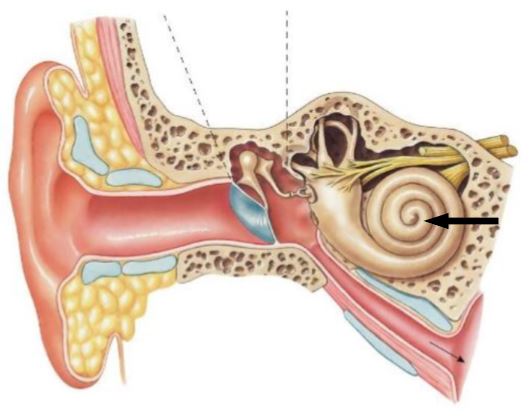
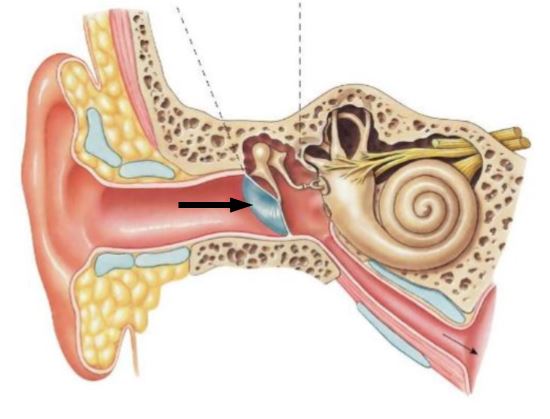
What is this?

a)

Pinna

b)

Hearing Nerve

c)

Cochlea

d)

Ear Drum

e)

Anvil

92.

What is this?

a)

Ear Drum

b)

Ear Canal

c)

Pinna

d)

Hammer

e)

Cochlea

93.

What is this?

a)

Ear Drum

b)

Ear Canal

c)

Pinna

d)

Cochlea

e)

Hearing Nerve

94.

Which section of the ear transfers sound into electrical impulses, which are then sent to the brain ?

a)

Outer Ear

b)

Inner Ear

c)

Middle Ear

d)

Cochlea

95.

Which section of the ear do vibrations push up against the structures in order to hear the sound?

a)

Outer Ear

b)

Middle Ear

c)

Inner Ear

96.

Which section of the ear helps control the body's balance?

a)

Outer Ear

b)

Inner Ear

c)

Middle Ear

d)

Cochlea

97.

What is part A?

a)

Cornea

b)

Pupil

c)

Iris

d)

Sclera

98.

A hole where light enters into the eye.

a)

Retina

b)

Pupil

c)

Cornea

d)

Iris

99.

Controls the amount of light that enters the eye, also gives the eyes its color.

a)

Retina

b)

Cornea

c)

Iris

d)

Sclera

100.

The convex lens focuses the light, allows us to see objects near and far.

a)

Lens

b)

Iris

c)

Retina

101.

The back surface of the eye covered in receptor cells called rods and cones.

a)

Retina

b)

Cornea

c)

Lens

d)

Pupil

102.

What is part D?

a)

Sclera

b)

Cornea

c)

Lens

103.

Identify the part of the eye colored red in this diagram.

a)

cornea

b)

pupil

c)

iris

d)

retina

104.
What is letter I?
a)
Cornea
b)
Lens
c)
Vitreous humor
d)
Optic nerve
105.

Which eye part contains rods and cones to help us see in dim light and color?

a)

Sclera

b)

Lens

c)

Cornea

d)

Retina