
 Worksheets
Social Studies Chapter 8 Review
Total questions: 31
Worksheet time: 17mins
Slavery was most common _______
in Northern factories
on Southern Plantations
in the Thirteen Colonies
the Louisiana Purchase
As time went on, many people in the North wanted to ________ slavery.
abolish
profit
spread
keep
The growth of ___________ on a massive scale was not possible without the institution of slavery.
cash crops
factories
plantations
slavery
What was the main goal of the abolitionist movement?
to give enslaved people the right to vote
end slavery in the United States
to help Southerners catch enslaved people who had escaped
to allow slavery to spread into new U.S. territories
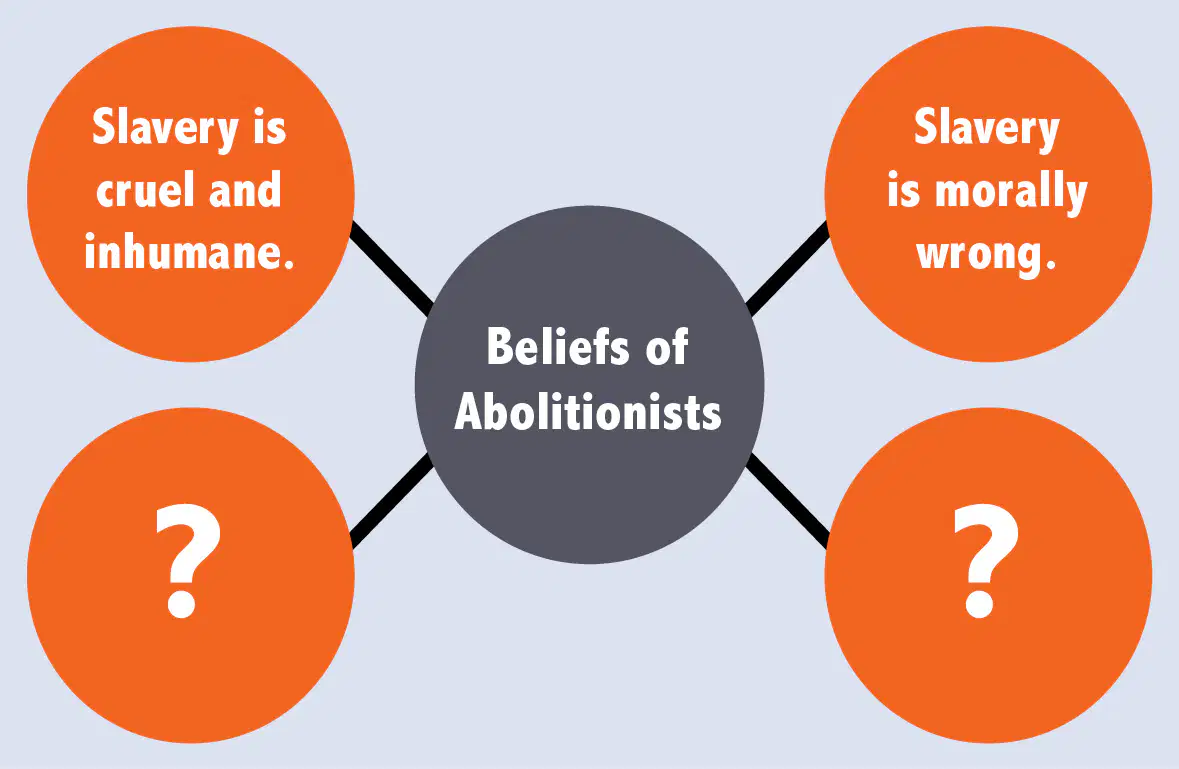
Which two statements best complete the graphic organizer? (Choose 2)
Slavery should be expanded to new areas.
Slavery brings too many new people into the country.
Slavery should be ended, and all enslaved people should be freed.
Slavery is a violation of the principle of democracy that all people are created equal.
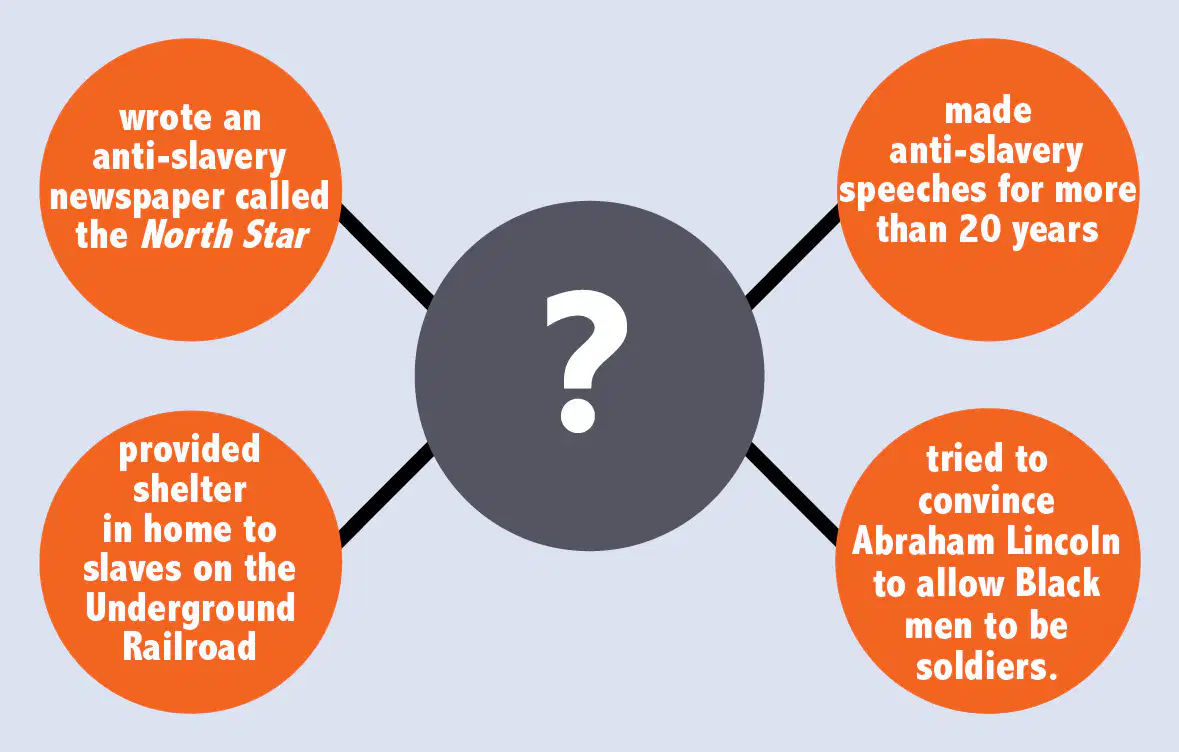
Which person’s name belongs in the center of the graphic organizer?
Harriet Tubman
Thomas Jefferson
Frederick Douglass
Sojourner Truth
Northern and Southern states were ________ in the Senate.
unbalanced
evenly balanced
excluded
included
Northern and Southern states worried _______ would upset the Senate vote.
new states
freed enslaved people
old states
enslaved people
What did slave codes do? (Choose 2)
They made it illegal for enslaved people to meet together.
They made it illegal to force enslaved people to do more work.
They made it illegal to teach enslaved people to read and write.
They made it illegal for enslaved people to be taken to western states.

In which area was the institution of slavery prohibited by the Missouri Compromise of 1820?
Area A
Area B
Area C
Area D
Which part of the Compromise of 1850 made Northerners very angry?
a new strict fugitive slave law
the end of slave trade in Washington, D.C.
the admission of California to the Union as a free state
a vote to decide if slavery was allowed in New Mexico
The Kansas-Nebraska Act was based on the idea of ________.
popular sovereignty
right to life, liberty, and the pursuit of happiness
Westward Expansion
Fugitive Slave Law
The violence grew so bad in Kansas that people called it _______.
Bleeding Kansas
Cut-Throat Kansas
Prison Kansas
Kansas Compromise
Which event directly resulted in the start of the secession of Southern states?
Abraham Lincoln was elected president.
Congress passed the Kansas-Nebraska Act.
John Brown attempted to raid Harpers Ferry.
Congress passed the Fugitive Slave Act of 1850.
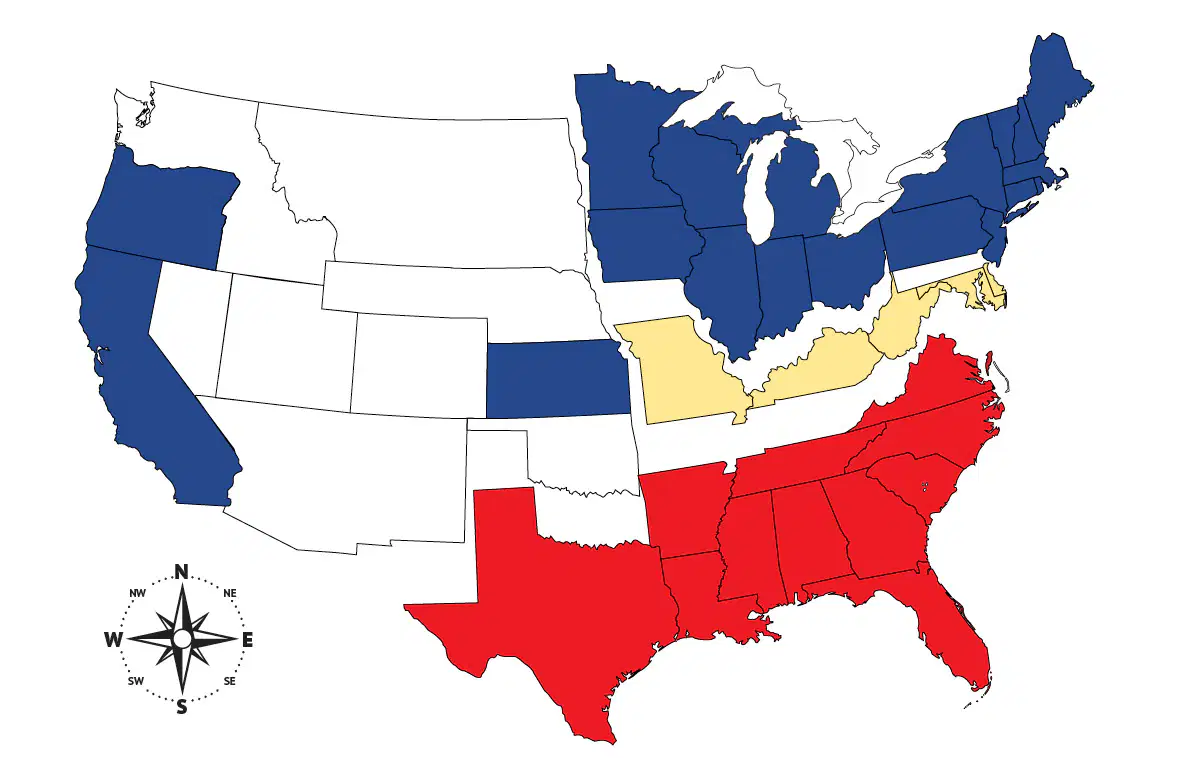
What are the blue areas on the map called?
territories
border states
slave states
free states
What are the red areas on the map called?
border states
free states
slave states
territories
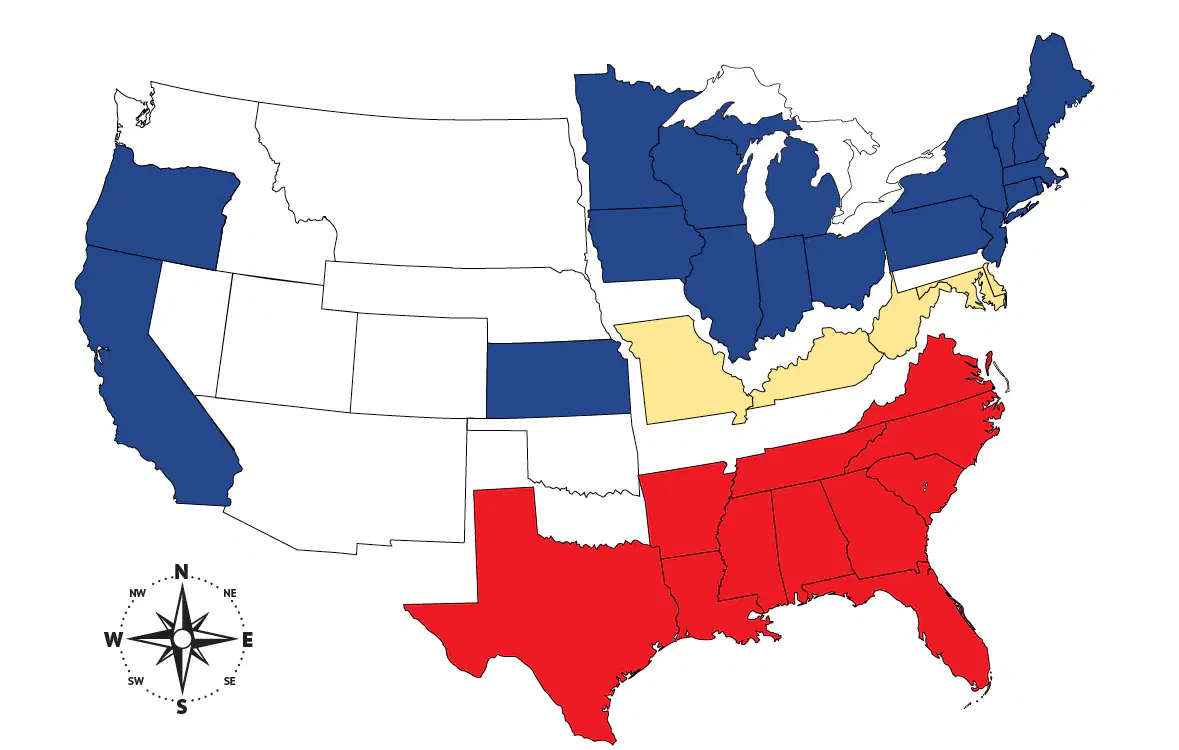
What are the yellow areas on the map called?
free states
slave states
border states
territories
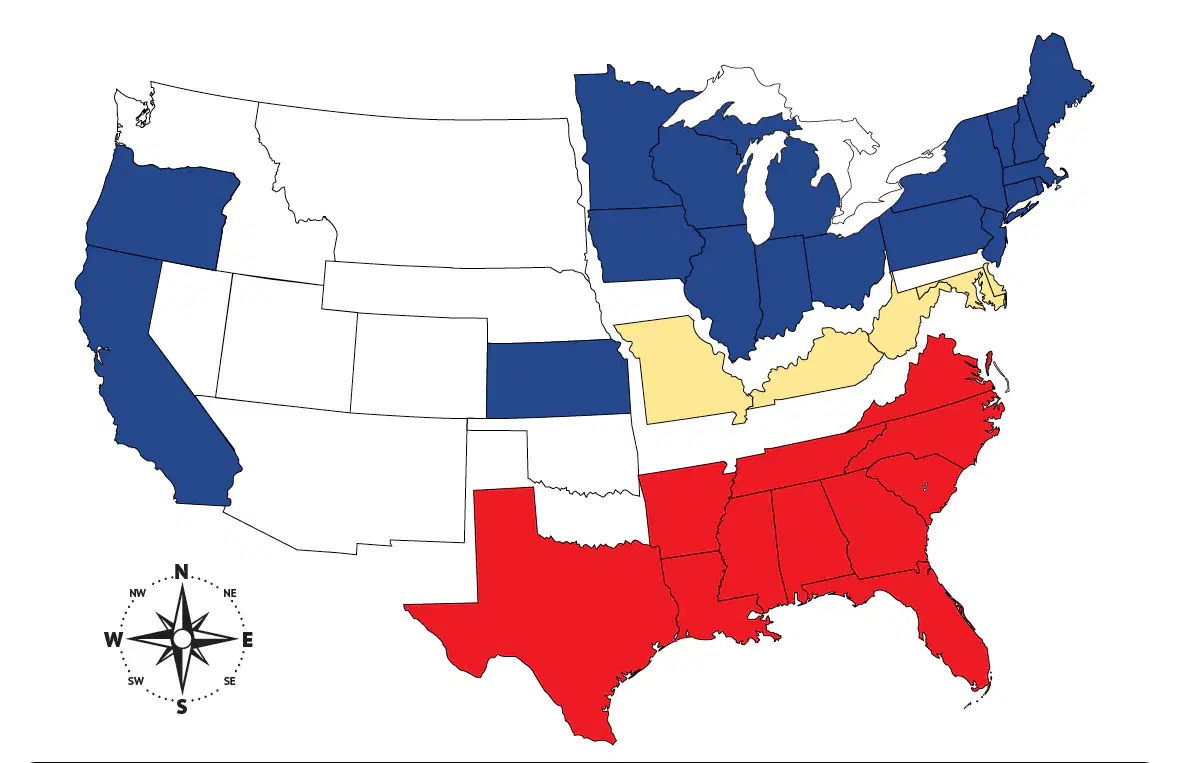
What are the white areas on the map called?
free states
slave states
border states
territories
Identify the leader the statement describes.
This leader commanded an army.
Jefferson Davis
Abraham Lincoln
Both
Identify the leader the statement describes.
This leader supported states' rights.
Jefferson Davis
Abraham Lincoln
Both
Identify the leader the statement describes.
This leader wanted to preserve the Union.
Jefferson Davis
Abraham Lincoln
Both
Identify the leader the statement describes.
This leader was the president of the Confederacy.
Jefferson Davis
Abraham Lincoln
Both
Identify the leader the statement describes.
This leader was president of the United States.
Jefferson Davis
Abraham Lincoln
Both

Which statements best complete the graphic organizer? (Choose 2)
It allowed formerly enslaved Black men to be soldiers.
It kept formerly enslaved Black men from being soldiers.
Great Britain and France would not support the Confederacy.
Great Britain and France joined Lincoln in his efforts to free enslaved people.
________ is a federal holiday that celebrates the end of slavery in the United States.
Juneteenth
Emancipation Day
Fourth of July
Martin Luther King Jr. Day
Slavery ended in Texas when Union troops arrived in Galveston, and ______ issued an order saying enslaved people in Texas were free.
a Union general
Abraham Lincoln
Harriet Tubman
Jefferson Davis
The Lincoln Memorial is located in _________.
Washington, D.C.
New Orleans, LA
Richmond, VA
Baton Rouge, LA
The Lincoln Memorial has _______ that represent the number of states in the Union when Lincoln died.
36 columns
36 lights
36 feet high
36 statues
______ are displayed inside the Lincoln Memorial.
Two of Lincoln's speeches
Two battle maps of Union victories
Two states Lincoln lived in
Two portraits of Lincoln
The Lincoln Memorial is a symbol of ______ for all Americans.
freedom
equality
slavery
bravery
Which statements correctly describe the 13th Amendment? (Choose 2)
It made Juneteenth a national holiday.
It was added to the Constitution after the Civil War.
It banned slavery in the United States and all its territories.
It made it illegal to deny people the right to vote because they had been enslaved.

